

# How to Reduce Flower Delivery Times
> TL;DR: Reducing flower delivery times requires strategic route optimization, peak season planning, and real-time coordination to handle time-sensitive orders efficiently. Professional florists typically achieve 30-40% time reductions through AI-powered route planning. Route optimization tools like Zeo Route Planner address this with automated route sequencing and time window management, helping florists save 2+ hours daily per driver.
Flower delivery is the ultimate high-stakes logistics game. Unlike other delivery services where a package can arrive a day late with an apology, your customers need their anniversary bouquet at exactly 2 PM or their funeral arrangement before the service begins.
Learning how to reduce flower delivery times is critical for florists who want to maintain customer satisfaction and business reputation. There’s no second chance when you miss a flower delivery window. The special moment passes, the flowers wilt, and your reputation takes a devastating hit that spreads through word-of-mouth faster than you can say “Valentine’s Day disaster.”
Why Flower Delivery Timing Is Make-or-Break (And More Critical Than Other Deliveries)
Flower deliveries carry emotional weight that transforms logistics into something far more complex than moving packages from point A to point B.
When someone orders flowers for their mother’s 80th birthday celebration or a funeral service, they’re trusting you with irreplaceable moments. Late delivery doesn’t just mean unhappy customers – it means you’ve potentially ruined someone’s most important day of the year.
The perishable nature of flowers adds another layer of urgency. Fresh roses that looked perfect at 8 AM can appear wilted by 2 PM if left in a hot delivery vehicle. According to the Society of American Florists, flower quality deteriorates rapidly when exposed to temperature fluctuations, making time-sensitive delivery crucial for maintaining product integrity.
Peak seasons amplify these challenges exponentially. Valentine’s Day alone accounts for approximately 35% of annual flower purchases, according to the National Retail Federation, meaning your normal delivery volume can triple overnight while customer expectations remain sky-high.
Pre-Delivery Planning: Route Optimization Strategies That Cut Delivery Times by 30%
Manual route planning kills efficiency before your drivers even leave the shop. Most florists still plan routes by looking at addresses on a map and making educated guesses about the best sequence.
This approach wastes massive amounts of time. Professional route optimization software considers traffic patterns, delivery time windows, vehicle capacity, and driver locations to create mathematically optimal routes that human planning simply cannot match.
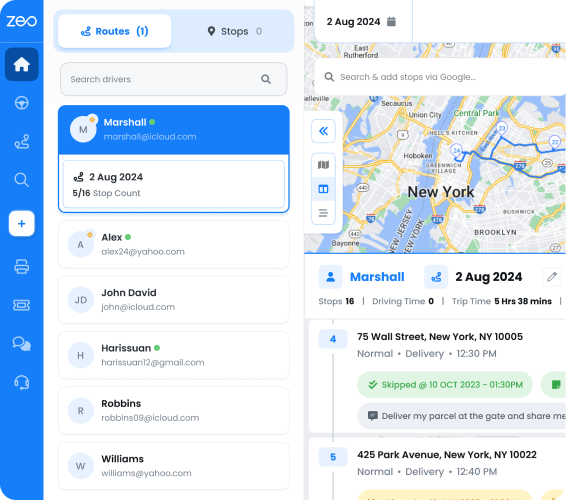
Zeo Route Planner solves this by using AI-powered algorithms that automatically organize your deliveries into the most efficient sequence, saving 2+ hours daily per driver. The system accounts for delivery time windows, so your funeral arrangements arrive before services begin and anniversary flowers reach customers during their celebration dinner.
Group deliveries by geographic zones first, then optimize within each zone. This prevents drivers from crossing town multiple times and reduces overall mileage by 25-40%.
Set realistic time windows for each delivery type. Funeral arrangements need strict arrival times, while birthday flowers often have flexible 4-6 hour windows. Use these differences strategically when sequencing routes.
Plan for contingencies during peak seasons. Build 15-20% extra time into your routes during Valentine’s Day and Mother’s Day to account for unexpected delays, traffic, or last-minute customer requests.
Peak Season Management: Handling Valentine’s Day and Mother’s Day Volume Without Chaos
Peak flower seasons test every weakness in your delivery system. What works for 20 daily deliveries breaks completely when you’re handling 100+ orders per day.
Start peak season planning 6-8 weeks early. Map out your delivery capacity, identify bottlenecks, and secure additional drivers or vehicles before demand hits. Most florists wait until the week before Valentine’s Day, when temporary drivers and rental vehicles become expensive and scarce.
Create delivery zones based on your driver count and geographic spread. If you normally serve a 20-mile radius with 3 drivers, consider reducing to 15 miles during peak periods or adding temporary drivers to maintain coverage.
Implement staggered delivery schedules. Spread Valentine’s deliveries across February 13-15 instead of cramming everything into February 14. Many customers accept early delivery when you explain it ensures peak freshness and guaranteed arrival.
Use time slot scheduling to control delivery density. Instead of accepting “anytime Tuesday” requests, offer specific 2-hour windows that allow you to optimize routes and manage customer expectations effectively.
Prepare your team with detailed contingency plans. What happens when a driver calls in sick on Valentine’s Day morning? Having backup plans prevents panic-driven decisions that destroy carefully optimized routes.
Real-Time Coordination: Technology Tools for Dynamic Route Adjustments and Customer Communication
Even perfect pre-planning falls apart when real-world complications hit. Traffic accidents, weather delays, and last-minute customer changes require immediate route adjustments that manual coordination cannot handle effectively.
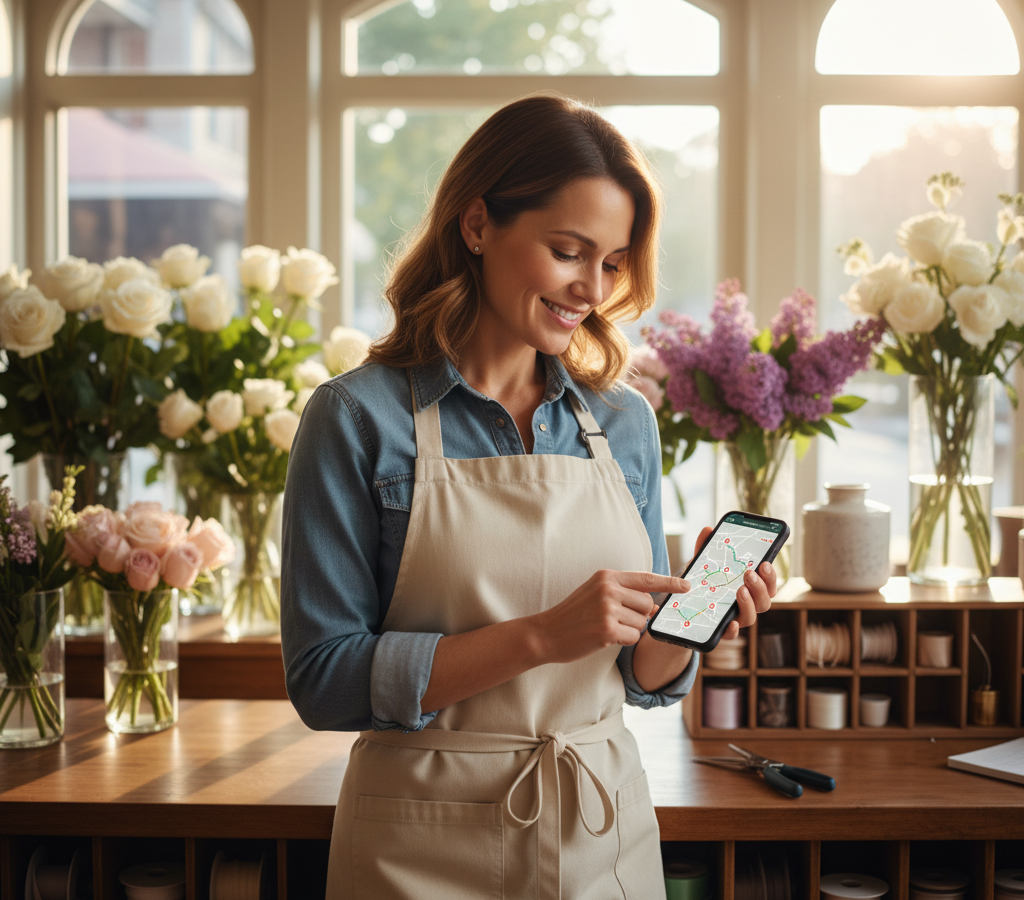
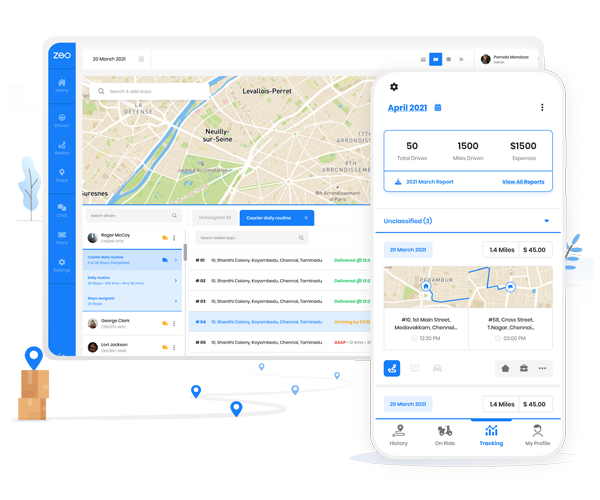
Modern delivery management software provides real-time GPS tracking and automatic route recalculation when disruptions occur. Delivery drivers receive optimized routes directly on their mobile phones through apps like Zeo’s driver platform, allowing them to navigate efficiently while capturing delivery photos and signatures for customer peace of mind.
Customer communication becomes critical during delays. Driver tracking software with automated SMS and email notifications keeps customers informed about delivery progress without requiring your staff to make individual phone calls. Live tracking links let customers monitor their delivery in real-time, reducing anxiety and phone inquiries to your shop.
Build systematic communication protocols for different scenarios. When deliveries run 30+ minutes behind schedule, automatically notify affected customers with updated arrival windows. This proactive approach maintains trust even when delays are unavoidable.
Zeo’s live ETA updates and customer notification system handles this communication automatically, sending branded messages that keep your customers informed while your drivers focus on safe, efficient delivery.
Use proof of delivery features to document successful handoffs. Photos, digital signatures, and delivery notes protect your business from disputed deliveries while providing customers with confirmation their flowers arrived safely.
Driver Management and Training: Building a Team That Delivers Perfection Under Pressure
Your drivers are the final link between perfect planning and successful delivery. Even optimal routes fail when drivers lack proper training or motivation to execute consistently.
Hire drivers who understand customer service, not just navigation. Flower delivery drivers interact directly with customers during emotionally significant moments, requiring empathy and professionalism that typical delivery drivers may not possess.

increase fuel savings
Hassle Free Deliveries & Pickups!
Optimize routes with our algorithm, reducing travel time and costs efficiently.
Get Started for Free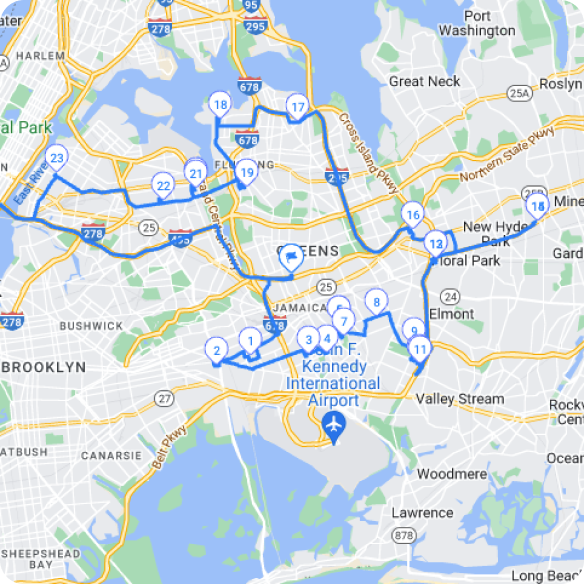
Train drivers on flower care during transport. Flowers should stay in air-conditioned vehicles, away from direct sunlight, and handled gently during loading and unloading. A beautiful arrangement can be ruined by careless handling in the final mile.
Establish clear protocols for common delivery challenges. What should drivers do when customers aren’t home? How should they handle apartment building access? When should they call the shop versus making independent decisions?
Create performance incentives tied to delivery success metrics. Track on-time delivery rates, customer feedback scores, and flower condition upon arrival. Recognition and bonuses for consistent performance motivate drivers to maintain high standards during stressful peak periods.
Cross-train multiple drivers on each delivery zone. This flexibility prevents service disruption when regular drivers are unavailable and maintains customer relationships across your entire service area.
Measuring Success: KPIs Every Florist Should Track for Delivery Performance
You cannot improve what you don’t measure. Most florists track revenue and order volume but ignore the delivery metrics that directly impact customer satisfaction and repeat business.
Monitor on-time delivery percentage as your primary metric. Calculate the percentage of deliveries that arrive within promised time windows. Industry leaders maintain 95%+ on-time rates even during peak seasons.
Track average delivery time from shop departure to customer handoff. This metric reveals route efficiency and helps identify drivers or routes that need optimization. Benchmark your current performance before implementing changes to measure improvement accurately.
Measure customer satisfaction through post-delivery surveys or follow-up calls. Ask specifically about delivery timing, flower condition upon arrival, and driver professionalism. This feedback identifies problems before they become reputation-damaging complaints.
Calculate delivery cost per order, including driver wages, vehicle expenses, and route optimization tools. Understanding true delivery costs helps you price services appropriately and invest in efficiency improvements that reduce long-term expenses.
Monitor driver productivity through deliveries completed per hour and miles driven per delivery. The Bureau of Labor Statistics tracks industry benchmarks that help identify top-performing drivers and routes that need optimization.
Track repeat customer rates and correlate with delivery performance. Implementing effective customer retention strategies around delivery excellence creates loyal advocates who drive referral business and reduce marketing costs.
Peak season metrics deserve special attention. Compare Valentine’s Day and Mother’s Day performance year-over-year to identify improvements and remaining challenges. These high-volume periods reveal your delivery system’s true capabilities and limitations.
Frequently Asked Questions
Q: What’s the average delivery time for flower orders?
Most flower deliveries take 2-4 hours from order placement to delivery during normal business days. During peak seasons like Valentine’s Day, delivery times can extend to 6-8 hours without proper route optimization.
Q: How do florists handle same-day flower delivery requests?
Successful florists use route optimization software to dynamically adjust delivery schedules throughout the day. Zeo Route Planner’s AI-powered optimization helps florists accommodate last-minute orders by automatically recalculating the most efficient routes, saving 2+ hours daily per driver.
Q: Why do flowers arrive damaged even when delivered on time?
Temperature fluctuations and rough handling during transport are the primary causes of flower damage. Flowers should remain in climate-controlled vehicles and be handled gently during loading, unloading, and delivery to maintain their quality throughout the delivery process.
Q: What’s the busiest time for flower deliveries?
Valentine’s Day accounts for approximately 35% of annual flower purchases, followed by Mother’s Day and funeral services. These peak periods require specialized planning and route optimization to handle 3-5x normal delivery volumes while maintaining quality service.
Q: How can flower shops reduce delivery costs without sacrificing quality?
Route optimization is the most effective way to reduce delivery costs while maintaining service quality. Zeo Route Planner’s capacity-based routing and time window optimization helps florists reduce fuel costs by 25-40% while ensuring flowers arrive fresh and on schedule.
The flower delivery business demands operational precision that few other industries require. Your customers trust you with their most important moments, and your delivery performance directly impacts those irreplaceable experiences.
Implementing systematic route optimization, peak season planning, and real-time coordination transforms reactive scrambling into proactive precision. The investment in proper delivery systems pays dividends through higher customer satisfaction, increased repeat business, and reduced operational stress during your busiest seasons.
Start your free trial of Zeo Route Planner to see how automated route optimization can transform your flower delivery operations into a competitive advantage that ensures every bouquet arrives fresh, on-time, and exactly when your customers need them most.
Are you a fleet owner?
Want to manage your drivers and deliveries easily?
Grow your business effortlessly with Zeo Routes Planner – optimize routes and manage multiple drivers with ease.

increase fuel savings
Save $200 on fuel, Monthly!
Optimize routes with our algorithm, reducing travel time and costs efficiently.
Get Started for Free