

# Best Route Planner App in 2026: Compare Zeo, Circuit, Route4Me & More
> TL;DR: The best route planner app depends on your fleet size and industry, not brand recognition, so compare stop limits, offline support, and driver app quality before you commit. Delivery and field service teams using AI-powered route optimization typically save 2+ hours daily on manual planning alone. Zeo Route Planner offers a free tier up to 12 routes/month plus fleet-plus-app functionality, making it a strong starting point for solo drivers and small teams comparing options.
If you’ve spent the last week Googling “best route planner app” and closing tab after tab, you’re not alone. Every app claims to be the best. None of them tell you which one actually fits your fleet size, budget, or industry.
This guide skips the hype. You’ll get a transparent comparison table, a decision framework based on your fleet size, real pricing numbers, and answers to the exact questions you’re already searching for. By the end, you’ll know which route planner app fits your business, not just which one has the loudest marketing.
What a Route Planner App Actually Does (and Why “Best” Depends on Your Use Case)
A route planner app takes a list of addresses and turns them into the most efficient driving order. Instead of a dispatcher manually sequencing 30 stops by guesswork, the software uses route optimization algorithms to cut drive time, fuel costs, and missed deliveries.
But “efficient” means different things depending on your business. A pest control company needs skill-based driver assignment, so only certified technicians get certain jobs. A courier service needs tight time windows because customers expect deliveries within a specific hour.
According to the U.S. Bureau of Labor Statistics data on transportation employment, transportation and warehousing employment has grown steadily, with delivery and driver services among the fastest-expanding segments in the country. More drivers on the road means more competition for efficiency. The company with the tighter route wins the margin.
This is why there’s no single “best” route planner app. There’s only the best app for your stop count, driver count, and industry. The comparison below breaks that down by the criteria that actually matter, not marketing copy.
Route Planner App Comparison: Zeo vs. Circuit vs. Route4Me vs. OptimoRoute vs. Onfleet
Here’s a side-by-side look at the five most-searched route planner apps, based on published pricing and feature pages as of 2026. For a deeper feature-by-feature breakdown, see our Zeo vs. Route4Me comparison.
| App | Starting Price | Free Plan | Stop Limit (Free/Entry) | Offline Mode | Driver App Quality |
|—|—|—|—|—|—|
| Zeo Route Planner | Free tier available; paid plans scale by driver count | Yes, up to 12 routes/month | Generous stop limits on paid plans | Supported on mobile app | Turn-by-turn navigation, proof of delivery, live tracking |
| Circuit | Free tier; paid starts ~$25-40/mo per driver | Yes, limited stops | Around 10 stops/day free | Limited offline support | Simple, consumer-friendly UI |
| Route4Me | Starts ~$40-50/mo per driver | No true free plan | Varies by plan | Available on higher tiers | Functional but dated interface |
| OptimoRoute | Starts ~$40+/mo per driver | 30-day trial, no permanent free plan | Depends on plan, higher stop caps on premium | Available on mobile app | Solid for dispatch-heavy teams |
| Onfleet | Starts ~$500+/mo (enterprise-leaning) | No free plan | High stop volume, built for scale | Available | Strong for large delivery ops |
What this table tells you:
- If you’re a solo driver or just starting out, Zeo and Circuit offer real free tiers. OptimoRoute offers a trial but no permanent free option.
- If offline navigation is a dealbreaker (rural routes, spotty service areas), check current app-specific documentation before committing. Coverage varies by plan tier and updates often.
- If you manage more than 20 drivers, Onfleet and OptimoRoute lean toward enterprise pricing. Zeo and Route4Me scale more gradually by driver count.
- Driver app quality matters more than most buyers realize. A clunky app means more calls to dispatch and slower adoption.
Pricing changes frequently across all five platforms. Always confirm current rates on each provider’s pricing page before signing a contract.
Which Route Planner App Is Right for You? A Decision Framework by Fleet Size and Industry
Instead of picking based on brand recognition, match the app to your actual operation.
Solo driver or gig worker (1 driver, under 12 stops/day)
You don’t need a fleet dashboard. You need a phone app that plans your day fast. Zeo’s mobile app works standalone here, with a free tier covering up to 12 routes a month. Solo landscapers, real estate agents doing property visits, or independent couriers fit this profile.
Small team (3-10 drivers, delivery or field service)
This is where most operations managers start comparing tools seriously. You need multi-driver dispatch, proof of delivery, and customer notifications, without paying for enterprise features you won’t use. A pool cleaning company with 6 technicians, for example, needs skill-based assignment (not every tech is certified for the same equipment) and time windows for customer appointments.
Growing fleet (10-50 drivers, multi-stop delivery or route-based services)
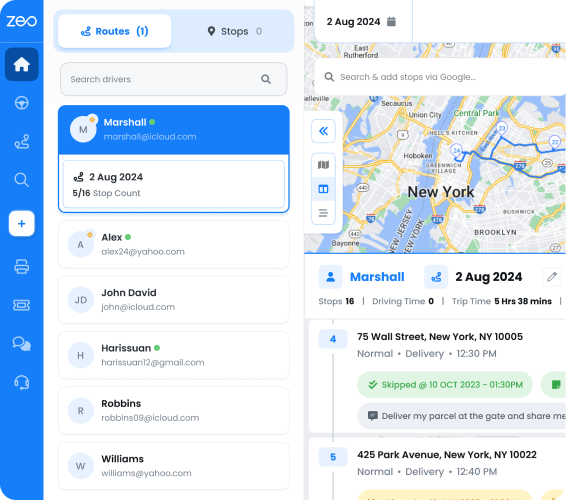
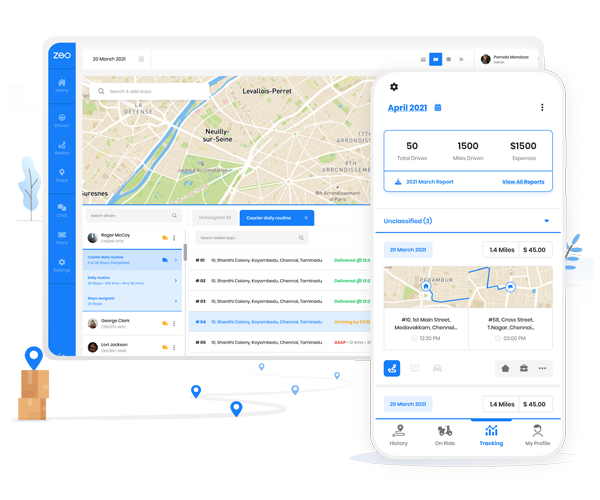
At this size, you need capacity-based routing (so a truck doesn’t get overloaded), driver performance analytics, and integrations with your existing tools like Shopify or HubSpot. This is also where the fleet-plus-app model matters most: a manager plans routes on the web platform, assigns them across the team, and each driver receives their route automatically on the Zeo mobile app, with turn-by-turn navigation and proof of delivery built in.
Enterprise (50+ drivers, complex logistics)
At scale, you’re likely evaluating custom API integrations and dedicated account support. Onfleet and OptimoRoute market heavily to this tier, but Zeo’s API and Zapier integration also support larger operations without forcing you into enterprise-only pricing.
How Much Do Route Planner Apps Really Cost? Pricing Tiers, Hidden Fees, and ROI Breakdown
Sticker price is rarely the full story. Here’s what to actually budget for.
Common pricing structures:
- Per-driver monthly fee: Most apps charge per active driver, not per vehicle. A 10-driver team on a $40/driver plan costs $400/month before add-ons.
- Stop or route caps: Free and entry tiers often cap monthly routes or daily stops. Exceeding the cap can trigger upgrade prompts or overage charges.
- Add-on fees: Some platforms charge extra for SMS notifications, API access, or advanced analytics. Read the fine print before assuming a feature is included.
- Contract minimums: A few providers require annual commitments to unlock advertised pricing. Monthly flexibility often costs more per seat.
The ROI math that actually matters:
Route optimization tools generally claim to save time and fuel. Zeo’s AI-powered optimization saves 2+ hours daily per driver, time that would otherwise go to manual route planning or inefficient driving order.
Here’s a simple way to calculate your own ROI:
- Estimate current daily planning time per driver (many managers spend 30-60 minutes manually sequencing stops).
- Multiply by driver count and average hourly labor cost.
- Add estimated fuel savings from reduced mileage (the U.S. Department of Energy’s fuel economy guidance notes that reduced idling and optimized routing can meaningfully cut fuel consumption for commercial fleets).
- Compare that monthly savings to the subscription cost.
For a 10-driver delivery team saving even 1 hour per driver daily at $20/hour labor cost, that’s $2,000/month in reclaimed labor value, before fuel savings. Most route planner apps in this comparison cost a fraction of that. Industry benchmarks from the American Trucking Associations’ industry research show fuel and labor consistently rank among the top operating costs for fleets of all sizes, reinforcing why even modest per-driver savings compound quickly across a team.
Key Features to Evaluate Before You Buy: Offline Navigation, Real-Time Rerouting, Multi-Driver Dispatch, and Integrations
Before you commit to a plan, test these features specifically. They’re the ones that cause the most support tickets after purchase.
Offline navigation
If your drivers work in rural areas, parking garages, or regions with weak cell coverage, offline mode isn’t optional. Test this during your trial, not after signing an annual contract.
Real-time rerouting

increase fuel savings
Hassle Free Deliveries & Pickups!
Optimize routes with our algorithm, reducing travel time and costs efficiently.
Get Started for Free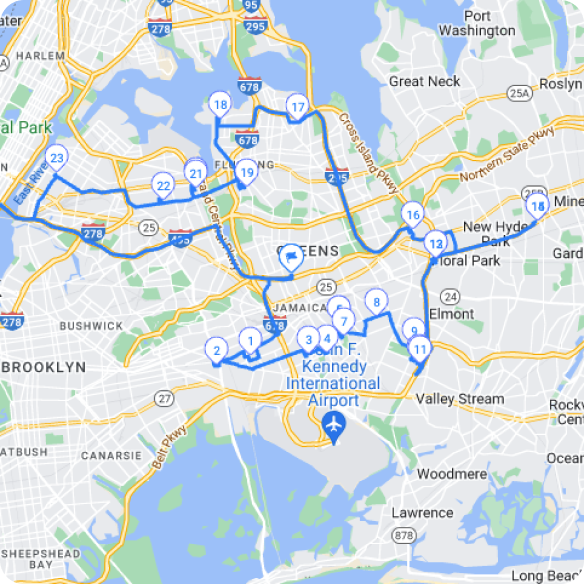
Traffic happens. A customer cancels. A driver calls in sick mid-shift. Dynamic route adjustments let dispatchers reassign stops without rebuilding the entire day’s schedule from scratch.
Multi-driver dispatch
If you manage more than one driver, this is non-negotiable. You need to see all routes on one dashboard, reassign stops between drivers, and track live GPS location for every vehicle at once.
Proof of delivery
For delivery and field service businesses, proof of delivery with photo capture, digital signatures, and delivery notes protect you from disputed deliveries. A pest control technician documenting a completed treatment with a photo and note avoids “the technician never showed up” disputes.
Integrations
Check whether the app connects to tools you already use. Shopify and WooCommerce integrations matter for e-commerce businesses that need orders to auto-import as stops. Zapier support matters if you rely on custom workflows across CRMs or spreadsheets.
Customer communication
Live ETA updates and SMS notifications reduce “where’s my delivery” calls to dispatch. This alone can cut inbound customer service volume significantly for delivery-heavy operations.
How to Get Your Whole Team Onboard: From Manager Dashboard to Driver App in Under a Day
One of the biggest hidden costs of switching route planner apps isn’t the subscription, it’s the time it takes to train your team.
Here’s what a realistic onboarding day looks like:
Morning: Set up the manager side
Import your existing customer or stop list using bulk address import from Excel, CSV, or Google Sheets. Add your drivers, assign vehicles, and set skills if certain jobs require specific certifications (common in HVAC, electrical, or pest control).
Midday: Build your first optimized route
Use AI-powered optimization to generate routes based on time windows, priority stops, and vehicle capacity. A waste collection company, for example, can set capacity limits so trucks don’t get routed to more stops than they can physically handle.
Afternoon: Push routes to drivers
This is where the fleet-plus-app model saves real time. Routes built on the web platform sync automatically to each driver’s Zeo mobile app. Drivers open the app and see turn-by-turn navigation, customer details, and stop order, without needing separate training sessions or manual route entry.
End of day: Confirm tracking and notifications
Check that live GPS tracking is working and that customer notifications (SMS, email, live tracking link) are sending correctly. A branded tracking page with your company logo adds a professional touch for customer-facing deliveries.
For a solo operator, this entire process takes under an hour. For a 20-driver fleet, expect a half-day for full rollout, most of which is address import and driver setup, not app training. Drivers generally need minimal onboarding since the mobile app interface is built for quick adoption in the field.
Frequently Asked Questions
Q: How many stops can a route planner app optimize at once?
Most route planner apps can optimize anywhere from 10 to several hundred stops in a single route, depending on the plan tier. Free tiers typically cap this at 10-12 routes per month, while paid plans scale to handle full-day multi-stop routes for delivery and field service teams.
Q: What’s the difference between a route planner app and GPS navigation?
GPS navigation (like Google Maps or Waze) gives turn-by-turn directions for a single destination, while a route planner app sequences multiple stops in the most efficient order before navigation even starts. Route planner apps also add features GPS apps don’t have, like proof of delivery, customer notifications, and multi-driver dispatch.
Q: Can a route planner app work without internet or cell signal?
Offline capability varies by app and plan tier, so it’s worth testing during a trial if your routes cover rural areas or dead zones. Zeo’s mobile app supports offline functionality, but coverage details should be confirmed against current documentation since features update over time.
Q: How long does it take to switch to a new route planner app?
For a solo driver, setup typically takes under an hour, including address import and account setup. For a fleet of 15-20 drivers, expect about half a day for full rollout, most of which is bulk address import and driver account setup rather than actual training, since driver-facing apps are generally built for quick field adoption.
Q: Do route planner apps integrate with e-commerce platforms like Shopify?
Many route planner apps offer e-commerce integrations, but the depth varies. Zeo Route Planner integrates directly with Shopify and WooCommerce to auto-import orders as delivery stops, plus Zapier support that connects to 1,000+ additional apps for custom workflows.
—
Choosing a route planner app doesn’t need to take weeks of trial-and-error. Compare your fleet size against the framework above, confirm pricing and offline support directly with each provider, and test the driver app experience before you commit.
Start a free trial of Zeo Route Planner and plan your first optimized multi-stop route in under 5 minutes, no credit card required. If you’re managing a fleet, book a live demo to see driver management, real-time tracking, and analytics in action.
Are you a fleet owner?
Want to manage your drivers and deliveries easily?
Grow your business effortlessly with Zeo Routes Planner – optimize routes and manage multiple drivers with ease.
increase fuel savings
Save 2 Hours on Deliveries, Everyday!
Optimize routes with our algorithm, reducing travel time and costs efficiently.
Get Started for Free