

Updated on: June 11, 2026
Reading Time: 3 minutes
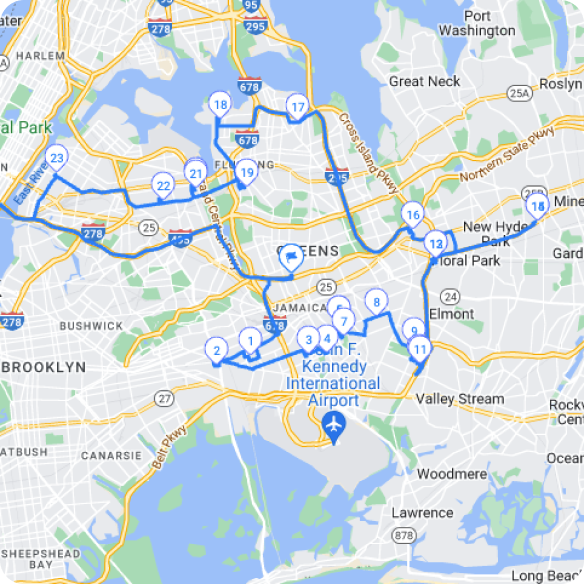
TL;DR: Capacity planning software enhances workforce mobility by optimizing resource allocation, providing real-time visibility, and enabling dynamic schedule adjustments for field teams. Companies report saving 2+ hours daily through automated route optimization and resource planning. Route optimization tools like Zeo Route Planner address this with AI-powered route optimization and auto-assignment of stops to drivers, helping logistics teams save 2+ hours daily.
Workforce mobility has become an essential aspect of modern business operations. It facilitates agility, adaptability, and efficiency. As businesses navigate through dynamic market landscapes, the ability of employees to work remotely or on the go has become crucial for maintaining competitiveness and meeting customer expectations. Picture a bustling city, where delivery routes need to be optimized, resources need to be allocated efficiently, and schedules need to be adjusted seamlessly. In such a dynamic setting, the need for a robust capacity planning software like Zeo becomes paramount. It serves as a strong foundation for orchestrating seamless workforce mobility and driving organizational success.
Understanding Workforce Mobility
Workforce mobility refers to the agility of employees to work on the go by utilizing technology to access resources and fulfill tasks efficiently. For example, consider a field service team tasked with delivering packages across a city. Their success hinges on effective route planning, resource allocation, and real-time adjustments. Industries such as logistics, delivery services, field sales, and home services rely heavily on workforce mobility to meet customer demands and stay competitive.
The shift toward mobile workforces has accelerated significantly in recent years. According to the Bureau of Labor Statistics, the demand for flexible work arrangements continues to grow across various industries, particularly in service-based sectors. This trend has created new challenges for businesses in managing distributed teams while maintaining operational efficiency and customer service standards.
Use Case for the Logistics Industry
Consider the logistics industry, where timely deliveries are necessary for business success. Imagine a scenario where a logistics company needs to deliver packages to various locations within a city. Effective route planning and resource allocation are crucial to meet delivery deadlines and optimize operational costs. This is where capacity planning software plays a vital role. By leveraging advanced algorithms and real-time data, the logistics company can optimize delivery routes, allocate resources efficiently, and adapt quickly to changing demands. With capacity planning software like Zeo, the logistics company can ensure seamless workforce mobility, maximize operational efficiency, and deliver exceptional service to its customers.
The complexity of modern logistics operations requires sophisticated planning tools. Companies must consider multiple variables including vehicle capacity constraints, driver work hours, customer time windows, and traffic patterns. Without proper capacity planning, logistics operations can quickly become inefficient, leading to increased fuel costs, overtime expenses, and customer dissatisfaction.
Importance of Capacity Planning Software
Capacity planning software plays a pivotal role in enabling businesses to harness the full potential of their workforce and resources. By providing real-time visibility into operational processes, demand planning & forecasting capabilities, and resource optimization algorithms, capacity planning software empowers businesses to make data-driven decisions that drive efficiency and profitability. Whether it’s optimizing delivery routes, balancing workload distribution, or ensuring timely responses to customer demands, capacity planning software serves as a strategic tool for aligning workforce mobility with organizational objectives.
The strategic value of capacity planning extends beyond simple scheduling. It encompasses comprehensive resource management that considers skill sets, equipment availability, geographic constraints, and customer priorities. The Department of Transportation emphasizes the importance of efficient transportation planning in reducing environmental impact and operational costs across various industries.
Key Components of Effective Capacity Planning
Successful capacity planning requires several critical components working in harmony. First, accurate demand forecasting helps businesses anticipate workload requirements and staff accordingly. This involves analyzing historical data, seasonal patterns, and market trends to predict future capacity needs.
Second, resource mapping provides visibility into available personnel, vehicles, and equipment. This includes tracking skills, certifications, availability, and performance metrics for each team member. Understanding these capabilities allows managers to match the right resources to specific tasks and customer requirements.
Third, constraint management addresses limitations such as regulatory compliance, vehicle capacity, driver work hours, and geographic boundaries. Effective capacity planning software must account for these constraints while optimizing overall performance.
Benefits of Capacity Planning Software for Workforce Mobility
Now, let’s delve into the specific benefits that capacity planning software like Zeo brings to workforce mobility:

increase fuel savings
Save $200 on fuel, Monthly!
Optimize routes with our algorithm, reducing travel time and costs efficiently.
Get Started for Free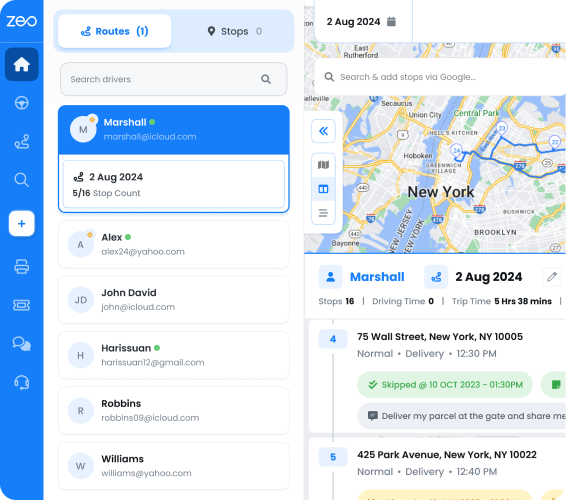
- Improved Resource Allocation: Effective resource allocation is crucial for maximizing efficiency and minimizing costs. By ensuring that resources are allocated optimally, businesses can reduce wastage and enhance productivity. With Zeo’s intelligent route optimization algorithms, businesses can optimize routes and schedules, completing more tasks in less time. This ultimately leads to increased profitability and growth.
- Enhanced Flexibility: In today’s fast-paced business environment, flexibility is key to success. Businesses need to adapt quickly to dynamic changes in demand, operational requirements, and unforeseen challenges. Zeo provides businesses with real-time tracking and monitoring capabilities, enabling them to make quick adjustments to routes and schedules. This ensures seamless workforce mobility and customer satisfaction, allowing businesses to stay ahead of the competition and seize new opportunities for growth.
- Optimized Scheduling: Efficient scheduling is crucial for maximizing productivity and meeting customer expectations. By ensuring that tasks are assigned to the right resources at the right time, businesses can minimize delays, reduce idle time, and improve overall operational efficiency. With its robust driver management feature, Zeo enables businesses to assign routes to drivers and create and manage schedules efficiently. This ensures exceptional service delivery and customer satisfaction.
- Real-time Insights: Data-driven decision-making is essential for success in today’s digital age. Zeo provides businesses with real-time insights into route performance, driver behavior, and operational efficiency. By analyzing this data, businesses can identify trends, spot opportunities for improvement, and make informed decisions to drive growth. With Zeo’s comprehensive reporting and analytics features, businesses can gain valuable insights into their operations, optimize their processes effectively, and achieve their strategic objectives.
Overcoming Common Workforce Mobility Challenges
Mobile workforces face unique challenges that traditional office-based operations don’t encounter. Communication barriers arise when team members are distributed across different locations and time zones. Capacity planning software addresses this by providing centralized communication tools and real-time status updates that keep everyone connected and informed.
Performance monitoring becomes more complex when employees work independently in the field. Without proper oversight tools, managers struggle to ensure productivity and quality standards. Modern capacity planning solutions provide performance analytics and tracking capabilities that give managers visibility into field operations while respecting employee autonomy.
Customer expectations for transparency and communication have also increased significantly. Customers want real-time updates about service appointments, delivery windows, and any changes to scheduled activities. Capacity planning software helps meet these expectations by automating customer communications and providing accurate timing information.
Conclusion
Workforce mobility is a cornerstone of modern business operations, enabling agility, responsiveness, and customer satisfaction. Capacity planning software, such as Zeo, plays a pivotal role in enhancing workforce mobility by optimizing resource allocation, streamlining operations, and providing real-time insights. From improved resource allocation to enhanced flexibility and optimized scheduling, Zeo empowers businesses to adapt to changing demands, seize new opportunities, and deliver exceptional service to their customers.
Connect with Zeo experts today for a free demo and harness the power of capacity planning software to thrive in the digital age and achieve strategic objectives with efficiency.
Frequently Asked Questions
How does capacity planning improve field service efficiency?
Capacity planning improves field service efficiency by matching the right technicians with appropriate skills to customer needs while optimizing travel time between appointments. It considers factors like technician availability, skill sets, equipment requirements, and geographic proximity to minimize travel time and maximize productive work hours.
What are the main challenges in managing a mobile workforce?
The primary challenges include maintaining communication across distributed teams, ensuring consistent service quality without direct supervision, and coordinating schedules across multiple time zones and locations. Additionally, tracking performance, managing customer expectations, and adapting quickly to schedule changes or emergencies can be particularly difficult with mobile teams.
How can route optimization reduce operational costs for delivery businesses?
Route optimization reduces operational costs by minimizing fuel consumption, reducing vehicle wear and tear, and maximizing the number of deliveries completed per day. Zeo Route Planner’s AI-powered route optimization saves delivery teams 2+ hours daily while reducing overall mileage and improving customer satisfaction through more accurate delivery windows.
What features should businesses look for in workforce mobility software?
Essential features include real-time GPS tracking for field personnel, automated scheduling and dispatch capabilities, mobile apps for field workers, customer communication tools, and comprehensive reporting and analytics. Integration capabilities with existing business systems and scalability to accommodate growth are also crucial considerations.
How does real-time tracking benefit both managers and field workers?
Real-time tracking provides managers with visibility into field operations, enabling better resource allocation and customer service while helping field workers by providing navigation assistance and allowing them to communicate delays or issues immediately. It also improves safety by ensuring managers know worker locations and can respond quickly to emergencies or equipment problems.
Are you a fleet owner?
Want to manage your drivers and deliveries easily?
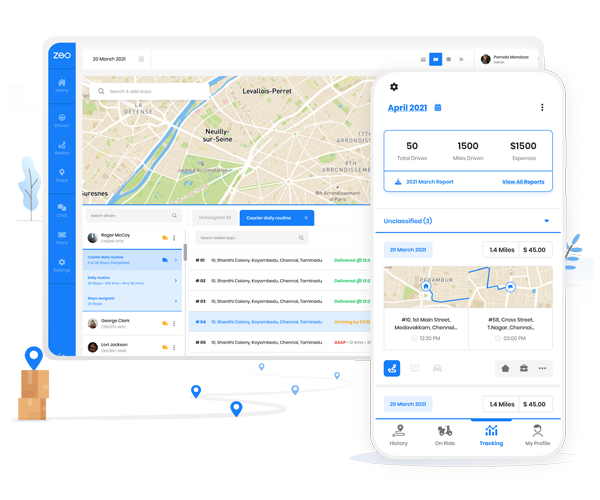
Grow your business effortlessly with Zeo Routes Planner – optimize routes and manage multiple drivers with ease.

increase fuel savings
Hassle Free Deliveries & Pickups!
Optimize routes with our algorithm, reducing travel time and costs efficiently.
Get Started for Free