

# Route Planner App: The Complete Guide to Choosing the Right One
> TL;DR: The right route planner app depends entirely on whether you’re routing for yourself or for a team—solo drivers need fast optimization and navigation, while fleets need driver assignment, tracking, and reporting. A route planner app can solve the “traveling salesman problem” in seconds, a calculation with millions of possible combinations that no human can do manually. Route optimization tools like Zeo Route Planner address this with AI-powered routing and a shared mobile app for both solo users and fleet drivers, helping delivery and field service teams save 2+ hours daily.
Searching for a route planner app usually starts the same way. You type the phrase into Google, click five tabs, and end up more confused than when you started.
Every app store listing looks the same. Every marketing page promises “optimized routes” and “time savings.” But almost none of them tell you what you actually need to know: can this tool handle 15 drivers, or is it built for one?
This guide answers that question directly. We’ll cover how a route planner app actually works, what separates a solo app from a fleet platform, and what real businesses save in time and fuel. No fluff, no vague promises—just the information you need to pick the right tool.
What Is a Route Planner App (and How It’s Different from Google Maps)
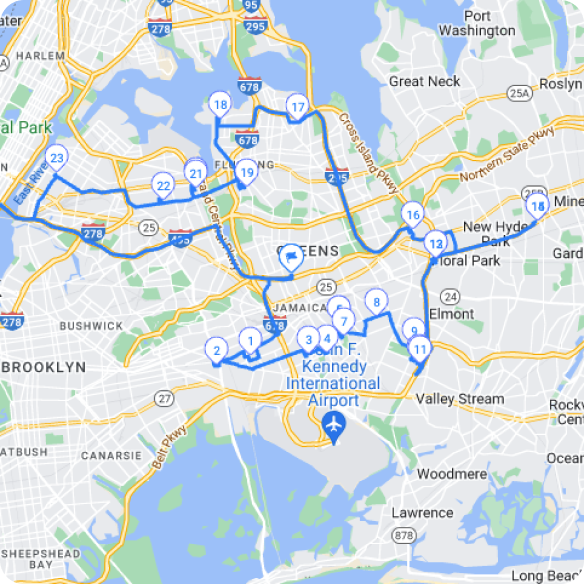
A route planner app takes a list of stops and figures out the fastest, most efficient order to visit them. Google Maps gets you from Point A to Point B. A route planner app solves a much harder problem: the order of 10, 50, or 200 stops.
This is called the “traveling salesman problem” in computer science, and it’s not simple math. For just 10 stops, there are over 3.6 million possible route combinations. A route planner app uses optimization algorithms to find the best one in seconds—something no human could calculate manually.
Google Maps also caps you at 10 waypoints per route and won’t factor in delivery time windows, vehicle capacity, or driver skills. A dedicated route planner app does.
Here’s the real difference in practice:
- Google Maps: Manual stop entry, no bulk import, limited waypoints, no proof of delivery, no driver tracking for a team
- Route planner app: Bulk address import, automatic stop sequencing, time windows, live GPS tracking, proof of delivery, customer notifications
If you’re managing more than a handful of stops a day, or managing other people’s stops, Google Maps becomes a bottleneck fast. That’s the gap a route planner app is built to close.
Solo Driver vs. Fleet Use Cases: Which Route Planner App Do You Actually Need?
This is where most buyers get stuck. The term “route planner app” covers two very different products, and picking the wrong one wastes money either way.
Solo driver use case: You’re a realtor doing property showings, a courier running your own routes, or a technician scheduling your own jobs. You need an app that takes your stop list, optimizes the order, and gives you turn-by-turn navigation. You don’t need to manage other people.
Fleet use case: You’re a dispatcher or operations manager assigning routes to 5, 20, or 50 drivers. You need to build routes on a web dashboard, assign them to specific drivers based on skills or zones, track everyone’s location in real time, and collect proof of delivery across your whole team.
The mistake a lot of growing businesses make is picking a basic app built only for solo use, then hitting a wall when they hire their third or fourth driver. Suddenly they need driver assignment, team tracking, and reporting—features a single-user app was never built to handle.
This is where Zeo’s structure solves a real scaling problem. Zeo’s mobile app serves both audiences from the same ecosystem. Individual drivers—gig workers, realtors, field technicians—can plan their own optimized routes for free or on a Premium plan, entirely from their phone.
At the same time, fleet drivers use that exact same app to receive routes pushed directly from a manager using the Zeo web platform. A pest control company with 3 technicians today doesn’t need to switch tools when it grows to 30 technicians next year. The manager simply starts building routes on the web dashboard and assigning them to the team, while drivers keep using the app they already know.
Your technicians receive optimized routes directly on their phones via the Zeo app, complete with turn-by-turn navigation, customer details, and time windows—no retraining, no new software to learn.
Must-Have Features: A Feature-by-Feature Comparison
Once you know whether you need solo or fleet capability, the next step is comparing actual features—not marketing copy. Here’s how five popular route planner apps stack up on the capabilities that matter most.
| Feature | Zeo | Route4Me | Circuit | OptimoRoute | Routific |
|—|—|—|—|—|—|
| AI route optimization | Yes | Yes | Yes | Yes | Yes |
| Free plan available | Yes (up to 12 routes/mo) | Limited trial | Limited | No free plan | No free plan |
| Bulk import (Excel/CSV/Sheets) | Yes | Yes | Yes | Yes | Yes |
| Capacity-based routing | Yes | Yes | Limited | Yes | Yes |
| Time window constraints | Yes | Yes | Yes | Yes | Yes |
| Skill-based driver assignment | Yes | Limited | No | Yes | Limited |
| Live GPS tracking | Yes | Yes | Yes | Yes | Yes |
| Proof of delivery (photo/signature) | Yes | Yes | Yes | Yes | Limited |
| Customer SMS/email notifications | Yes | Yes | Yes | Yes | Yes |
| In-app driver-manager chat | Yes | No | No | No | No |
| Shopify/WooCommerce integration | Yes | Yes | Yes | Limited | No |
| Zapier integration | Yes | Yes | Yes | Yes | Yes |
| Pickup-delivery linking | Yes | Limited | No | Yes | Limited |
| Blackout dates for recurring routes | Yes | No | No | No | No |
| Mobile app for solo + fleet drivers | Yes | Yes | Yes | Limited | Limited |
A few things stand out here. Most tools can technically optimize a route—that’s table stakes now. The real differentiation is in the details: can you pause a recurring route without deleting it (Zeo’s blackout dates), can your manager and driver message each other inside the app, and is there a genuinely usable free tier for solo users who aren’t ready to commit to a fleet contract.
Zeo’s free plan allows up to 12 optimized routes per month, which is enough for many solo drivers or small teams testing the waters before scaling up.
How Route Planning Works in Practice: Step-by-Step Walkthrough
Here’s what actually happens when you use a route planner app, from stop list to delivered package.
Step 1: Add your stops. Upload a spreadsheet, pull in orders automatically from Shopify or WooCommerce, or type addresses manually. Zeo supports multiple input methods, including bulk upload, saved Favorites lists, and even pulling addresses from images.
Step 2: Set your constraints. Add time windows (customer only available 2-4 PM), priority flags (ASAP vs. normal), and vehicle capacity limits if you’re managing weight or volume restrictions.

increase fuel savings
Save 2 Hours on Deliveries, Everyday!
Optimize routes with our algorithm, reducing travel time and costs efficiently.
Get Started for Free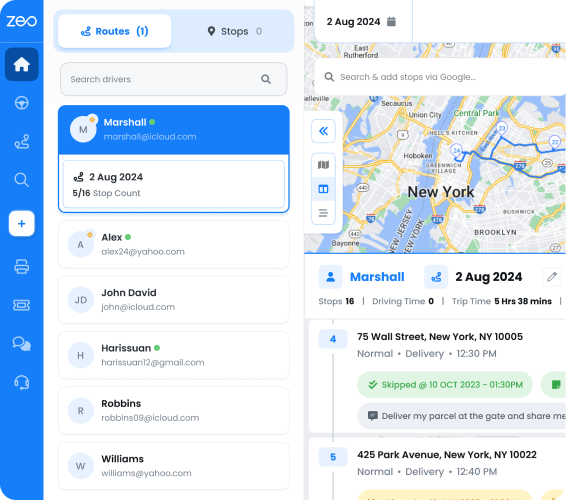
Step 3: Optimize. The app’s algorithm calculates the most efficient stop order in seconds, factoring in traffic, distance, and your constraints. For fleets, this also includes auto-assigning stops across multiple drivers based on location, skill, or vehicle.
Step 4: Assign and push to drivers. On the fleet side, a manager reviews the optimized routes on the web platform and assigns them to specific drivers. Each driver receives their route instantly on the Zeo mobile app.
Step 5: Navigate and track. Drivers follow turn-by-turn directions using their preferred navigation app (Google Maps, Waze, or Apple Maps all work with Zeo). Managers watch live GPS tracking from the dashboard and see real-time ETA updates.
Step 6: Confirm with proof. At each stop, the driver captures a photo, collects a signature, or logs delivery notes. For COD orders, payment collection gets tracked in the same step. Learn more about how proof of delivery protects both drivers and businesses from disputes.
Step 7: Notify the customer. The customer gets an SMS or email with a live tracking link and updated ETA, cutting down on “where’s my delivery” calls.
Step 8: Review the data. After the route finishes, managers pull reports on miles driven, time per stop, and driver performance to spot patterns and improve future routes.
A food delivery business running this process across 10 drivers, for example, can go from a 45-minute manual dispatch session each morning to a route plan that builds itself in under 5 minutes.
Real ROI: What Businesses Actually Save in Time, Fuel, and Miles
Numbers matter more than feature lists, so let’s talk about actual return on investment.
Time savings: Zeo’s AI-powered route optimization saves drivers and dispatchers 2+ hours daily. For a 10-driver fleet, that’s potentially 20 hours of combined labor time recovered every single day—time that used to go into manual route building, re-sequencing stops, or calling drivers for updates.
Fuel and mileage: According to the U.S. Department of Energy’s fuel economy research, inefficient routing and excess idling are major contributors to wasted fuel in commercial fleets. Optimized routing reduces unnecessary backtracking and shortens total mileage, which directly cuts fuel spend. Businesses using route optimization tools commonly report meaningful reductions in daily mileage once manual guesswork is removed from the process.
Labor cost: U.S. Bureau of Labor Statistics data on transportation occupations shows that transportation and warehousing roles rely heavily on efficient scheduling to control labor costs. Cutting 2 hours of planning time per driver, per day, translates directly into either labor savings or capacity for more stops in the same shift.
Customer service costs: Live tracking links and automated ETA notifications reduce “where is my driver” phone calls, a hidden cost that many field service and delivery businesses underestimate. Fewer inbound calls means dispatchers spend more time planning and less time answering the phone.
Fewer missed appointments: Time window constraints and priority stop flags help field service businesses—like HVAC, plumbing, and pest control companies—reduce missed service windows, which protects both customer satisfaction and repeat business. Data compiled by the American Transportation Research Institute’s operational cost benchmarks consistently shows route inefficiency as one of the largest controllable cost centers for fleets of any size.
None of this requires buying new trucks or hiring more staff. It’s the same drivers and the same vehicles, routed more intelligently.
Free vs Paid Plans: What to Expect at Each Pricing Tier
Pricing is where a lot of route planner apps get vague. Here’s a realistic breakdown of what you should expect at each tier.
Free tier: Designed for solo drivers or very small operations testing the tool. Expect a monthly route cap (Zeo offers up to 12 routes/month free), basic optimization, and standard navigation. This tier works well for a solo courier, a realtor doing a few showings a week, or a small business owner deciding if route optimization is worth paying for.
Individual/Premium tier: Built for solo drivers who’ve outgrown the free cap—gig delivery drivers, independent contractors, sales reps running daily territories. Expect unlimited or higher route limits, proof of delivery, and more advanced optimization settings, usually at a low monthly cost per user.
Fleet/Team tier: Built for operations managing multiple drivers. This is where you get the web platform for building and assigning routes, driver management, skill-based assignment, live team tracking, analytics and reporting, and integrations like Shopify, WooCommerce, and Zapier. Pricing is typically per-driver, per-month, and scales with team size.
Enterprise tier: For larger fleets needing custom integrations, API access, or dedicated support. Pricing is quoted based on fleet size and specific requirements.
The mistake to avoid: don’t pay for an enterprise fleet platform if you’re a solo driver, and don’t try to force a free solo app to manage 15 employees. Match the tier to your actual team size and complexity, and expect that to change as you grow.
How to Choose the Right Route Planner App for Your Team
Here’s a simple decision framework to cut through the noise.
Ask yourself these four questions:
- How many drivers am I routing? One (including yourself) means a solo plan works. Two or more means you need fleet features like driver assignment and team tracking.
- Do I need proof that the job was done? If customers dispute deliveries or service completion, prioritize apps with photo capture and digital signatures.
- Do I need to integrate with existing tools? If you run orders through Shopify, WooCommerce, or a CRM like HubSpot, confirm the app has native integrations or Zapier support before committing.
- Will my team grow in the next 12 months? If you’re hiring drivers or technicians, pick a platform that scales from solo to fleet without forcing you to migrate to a new tool later.
A landscaping business with 2 trucks today might have 8 next spring. Choosing a route planner app that handles both solo and fleet use—like Zeo, where the same mobile app serves individual users and fleet-assigned drivers—means you’re not re-training your team or re-building your workflow when you grow.
Once you’ve answered those questions, test the shortlist. Most route planner apps, including Zeo, offer a free tier or trial. Upload a real stop list, run an actual route, and see how the optimization, navigation, and tracking perform with your own addresses—not a demo dataset.
Frequently Asked Questions
Q: How many stops can a route planner app handle compared to Google Maps?
Google Maps caps route planning at 10 waypoints and requires manual entry for each stop, which makes it impractical for delivery or field service routes beyond a handful of addresses. Dedicated route planner apps like Zeo support bulk upload of hundreds of stops via spreadsheet, image, or saved Favorites lists, then apply AI optimization to sequence them in seconds.
Q: Is a free route planner app good enough for a small business?
For solo drivers or very small operations, a free tier can be genuinely useful rather than just a trial gimmick. Zeo’s free plan, for example, allows up to 12 optimized routes per month, which covers many independent couriers, realtors, or technicians before they need to upgrade to a paid tier.
Q: What’s the difference between route planning and route optimization?
Route planning refers to mapping out which stops to visit, while route optimization specifically calculates the most efficient order and timing for those stops based on constraints like traffic, time windows, and vehicle capacity. Optimization is a mathematically complex problem—known as the traveling salesman problem—that becomes unsolvable by hand once you pass even 10-15 stops.
Q: Can a route planner app assign routes to multiple drivers automatically?
Yes, fleet-focused route planner apps can auto-assign stops to drivers based on location, skill set, or vehicle capacity rather than requiring a dispatcher to manually divide a stop list. Zeo’s web platform allows managers to build and assign optimized routes across a team, while drivers receive their assignments directly on the Zeo mobile app with turn-by-turn navigation.
Q: How much time does route optimization actually save a delivery or field service business?
Businesses that switch from manual route planning to AI-powered optimization commonly report significant reductions in daily planning time and driving mileage, since the software removes guesswork around stop order and traffic patterns. Zeo’s route optimization is built to save drivers and dispatchers 2+ hours daily, time that can be redirected into completing more stops or reducing labor costs.
Start Planning Smarter Routes Today
A route planner app should save you time the first day you use it, not require weeks of setup and training. Zeo Route Planner lets you plan your first optimized route in under 5 minutes, free for up to 12 routes per month.
If you’re managing a team of drivers or technicians, book a fleet demo to see team pricing and how the web platform and driver app work together as you scale.

Are you a fleet owner?
Want to manage your drivers and deliveries easily?
Grow your business effortlessly with Zeo Routes Planner – optimize routes and manage multiple drivers with ease.
increase fuel savings
Hassle Free Deliveries & Pickups!
Optimize routes with our algorithm, reducing travel time and costs efficiently.
Get Started for Free