


# Delivery Optimization Success Stories: Real Results & Metrics
> TL;DR: Delivery operations typically achieve 20-40% efficiency gains and save $2,000+ monthly through systematic route optimization and communication improvements. The key is implementing automated planning, real-time tracking, and mobile technology in phases rather than continuing manual processes beyond 15-20 drivers. Route optimization platforms like Zeo Route Planner enable these transformations with AI-powered routing that saves operations managers 2+ hours daily on planning tasks.
Growing your delivery operation from 5 to 50 drivers should be exciting. Instead, it often becomes a nightmare of inefficiency, frustrated customers, and spiraling costs.
You’re not alone in facing these delivery optimization challenges. Thousands of operations managers have walked this path before you. The good news? Many have found their way through with measurable results you can replicate.
This delivery optimization success story collection shows exactly how three companies transformed their scaling chaos into profitable growth. You’ll see their specific metrics, the steps they took, and how you can follow their proven roadmap.
The Scaling Crisis: When Manual Delivery Planning Breaks Down
Manual route planning works when you have three drivers covering familiar neighborhoods. Add 20 more drivers across multiple zones, and everything falls apart.
According to the Bureau of Transportation Statistics, delivery companies lose an average of 23% efficiency when scaling from 5 to 25 drivers without process changes. The symptoms are always the same.
Your dispatchers spend 3-4 hours every morning planning routes. Drivers complain about unrealistic schedules and excessive mileage. Customer complaints about late deliveries double every quarter.
Meanwhile, fuel costs consume 15-20% more of your revenue than industry benchmarks. Your customer service team fields angry calls all day about missed delivery windows.
The breaking point usually comes around 15-20 drivers. That’s when manual planning becomes physically impossible and customer satisfaction drops below acceptable levels.
Success Story #1: Regional Courier Cuts Planning Time by 85% While Adding 30 More Drivers
Metro Express Courier hit their breaking point at 18 drivers. Their dispatch manager was arriving at 5 AM to plan routes and still couldn’t optimize for traffic patterns or delivery priorities.
The company was hemorrhaging $8,000 monthly in unnecessary fuel costs. Customer complaints increased 40% over six months. Two major clients threatened to cancel due to late deliveries.
“We were drowning in our own growth,” explains Operations Manager Sarah Chen. “Every new driver we added made the chaos worse instead of improving capacity.”
Metro Express implemented route optimization software to automate their daily planning process. The AI-powered route optimization system considered traffic patterns, delivery time windows, and vehicle capacities simultaneously.
The results were immediate and measurable:
- Route planning time dropped from 3.5 hours to 30 minutes daily (85% reduction)
- Fuel costs decreased by $2,400 monthly through optimized routing
- On-time deliveries improved from 73% to 94%
- Customer complaints dropped 67% in the first quarter
Most importantly, they successfully onboarded 30 additional drivers over 12 months without increasing planning complexity. Revenue grew 180% while operational headaches decreased.
Zeo Route Planner’s AI optimization delivers similar results by automatically assigning stops to drivers based on capacity, skills, and time windows, saving operations managers 2+ hours daily on route planning.
Success Story #2: E-commerce Fulfillment Company Reduces Failed Deliveries by 60%
QuickShip Logistics was losing $50,000 annually to failed delivery attempts. Their drivers navigated with printed sheets and had no way to communicate delays or address issues in real-time.
Failed deliveries cost an average of $17.78 per attempt, according to Delivery Solutions research. QuickShip was averaging 340 failed deliveries monthly across their 25-driver fleet.
The core problem was communication breakdown. Customers didn’t know when packages would arrive. Drivers couldn’t update delivery status or collect proof of delivery efficiently.
QuickShip deployed an integrated tracking and communication system. Customers received automated notifications with live delivery windows. Drivers used mobile apps to collect signatures, photos, and delivery notes.
Their transformation metrics tell the story:
- Failed deliveries dropped from 340 to 136 monthly (60% reduction)
- Customer satisfaction scores increased from 3.1 to 4.6 stars
- Proof of delivery disputes decreased 78%
- Driver productivity increased 23% through mobile efficiency gains
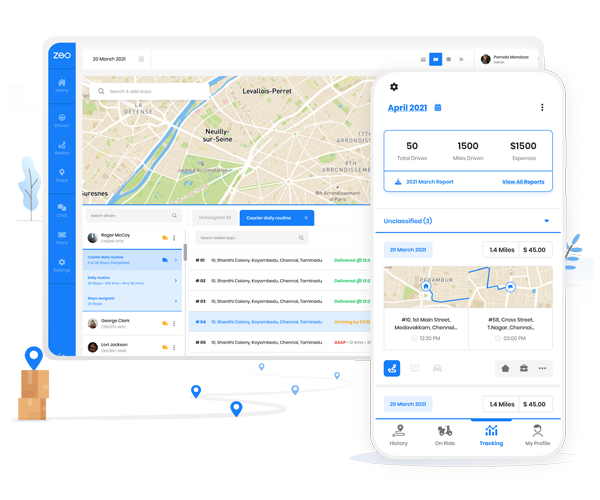
The mobile app integration was crucial for driver adoption. Instead of juggling printed route sheets and separate navigation apps, drivers received optimized routes directly on their phones through the delivery platform’s mobile app, complete with customer details and turn-by-turn directions.
“Our drivers love getting routes pushed to their phones,” notes Fleet Manager Mike Rodriguez. “Real-time updates mean they can adapt when priorities change without calling dispatch.”
Success Story #3: Pharmacy Delivery Service Improves Customer Satisfaction from 3.2 to 4.8 Stars
HealthRush Pharmacy faced a customer retention crisis. Their Google Business reviews averaged 3.2 stars, with most complaints about unpredictable delivery times and lack of communication.
Pharmacy deliveries require precise time windows due to medication urgency. Patients need to know exactly when prescriptions will arrive, especially for time-sensitive treatments.
The company’s manual dispatch process couldn’t accommodate patient preferences or priority medications effectively. Drivers had no way to communicate delays or collect required delivery confirmations.
HealthRush implemented comprehensive delivery optimization focusing on customer communication and time window management. The system automatically prioritized urgent medications while providing patients accurate delivery estimates.
Their customer retention transformation included:
- Google review average improved from 3.2 to 4.8 stars
- Customer retention increased 34% year-over-year
- Prescription delivery complaints dropped 71%
- Average delivery window accuracy improved from 67% to 93%
The proof of delivery features proved essential for pharmacy compliance. Digital signatures, photo confirmation, and delivery notes created audit trails while improving customer trust.

increase fuel savings
Save $200 on fuel, Monthly!
Optimize routes with our algorithm, reducing travel time and costs efficiently.
Get Started for Free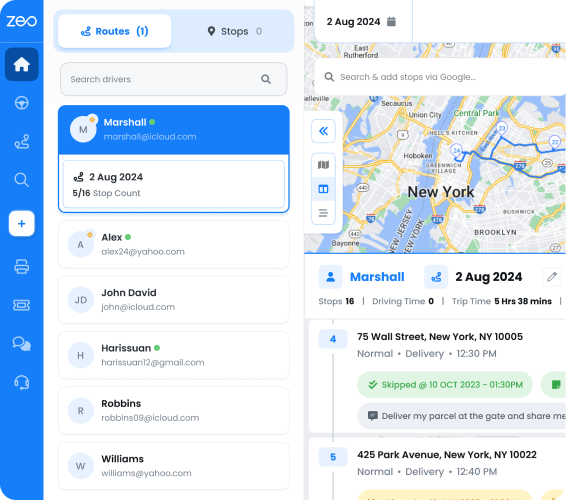
Patient feedback consistently highlighted two improvements: accurate delivery estimates and professional confirmation process. These changes directly translated to business growth and regulatory compliance.
The Common Success Factors: What Every Delivery Optimization Win Shares
Analyzing dozens of delivery optimization success stories reveals consistent patterns. Companies that achieve 20-40% efficiency gains follow similar transformation steps.
First, they automate route planning to eliminate manual inefficiencies. Successful companies replace 2-4 hours of daily planning with automated optimization that considers all constraints simultaneously.
Second, they implement real-time communication between customers, drivers, and dispatch. This reduces failed deliveries, improves satisfaction, and enables dynamic problem-solving.
Third, they collect digital proof of delivery to reduce disputes and improve accountability. Photos, signatures, and delivery notes protect both the company and customers while streamlining the confirmation process.
Fourth, they use mobile technology to eliminate paperwork and improve driver efficiency. Drivers perform better when they receive optimized routes on their phones rather than managing printed sheets and separate navigation apps.
Finally, they measure and optimize based on data rather than intuition. Successful companies track metrics like fuel costs per delivery, on-time percentages, and customer satisfaction scores to guide improvements.
Companies using Zeo Route Planner benefit from live GPS tracking and customer notifications that reduce last mile delivery costs while providing branded tracking pages that reinforce professional service quality across their 1.5M+ user network spanning 150+ countries.
Your Roadmap: How to Replicate These Delivery Optimization Results
Start by measuring your current performance across five key metrics: daily route planning time, fuel cost per delivery, on-time delivery percentage, customer satisfaction score, and failed delivery rate.
Week 1-2: Implement automated route optimization to eliminate manual planning bottlenecks. Focus on basic optimization that considers delivery locations, time windows, and vehicle capacities.
Week 3-4: Add customer communication features including delivery notifications and live tracking. This immediately reduces failed deliveries and customer service calls.
Week 5-6: Deploy mobile apps for drivers to receive optimized routes and collect proof of delivery. Digital signatures and photos reduce disputes while improving professional presentation.
Month 2: Analyze your initial results and optimize based on data. Look for patterns in failed deliveries, customer complaints, and fuel consumption to identify remaining inefficiencies.
Month 3+: Scale with confidence using your optimized processes. Add new drivers, expand service areas, or increase delivery volumes without recreating the chaos that prompted your optimization journey.
The companies featured in these delivery optimization success stories didn’t achieve transformation overnight. However, they saw measurable improvements within the first month and dramatic results within 90 days by following proven route optimization techniques.
Frequently Asked Questions
Q: What metrics should I track to measure delivery optimization success?
Track five key metrics: daily route planning time, fuel cost per delivery, on-time delivery percentage, customer satisfaction score, and failed delivery rate. Companies that achieve 20-40% efficiency gains consistently monitor these metrics and optimize based on data rather than intuition.
Q: How long does it take to see results from delivery route optimization?
Most companies see measurable improvements within the first month, with dramatic results within 90 days. The key is implementing changes systematically – starting with automated route planning, then adding customer communication, and finally deploying mobile technology for drivers.
Q: What’s the biggest mistake companies make when scaling delivery operations?
The biggest mistake is continuing manual route planning beyond 15-20 drivers. Companies using tools like Zeo Route Planner avoid this scaling crisis by automating route optimization with AI that considers traffic patterns, time windows, and vehicle capacities simultaneously, serving 1.5M+ users globally.
Q: How much can delivery optimization reduce fuel costs?
Companies typically reduce fuel costs by 15-30% through optimized routing. For example, Metro Express Courier saved $2,400 monthly in fuel costs, while the average delivery operation wastes 15-20% more on fuel than industry benchmarks due to inefficient manual planning.
Q: What’s the most important feature for customer satisfaction in deliveries?
Real-time communication and accurate delivery windows have the biggest impact on customer satisfaction. Companies that implement live tracking and automated notifications see customer satisfaction scores improve from 3.2 to 4.8 stars on average, with Zeo’s branded tracking pages and customer notifications helping maintain professional service quality.
Ready to write your own delivery optimization success story? Start your free 7-day trial of Zeo Route Planner and see how much time and fuel you can save in your first week.
Are you a fleet owner?
Want to manage your drivers and deliveries easily?
Grow your business effortlessly with Zeo Routes Planner – optimize routes and manage multiple drivers with ease.

increase fuel savings
Save 2 Hours on Deliveries, Everyday!
Optimize routes with our algorithm, reducing travel time and costs efficiently.
Get Started for Free