


What Is Equipment Delivery Management? (And How It Differs from Standard Delivery)
> TL;DR: Equipment delivery management is the process of routing, scheduling, and tracking deliveries for bulky or installation-dependent items like generators, HVAC units, or medical devices — a job standard parcel delivery software isn’t built to handle. Success depends on matching the right vehicle capacity to the right load and hitting tight appointment windows. Route optimization platforms like Zeo Route Planner address this with capacity-based routing and time window scheduling, helping equipment delivery teams save 2+ hours daily on planning and dispatch.
Equipment delivery management is the process of planning, routing, and tracking deliveries that involve bulky, high-value, or installation-dependent items. Think generators, medical devices, HVAC units, or construction rental equipment.
It’s not the same as parcel delivery. A parcel driver drops a box on a porch and moves on. An equipment driver often has to load a specific vehicle, arrive within a tight appointment window, and sometimes install or set up the item on-site.
It’s also different from general fleet management. Fleet management focuses on vehicles—maintenance, fuel, mileage. Equipment delivery management focuses on the job itself: matching the right equipment to the right vehicle, hitting installation windows, and proving the job got done correctly.
If you’re an operations manager juggling 5 to 30 drivers who handle both delivery and setup, you’re not running a parcel operation. You’re running something more complex, and it needs its own system.
According to U.S. Bureau of Labor Statistics data on equipment rental industry employment, employment in the equipment rental and leasing industry has grown steadily, driven by construction and industrial demand. That growth means more deliveries, more complexity, and more risk if your process is still stuck on spreadsheets.
5 Challenges Unique to Delivering Bulky, Scheduled, or Installed Equipment
Standard delivery software wasn’t built for what you deal with every day. Here are the five biggest pain points.
1. Size and weight constraints. Not every truck can carry every load. Sending a driver with the wrong vehicle means a wasted trip and an angry customer.
2. Appointment windows tied to installation. Medical equipment often needs a technician on-site at an exact time. Miss the window, and you might reschedule a hospital procedure or a patient’s home care setup.
3. Installation and setup complexity. Delivery isn’t the final step—setup is. Drivers need instructions, checklists, and a way to document that installation was completed correctly.
4. Frequent pickups and returns. Rental equipment doesn’t just go out. It comes back. Coordinating pickup logistics alongside delivery routes doubles the planning work.
5. Zero visibility after the truck leaves. Without real-time tracking, you’re stuck calling drivers to ask, “Did you make it? Is it installed?” That’s not a system—that’s guesswork.
These challenges compound fast. A single wrong-vehicle mistake can cascade into three missed appointments later in the day.
Must-Have Features in an Equipment Delivery Management Platform
Generic delivery apps and spreadsheets can’t handle these variables. Here’s what an equipment delivery management platform actually needs.
Capacity-based routing. The system should factor in vehicle weight and volume limits when assigning stops, so you never pair a 2,000-lb generator with a van that can’t carry it.
Time window scheduling. Installation appointments need hard time constraints built into the route, not just a rough delivery day.
Skill-based assignment. If a job needs a certified installer, the platform should use skill-based job assignment to route that stop to a driver with the right qualifications, not just the nearest one.
Proof of delivery and service. Photo capture, digital signatures, and delivery notes give you documented proof that equipment was delivered and installed—not just dropped off.
Real-time tracking and communication. Live GPS tracking and in-app chat let you see where drivers are and talk to them instantly if a site access issue comes up.
Driver mobile app. Once a manager builds and assigns routes on the web platform, drivers need those routes, time windows, and equipment details on their phones—complete with navigation.
This is exactly how Zeo Route Planner is structured. Managers plan routes on the Zeo web platform, assigning capacity limits, time windows, and skills. Drivers then receive their stops on the Zeo mobile app, where they navigate turn-by-turn, capture signatures or photos as proof of installation, and message dispatch in real time if a site issue forces a reschedule.
How Route Optimization Software Solves the Equipment Delivery Puzzle
Route optimization software doesn’t just find the shortest path between stops. For equipment delivery, it solves three specific problems at once.
It matches equipment to vehicle capacity automatically. Instead of a dispatcher manually checking which truck can carry which load, the software factors weight and volume limits into the route plan from the start.
It respects installation windows without manual scheduling. Time window constraints mean the system builds routes around your hardest appointments first, reducing the risk of a missed medical device setup or a rental drop-off outside business hours.
It gives you visibility from dispatch to signature. Real-time GPS tracking and live ETA updates mean you know exactly where a delivery stands. Proof of delivery with photo and signature capture closes the loop, confirming the job was completed—not just attempted.
Zeo Route Planner’s AI-powered optimization saves drivers 2+ hours daily by eliminating manual route planning and reducing backtracking between stops. For a team of 15 drivers handling installation-dependent deliveries, that’s time better spent on setup quality, not windshield time.
The result: fewer wasted trips, fewer missed windows, and a dispatcher who isn’t spending the whole day on the phone chasing status updates.
Step-by-Step: Building an Efficient Equipment Delivery Workflow
Here’s how to move from spreadsheet chaos to a repeatable system.
Step 1: Centralize your delivery data. Pull all your stops—deliveries, pickups, installations—into one system. Zeo supports bulk address import from Excel, CSV, or Google Sheets, so you’re not manually re-entering addresses every morning.
Step 2: Set your constraints upfront. Enter vehicle capacity limits, driver skills, and appointment time windows before you build the route. This is where most manual processes fail—constraints get applied after the fact, not before.
Step 3: Let the software optimize the route. Route optimization software builds the most efficient sequence of stops based on your constraints, not just distance. This is the step that replaces hours of manual dispatcher work.
Step 4: Assign and send routes to drivers. Once the route is built on the web platform, assign it to the right driver. Your drivers and installers receive their stops, time windows, and equipment details directly on the Zeo mobile app.
Step 5: Drivers navigate and execute. From the app, drivers get turn-by-turn navigation using Google Maps, Waze, or Apple Maps, and see full customer and equipment details for each stop.

increase fuel savings
Save $200 on fuel, Monthly!
Optimize routes with our algorithm, reducing travel time and costs efficiently.
Get Started for Free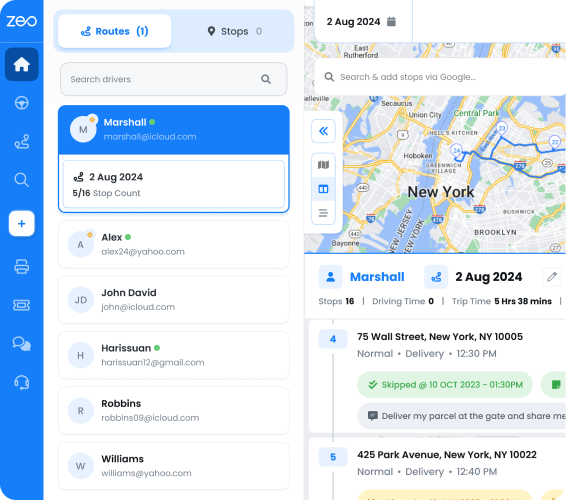
Step 6: Capture proof on-site. After delivery or installation, drivers capture a photo, collect a signature, or add delivery notes directly in the app—creating a documented record without paperwork.
Step 7: Handle exceptions in real time. If a site isn’t accessible or equipment doesn’t fit, drivers message dispatch directly through in-app chat. Managers can then make dynamic route adjustments mid-shift instead of waiting until end of day to find out something went wrong.
Step 8: Review performance and refine. Use route analytics and driver performance reporting to spot patterns—which routes run long, which drivers need better skill matching, where appointment windows get missed most often.
This workflow turns a reactive, phone-call-driven process into a system you can scale from 5 drivers to 30 without adding headcount to dispatch.
Real-World Use Cases: Construction Rental, Medical Equipment, and Industrial Supply
Construction equipment rental. A construction delivery management operation delivering excavators, generators, and scaffolding to job sites deals with constant pickups and drop-offs across shifting locations. Capacity-based routing ensures the right truck goes to the right site, while proof of delivery photos document equipment condition on arrival—useful for resolving damage disputes later.
Medical equipment delivery. A durable medical equipment (DME) provider delivering hospital beds, oxygen concentrators, or mobility devices to patients’ homes can’t afford missed appointment windows — a challenge similar to what medical courier routes face with time-sensitive stops. Time window constraints keep technicians on schedule, and digital signature capture provides proof that a patient or caregiver received the device. According to Centers for Medicare & Medicaid Services guidance on durable medical equipment, DME delivery timeliness directly affects patient care outcomes, making scheduling accuracy a compliance-relevant issue, not just an operational one.
Industrial supply and installation. A company delivering and installing industrial machinery needs skill-based assignment to send certified technicians to complex jobs — and should follow OSHA guidelines on material handling and equipment safety when planning load and setup procedures. If a site isn’t ready for installation, the driver can message dispatch through in-app chat immediately, and the manager can reschedule that stop mid-shift instead of losing the entire day’s route efficiency.
Across all three industries, the common thread is the same: generic delivery tools can’t account for capacity, time windows, and installation proof simultaneously. A dedicated equipment delivery management approach can.
FAQs: Equipment Delivery vs. Fleet vs. Logistics Management
Is equipment delivery management the same as fleet management?
No. Fleet management focuses on vehicles—maintenance schedules, fuel costs, and mileage tracking. Equipment delivery management focuses on the delivery job itself: matching equipment to the right vehicle, meeting installation windows, and proving successful delivery.
How is equipment delivery different from parcel logistics?
Parcel logistics optimizes for speed and volume with standardized package sizes. Equipment delivery involves size and weight constraints, appointment-based scheduling, and often on-site installation—requirements standard parcel tools don’t handle.
Do I need separate software for delivery and logistics management?
Not necessarily. A platform built for equipment delivery, like Zeo Route Planner, combines route optimization, capacity-based routing, proof of delivery, and driver tracking in one system—covering both the delivery and broader logistics coordination without stitching together multiple tools.
Can route optimization software handle installation appointments, not just drop-offs?
Yes. Platforms with time window constraints and skill-based assignment can schedule and route installation-dependent stops, ensuring the right technician arrives at the right time with the right equipment.
What’s the biggest mistake operations managers make with equipment delivery?
Using spreadsheets or generic delivery apps that don’t account for vehicle capacity or installation time windows. This leads to wasted trips, missed appointments, and no documented proof that equipment was delivered and set up correctly.
Frequently Asked Questions
Q: What size company needs dedicated equipment delivery management software?
Operations with 5 or more drivers handling installation-dependent deliveries typically outgrow spreadsheets and generic delivery apps. Once you’re juggling vehicle capacity limits, technician skill matching, and appointment windows across multiple daily routes, manual coordination becomes a bottleneck rather than a workaround.
Q: How do you handle equipment delivery when a site isn’t ready for installation?
The best approach is real-time communication between the driver and dispatch so the stop can be rescheduled without disrupting the rest of the route. Zeo Route Planner’s in-app chat lets drivers flag site access issues immediately, and managers can make dynamic route adjustments mid-shift instead of finding out at day’s end.
Q: What’s the difference between proof of delivery and proof of installation?
Proof of delivery confirms an item arrived at the correct location, while proof of installation confirms it was set up and functioning correctly. Photo capture, digital signatures, and delivery notes can document both stages, giving operations managers a documented record beyond a simple delivery confirmation.
Q: How do you reduce wrong-vehicle mistakes in equipment delivery?
Building vehicle weight and volume limits into the routing process before stops are assigned prevents dispatchers from manually guessing which truck can carry which load. Capacity-based routing, like the kind used in Zeo Route Planner, factors these constraints into the route plan automatically, reducing wasted trips.
Q: Can small equipment rental businesses benefit from route optimization software, or is it only for large fleets?
Route optimization software scales down as well as up — a company with 3 to 5 drivers handling daily pickups and drop-offs can save meaningful time on planning alone. Since routing needs (capacity, time windows, proof of delivery) don’t disappear at smaller volumes, the same tools that help a 30-driver fleet often benefit a 5-driver team just as much on a per-driver basis.
—
If you’re managing equipment deliveries with spreadsheets and phone calls, you’re spending hours on work software should handle automatically. Start a free Zeo Route Planner trial and build your first optimized equipment delivery route in under 10 minutes. Or book a demo to see how fleet managers handle capacity-based routing, installation windows, and proof of delivery at scale.
Are you a fleet owner?
Want to manage your drivers and deliveries easily?
Grow your business effortlessly with Zeo Routes Planner – optimize routes and manage multiple drivers with ease.
increase fuel savings
Save $200 on fuel, Monthly!
Optimize routes with our algorithm, reducing travel time and costs efficiently.
Get Started for Free