

# How to Optimize Medical Courier Routes in 2026
> TL;DR: Medical courier route optimization reduces operational costs by 25-35% while improving critical delivery times through systematic route planning, emergency protocol integration, and AI-powered sequencing. According to the Bureau of Labor Statistics, the medical courier industry’s 15% annual growth since 2023 makes efficient routing essential. Route optimization tools like Zeo Route Planner address this with AI-powered optimization and real-time GPS tracking, helping medical courier teams save 2+ hours daily.
Medical courier operations face a unique challenge: every minute counts when transporting life-saving specimens, medications, and supplies between healthcare facilities. Knowing how to optimize medical courier routes effectively can mean the difference between operational success and failure. Yet most courier services still rely on manual route planning that wastes precious time and increases costs.
The pressure is mounting. According to the Bureau of Labor Statistics, the medical courier industry has grown 15% annually since 2023, creating more complex delivery networks that manual planning simply cannot handle efficiently.
Smart route optimization changes everything. Operations managers who implement systematic route planning see 25-35% cost reductions while dramatically improving delivery times for critical medical shipments.
The Hidden Costs of Inefficient Medical Courier Routes
Manual route planning creates a cascade of hidden costs that erode your profit margins and threaten service quality.
Driver Overtime Becomes the Norm
Your drivers spend 2-3 extra hours daily navigating poorly planned routes. That’s 10-15 hours of overtime per week, per driver. With 10 drivers, you’re paying for an extra 100-150 hours weekly just because routes aren’t optimized.
The math is brutal. At $25/hour overtime rates, inefficient routing costs you $2,500-$3,750 weekly in unnecessary labor costs alone.
Fuel Costs Spiral Out of Control
Unoptimized routes typically include 30-40% more driving than necessary. Your fleet travels extra miles between hospitals, labs, and pharmacies because stops aren’t sequenced efficiently.
With medical couriers averaging 150 miles daily per vehicle, poor routing adds 45-60 unnecessary miles. At current fuel prices, that’s $15-20 daily per vehicle in wasted fuel costs.
STAT Delivery Failures Damage Relationships
Late deliveries hurt more than your reputation. When blood samples arrive late at labs, results get delayed. When medications don’t reach patients on schedule, treatment plans get disrupted.
Healthcare facilities track courier performance metrics closely. Consistent delays lead to contract cancellations and lost revenue that far exceeds any routing cost savings.
Vehicle Maintenance Costs Increase
Extra miles mean more wear on your fleet. Inefficient routes increase maintenance frequency, tire replacements, and vehicle depreciation. The cumulative effect significantly impacts your bottom line.
Medical Courier Route Planning Workflow: 10-Step Implementation Guide
Transform your routing process with this systematic workflow that ensures efficient, compliant deliveries every time.
Step 1: Categorize Delivery Priorities
Not all medical deliveries are equal. Create clear priority categories:
- STAT (immediate): Blood for emergency surgery, crash cart medications
- Priority (2-4 hours): Lab specimens, routine medications
- Standard (same-day): Medical supplies, non-urgent prescriptions
Build your routes with STAT deliveries first, then layer in other priorities.
Step 2: Map Time Windows for Each Stop
Healthcare facilities have specific receiving hours that vary by department. Document these windows:
- Lab receiving: Usually 6 AM – 4 PM weekdays
- Pharmacy deliveries: Often 8 AM – 6 PM with lunch closures
- Hospital emergency departments: 24/7 but preferred morning deliveries
Time window violations create delays and frustrated customers.
Step 3: Calculate Realistic Service Times
Factor in actual stop durations, not just drive times:
- Hospital deliveries: 8-12 minutes (parking, security, delivery confirmation)
- Clinic deliveries: 5-8 minutes
- Lab pickups: 10-15 minutes (specimen verification, paperwork)
Underestimating service times creates impossible schedules.
Step 4: Assign Driver Skills and Certifications
Some deliveries require specific qualifications:
- Controlled substances: Licensed drivers only
- Temperature-sensitive items: Cold chain training
- Biohazardous materials: OSHA certification
Match drivers to appropriate delivery types during route creation.
Step 5: Build Core Routes by Geographic Zones
Divide your service area into logical zones based on facility clusters:
- Downtown hospital district
- Suburban clinic corridor
- Industrial lab complex area
This prevents drivers from crisscrossing the city unnecessarily.
Step 6: Optimize Stop Sequences
Use route optimization software to determine the most efficient stop order within each zone. Manual sequencing rarely finds the optimal path, especially with 15+ stops daily.
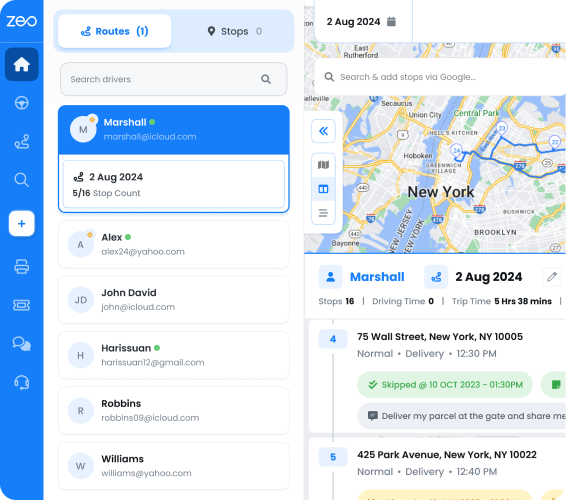
Zeo Route Planner’s AI-powered optimization automatically sequences stops to minimize drive time while respecting time windows and priority constraints, saving 2+ hours daily per driver.
Step 7: Build in Buffer Time for STAT Requests
Reserve 20-30% of each driver’s capacity for emergency deliveries. STAT requests happen throughout the day, and you need flexibility to accommodate them without destroying existing routes.
Step 8: Communicate Routes Effectively
Your drivers need clear, actionable route information:
- Stop addresses with specific department locations
- Contact names and phone numbers
- Special delivery instructions
- Priority levels and time requirements
Route managers assign optimized routes through web platforms while drivers receive turn-by-turn navigation and can update delivery status in real-time through mobile apps, ensuring seamless communication for time-sensitive medical deliveries.
Step 9: Track Progress Throughout the Day
Monitor route execution in real-time. Medical deliveries often face unexpected delays (hospital emergencies, traffic incidents, specimen prep delays). Early visibility lets you adjust routes before small delays become major problems.
Step 10: Document and Analyze Performance
Track key metrics for continuous improvement:
- On-time delivery percentages by facility
- Average route completion times
- Fuel consumption per route
- Customer satisfaction scores
Use this data to refine your routing process weekly.
Cost-Benefit Analysis: Real Medical Courier Route Optimization Case Studies
Real-world examples demonstrate the significant financial impact of proper route optimization. For comprehensive guidance on building successful medical courier operations, explore our detailed medical courier guide.
Case Study: Regional Lab Network (15 Drivers)
A laboratory network serving 45 healthcare facilities implemented systematic route optimization after struggling with late deliveries and rising costs.
Before optimization:
- Average daily routes: 180 minutes per driver
- Fuel consumption: 4.2 gallons per route
- On-time delivery rate: 78%
- Weekly overtime: 45 hours across fleet
After implementing optimized routing:
- Average daily routes: 135 minutes per driver (25% reduction)
- Fuel consumption: 3.1 gallons per route (26% reduction)
- On-time delivery rate: 94%
- Weekly overtime: 12 hours across fleet (73% reduction)
Monthly cost savings: $8,400
- Labor savings: $4,800 (reduced overtime)
- Fuel savings: $2,100 (1,100 fewer gallons monthly)
- Maintenance savings: $900 (fewer vehicle miles)
- Contract retention: $600 value (improved service quality)
The investment in route optimization paid for itself within 6 weeks.
Case Study: Pharmacy Delivery Service (8 Drivers)
A pharmacy courier service handling prescription deliveries to nursing homes and clinics faced escalating costs and service complaints.
Their transformation:
- Route planning time: Reduced from 45 minutes to 8 minutes daily
- Daily mileage per vehicle: Decreased from 165 to 118 miles (28% reduction)
- Customer complaints: Dropped 65% due to improved arrival time accuracy
- Driver satisfaction: Increased significantly with predictable schedules
The pharmacy service achieved 31% cost reduction within three months while improving customer satisfaction scores from 3.2 to 4.7 out of 5.
ROI Calculation Framework
Calculate your potential savings using this framework:
Monthly labor cost reduction = (Hours saved per driver × Number of drivers × 22 workdays) × Hourly rate
Monthly fuel cost reduction = (Miles reduced per vehicle × Number of vehicles × 22 workdays) × (Fuel cost per mile)
Monthly maintenance reduction = (Miles reduced × Fleet size × 22 workdays) × $0.08 per mile
Most medical courier operations see 6-8 month payback periods on route optimization investments.
Emergency Protocol Integration: Handling STAT Deliveries Within Optimized Routes
STAT deliveries can’t wait for tomorrow’s route. Your optimization system must accommodate emergency requests without destroying efficiency. Advanced fleet management software helps coordinate these critical deliveries seamlessly.
Dynamic Route Adjustment Protocols
When STAT requests arrive, follow this decision tree:

increase fuel savings
Hassle Free Deliveries & Pickups!
Optimize routes with our algorithm, reducing travel time and costs efficiently.
Get Started for Free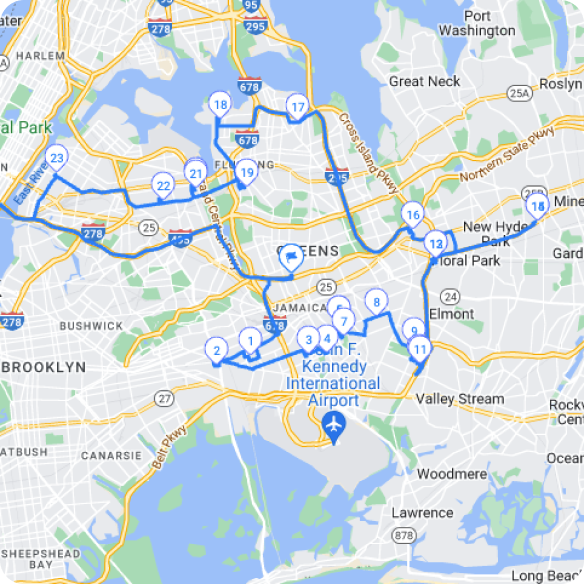
- Can the nearest driver accommodate the pickup within 15 minutes? Assign immediately.
- Will the addition delay other priority deliveries beyond acceptable windows? Reassign lower-priority stops.
- Does the STAT delivery require special certifications? Route to qualified drivers only.
Smart route optimization systems recalculate optimal sequences automatically when new stops are added mid-route.
STAT Delivery Response Standards
Establish clear response time commitments:
- Emergency blood products: 30-minute pickup guarantee
- Crash cart medications: 45-minute delivery maximum
- Urgent lab specimens: 1-hour pickup window
Communicate these standards to healthcare partners so they understand your service capabilities.
Driver Communication for Emergency Requests
Your drivers need instant notification of STAT deliveries with complete information:
- Pickup location and contact
- Delivery destination and urgency level
- Special handling requirements
- Revised route sequence to maintain efficiency
Mobile apps enable instant communication between dispatch and drivers, ensuring STAT requests get handled immediately while maintaining route efficiency.
Backup Driver Protocols
Maintain backup coverage for peak emergency periods:
- One on-call driver during business hours
- Weekend emergency coverage rotation
- Cross-training drivers on all route areas
According to the National Association of Medical Equipment Suppliers, medical courier services with formal emergency protocols maintain 95%+ STAT delivery success rates while services without protocols average only 73%.
Multi-Location Hospital Network Route Coordination Strategies
Large healthcare networks require sophisticated coordination between multiple facilities with interconnected delivery needs. Similar principles apply to other specialized delivery operations, as demonstrated in our guide to reducing pharmaceutical sales travel time.
Hub-and-Spoke vs. Direct Routing Models
Choose your routing model based on network characteristics:
Hub-and-spoke works best for:
- Central lab serving 10+ satellite locations
- Pharmacy with multiple clinic distribution points
- Large hospital system with centralized supply chain
Direct routing suits:
- Independent facilities with unique vendors
- Time-sensitive deliveries requiring minimal handling
- High-volume routes between specific facility pairs
Inter-Facility Transfer Coordination
Hospital networks often need patient transfers, equipment sharing, and specimen routing between locations. Coordinate these internal deliveries with external courier routes for maximum efficiency.
Example: A patient transfer from suburban clinic to downtown hospital can carry lab specimens from three nearby facilities, eliminating separate courier trips.
Load Balancing Across Multiple Drivers
Distribute delivery volumes evenly to prevent driver burnout and ensure consistent service levels:
- Monitor stop counts per driver daily
- Balance high-priority vs. routine deliveries
- Rotate challenging routes (heavy traffic areas, difficult facilities)
Zeo Route Planner’s auto-assignment feature distributes stops evenly across your driver fleet while considering vehicle capacity, driver skills, and workload balance.
Cross-Docking for Complex Networks
Large networks benefit from strategic cross-docking points where drivers exchange shipments to optimize overall network efficiency:
- Morning consolidation at central depot
- Midday exchanges at strategic intersections
- End-of-day return consolidation
This strategy works particularly well for networks spanning multiple metro areas.
Performance Monitoring Across Network Locations
Track performance metrics by facility to identify improvement opportunities:
- Delivery success rates by hospital department
- Average service times at each location
- Facility-specific delays and their causes
- Customer satisfaction by network location
Use this data to negotiate better receiving procedures with problematic facilities.
Technology Implementation: Training Drivers and Measuring Success
Technology adoption succeeds or fails based on driver acceptance and proper training protocols. Drawing from best practices in field service operations, including HVAC route planning, successful implementation requires structured training and ongoing support.
Driver Training Program Structure
Roll out technology in phases to ensure adoption success:
Week 1: Basic app navigation and route viewing
- How to access assigned routes
- Reading stop details and special instructions
- Basic navigation integration
Week 2: Status updates and communication
- Updating delivery status in real-time
- Photo capture for proof of delivery
- Emergency communication protocols
Week 3: Advanced features and troubleshooting
- Handling route changes mid-shift
- Reporting delivery issues
- Customer communication tools
Pair experienced drivers with technology-hesitant colleagues during training.
Mobile Device Management
Provide drivers with reliable tools:
- Commercial-grade smartphones or tablets
- Vehicle mounts and charging cables
- Backup communication methods
- Clear usage policies and expectations
Poor equipment leads to poor adoption rates.
Real-Time Performance Monitoring
Track driver adaptation to new routing technology using comprehensive driver tracking software:
- Route completion times vs. historical averages
- Customer delivery satisfaction scores
- Driver feedback on route accuracy
- Technology usage rates and feature adoption
Success Metrics to Monitor
Measure these key performance indicators monthly:
Efficiency Metrics:
- Average route completion time
- Miles driven per delivery completed
- Fuel consumption per route
- Driver overtime hours
Service Quality Metrics:
- On-time delivery percentage
- Customer satisfaction scores
- Delivery accuracy rates
- Emergency response times
Financial Metrics:
- Cost per delivery
- Revenue per driver hour
- Customer retention rates
- Vehicle utilization percentages
Continuous Improvement Process
Review performance data weekly with your driver team. They often identify route optimization opportunities that management misses:
- Facility receiving procedure changes
- New construction affecting travel times
- Customer preference patterns
- Seasonal volume fluctuations
According to the American Organization for Nursing Leadership, healthcare facilities prefer courier services that demonstrate measurable performance improvements over time, with 89% citing consistent on-time delivery as their primary vendor selection criterion.
Integration with Existing Healthcare Systems
Connect your route optimization technology with healthcare facility systems where possible:
- Electronic health record delivery confirmations
- Laboratory information system integration
- Pharmacy management system coordination
- Hospital supply chain visibility
This integration reduces manual paperwork and improves accuracy across the entire delivery chain.
Frequently Asked Questions
Q: What are the biggest cost drivers in medical courier operations?
Labor costs typically account for 60-70% of medical courier expenses, with fuel and vehicle maintenance making up another 20-25%. Poor route planning can increase these costs by 30-40% through unnecessary overtime, extra mileage, and vehicle wear.
Q: How quickly should STAT medical deliveries be handled?
Emergency blood products require 30-minute pickup guarantees, crash cart medications need 45-minute delivery maximums, and urgent lab specimens should have 1-hour pickup windows. Zeo Route Planner’s dynamic route adjustment helps couriers meet these critical timeframes while maintaining efficiency across other deliveries.
Q: What qualifications do medical courier drivers need?
Medical courier drivers need clean driving records, background checks, and often OSHA certification for biohazardous materials. Controlled substance deliveries require licensed drivers, while temperature-sensitive items need cold chain training. Route planning systems should match qualified drivers to appropriate delivery types.
Q: How can medical couriers reduce fuel costs without compromising service?
Optimizing stop sequences can reduce daily mileage by 25-40%, saving $15-20 per vehicle daily in fuel costs. Geographic zone routing and efficient pickup/delivery coordination prevent unnecessary cross-town trips while maintaining service quality.
Q: What technology features are essential for medical courier route optimization?
Essential features include real-time GPS tracking, time window management, priority stop handling, and proof of delivery with photo capture. Zeo Route Planner provides these capabilities along with AI-powered optimization that saves medical couriers 2+ hours daily while ensuring compliance documentation.
Route optimization transforms medical courier operations from reactive, costly services into strategic healthcare support partners. The combination of systematic route planning, emergency protocol integration, and proper technology implementation delivers measurable results: 25-35% cost reductions, dramatically improved delivery times, and stronger customer relationships.
Your patients deserve reliable, efficient medical deliveries. Your business deserves sustainable profitability. Route optimization delivers both.
Start your 7-day free trial of Zeo Route Planner to see how much time and money you can save on your medical courier routes.

Are you a fleet owner?
Want to manage your drivers and deliveries easily?
Grow your business effortlessly with Zeo Routes Planner – optimize routes and manage multiple drivers with ease.
increase fuel savings
Save 2 Hours on Deliveries, Everyday!
Optimize routes with our algorithm, reducing travel time and costs efficiently.
Get Started for Free