

# How to Schedule Beverage Delivery Routes: A 7-Step Process for Distributors
> TL;DR: To schedule beverage delivery routes effectively, aggregate all orders first, then sequence stops by time windows, truck capacity, and load order — not distance alone. Beverage distribution has constraints most route planning ignores, from perishability windows to age verification, and route optimization tools like Zeo Route Planner address this with capacity-based routing and scheduled recurring routes, helping distribution teams save 2+ hours daily on route planning.
If you’re still scheduling beverage delivery routes on a spreadsheet or whiteboard, you already know the pain points. A driver calls in sick. A restaurant moves its delivery window. A pallet of kegs doesn’t fit after all. By 20 stops, manual planning starts to crack. By 50 stops, it breaks completely.
This guide walks you through how to schedule beverage delivery routes the right way — from aggregating orders to dispatching drivers. You’ll get a 7-step process, a sample weekly schedule template, a manual-vs-software comparison, and the mistakes that cost distributors the most time and fuel.
Why Beverage Delivery Scheduling Is Harder Than Standard Route Planning
Beverage delivery isn’t like shipping boxes from a warehouse. It comes with constraints most route planning advice ignores.
Perishability windows. Dairy-based coffee creamers, kombucha, and craft beer have shelf lives that shrink fast outside refrigeration. Routes need to minimize the time product sits on the truck, not just minimize miles — similar to the challenges covered in refrigerated truck route planning, where threshold delivery windows matter as much as the route itself.
Case and pallet capacity. A single stop might need 3 cases of soda, 2 kegs, and a pallet of bottled water. Trucks have weight and volume limits. Load the wrong sequence, and you’ll run out of space before you run out of stops.
Recurring accounts. Most beverage distributors serve the same restaurants, offices, and retailers weekly or bi-weekly. These aren’t one-off deliveries — they’re standing relationships with specific delivery-day expectations.
Age verification. Alcohol distributors face a legal requirement most delivery businesses never think about. Every keg or case drop-off needs ID verification and documentation, adding a compliance step to every stop — a challenge covered in more depth in our guide to alcohol delivery route compliance.
Retailer time windows. Grocery stores and restaurants often set strict receiving hours — before opening, during specific loading dock slots, or outside peak service hours. Miss the window, and you’re rescheduling the whole stop.
According to the American Beverage Association industry data, the U.S. beverage industry supports over 233,000 direct jobs and moves billions of cases annually — much of it through last-mile distribution networks juggling exactly these constraints. Standard route planning advice built for parcel delivery just doesn’t account for perishability, load sequencing, or age checks. The FDA food code guidance on perishable transport further underscores why minimizing time-on-truck matters for dairy and other temperature-sensitive beverage products.
How to Schedule Beverage Delivery Routes in 7 Steps: From Order Aggregation to Dispatch
Step 1: Aggregate all orders in one place
Pull together standing orders, one-off requests, and recurring account schedules before you plan anything. If orders live in three different inboxes or a shared spreadsheet, errors slip through. Set a daily cutoff time for new orders so your planning window doesn’t shift constantly. For accounts that order on a fixed schedule, setting up recurring routes scheduling removes the need to re-aggregate the same order every week.
Step 2: Group orders by delivery zone
Cluster stops by geographic area before assigning drivers. This keeps each route tight and reduces backtracking across town. For distributors covering both urban and rural accounts, separate these into different route types — dense city routes look nothing like spread-out rural ones.
Step 3: Check capacity before sequencing
Match total case count, pallet count, and weight against each truck’s capacity. Overloading is one of the most common beverage scheduling errors — it leads to last-minute re-routing when a driver realizes mid-morning they can’t fit the final three stops.
Step 4: Apply time window constraints
Flag every stop with a hard delivery window — dock hours, restaurant pre-opening slots, retailer receiving times. Sequence routes so time-sensitive stops happen first, and flexible stops fill the gaps.
Step 5: Sequence for load order, not just distance
This is beverage-specific. Load the truck in reverse delivery order — the first stop’s product goes in last, so it’s the first thing accessible. Getting this wrong means drivers unloading half a truck to reach one case of coffee syrup.
Step 6: Assign drivers based on skills and vehicle type
Some accounts need drivers trained for age verification checks. Some routes need a refrigerated truck. Match driver and vehicle to the account’s actual requirements, not just proximity.
Step 7: Dispatch and monitor in real time
Once routes are built, get them into drivers’ hands with clear stop order, time windows, and account notes. Then track progress through the day — because a flat tire or a closed loading dock will still throw off your schedule no matter how well you planned it.
Beverage-Specific Scheduling Factors You Can’t Ignore
Three factors separate beverage route scheduling from generic delivery planning. Get these wrong, and you’ll feel it in fuel costs and missed accounts.
Load sequencing. Your truck should load like a reverse itinerary. Stop 1’s order goes in last; stop 10’s order goes in first. Skipping this means drivers waste 10-15 minutes per stop hunting for product buried behind other pallets.
Time windows. Restaurants often need deliveries before 10 AM, ahead of lunch prep. Grocery stores may only accept deliveries during scheduled dock slots. Bars and liquor stores might prefer afternoon drops before evening rush. Building routes around these windows — instead of pure distance optimization — prevents refused deliveries and rescheduling headaches.
Capacity planning. A 24-foot box truck can typically hold around 12-16 pallets depending on product mix and packaging. Water is heavy but stacks efficiently; canned craft beer is lighter but bulkier per case. Planning routes without accounting for actual case dimensions and weight leads to trucks that “look full” on paper but can’t physically fit the last two stops. Distributors looking to trim expenses further can also review these strategies to reduce beverage delivery costs.
The Bureau of Labor Statistics driver occupation outlook reports that delivery driver roles are among the fastest-growing transportation occupations, with over 400,000 heavy and tractor-trailer driver job openings projected annually through the decade — meaning driver time is only getting more expensive. Every inefficient route sequence compounds that cost.
Manual Scheduling vs. Route Planning Software: A Comparison Table and When to Upgrade
Here’s how the two approaches stack up for beverage distributors:
| Factor | Manual (Spreadsheet/Whiteboard) | Route Planning Software |
|—|—|—|
| Time to build daily routes | 1-3 hours per day | Minutes |
| Capacity checking | Manual math, error-prone | Built into route logic |
| Recurring accounts | Re-entered or copy-pasted weekly | Set once, runs automatically |
| Time window handling | Manual cross-referencing | Applied automatically during optimization |
| Proof of delivery | Paper logs or none | Photo, signature, and notes captured digitally |
| Real-time changes | Phone calls, re-planning from scratch | Dynamic mid-shift adjustments |
| Scalability | Breaks down past 15-20 stops per driver | Scales to 30+ stops without added planning time |

increase fuel savings
Hassle Free Deliveries & Pickups!
Optimize routes with our algorithm, reducing travel time and costs efficiently.
Get Started for Free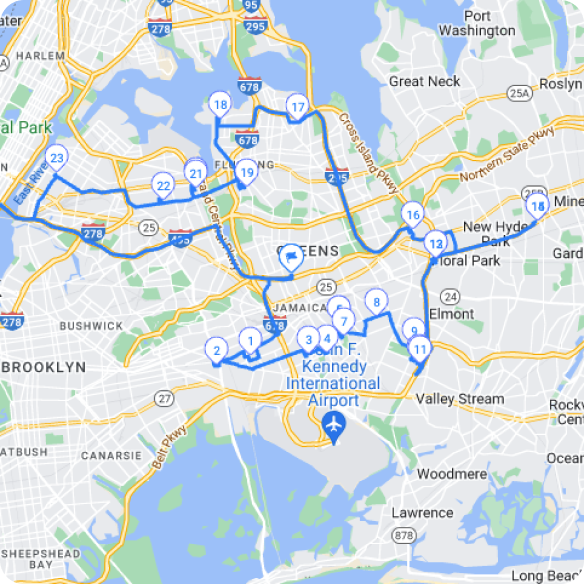
When to upgrade: If you’re managing more than 5 drivers, adding new recurring accounts monthly, or spending over an hour a day just building routes, manual scheduling is already costing you more than software would. The tipping point usually hits when a dispatcher starts saying “I just keep it all in my head” — that’s a single point of failure waiting to happen.
Sample Weekly Delivery Schedule Template + Free Checklist
Here’s a simplified weekly structure you can adapt for your distribution business:
Monday & Thursday: Recurring restaurant and bar accounts (soft drinks, kegs, mixers)
Tuesday & Friday: Grocery and retail accounts (full case/pallet loads, strict dock windows)
Wednesday: Office coffee service and water cooler accounts (smaller, frequent stops)
Saturday: Overflow, one-off orders, and expedited/ASAP requests
For each route, track:
- Account name and delivery frequency (weekly, bi-weekly)
- Required time window
- Case/pallet count and weight
- Age verification required (yes/no)
- Assigned driver and vehicle
Pre-dispatch checklist:
- [ ] All orders for the day confirmed and aggregated
- [ ] Truck loads match capacity limits
- [ ] Load order matches reverse delivery sequence
- [ ] Time-window stops flagged and sequenced first
- [ ] Age-verification stops assigned to trained drivers
- [ ] Drivers have updated account notes and contact info
- [ ] Routes sent to drivers before shift start
Print this or build it into a shared sheet — but know that every row here is something route planning software automates.
Common Beverage Route Scheduling Mistakes (and How to Fix Them)
Mistake 1: Loading trucks by convenience, not sequence. Drivers load whatever’s closest at the warehouse door, then spend the day digging through pallets. Fix: enforce reverse-order loading tied to the planned stop sequence.
Mistake 2: Ignoring recurring account patterns. Treating every week as a fresh planning exercise wastes hours re-building routes for accounts that order the same thing every Tuesday. Fix: set up standing routes and only adjust for exceptions.
Mistake 3: Overloading trucks “just to fit one more stop.” This leads to product damage, safety risks, and drivers who have to make a second trip anyway. Fix: check capacity limits before finalizing routes, not after loading.
Mistake 4: Skipping age verification steps under time pressure. Rushed drivers sometimes skip ID checks to hit delivery windows, creating serious compliance risk for alcohol distributors. Fix: build in documentation steps — like photo or note capture — so verification happens every time, not just when convenient.
Mistake 5: No proof of delivery for COD accounts. Cash-on-delivery beverage accounts without a paper trail lead to disputes over what was delivered and what was paid. Fix: capture proof of delivery — signature and payment confirmation — at the point of delivery, every time.
Mistake 6: Manually re-routing after every schedule change. A canceled order or a late add-on shouldn’t mean rebuilding the whole day’s routes by hand. Fix: use a system that can adjust sequencing dynamically without starting over.
How Zeo Route Planner Simplifies Beverage Delivery Scheduling for Managers and Drivers
Everything above — capacity checks, time windows, recurring accounts, load sequencing — is manageable at 5 stops on a spreadsheet. It’s nearly impossible at 50 stops across 15 drivers without a system built for it.
Zeo Route Planner’s AI-powered route optimization handles capacity-based routing automatically, factoring in vehicle weight and volume limits so you don’t overload trucks or leave capacity unused. For distributors juggling grocery dock windows and restaurant prep-time deadlines, Zeo’s time window constraints sequence stops so time-sensitive accounts get served first, without manual cross-referencing.
Recurring weekly and bi-weekly accounts — a defining feature of beverage distribution, as covered in our guide to beverage distribution merchandising efficiency — are handled through Zeo’s scheduled and recurring routes, so you set up a standing account once instead of re-entering it every week. And when volume changes mid-shift, Zeo supports dynamic route adjustments, so a canceled order or urgent add-on doesn’t mean rebuilding your day from scratch.
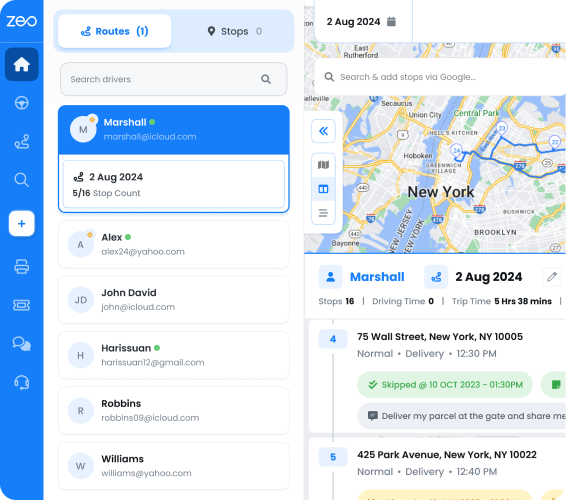
Here’s how it plays out day-to-day: your operations manager builds and optimizes the weekly beverage delivery schedule on Zeo’s web platform — assigning drivers, sequencing stops by time window and truck load capacity, and organizing recurring restaurant and retail accounts. Each driver then receives their daily route automatically in the Zeo mobile app, complete with turn-by-turn navigation and full stop details.
At each delivery, the driver can capture proof of delivery — photo, signature, and notes — which is especially useful for documenting an age-verification check at an alcohol account or confirming a case count at a grocery dock. If a customer isn’t available or an account needs an age-verification hold, the driver messages dispatch directly through in-app chat, no phone tag required. COD accounts get logged on the spot, so payment records match delivery records automatically.
For a beverage distributor running 15 drivers across 200+ weekly stops, this is the difference between a dispatcher spending three hours every morning building routes and having optimized routes ready in minutes — with 1.5M+ users across 150+ countries already relying on this same process daily.
Frequently Asked Questions
Q: How far in advance should beverage delivery routes be scheduled?
Most distributors plan routes 24 hours ahead, using a daily order cutoff time so last-minute additions don’t force a full re-plan. Recurring accounts (weekly or bi-weekly restaurant and retail orders) can be scheduled further out since the delivery pattern rarely changes, leaving same-day capacity for one-off or expedited orders.
Q: How many stops can one beverage delivery driver handle per day?
It depends on stop density, case/pallet volume per account, and time window restrictions, but manual planning typically breaks down past 15-20 stops per driver. Grocery and restaurant accounts with strict dock windows or prep-time deadlines reduce that number further since routes must be sequenced around fixed appointment slots rather than pure distance.
Q: What’s the best way to handle age verification for alcohol deliveries on a route?
Since age verification is a legal requirement rather than a routing feature, most distributors solve it by pairing driver training with documentation at the point of delivery. Zeo Route Planner’s photo capture, digital signature, and delivery notes let drivers document that an ID check happened at each account, creating a record without adding a separate compliance system.
Q: How do you prevent trucks from being overloaded on beverage routes?
Overloading happens when routes are sequenced by distance alone without checking case count, pallet count, and weight against truck capacity. Zeo Route Planner’s capacity-based routing factors in vehicle weight and volume limits during optimization, so routes are built to match what a truck can actually carry before drivers head out.
Q: Should beverage distributors use fixed routes or re-optimize daily?
A hybrid approach works best: keep recurring accounts on a standing weekly or bi-weekly schedule, and only re-sequence for exceptions like new orders, cancellations, or urgent add-ons. Rebuilding an entire day’s routes from scratch for minor changes wastes planning time that a dynamic adjustment could handle in minutes.
—
If you’re managing beverage delivery routes manually and feeling the strain as SKUs, stops, and recurring accounts multiply, it’s worth testing whether software closes that gap. Start a free Zeo Route Planner trial to build your first optimized beverage delivery schedule in minutes — no credit card required — or book a demo to see fleet-wide scheduling and recurring routes in action.
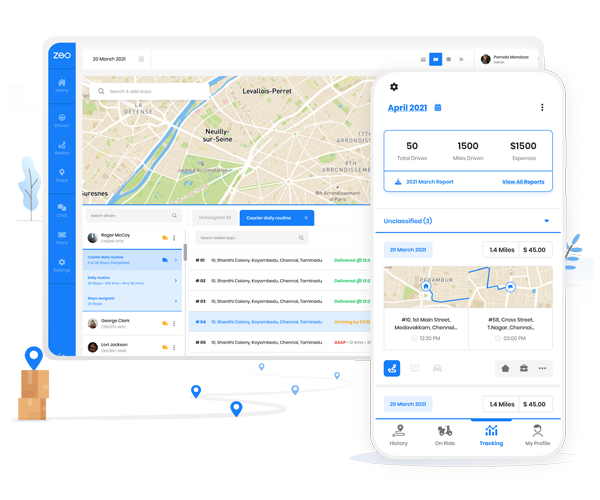
Are you a fleet owner?
Want to manage your drivers and deliveries easily?
Grow your business effortlessly with Zeo Routes Planner – optimize routes and manage multiple drivers with ease.

increase fuel savings
Save $200 on fuel, Monthly!
Optimize routes with our algorithm, reducing travel time and costs efficiently.
Get Started for Free