

Updated on: September 6, 2026
Reading Time: 5 minutes
TL;DR: You can import addresses directly from a package label by scanning its Bar/QR code in the Zeo Route Planner app, skipping manual entry entirely. Barcodes and QR codes already contain the encoded delivery address, so scanning them is faster and less error-prone than typing addresses by hand. Route optimization tools like Zeo Route Planner address this with built-in Bar/QR code scanning paired with bulk address import, helping delivery teams save 2+ hours daily.
Managing addresses is one of the most hectic jobs in the last mile delivery process. About a decade ago, delivering packages to customers across the city took much pain for the drivers. But now Zeo Route Planner has advanced the last mile delivery management, easing handling the customers’ addresses.
Zeo Route Planner has always tried to provide features to their customers that can help them to carry out the last-mile delivery process easily. We have provided various methods to manage our app’s address, including importing addresses using a spreadsheet, importing addresses using image capture, and manual typing. We have recently added a new feature, which is importing addresses using QR/Bar code.
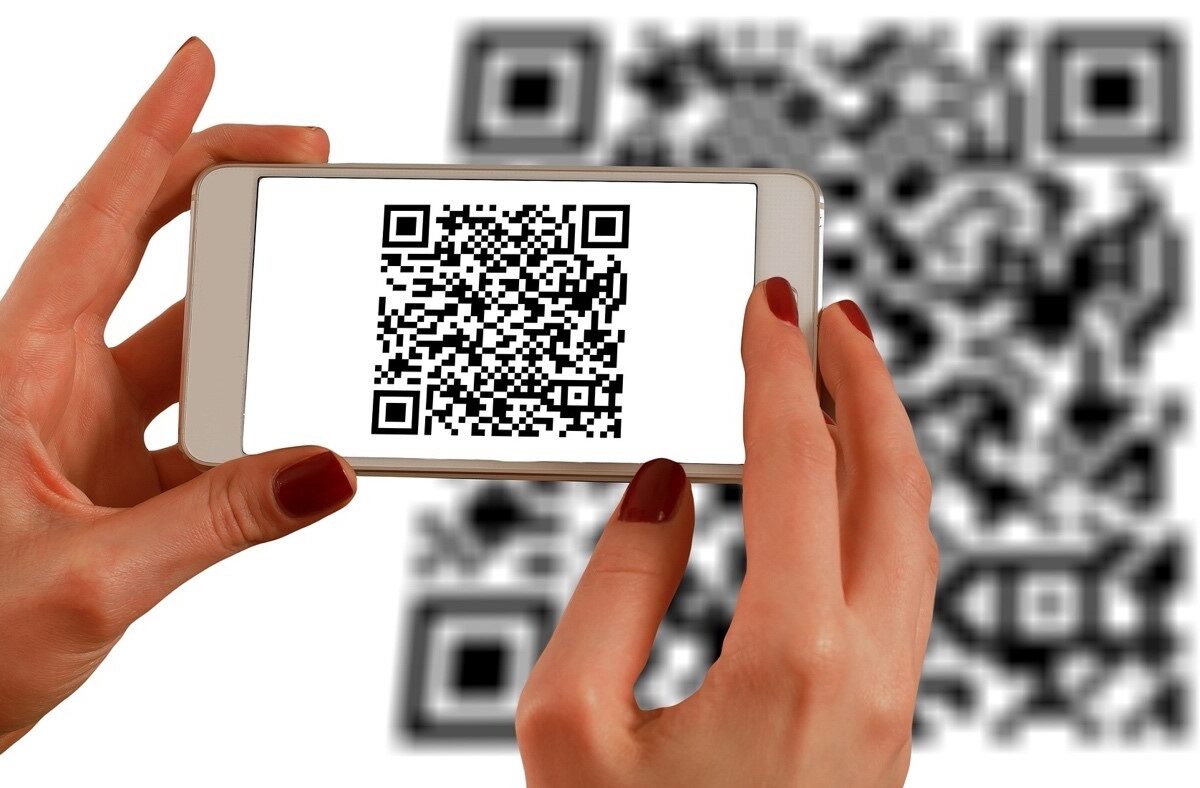
This new feature will help the drivers to import the address directly from the package. Since every package contains either a Bar code or a QR code, the drivers can easily scan those codes, and the app will automatically load the addresses and help them get delivery ready.
Why Barcodes and QR Codes Matter in Last Mile Delivery
Barcodes and QR codes have been a backbone of logistics and shipping operations for decades, encoding shipment data like recipient address, tracking number, and order details into a scannable format. According to the Bureau of Transportation Statistics, freight and parcel volumes in the U.S. have grown steadily year over year, putting more pressure on drivers to process deliveries quickly and accurately. Manually typing addresses from a label increases the chance of typos, which can lead to missed or misdelivered packages. Scanning the code that’s already printed on the package removes that manual step and pulls the address in exactly as it was encoded.
For companies managing high delivery volumes, even small inefficiencies compound quickly. The U.S. Bureau of Labor Statistics notes that delivery driver roles are among the fastest-growing occupations, which means more drivers are handling more stops daily — making tools that cut down manual address entry increasingly valuable for route efficiency.
Steps to Import Address Using Bar/QR Code
Follow these easy steps to import address in the app using Bar/QR code
- Open the Zeo Route Planner app and head towards the ‘My Profile’ tab.
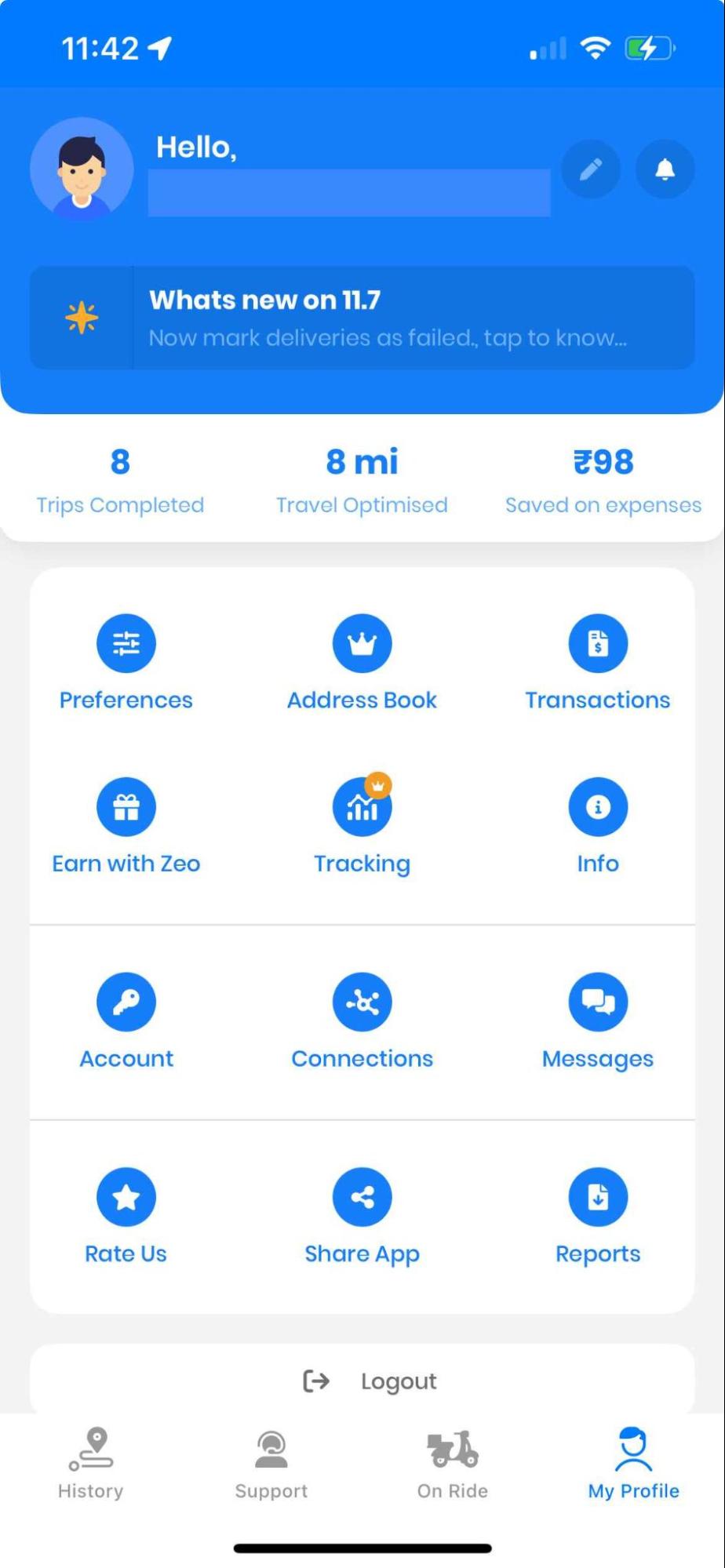
- Now press the ‘On Ride’ button and press the ‘+’ buttons on the left-hand side.
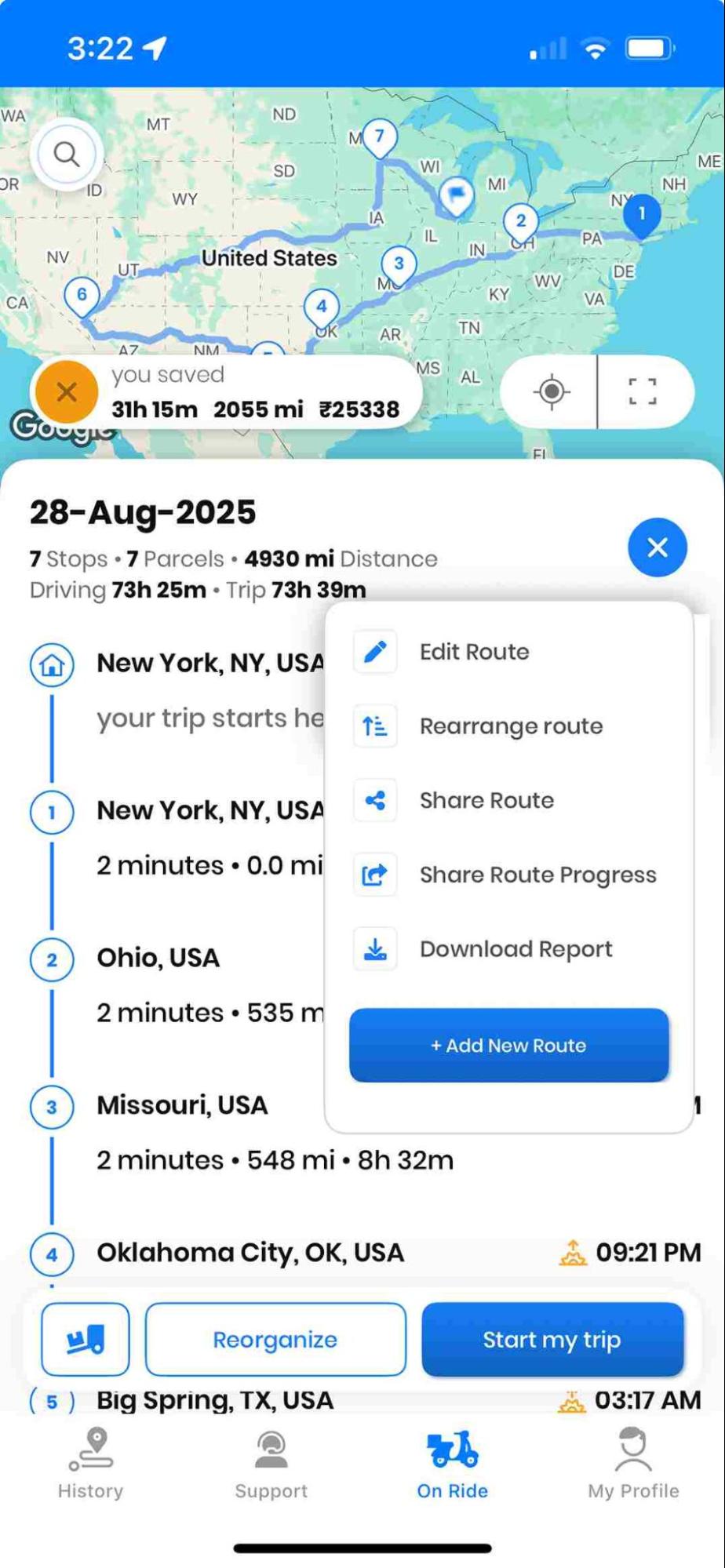
- Then press the ‘+Add New Route‘ button to open the various options to add the address.
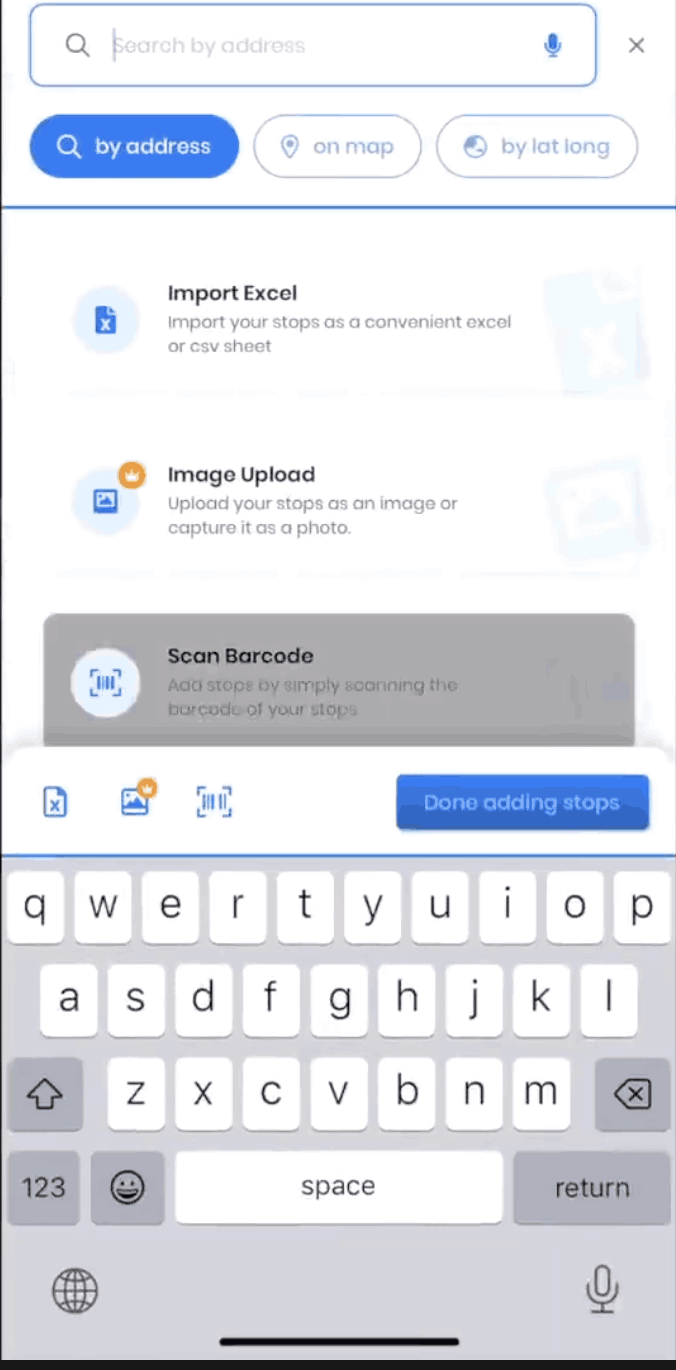
- After pressing the “Add New Route” button, another screen will load, and you will see various options, such as “Import Excel,” “Image Upload,” and “Scan Bar/QR Code.“
- Press the Scan Bar/QR code button.
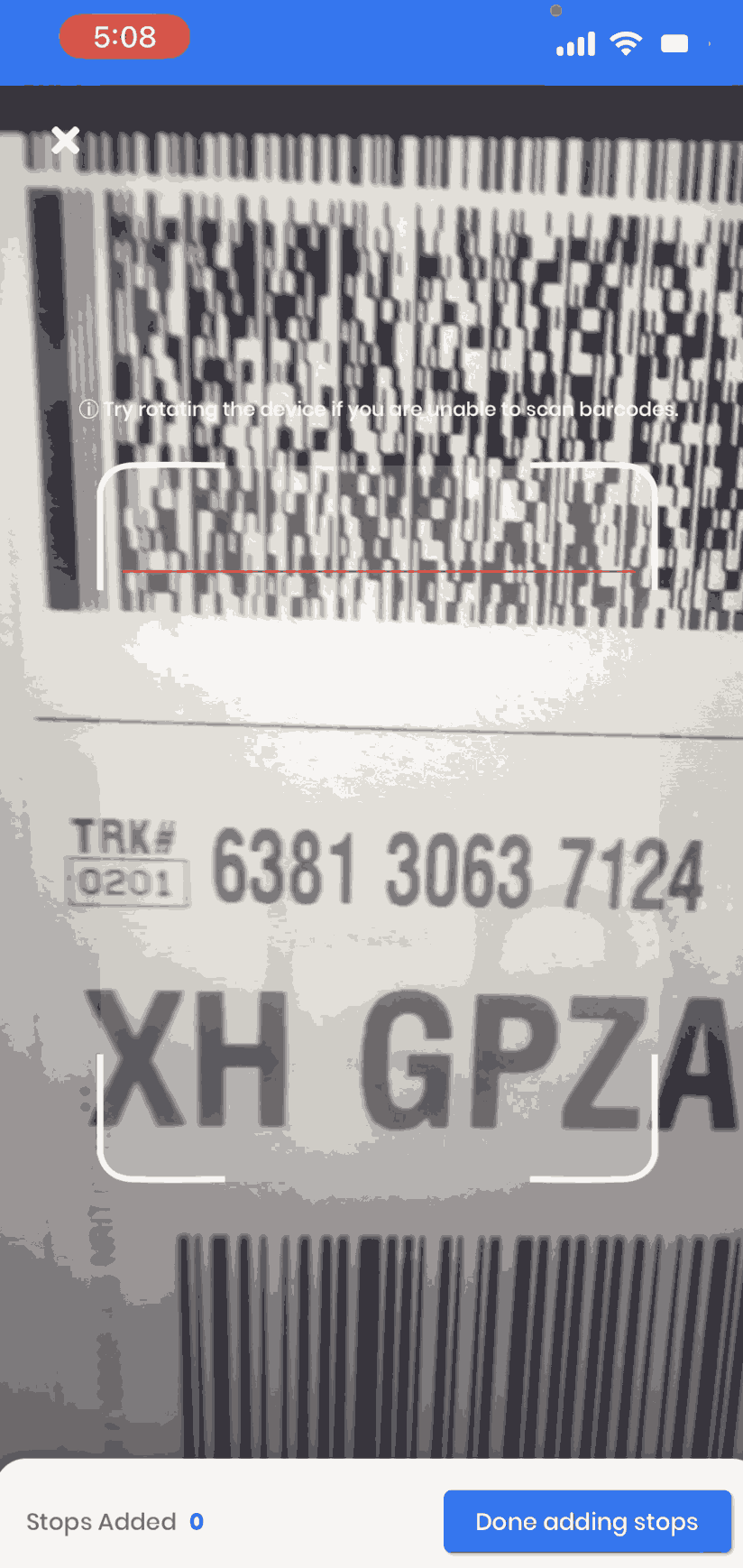
- Upon pressing the Scan Bar/QR code button, another window will pop up. It will automatically open the camera of your smartphone, and the screen will display a rectangular box.
- You have to scan the bar/QR code in the rectangle area.
- Align the rectangle box in front of the Bar/QR code that you want to scan.
- The app will automatically scan the Bar/QR code, and it will show you the address. Follow the above process and keep on adding the addresses.
- Press on the Done Adding Stops button when you are done adding the addresses.
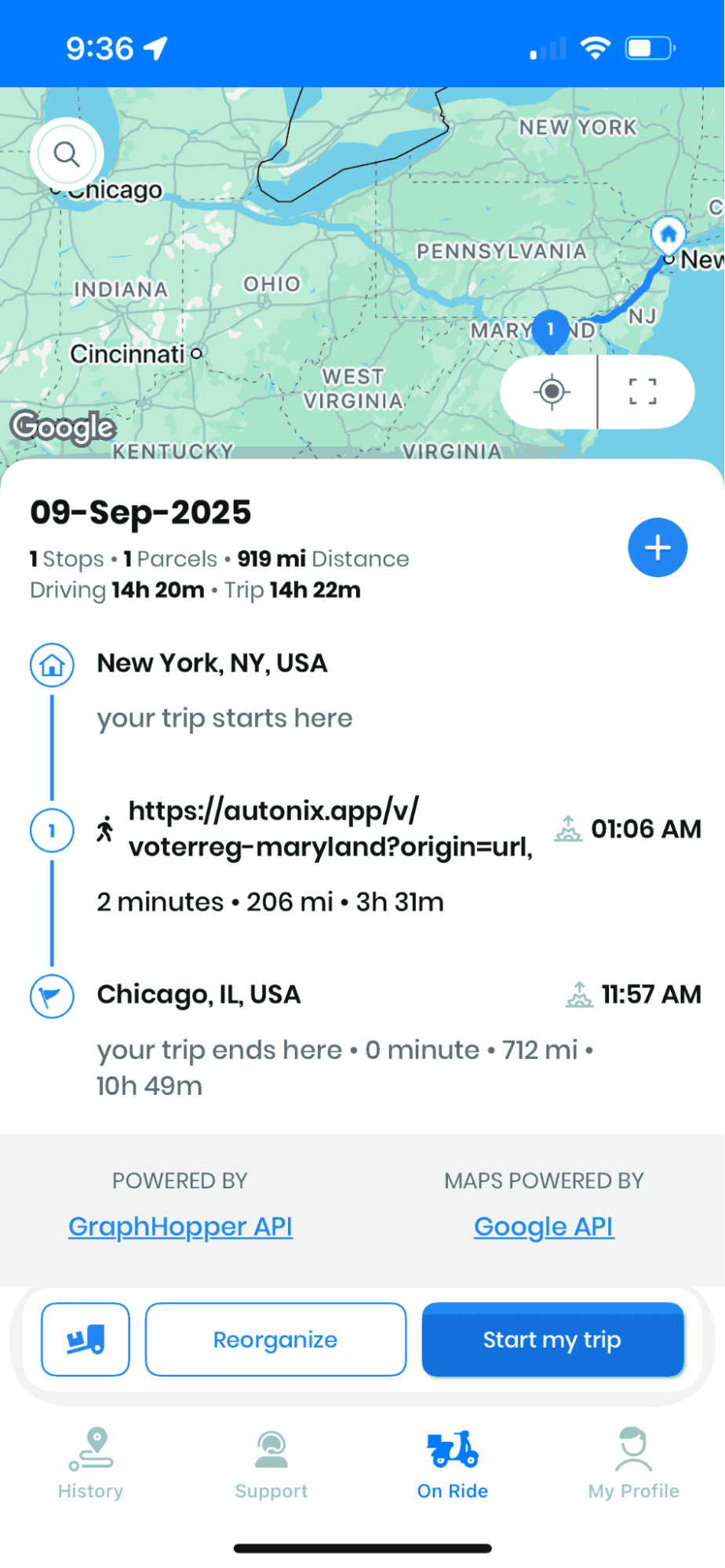
- Also, provide the Start Location and End Location according to your need.
- Click on Save and Optimize button to optimize the routes, and the app will provide you the best-optimized route.
- You are now set to go and deliver the products to the right address.
Getting the Most Out of Scanned Addresses
Once addresses are scanned into the app, they behave just like any manually entered or imported stop, meaning they can be organized into a single route and optimized alongside the rest of your stops for the day. This is especially useful for drivers juggling packages from multiple sources, where some addresses arrive via spreadsheet, some through image capture, and others straight off the package label. Combining these input methods within one app removes the need to switch between separate tools or re-type information that’s already been printed and encoded.
Drivers who scan addresses at pickup or sorting can also mark stops as Priority (ASAP vs Normal) so time-sensitive deliveries move to the front of the route. Once the route is optimized, features like live ETA updates and customer notifications keep recipients informed without any extra manual work from the driver.

increase fuel savings
Save 2 Hours on Deliveries, Everyday!
Optimize routes with our algorithm, reducing travel time and costs efficiently.
Get Started for Free
Conclusion
For streamlining your delivery workflow, importing addresses using Barcodes and QR codes. If you have a logistics company that has hundreds of daily deliveries, then scanning addresses reduces manual effort, prevents mistakes, and improves efficiency. Importing addresses using a Bar/QR code can save time and reduce errors. You can take your delivery operations to the next level by combining QR code scanning with a route planning tool.
Sign up to Zeo to add addresses via Excel, OCR, or QR scan and secure a digital confirmation for every stop!
Frequently Asked Questions
Can a QR code contain a full delivery address?
Yes, a QR code can encode a complete delivery address along with additional shipment data like order ID, recipient name, and special handling instructions. This is why many shipping labels use QR or barcodes — they pack more information into a small space than a barcode alone typically can hold.
What’s the difference between a barcode and a QR code on a shipping label?
A barcode stores data in a single line of varying-width bars and typically holds a shorter string, like a tracking number that links back to a database. A QR code stores data in a two-dimensional grid and can hold significantly more information directly, including the full address, without needing an internet connection to look it up.
How can drivers avoid address entry errors during high-volume delivery days?
Scanning barcodes or QR codes directly from package labels removes the manual typing step that causes most address errors. Zeo Route Planner’s Bar/QR code scanning and bulk address import (via Excel, CSV, or Google Sheets) let drivers and dispatchers load dozens of stops in minutes instead of typing each one individually.
Do I need a special scanner to read barcodes and QR codes for deliveries?
No, modern smartphone cameras are capable of reading both barcodes and QR codes without any additional hardware. Most route planning and delivery apps, including Zeo Route Planner, use the phone’s built-in camera to scan codes directly within the app.
Why do delivery companies switch from manual address entry to scanning?
Manual address entry is slower and more prone to typos, especially when drivers are handling dozens of stops in a single shift. Route optimization platforms that support Bar/QR code scanning alongside AI-powered route optimization help delivery teams save 2+ hours daily by cutting out repetitive manual data entry.
Are you a fleet owner?
Want to manage your drivers and deliveries easily?
Grow your business effortlessly with Zeo Routes Planner – optimize routes and manage multiple drivers with ease.
increase fuel savings
Hassle Free Deliveries & Pickups!
Optimize routes with our algorithm, reducing travel time and costs efficiently.
Get Started for Free