


# Construction Delivery Management: A Step-by-Step System to Stop Late Materials and Idle Crews
> TL;DR: Construction delivery management fixes late materials and idle crews by replacing phone-call coordination with planned, time-window-based routing and live tracking. Material-related delays are among the top documented causes of lost labor productivity on job sites, according to industry research. Route optimization tools like Zeo Route Planner address this with real-time GPS tracking and proof of delivery, helping construction dispatch teams save 2+ hours daily on manual route planning.
Material deliveries to job sites are late more often than they’re on time. Trucks queue outside gates, crews stand around waiting on lumber or concrete, and project timelines slip by days you can never get back.
Construction delivery management is the process of planning, scheduling, tracking, and verifying material deliveries across multiple active job sites. Done well, it keeps trucks moving, crews working, and projects on schedule.
Done poorly, it costs you money every single day. This guide gives you a practical, step-by-step system to fix it — not another article about project delivery methods or contract types.
What Is Construction Delivery Management (and Why Generic Logistics Tools Fall Short)
Construction delivery management covers four things: scheduling when materials arrive, routing trucks efficiently between sites, tracking trucks in real time, and confirming materials landed at the right location.
It sounds simple. It isn’t, because construction logistics looks nothing like standard delivery routing — a challenge shared by related fields like equipment delivery management, where mixed loads and shifting site conditions also complicate routing.
You’re not delivering to fixed addresses with loading docks. You’re delivering to active job sites with shifting access points, gate codes, security hours, and congestion that changes daily depending on what phase of construction is underway.
Generic logistics software assumes a stable environment. Construction doesn’t have one. A site that was accessible last week might be blocked by a crane setup today. A delivery window might shrink because the concrete pour schedule moved.
This is why spreadsheets and phone calls still run most construction delivery coordination in 2026. Dispatchers juggle driver texts, site manager calls, and guesswork about ETAs — with no single source of truth.
The fix isn’t more phone calls. It’s route optimization software built to handle multiple stops, time windows, and real-time changes, paired with live tracking and proof of delivery that removes the guesswork entirely.
The Real Cost of Poor Delivery Coordination: Site Congestion, Idle Crews, and Late Materials
Poor delivery coordination doesn’t just annoy people. It drains budgets.
Site congestion backs up your whole operation. When three trucks arrive at the same gate within 20 minutes of each other, someone waits. Narrow site access, shared staging areas, and tight urban job sites make this worse. One late truck can cascade into a two-hour bottleneck.
Idle crews are a direct labor cost. The Construction Industry Institute research on labor productivity has long documented that material-related delays are among the top causes of lost labor productivity on job sites. If a five-person framing crew sits idle for 90 minutes waiting on a delayed lumber delivery, that’s 7.5 labor-hours wasted — before you factor in the ripple effect on the next day’s schedule.
Late materials delay the critical path. A missed concrete delivery doesn’t just push back the pour. It pushes back everything scheduled after it: formwork removal, inspections, framing. The Associated General Contractors of America supply chain reports have repeatedly flagged supply chain and material delivery disruptions as a leading driver of project schedule overruns.
No visibility means no accountability. When a truck is late and nobody can see where it is, dispatchers can’t reroute, project managers can’t warn the crew, and nobody knows whether the problem was traffic, a wrong turn, or a driver running behind on a prior stop.
No proof of delivery means disputes. Without photo or signature confirmation, “we delivered it” versus “we never received it” becomes a he-said-she-said argument that costs time and sometimes money to resolve.
Add this up across 10, 15, or 20 active sites running simultaneously, and poor delivery coordination becomes one of the most expensive — and most fixable — problems in your operation. Labor cost pressures are well documented in Bureau of Labor Statistics data on construction employment and costs, which underscores why every idle labor-hour matters to project margins.
How Route Optimization Solves Construction’s Biggest Delivery Challenges
Route optimization software solves construction delivery problems by replacing guesswork with planned, data-backed sequencing.
It sequences deliveries based on time windows, not driver instinct. If Site A needs materials before 7 AM pour time and Site B can receive anytime before 3 PM, the software builds the route around that constraint automatically — instead of relying on a dispatcher’s memory.
It accounts for vehicle capacity. Material haulers carrying mixed loads — rebar, lumber, pallets of block — need routing that respects weight and volume limits so trucks aren’t overloaded or making unnecessary extra trips.
It handles priority stops. An ASAP concrete delivery or an urgent part needed to unblock a crew can be flagged as priority, so it jumps ahead of lower-urgency drops in the route sequence.
It adjusts mid-shift. Job sites change fast. A gate closes, a site manager calls with a new access point, or a truck gets delayed in traffic. Zeo’s dynamic route adjustments let dispatchers update a driver’s route mid-shift without scrapping the whole plan.
It gives real-time visibility dispatchers never had before. Real-time GPS tracking shows exactly where every truck is, so dispatchers can warn a site manager about a delay before the crew even notices a problem.
For a company running 15 active sites with a mixed fleet of company trucks and third-party haulers, this isn’t a convenience. It’s the difference between a smooth delivery day and a morning of frantic phone calls.
Must-Have Features in Construction Delivery Management Software
Not every route planning tool is built for construction logistics. Here’s what to look for.
- Multi-stop route optimization that sequences deliveries across dozens of sites based on time windows and priority, saving dispatchers hours of manual planning.
- Capacity-based routing so trucks carrying mixed material loads stay within weight and volume limits.
- Time window and priority stop settings to make sure concrete pours, framing deliveries, and urgent material requests get handled in the right order.
- Real-time GPS tracking so dispatchers and site managers always know where a truck is and when it will arrive.
- Live ETA updates that let site managers plan crew schedules around actual arrival times, not guesses.
- Proof of delivery with photo and signature capture to confirm materials arrived at the correct site, with the right quantity, with sign-off from the site foreman.
- Delivery notes for drivers to flag issues on the spot — damaged pallets, wrong gate, access problems.
- Skill-based and vehicle-based driver assignment so the right truck and the right driver get matched to the right site.
- Scheduled and recurring routes for standing weekly deliveries to active sites.
- Bulk address import so dispatchers can upload a week’s worth of site deliveries from a spreadsheet in minutes, instead of entering stops one by one.
- In-app chat between dispatcher and driver for fast updates without a phone call.
- Driver performance analytics to spot which routes or drivers consistently run late, and why.
A platform that covers all of these — like Zeo Route Planner — removes the need to stitch together a spreadsheet, a group text thread, and a separate tracking app.
Step-by-Step: Building an Efficient Delivery Management Workflow for Your Job Sites
Here’s a practical setup you can implement this week.
Step 1: Map your active job sites and delivery windows. List every site, its access constraints (gate hours, delivery zones, crane conflicts), and the time windows materials need to arrive.
Step 2: Import your stops in bulk. Upload your site list via Excel, CSV, or Google Sheets instead of manually entering each address. Save recurring job sites as Favorites so you can build a route from a saved list in seconds for repeat deliveries.
Step 3: Set time windows and priority flags. Mark concrete pours and other time-sensitive drops as priority stops. Give flexible deliveries normal priority so the system sequences around your hard deadlines first.
Step 4: Assign by vehicle and skill. Match flatbeds, dump trucks, or material haulers to the sites and loads they’re equipped for. If a driver needs a specific certification or equipment skill, assign based on that too.
Step 5: Let the software optimize the route. Run AI-powered optimization to sequence stops efficiently across your fleet — company trucks and third-party haulers alike.
Step 6: Push routes to drivers’ phones. Drivers receive turn-by-turn navigation, site details, and delivery notes directly on the Zeo mobile app — no need to call dispatch for directions or gate codes.
Step 7: Track live and adjust as needed. Monitor trucks in real time. If a site calls to say the gate is blocked, reroute that driver mid-shift without disrupting the rest of the plan.
Step 8: Capture proof of delivery on-site. Drivers log a photo and signature from the site foreman confirming materials arrived, in the right place, in the right quantity.
Step 9: Review analytics weekly. Check which routes ran long, which drivers were consistently on time, and where congestion patterns are forming — then adjust your site windows accordingly.
This workflow takes under an hour to set up and runs itself after that, with adjustments as sites and schedules shift.
Construction Delivery Software Comparison: Zeo vs. StruxHub vs. Onfleet
| Feature | Zeo Route Planner | StruxHub | Onfleet |
|—|—|—|—|
| Multi-stop route optimization | Yes, AI-powered | Limited, scheduling-focused | Yes |
| Built for construction site logistics | Yes | Yes (site logistics/deliveries focus) | No, general delivery focus |
| Capacity-based routing | Yes | No | Yes |
| Real-time GPS tracking | Yes | Yes | Yes |
| Live ETA for site managers | Yes | Yes | Yes |
| Proof of delivery (photo + signature) | Yes | Limited | Yes |
| Driver mobile app | Yes | Yes | Yes |

increase fuel savings
Hassle Free Deliveries & Pickups!
Optimize routes with our algorithm, reducing travel time and costs efficiently.
Get Started for Free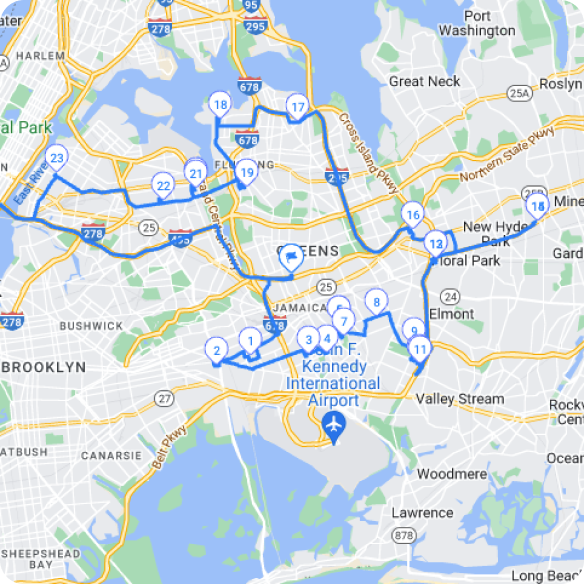
| Bulk stop/address import | Yes (Excel, CSV, Google Sheets) | Yes | Limited |
| Skill-based driver assignment | Yes | No | No |
| Scheduled/recurring routes | Yes | Yes | Limited |
| Pricing model | Per-driver, scalable for mixed fleets | Project/site-based, often enterprise-priced | Per-driver, delivery-focused |
The practical difference: StruxHub is strong for broader site logistics management (equipment, labor, deliveries combined) but offers less depth in route optimization for a mixed fleet of trucks and haulers. Onfleet handles general last-mile delivery well but isn’t built with construction-specific needs like capacity-based material loads or skill-based driver-to-site matching.
Zeo Route Planner focuses specifically on route optimization, tracking, and proof of delivery — the three things construction dispatchers struggle with most — without the overhead of a full site management suite you may not need.
ROI Breakdown: Time and Cost Savings from Optimized Delivery Routing
The numbers make the case clearer than theory.
Dispatcher time savings: Zeo’s AI-powered route optimization saves 2+ hours daily per dispatcher who previously built routes manually. Across a dispatch team of three, that’s 6+ hours a day returned to planning and problem-solving instead of manual sequencing.
Reduced idle labor costs: If optimized routing and live ETAs cut late-delivery incidents by even half, and each incident previously idled a 5-person crew for 60–90 minutes, the labor cost savings scale quickly. On a $35/hour average crew wage, that’s $175–$262 saved per prevented incident, per crew.
Fewer disputed deliveries: Photo and signature proof of delivery reduces time spent chasing down “where did this delivery go” disputes between suppliers, haulers, and site teams — disputes that often take a project manager 30–60 minutes each to resolve.
Fuel and mileage savings: Optimized multi-stop routing reduces unnecessary mileage from backtracking between sites. Combined with Zeo’s mileage tracking, dispatchers get cleaner data for fuel budgeting and expense reporting.
Fewer truck-queuing delays: Sequencing deliveries by time window instead of first-come-first-served reduces the odds of three trucks hitting the same gate at once — cutting the congestion that stalls unloading crews.
None of these numbers promise guaranteed outcomes. They reflect the kind of time and cost recovery companies typically see when they replace manual coordination with optimized, tracked delivery routing.
Keeping Drivers, Dispatchers, and Site Managers in Sync: The Web + App Connection
The biggest coordination gap in construction delivery isn’t planning — it’s communication between the office and the truck.
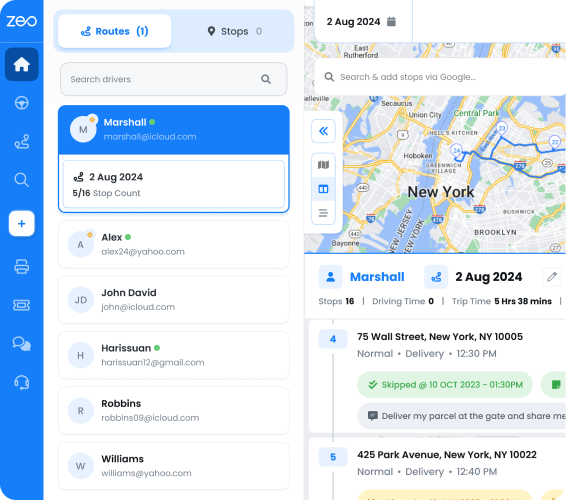
Dispatchers build and assign delivery routes from the Zeo web platform, sequencing stops across every active job site for the day. From there, the handoff to drivers is instant.
Truck drivers and material haulers receive their routes directly on the Zeo mobile app. They get turn-by-turn navigation straight to each site’s gate or drop zone — no more calling the office to ask “where exactly do I park this load.” This same web-to-app handoff is what makes coordination easier for adjacent site-based work too, like construction site toilet service logistics, where recurring stops and shifting site access create similar scheduling headaches.
When a driver arrives, they log proof of delivery right from the app: a photo of the materials on-site and a signature from the site foreman. That record is timestamped and tied to the exact site, so there’s no dispute later about whether materials showed up.
As the driver moves between sites, live ETA updates flow back to the dispatcher automatically. Site managers get visibility into when materials will land, without a single phone call.
This loop — web platform for planning, mobile app for execution — is what keeps a 15-site delivery day from turning into a dispatcher fielding 40 phone calls. Everyone sees the same information at the same time: dispatcher, driver, and site manager.
FAQ: Common Questions About Construction Delivery Scheduling
How do I schedule recurring material deliveries to the same job site?
Use scheduled/recurring routes to set up standing deliveries, and save the site as a Favorite so you can build future routes from it instantly. If you need to change the assigned driver for just one day without disrupting the full schedule, a date override lets you do that.
What if a job site needs deliveries paused temporarily?
Blackout dates let you pause a scheduled route without deleting it — useful when a site goes on hold for permitting, weather, or inspection delays.
Can different drivers handle different days of the same route?
Yes. Day Plan functionality lets you assign different drivers or haulers to specific days within one scheduled delivery route, which is common when you’re mixing company trucks with third-party haulers across the week.
How do I avoid routing trucks through restricted roads near job sites?
Avoid Params let you exclude highways, tunnels, bridges, or other route types that may be restricted for heavy material haulers.
What if materials need to be picked up from a supplier before dropping at a site?
Pickup–delivery linking automatically pairs a pickup stop (like a supplier yard) with its matching delivery stop (the job site) and sequences them in the correct order.
How quickly can I set up my first delivery route?
Most dispatchers can import their site list and build their first optimized route in under 10 minutes using bulk upload and AI-powered optimization.
Frequently Asked Questions
Q: What causes most construction material delivery delays?
The biggest causes are poor site access coordination (gate schedules, crane conflicts, congestion), lack of real-time truck visibility, and manual scheduling that can’t adapt when job site conditions change daily. Most delays trace back to a dispatcher not knowing where a truck is until it’s already late.
Q: How do you track material deliveries across multiple job sites?
Real-time GPS tracking lets dispatchers see every truck’s location and ETA from a single dashboard instead of calling drivers for updates. Zeo Route Planner’s live tracking and ETA updates give dispatchers and site managers the same visibility at the same time, cutting down on status-check phone calls.
Q: What’s the difference between construction logistics software and general delivery routing software?
General delivery routing assumes fixed addresses and stable conditions, while construction logistics software needs to handle shifting site access, time-sensitive pours, and mixed-capacity loads like rebar and lumber. Tools with capacity-based routing and priority stop settings are better suited to job site deliveries than standard last-mile delivery apps.
Q: How can I reduce idle crew time caused by late material deliveries?
Scheduling deliveries with firm time windows and priority flags for critical items (like concrete before a pour) reduces the odds of a crew standing idle. Live ETA updates also let site managers adjust crew start times in advance instead of waiting on a truck that’s already late.
Q: Do I need proof of delivery for construction material drops?
Yes — photo and signature confirmation at the point of delivery prevents “it never arrived” disputes between suppliers, haulers, and site teams. Zeo Route Planner’s proof of delivery feature timestamps a photo and foreman signature tied to the exact job site, creating a clear record if a dispute comes up later.
—
Late materials and site congestion aren’t inevitable. They’re a routing and visibility problem — and one with a proven fix.
Start a free Zeo Route Planner trial to build your first optimized multi-site delivery route in under 10 minutes, or book a demo to see fleet dispatch and live tracking in action for your construction deliveries.
Are you a fleet owner?
Want to manage your drivers and deliveries easily?
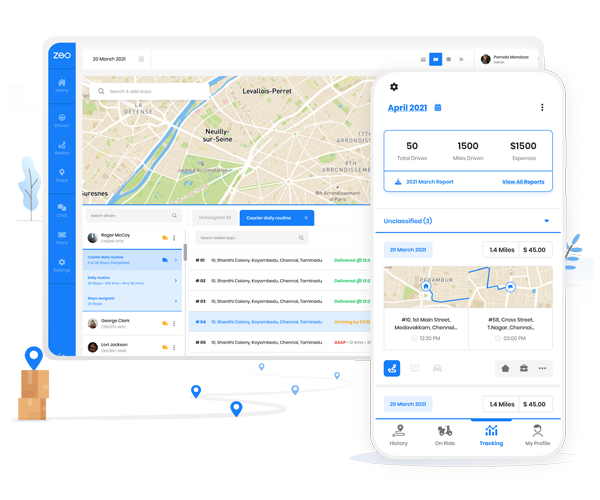
Grow your business effortlessly with Zeo Routes Planner – optimize routes and manage multiple drivers with ease.
increase fuel savings
Save 2 Hours on Deliveries, Everyday!
Optimize routes with our algorithm, reducing travel time and costs efficiently.
Get Started for Free