

Updated on: April 28, 2026
Reading Time: 3 minutes
TL;DR: Driver management systems enhance fleet safety, boost operational efficiency, and reduce costs through real-time monitoring, automated scheduling, and performance analytics. These systems help fleet managers save up to 30% on fuel costs while improving driver retention rates. Route optimization tools like Zeo Route Planner address this with AI-powered auto-assignment of stops to drivers and skill-based routing, helping fleet teams save 2+ hours daily.
Company owners may have fleet management, security, and maintenance solutions, but they may not consider the needs of their drivers. Businesses of all sizes that run a fleet of vehicles are turning to fleet and driver management solutions to assist, protect, and manage their drivers. Driver management solutions can significantly benefit any commercial vehicle fleet, large or small.
In this article, we will discuss what a driver management system is, how to manage fleet drivers and safety, the benefits of a driver management system, and how driver management software can help your company.
What is a Driver Management System?
Driver Management System is software that allows you to see an overview of driver efficiency, analyze driver and vehicle performance, control their operations, and improve driver safety. It enables firms to operate their fleets more efficiently delivering real-time data on the driver’s behavior and vehicle performance.
Modern driver management systems integrate with GPS tracking, route optimization, and communication tools to provide comprehensive oversight of fleet operations. According to the U.S. Bureau of Labor Statistics, the transportation industry continues to face driver shortages, making efficient driver management more critical than ever for maintaining competitive operations.
How to Manage Fleet Drivers and Safety?
The logistics company is grappling with increased fuel consumption, frequent vehicle maintenance, and accidents due to speeding and harsh braking by fleet drivers.
Effective fleet management and safety are crucial for optimizing operations and preventing accidents. Best practices
and strategies can help promote safety among fleet drivers.
- Utilize a Driver Management System (DMS) to monitor driver behavior, track routes, and analyze performance metrics, enabling fleet managers to identify areas for improvement and enforce safety standards.
- Regular safety training for drivers should cover defensive driving, hazard recognition, traffic laws, vehicle handling, and the proper use of safety features like seat belts and speed limiters.
- Implement a comprehensive safety policy that outlines expected driving behavior, vehicle maintenance protocols, and incident reporting. Hold drivers accountable for violations and reward safe driving practices with incentives or recognition programs.
- Schedule routine vehicle inspections and maintenance to prevent mechanical failures and accidents, and establish an immediate reporting system for drivers to report issues so necessary repairs can be made.
The Benefits of a Driver Management System
Here are many advantages of driver management software for commercial vehicle fleets, enhancing business efficiency and productivity. Let’s see some benefits of the driver management system.
- Improves Driver And Fleet Safety
A driver management system can reduce risks and improve safety for commercial vehicle drivers by managing documents and training requirements. Technology can optimize working hours and routes, allowing drivers to become more productive without overexertion. A mobile app can track driving and off-duty hours, preventing fatigue and ensuring drivers adhere to hours of service regulations. The Federal Motor Carrier Safety Administration reports that proper fleet management practices can reduce accident rates by up to 20%.
- Real-Time Alerts
Driver management software alerts drivers and fleet offices of potential road issues, such as mechanical problems, road problems, or accidents. It allows both parties to respond appropriately. It’s crucial to implement a system that trains drivers on handling these situations, with installed cab alerts for risky situations.
- Track Fuel Usage
Fuel usage tracking is crucial as fuel is the largest recurring cost for vehicles. Driver management software collects data, monitors trends, and compares mileage with daily travel distance. This maximizes fuel economy, allowing drivers to find optimal routes and fuel prices.
- Greater Driver Efficiency
The GPS driver management software enhances efficiency by real-time routing drivers around congested areas and construction sites, automating daily compliance tasks, and generating reports quickly. It also includes a built-in productive maintenance program for reduced downtime.
- Driver Retention
A reliable driver management system can effectively retain good drivers in a competitive job market. Tracking software offers driver rewards and safety scores, motivating employees to perform better.
Cost Reduction Through Strategic Driver Management
Implementing a comprehensive driver management system delivers measurable cost savings across multiple operational areas. Fleet managers report significant reductions in fuel consumption through optimized routing and driver behavior monitoring. Vehicle maintenance costs decrease when systems track driver habits and alert managers to potentially damaging behaviors like harsh acceleration or excessive idling.
Insurance premiums often decrease as well, since many carriers offer discounts for fleets that demonstrate proactive safety management through documented driver monitoring and training programs. The combination of reduced accidents, lower fuel consumption, and decreased vehicle wear creates a compelling return on investment that typically pays for the management system within the first year of implementation.

increase fuel savings
Hassle Free Deliveries & Pickups!
Optimize routes with our algorithm, reducing travel time and costs efficiently.
Get Started for Free
How is the Zeo Driver Management System Helpful?
The Zeo Driver Management System significantly enhances fleet operations by streamlining processes, enhancing safety, and enhancing productivity. Let’s see some features of the Zeo Driver Management system.
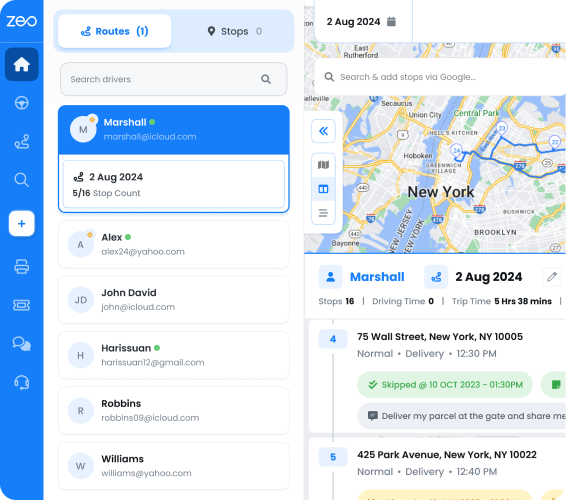
- The system automatically assigns stops to drivers based on their location and shift timings, eliminating the need for manual driver allocation.
- The Zeo driver management system allocates work based on skill and optimizes team routes to meet client needs by matching tasks with team members’ expertise.
- Assign stores to drivers to ensure uniform departure points, streamlining delivery operations and maximizing road productivity.
- The Zeo driver system also can add all fleet vehicles, assign them to drivers, optimize routes based on vehicle capacity, and effectively manage the fleet.
- The system ensures smooth coordination between drivers and management by obtaining a list of all drivers and facilitating direct communication.
For businesses looking to implement comprehensive route planning solutions, understanding these management capabilities becomes essential for scaling operations effectively.
Frequently Asked Questions
How much can a driver management system reduce operational costs?
Driver management systems typically reduce operational costs by 15-25% through improved fuel efficiency, reduced vehicle maintenance, and decreased insurance claims. Fleet managers report savings of $3,000-$8,000 per vehicle annually when implementing comprehensive driver monitoring and route optimization.
What safety metrics should fleet managers track in 2026?
Key safety metrics include harsh braking incidents, speeding violations, hours of service compliance, accident rates per mile driven, and driver fatigue indicators. Modern systems should also track real-time driver behavior patterns and provide immediate alerts for safety violations to prevent accidents before they occur.
How do driver management systems improve employee retention?
These systems boost retention by providing clear performance feedback, fair route assignments, and recognition for safe driving practices. Drivers appreciate transparent scoring systems and the ability to see their improvement over time, leading to higher job satisfaction and reduced turnover rates.
Can small fleets benefit from driver management software?
Absolutely – small fleets often see the most dramatic improvements since they typically operate without formal management processes. Even fleets with 3-10 vehicles report significant time savings and cost reductions when implementing basic driver tracking and route optimization features.
What’s the typical implementation time for driver management systems?
Most driver management systems can be implemented within 2-4 weeks, including driver training and system customization. Zeo Route Planner’s auto-assignment features and real-time GPS tracking help fleet teams save time immediately, with many users reporting productivity gains within their first week of use.
Conclusion
The industry faces increasing complexity in operating fleets due to government regulations, driver retention, and shortages. However, understanding how to leverage comprehensive route optimization strategies can help overcome these challenges, such as driver management software, ensuring safety, improving efficiency, and boosting driver satisfaction.
To learn more about Zeo, book a free demo with us!
Are you a fleet owner?
Want to manage your drivers and deliveries easily?
Grow your business effortlessly with Zeo Routes Planner – optimize routes and manage multiple drivers with ease.
increase fuel savings
Save 2 Hours on Deliveries, Everyday!
Optimize routes with our algorithm, reducing travel time and costs efficiently.
Get Started for Free