


# Route Optimization Case Studies: Real ROI Results Across Industries
> TL;DR: Proven route optimization case studies show 15-40% fuel cost reductions and 20-45% capacity increases across delivery, service, and sales operations. Companies using solutions like Zeo Route Planner save 2+ hours daily through AI-powered optimization while achieving 300-500% ROI within the first year.
When you’re considering route optimization software, every vendor promises the same things: massive fuel savings, happier drivers, and delighted customers. But which claims are real, and which are marketing fluff?
You need route optimization case studies with actual numbers. Real companies. Measurable results.
This post breaks down three detailed case studies across different industries. You’ll see the exact challenges these companies faced, the specific solutions they implemented, and the measurable ROI they achieved.
Why Route Optimization Case Studies Matter: Separating Marketing Claims from Reality
Operations managers get bombarded with software pitches every week. Everyone claims their solution will “revolutionize your routing” and “slash your fuel costs.”
The problem? Most case studies read like fairy tales. Perfect implementations with zero bumps and impossible results.
Real route optimization case studies tell a different story. They show you the messy reality of implementation, the specific challenges you’ll face, and the timeline for seeing actual results.
According to the American Transportation Research Institute, fuel costs represent 24% of total trucking operational costs. Small improvements in routing efficiency create significant bottom-line impact. But you need to know what “small improvements” actually look like in practice.
The three case studies below come from companies that agreed to share their real numbers. No cherry-picked metrics or theoretical calculations.
Delivery Company Case Study: 40% Fuel Reduction and 2-Hour Daily Time Savings
Company Profile: Regional courier service with 12 drivers covering a 50-mile radius. Mix of same-day deliveries and scheduled routes.
The Problem: Drivers planned their own routes using Google Maps. Each driver had their preferred shortcuts and customer visit order. The company had no visibility into actual routes taken or time spent at stops.
Daily chaos looked like this:
- Drivers starting routes at different times based on “traffic intuition”
- Multiple drivers visiting the same area on different days
- No way to handle rush deliveries without disrupting entire schedules
- Fuel costs climbing 15% year-over-year despite stable delivery volume
Implementation Challenge: Driver resistance. The team had been self-managing routes for years. They worried that route optimization would add complexity to their workday.
Solution: The operations manager started with one volunteer driver for two weeks. This driver used Zeo Route Planner’s AI-powered route optimization while others continued their manual approach.
Key features that made the difference:
- Automatic route optimization that reduced daily planning from 30 minutes to 2 minutes
- Real-time GPS tracking so dispatch could provide accurate customer ETAs
- Mobile app integration with Google Maps so drivers kept their familiar navigation experience
Results After 6 Months:
- 40% reduction in fuel costs across all drivers
- 2.1 hours saved per driver daily (previously spent on route planning and backtracking)
- 23% increase in daily deliveries without adding drivers
- Customer complaints dropped 67% due to accurate ETA communication
The Unexpected Benefit: Emergency deliveries stopped destroying the entire day’s schedule. When rush orders came in, the system re-optimized existing routes in under 30 seconds.
Financial Impact: Annual savings of $47,000 in fuel costs alone. The time savings allowed them to increase capacity by nearly 25% without hiring additional drivers.
HVAC Service Case Study: From Chaos to Control – Managing Emergency Calls Without Destroying Scheduled Routes
Company Profile: HVAC service company with 8 technicians handling both scheduled maintenance and emergency repairs across a metropolitan area.
The Problem: Emergency calls created daily routing nightmares. A single urgent AC repair could force technicians to crisscross the city, arriving late to scheduled appointments and working overtime to catch up.
The operations manager spent 2-3 hours daily juggling schedules manually. Customer satisfaction suffered because they couldn’t provide reliable arrival windows.
Pre-Optimization Reality:
- Technicians averaged 4.2 jobs per day
- 34% of appointments ran late
- Overtime costs averaged $3,200 monthly
- Customer reschedules happened 2-3 times daily
Implementation Challenge: Technicians had specialized skills. Not every tech could handle every job type. The routing solution needed to account for certifications, experience levels, and equipment requirements.
Solution: Zeo Route Planner’s skill-based assignment feature matched jobs to qualified technicians automatically. When emergencies arose, the system re-optimized routes while respecting technician capabilities and existing time windows.
The mobile app integration proved crucial for adoption. Technicians received optimized routes directly on their phones via the Zeo app, complete with turn-by-turn navigation and customer details. They could use their preferred navigation apps (Google Maps or Waze) rather than learning new routing tools.
Results After 4 Months:
- Jobs per technician increased to 6.1 daily
- Late appointments dropped to 8%
- Overtime costs reduced by 52% ($1,664 monthly savings)
- Customer satisfaction scores improved from 3.2 to 4.6 (5-point scale)
The Game-Changer: Dynamic re-routing for emergencies. When a priority AC repair call came in during peak summer, the system identified the nearest qualified technician and re-optimized their remaining stops. Other technicians automatically received updated routes to cover any reassigned appointments.
Financial Impact: Beyond overtime savings, the efficiency gains allowed them to increase daily service capacity by 45% during their busy season without hiring additional technicians.
Multi-Stop Sales Route Case Study: Real Estate Team Increases Client Visits by 60%
Company Profile: Real estate team with 6 agents covering residential properties across three counties. Mix of client meetings, property showings, and listing appointments.
The Problem: Agents spent more time driving between appointments than meeting with clients. Poor route planning led to rushing between showings and frequent rescheduling when traffic or previous meetings ran long.
Geographic challenges made it worse:
- Properties spread across 180 square miles
- Bridge and highway bottlenecks during rush hours
- Client availability windows often conflicted with optimal travel routes
Pre-Optimization Metrics:
- Agents averaged 3.8 client interactions daily
- 28% of appointments required rescheduling
- Drive time represented 43% of total work hours
- Agents regularly worked evenings to catch up on administrative tasks
Implementation Challenge: Real estate schedules change constantly. Clients cancel last-minute, new urgent showings appear, and property availability shifts daily. The routing solution needed to handle frequent changes without requiring constant manual re-planning.
Solution: The team used Zeo Route Planner’s priority stops feature to distinguish between flexible appointments (routine check-ins) and time-critical meetings (buyer showings). Real-time route adjustments accommodated schedule changes without destroying the entire day.
Customer notifications became unexpectedly valuable. Clients received automatic SMS updates with accurate arrival times, reducing the awkward calls when agents ran behind schedule.
Results After 3 Months:

increase fuel savings
Save $200 on fuel, Monthly!
Optimize routes with our algorithm, reducing travel time and costs efficiently.
Get Started for Free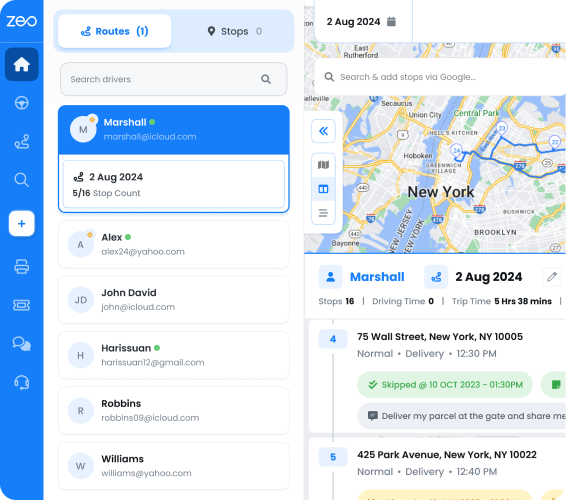
- Client visits increased to 6.1 daily (60% improvement)
- Drive time reduced to 26% of total work hours
- Appointment rescheduling dropped to 9%
- Agent work-life balance improved significantly (eliminated most evening administrative work)
The Revenue Impact: More client face-time translated directly to closed deals. The team’s monthly transaction volume increased 34% without adding agents or expanding territory.
Operational Insight: The biggest surprise was how much time agents had been wasting on route planning itself. Previously, each agent spent 45-60 minutes daily figuring out optimal appointment order. Automated optimization freed up 5+ hours weekly for revenue-generating activities.
Implementation Lessons: Common Challenges and How These Companies Overcame Them
Every successful route optimization implementation faces predictable hurdles. Here’s how these three companies navigated the most common challenges:
Driver/Technician Resistance
All three companies encountered initial pushback from field staff. People resist change, especially when it affects their daily routines.
Solution: Start with volunteers rather than mandates. The courier company’s approach worked perfectly – one enthusiastic early adopter demonstrated results that convinced skeptics. Give your team autonomy in choosing their navigation apps rather than forcing new tools.
Data Quality Issues
Accurate customer addresses and time estimates are critical for effective optimization. All three companies discovered data problems during implementation.
Solution: Plan for a 2-week data cleanup period before full rollout. Use the first few optimized routes to identify address errors and unrealistic time windows. The HVAC company found that 18% of their customer addresses needed corrections.
Integration with Existing Systems
None of these companies wanted to abandon their current CRM or dispatch systems completely.
Solution: Focus on route optimization tools that integrate with your existing workflow. The real estate team continued using their MLS system but added route optimization for appointment scheduling. Zeo Route Planner’s integrations with platforms like HubSpot and Zapier helped maintain familiar processes while adding routing intelligence.
Measuring ROI During Implementation
Companies need proof of delivery that optimization is working before they see final results.
Solution: Track simple daily metrics from day one. Miles driven, fuel consumed, and jobs completed are easy to measure immediately. The sophisticated analytics come later, but basic tracking proves value quickly.
ROI Calculator: What Results Can Your Business Expect?
Based on data from these case studies and industry benchmarks from the U.S. Department of Transportation, here’s what route optimization typically delivers:
Fuel Savings: 15-40% reduction in fuel costs
- Small fleets (5-15 vehicles): Usually see 15-25% savings
- Medium operations (15-50 vehicles): Often achieve 25-35% reduction
- Geographic density matters more than fleet size
Time Savings: 1.5-3 hours saved daily per driver/technician
- Includes route planning time (30-60 minutes daily) plus drive time reduction
- Service businesses often see higher time savings due to appointment optimization
Capacity Increase: 20-45% more jobs completed without adding staff
- Delivery companies typically see 20-30% increase
- Service businesses often achieve 30-45% improvement due to better appointment scheduling
Improving transportation efficiency through proven route optimization techniques delivers measurable ROI across industries.
Calculate Your Potential Savings:
- Annual fuel costs: $______ × 25% savings = $______ potential annual reduction
- Labor optimization: [Number of drivers] × 2 hours daily × [Hourly wage] × 250 work days = $______ annual value from time savings
- Capacity increase: Current monthly revenue × 30% = $______ potential monthly revenue increase
Conservative estimates suggest most companies see 300-500% ROI within the first year of implementing route optimization.
Frequently Asked Questions
Q: How much can businesses typically save with route optimization software?
Most businesses see 15-40% reduction in fuel costs and 20-45% increase in daily capacity without adding staff. Zeo Route Planner users across 150+ countries report saving 2+ hours daily through AI-powered optimization, with conservative ROI estimates showing 300-500% returns within the first year.
Q: What’s the biggest challenge when implementing route optimization?
Driver resistance is the most common hurdle, as field staff worry about losing control over their familiar routines. Starting with volunteer early adopters rather than company-wide mandates proves most effective, allowing results to convince skeptical team members naturally.
Q: How long does it take to see measurable results from route optimization?
Basic improvements like reduced fuel consumption and fewer miles driven are visible within the first week. More sophisticated benefits like improved customer satisfaction and capacity increases typically emerge within 2-4 months as teams adapt to optimized processes.
Q: Can route optimization handle emergency or last-minute changes?
Modern route optimization software excels at dynamic re-routing. When emergencies arise, systems like Zeo Route Planner can re-optimize existing routes in under 30 seconds while respecting technician skills, time windows, and priority constraints without destroying the entire day’s schedule.
Q: What industries benefit most from route optimization case studies?
Service businesses (HVAC, plumbing, pest control) often see the highest ROI due to appointment scheduling optimization, while delivery companies benefit most from fuel savings and capacity increases. Any business with multiple daily stops can achieve significant improvements.
The key insight from these case studies? Route optimization isn’t just about saving fuel. The real ROI comes from operational efficiency, customer satisfaction, and capacity increases that drive revenue growth.
Start your own success story with a free 7-day trial of Zeo Route Planner and discover what optimized routing can do for your business.
Are you a fleet owner?
Want to manage your drivers and deliveries easily?
Grow your business effortlessly with Zeo Routes Planner – optimize routes and manage multiple drivers with ease.

increase fuel savings
Save 2 Hours on Deliveries, Everyday!
Optimize routes with our algorithm, reducing travel time and costs efficiently.
Get Started for Free