

# Mobile Detailing Fleet Management Challenges: 7 Solutions for Scaling Profitably
> TL;DR: Mobile detailing fleet management challenges stem from poor coordination, inefficient routing, and communication gaps that cost businesses $200-400 per scheduling mistake. Studies show service businesses lose 21% of productivity to coordination issues, but AI-powered route optimization like Zeo Route Planner addresses this with automated scheduling and real-time tracking, helping mobile detailing teams save 2+ hours daily.
Managing a mobile detailing fleet sounds simple until you’re coordinating five vehicles across town while a customer calls about their delayed appointment. Mobile detailing fleet management challenges multiply quickly as you scale from one van to multiple teams.
The mobile auto detailing industry continues growing rapidly, but many fleet owners struggle with the same operational headaches. Poor coordination wastes time and fuel while frustrated customers hurt your reputation.
This guide breaks down the seven biggest mobile detailing fleet management challenges and provides proven solutions to help you scale profitably.
The Hidden Costs of Poor Mobile Detailing Fleet Coordination
Poor coordination drains your profits in ways you might not notice. Each miscommunication or scheduling mistake creates a ripple effect across your entire operation.
When your detailing team arrives at the wrong location, you lose the original appointment slot and pay for wasted travel time. The customer often cancels, and you still pay your team for the full day. A single mistake can cost $200-400 in lost revenue and labor costs.
Inventory problems multiply these issues. When a team runs out of supplies mid-job, they either deliver poor service or drive back to your shop for more products. Both options damage customer satisfaction and waste labor hours.
Communication gaps between your office and field teams create constant firefighting. You spend hours each day answering “where are you?” calls instead of growing your business. According to the Bureau of Labor Statistics productivity data, service businesses lose an average of 21% of their productivity to coordination issues.
Equipment and Resource Waste
Mobile detailing requires significant equipment investment per vehicle. Poor coordination means teams carry duplicate supplies or run out of essential products. You either overstock vehicles (tying up cash) or understock them (causing service delays).
Weather changes add another layer of complexity. When rain cancels outdoor appointments, you need to quickly reschedule multiple teams across different territories. Without proper systems, you lose entire days of revenue.
Territory overlap wastes fuel and creates customer confusion. When two teams service the same neighborhood on different days, you pay twice the travel costs and miss opportunities to serve multiple customers efficiently.
Mobile Detailing Fleet Management Challenges: Route Optimization Issues
Most mobile detailing teams spend 30-40% of their day driving between appointments. Poor routing turns a profitable day into a break-even operation through excessive fuel costs and reduced service capacity.
Traditional scheduling methods can’t handle the complexity of mobile operations. Appointment times, traffic patterns, service duration, and geographic spread all impact profitability. A route that looks good on paper often fails in practice.
Customer-requested time windows complicate routing further. When Mrs. Johnson wants service between 2-4 PM and Mr. Smith needs his car cleaned before noon, manual scheduling becomes a puzzle with expensive mistakes.
The Real Cost of Inefficient Routes
Consider a team that could complete six detail jobs with optimized routing but only finishes four due to poor planning. That’s 33% less revenue for the same labor and vehicle costs. Over a month, this difference determines whether your business grows or struggles.
Fuel costs add up quickly with inefficient routes. A team driving an extra 50 miles daily wastes $15-20 in fuel plus vehicle wear costs. Across five vehicles for a month, that’s $1,500-2,000 in avoidable expenses.
Driver satisfaction suffers when teams spend excessive time in traffic. Experienced detailers want to focus on their craft, not navigate poorly planned routes. High turnover costs time and money while hurting service quality.
Route optimization software addresses these routing challenges with AI-powered optimization that saves mobile detailing fleets 2+ hours daily per driver. The system considers time windows, service duration, and traffic patterns to create efficient routes automatically.
Real-Time Scheduling and Customer Communication Pain Points
Customer communication makes or breaks mobile service businesses. When customers don’t know when you’ll arrive or receive last-minute schedule changes, complaints and cancellations follow.
Mobile detailing customers often wait at specific locations for your team. A customer who blocks time for an appointment expects reliable communication. Poor updates lead to negative reviews and lost referrals.
Weather-related reschedules create communication nightmares. You need to contact multiple customers quickly while rebooking appointments and adjusting team schedules. Manual processes can’t handle this complexity efficiently.
Managing Customer Expectations
Service time estimates vary based on vehicle condition and service package. A “quick wash” might take three hours if the car hasn’t been cleaned in months. Customers need realistic timeframes and proactive updates when delays occur.
Peak season scheduling adds pressure to communication systems. During spring and summer months, appointment demand increases while weather creates more schedule disruptions. Your communication system must handle higher volume without dropping quality.
Multi-day projects require ongoing coordination. Commercial fleet detailing or large residential jobs span multiple visits. Customers need clear schedules and updates throughout the service period.
Automated customer notification systems send SMS and email updates with live tracking links, keeping customers informed without requiring manual communication from your team.
Multi-Vehicle Territory Management and Resource Allocation Issues
Territory management becomes complex as you add vehicles and teams. Overlapping territories waste resources while gaps in coverage miss sales opportunities.
Each team needs optimal territory size for profitability. Too large, and travel time kills margins. Too small, and you can’t generate enough revenue per vehicle. Finding the right balance requires data and ongoing adjustment.
Customer density varies significantly across service areas. Affluent neighborhoods might provide higher-value jobs but longer distances between appointments. Commercial areas offer volume but potentially lower margins.
Skill-Based Assignment Challenges
Different detailing services require different expertise levels. Paint correction demands advanced skills while basic washes can be handled by newer team members. Matching the right technician to each job impacts both quality and efficiency.
Equipment requirements vary by service type. Ceramic coating jobs need different supplies than standard details. You must ensure each team carries appropriate inventory for their assigned jobs.
Customer preferences add another assignment factor. Some clients prefer specific team members who know their vehicles and preferences. Balancing customer requests with operational efficiency requires careful planning.
Seasonal demand shifts affect territory allocation. Summer boat detailing might concentrate in marina areas while winter focuses on indoor services. Your territory strategy needs flexibility for changing demand patterns.
Fleet management software with skill-based driver assignment helps match the right technician to each job while optimizing territorial coverage and resource allocation.
Driver Productivity Tracking and Performance Management Difficulties
Measuring mobile team productivity requires different metrics than traditional businesses. You can’t simply count completed jobs without considering travel time, service quality, and customer satisfaction.

increase fuel savings
Save $200 on fuel, Monthly!
Optimize routes with our algorithm, reducing travel time and costs efficiently.
Get Started for Free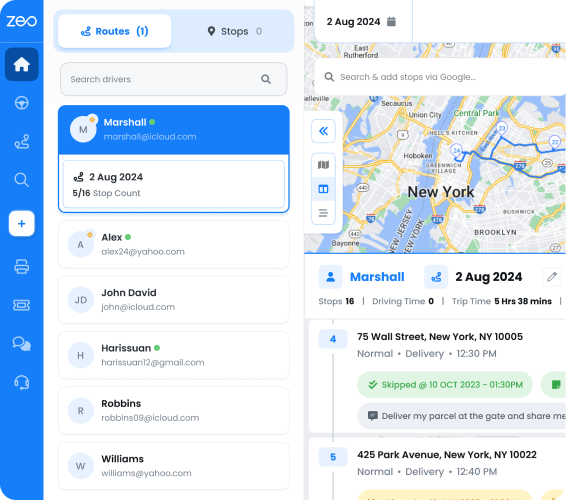
Time tracking becomes complicated when teams handle various service types across different locations. A premium detail job should take longer than a basic wash, but how do you distinguish between quality work and inefficiency?
Revenue per vehicle provides important productivity metrics, but external factors affect results. A team serving rural areas might generate less revenue than urban teams due to travel distances, not performance differences.
Performance Benchmarking Challenges
Establishing fair performance standards requires considering multiple variables. Vehicle condition, service package, weather, and customer accessibility all impact completion times. Simple metrics don’t capture these nuances.
Quality control proves difficult when teams work independently across town. You need systems to verify service quality without micromanaging experienced professionals.
Customer feedback provides performance insights but requires systematic collection and analysis. Happy customers rarely leave detailed reviews while complaints get amplified.
Training new team members while maintaining productivity creates additional challenges. New hires need mentoring but experienced teams lose efficiency when training newcomers.
Real-time GPS tracking and digital proof of delivery through photo capture and customer signatures help fleet managers monitor productivity while maintaining quality standards.
Technology Solutions That Transform Mobile Fleet Operations
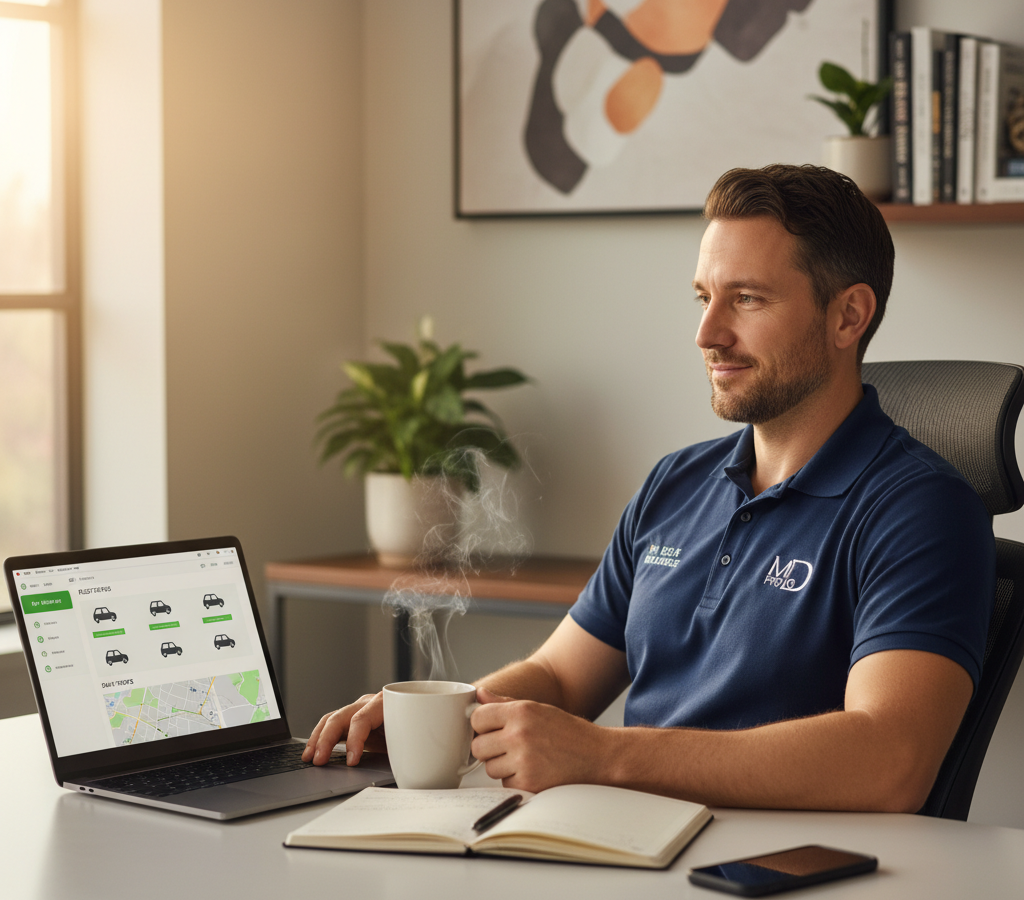
Modern route planning software eliminates most coordination headaches that plague mobile detailing fleets. AI-powered systems handle complex scheduling variables that overwhelm manual planning.
Fleet management platforms provide real-time visibility into team locations, job status, and customer communications. Managers can make informed decisions quickly when problems arise, following Small Business Administration fleet management best practices.
Digital proof of delivery systems protect your business while improving customer confidence. Photo documentation and digital signatures create clear service records that prevent disputes.
Implementation Strategy
Start with route optimization since this provides immediate time and fuel savings. Once teams adapt to optimized routing, add customer communication features and tracking capabilities.
Train your team gradually on new technology features. Focus on one capability at a time rather than overwhelming staff with complete system changes.
Measure results clearly to demonstrate technology ROI. Track fuel costs, service capacity, customer satisfaction scores, and team productivity before and after implementation.
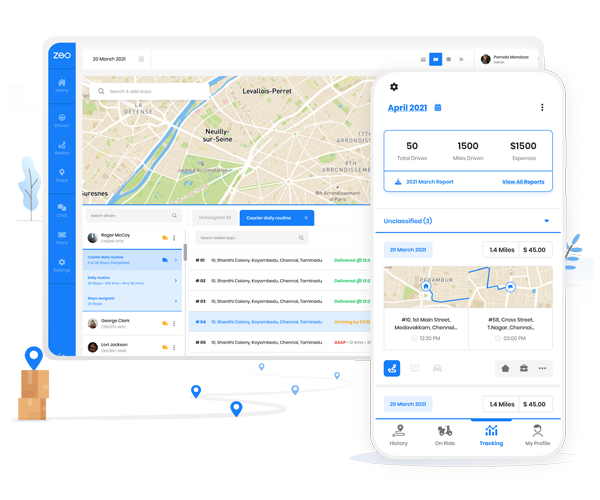
Fleet managers use web platforms to plan and assign routes while detailing teams receive optimized schedules directly through mobile apps, complete with customer details and navigation.
Integration Benefits
Connected systems eliminate data entry duplication and reduce communication errors. When scheduling, routing, and customer communication integrate seamlessly, coordination becomes automatic rather than manual.
Automated customer notifications reduce office workload while improving service quality. Teams focus on detailing work instead of constant phone updates.
Digital records streamline invoicing and provide service history for repeat customers. You can reference previous services and customer preferences for better relationship management.
Analytics from integrated systems reveal optimization opportunities that aren’t obvious from daily operations. Data-driven decisions replace guesswork for territory planning, pricing, and capacity management, as recommended by the National Association of Fleet Administrators.
Frequently Asked Questions
Q: How much can mobile detailing fleets save with proper route optimization?
Mobile detailing fleets typically save 2+ hours daily per driver with optimized routing, translating to 30-40% reduction in travel time and fuel costs. Zeo Route Planner’s AI-powered optimization has helped mobile detailing businesses serving 150+ countries reduce drive time while increasing daily service capacity.
Q: What’s the biggest operational challenge for mobile detailing fleet owners?
Territory management and route coordination become the primary bottleneck as fleets scale beyond 3-5 vehicles. Poor scheduling can cost $200-400 per mistake in lost revenue and wasted labor, while inefficient routes reduce daily capacity by up to 33%.
Q: How do mobile detailing companies track service quality across multiple teams?
Digital proof of delivery systems with photo capture, customer signatures, and service notes provide accountability while protecting the business from disputes. Real-time tracking also allows managers to monitor job completion times and identify training opportunities without micromanaging experienced technicians.
Q: What technology integration is most important for mobile detailing operations?
Route optimization provides the foundation since it impacts every other operational aspect – from fuel costs to customer satisfaction to team productivity. Once routing is optimized, adding customer communication features and digital documentation creates a complete operational system.
Q: How should mobile detailing fleets handle weather-related schedule disruptions?
Automated customer notification systems can quickly communicate schedule changes via SMS and email, while dynamic route adjustments allow managers to efficiently reschedule multiple teams across different territories without manual coordination headaches.
Transform Your Mobile Detailing Fleet Operations
Mobile detailing fleet management challenges seem overwhelming, but proven solutions exist for each operational pain point. Success requires systematic approaches rather than hoping coordination problems resolve themselves.
Route optimization provides the foundation for profitable mobile operations. When teams follow efficient routes, every other aspect of your business improves. Fuel costs drop, capacity increases, and customer satisfaction rises.
Technology doesn’t replace good management but amplifies effective strategies. The right systems eliminate routine coordination tasks so you can focus on business growth and service quality.
Start your free 7-day trial of Zeo Route Planner to see how mobile detailing fleets are cutting travel time by 30% and improving customer satisfaction. Experience firsthand how AI-powered routing and real-time coordination can transform your fleet operations.
Are you a fleet owner?
Want to manage your drivers and deliveries easily?
Grow your business effortlessly with Zeo Routes Planner – optimize routes and manage multiple drivers with ease.

increase fuel savings
Save 2 Hours on Deliveries, Everyday!
Optimize routes with our algorithm, reducing travel time and costs efficiently.
Get Started for Free