


# How to Coordinate Mobile Notary Routes Across Multiple Teams
> TL;DR: Effective mobile notary route coordination requires systematic daily planning, geographic territory optimization, and real-time adjustment protocols to handle urgent requests. Poor coordination wastes $2,400-3,200 monthly in fuel costs alone across an 8-notary team. Route optimization tools like Zeo Route Planner address this with AI-powered optimization and real-time GPS tracking, helping notary teams save 2+ hours daily in coordination time.
Managing multiple mobile notaries across different territories feels like solving a puzzle that changes every hour. When you need to coordinate mobile notary routes efficiently, one urgent real estate closing comes in, and suddenly your carefully planned day falls apart.
You’re not alone in this struggle. Most notary business owners with 3-12 notaries waste significant time each day trying to coordinate routes manually. According to the National Notary Association, poor coordination leads to missed appointment windows, frustrated clients, and notaries driving unnecessary miles between jobs.
This guide shows you exactly how to coordinate mobile notary routes efficiently, handle last-minute requests without chaos, and maximize your team’s daily appointments.
The Hidden Costs of Poor Mobile Notary Route Coordination
Poor route coordination costs your notary business more than just time. Let’s break down the real financial impact.
Excessive Travel Time and Fuel Costs
When notaries zigzag across town instead of following logical routes, fuel costs add up quickly. A notary driving 150 miles daily instead of an optimized 100 miles wastes $15-20 per day in fuel alone.
Multiply that across a team of 8 notaries over a month, and you’re looking at $2,400-3,200 in unnecessary fuel expenses. That doesn’t include vehicle wear and additional maintenance costs.
Missed Revenue Opportunities
Mobile notaries typically charge $75-150 per appointment. When poor routing causes a notary to miss even one appointment per day due to travel delays, that’s $450-900 in lost weekly revenue per notary.
The bigger cost comes from last-minute cancellations. When you can’t quickly reassign an urgent appointment because your routes are already inefficient, you lose both the immediate revenue and potential repeat business.
Client Satisfaction Issues
Late arrivals damage your reputation faster than any other operational problem. Real estate transactions have strict deadlines, and a notary arriving 30 minutes late can delay closings and frustrate multiple parties.
Poor coordination also means longer wait times for quote responses. When a client needs urgent service and you can’t quickly determine which notary can handle it, they’ll call your competitor instead.
Daily Route Planning Workflow: From Booking to Completion
Effective route coordination starts with a systematic daily planning process. Here’s the step-by-step workflow successful notary businesses use.
Morning Planning Session (30 minutes before first appointments)
Start each day by reviewing all scheduled appointments and plotting them geographically. Group appointments by proximity, not just by time.
Create initial route assignments based on each notary’s starting location and skill requirements. Some appointments need specific certifications or experience levels that not all notaries possess.
Build in buffer time between appointments. Real estate signings often run longer than expected, especially for first-time homebuyers who need extra explanation.
Geographic Clustering Strategy
Assign notaries to specific geographic zones when possible, but maintain flexibility for overflow situations. A notary familiar with downtown office buildings will navigate them faster than someone who primarily works residential areas.
Consider traffic patterns throughout the day. An appointment that’s 20 minutes away during lunch hour might be 45 minutes away during rush hour.
Real-Time Communication Protocol
Establish clear communication channels between your coordination team and field notaries. Each notary should report completion of appointments immediately, not at the end of the day.
Use a centralized system where notaries can see their route updates instantly. Phone tag between coordinators and notaries wastes valuable time that could be spent serving clients. Real-time vehicle tracking systems eliminate this coordination bottleneck entirely.
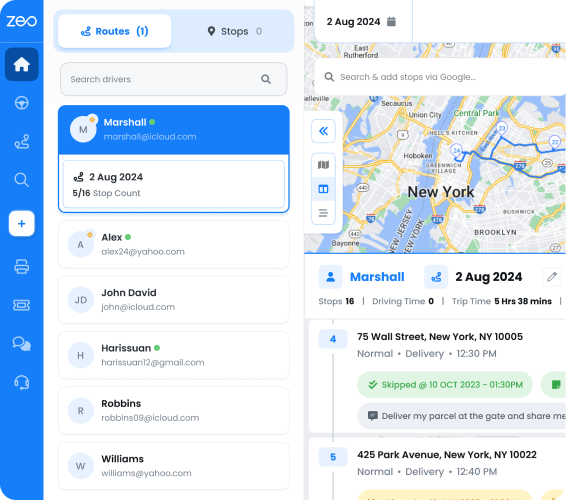
Zeo Route Planner solves this coordination challenge by automatically optimizing routes and sending updates directly to notaries’ mobile devices. This eliminates the back-and-forth communication that typically consumes 1-2 hours of coordination time daily.
Geographic Territory Optimization Strategies for Multi-Notary Operations
Smart territory management prevents overlap while ensuring complete coverage of your service area.
Zone-Based Assignment System
Divide your service area into logical zones based on drive time, not just geographic boundaries. A zone that looks small on a map might take longer to traverse due to traffic patterns or road layouts.
Assign primary and secondary notaries to each zone. The primary notary handles all appointments in their zone when available, while the secondary notary covers overflow or when the primary is unavailable.
Consider appointment density when creating zones. A zone with many office buildings might generate more appointments per square mile than a residential area, requiring different staffing approaches.
Flexible Coverage Areas
Build overlap between territories to handle peak demand periods. Tuesday through Thursday typically see higher appointment volumes for real estate transactions, requiring more flexible territory boundaries.
Cross-train notaries on multiple territories so they can efficiently cover different areas when needed. A notary who only knows one neighborhood becomes a bottleneck during busy periods.
Distance and Time Optimization
Calculate actual drive times between common appointment locations, not just distances. Two appointments might be 10 miles apart but take 30 minutes to travel during certain times of day.
Keep a database of challenging locations like large office complexes or gated communities that require extra navigation time. Factor this information into route planning to avoid late arrivals.
Zeo’s AI-powered route optimization considers real traffic conditions and automatically adjusts routes throughout the day, saving notary businesses an average of 2+ hours daily per driver in unnecessary travel time.
Real-Time Route Adjustments for Last-Minute Appointments and Emergencies
The ability to handle urgent requests without disrupting existing schedules separates successful notary businesses from their competitors.
Emergency Request Protocol
Develop a systematic approach for evaluating urgent requests. Not every “emergency” truly requires immediate service, but real emergencies like hospital visits or time-sensitive legal documents do need rapid response.
When an urgent request comes in, quickly assess which notary has the most flexibility in their current route. Look for notaries with longer gaps between appointments or those currently closest to the emergency location.
Dynamic Route Rebalancing
When adding an emergency appointment, don’t just squeeze it into the nearest notary’s schedule. Evaluate whether shifting appointments between notaries creates a more efficient overall solution.
For example, if Notary A is closer to an emergency but has a packed schedule, consider moving one of their later appointments to Notary B, who might be finishing early that day.
Technology-Enabled Flexibility
Manual route adjustments via phone calls and text messages create confusion and errors. Notaries need to see route changes immediately with clear directions to their next appointment.
Real-time tracking helps coordinators make informed decisions about who can best handle urgent requests. Knowing exactly where each notary is located and their estimated completion time enables quick, accurate emergency assignments.
Modern mobile notary fleet management software provides instant updates to notaries’ mobile devices. When routes change, notaries receive updated directions automatically without coordinator phone calls or confusion about their next destination.
Client Communication During Changes
Keep clients informed when emergency adjustments affect their appointments. A simple text message explaining a 15-minute delay prevents frustration and maintains professional relationships.

increase fuel savings
Hassle Free Deliveries & Pickups!
Optimize routes with our algorithm, reducing travel time and costs efficiently.
Get Started for Free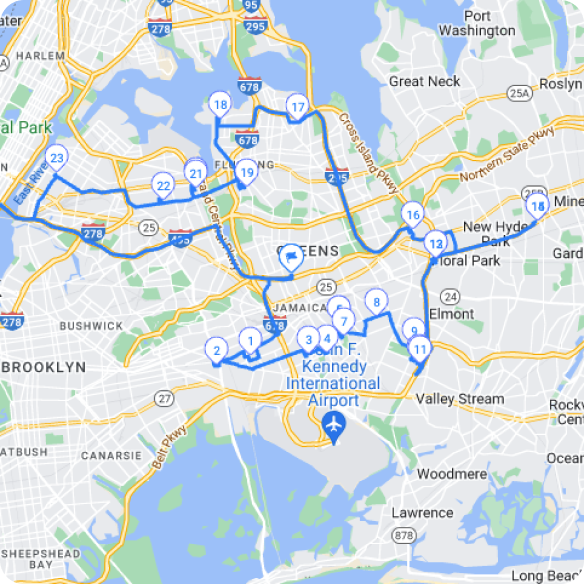
Provide updated arrival times immediately when routes change. Clients appreciate accurate information more than optimistic estimates that prove incorrect.
Cost-Benefit Analysis: Manual vs Automated Route Planning for Notary Services
Understanding the true cost difference between manual and automated coordination helps justify investment in better systems.
Manual Coordination Costs
A coordinator spending 2-3 hours daily on route planning and adjustments costs $60-90 per day in labor alone. This doesn’t include the opportunity cost of that person handling other business development activities.
Manual planning typically results in 15-25% longer routes due to suboptimal sequencing and inability to quickly recalculate when changes occur. For a notary driving 100 miles daily, that’s 15-25 extra miles of fuel and vehicle wear.
Communication errors from manual systems lead to missed appointments or notaries arriving at wrong locations. Each mistake costs time, fuel, and potential client relationships.
Automated Route Planning Benefits
According to Bureau of Labor Statistics transportation data, route optimization software typically reduces total drive time by 20-30% compared to manual planning. For notary services, this translates directly to more appointments per day or lower operational costs.
Automated systems eliminate most communication errors by providing clear, updated directions directly to notaries’ mobile devices. This reduces wasted time from navigation mistakes or unclear instructions.
The time saved on daily coordination can be redirected to business development activities like marketing or client relationship management, generating additional revenue growth.
Return on Investment Timeline
Most notary businesses see positive ROI from route optimization software within 30-60 days. The combination of fuel savings, increased appointment capacity, and reduced coordination labor typically pays for the technology investment quickly.
Zeo Route Planner users report saving 2+ hours daily in coordination time while serving 1.5M+ users across 150+ countries, demonstrating proven results across diverse transportation and service businesses.
Integration Setup: Connecting Booking Systems with Route Planning Tools
Seamless integration between your booking system and route planning eliminates double data entry and reduces scheduling errors.
Common Integration Points
Most notary booking systems can export appointment data in standard formats like CSV or Excel files. This allows easy import into route planning systems without manual retyping of addresses and appointment details.
API integrations provide real-time synchronization between booking and routing systems. When a new appointment gets scheduled, it automatically appears in route planning tools for immediate optimization.
Calendar integrations ensure notary availability stays current across all systems. When a notary calls in sick or takes time off, the information updates everywhere simultaneously.
Data Flow Optimization
Establish clear data standards for address formats, appointment types, and special requirements. Consistent data entry prevents routing errors and ensures all necessary information reaches notaries in the field.
Include client contact information in route data so notaries can communicate directly about delays or location clarification without involving coordinators. Digital proof of delivery features help document completed services and maintain compliance records.
Build appointment duration estimates into your booking system based on historical data. Loan signings typically take 45-60 minutes, while simple acknowledgments need only 10-15 minutes.
Zapier and Third-Party Connections
Zapier integration connects to thousands of popular business applications including most booking and CRM systems used by notary services. This enables automated data flow without custom programming.
Integration setup typically takes 1-2 hours and eliminates the daily manual work of transferring appointment data between systems.
Testing and Validation
Test your integration with a small subset of appointments before going live with full operations. Verify that addresses, appointment times, and special instructions transfer correctly.
Create backup procedures for situations when integrations temporarily fail. Having a manual process ready prevents service disruptions during technical issues.
Frequently Asked Questions
Q: How many appointments can a mobile notary handle per day with optimized routes?
With proper route coordination, most mobile notaries can handle 8-12 appointments per day compared to 5-7 with manual planning. Zeo Route Planner’s AI-powered optimization helps notaries serve 1.5M+ users across 150+ countries by reducing travel time between appointments by up to 30%.
Q: What’s the average cost savings from using route optimization for notary services?
Notary businesses typically save $2,400-3,200 monthly in fuel costs alone across an 8-notary team, plus reduce coordination labor by 2+ hours daily. The ROI usually appears within 30-60 days through fuel savings and increased appointment capacity.
Q: Can route planning software handle urgent notary requests during the day?
Yes, modern route optimization platforms provide real-time route adjustments for emergency appointments without disrupting existing schedules. Zeo’s dynamic route rebalancing automatically finds the best notary for urgent requests and updates all affected routes instantly.
Q: What information should be included when booking notary appointments for efficient routing?
Essential details include complete address, appointment duration estimate, required certifications, time windows, parking availability, and client contact information. Including building access codes and special instructions prevents delays and routing errors.
Q: How do notary businesses handle coverage across multiple geographic territories?
Most successful operations use zone-based assignment with primary and secondary notaries per territory, plus flexible overlap areas for peak demand. Cross-training notaries on multiple territories prevents bottlenecks during busy periods like Tuesday through Thursday real estate rushes.
Transform Your Notary Coordination Today
Effective route coordination transforms scattered notary operations into efficient, profitable businesses. The strategies outlined here reduce travel time, increase daily appointment capacity, and improve client satisfaction.
Start implementing these coordination improvements systematically. Begin with territory optimization, then add real-time adjustment protocols, and finally integrate your booking systems for seamless operations.
Your notaries will spend more time serving clients and less time driving between appointments. Your clients will experience reliable, punctual service that builds long-term business relationships.
Ready to eliminate coordination chaos and maximize your notary team’s efficiency? Start your free trial to see how Zeo can optimize your notary routes and reduce coordination time by 80%.
Are you a fleet owner?
Want to manage your drivers and deliveries easily?
Grow your business effortlessly with Zeo Routes Planner – optimize routes and manage multiple drivers with ease.
increase fuel savings
Save 2 Hours on Deliveries, Everyday!
Optimize routes with our algorithm, reducing travel time and costs efficiently.
Get Started for Free