

# Real Delivery Optimization Success Story: How One Company Transformed 25 Routes and Proved ROI
> TL;DR: Metro Express Delivery reduced route planning time from 3.5 hours to 15 minutes while cutting fuel costs by 18% and improving on-time delivery from 78% to 91%. Companies achieving delivery optimization success stories typically see ROI within 30-60 days through systematic implementation and driver buy-in. Zeo Route Planner’s AI-powered optimization helped this Cincinnati company handle 35% more deliveries with the same fleet while saving 2+ hours daily.
You’ve heard the promises. Route optimization software will cut fuel costs by 20%. Reduce delivery times by 30%. Save hours of planning each day.
But when you’re responsible for 25 drivers and hundreds of daily deliveries, marketing claims aren’t enough. You need proof that delivery optimization success stories actually happen in the real world.
That’s exactly what Mark Johnson, Operations Manager at Metro Express Delivery, needed when his Cincinnati-based company hit a growth wall in early 2026. Here’s the complete behind-the-scenes journey of their transformation.
The Starting Point: Why This Delivery Company Needed Route Optimization
Metro Express Delivery had grown from 5 drivers to 25 in just two years. Success brought new problems.
Mark spent 3-4 hours every morning manually planning routes in Excel. He’d print MapQuest directions for each driver and hope for the best. No real-time tracking meant angry customers calling about late deliveries.
“We were drowning in our own growth,” Mark explains. “Drivers were working 12-hour days. Fuel costs were eating our margins. Customer complaints doubled in six months.”
The breaking point came during a particularly busy Tuesday in March 2026. Three drivers called in sick. Mark had to scramble to redistribute 180 stops across 22 remaining drivers. He spent until 11 AM replanning routes while drivers sat in the parking lot waiting.
According to the American Transportation Research Institute, poor routing costs delivery companies an average of $84,000 annually per 25-driver fleet through wasted fuel, overtime, and lost productivity.
Metro Express needed route optimization software. But Mark had tried “solutions” before that promised everything and delivered nothing.
Implementation Journey: Rolling Out Zeo Route Planner Across 25 Drivers
Mark started his evaluation process in April 2026. After testing three platforms, he chose Zeo Route Planner for its proven track record with 1.5M+ users and straightforward implementation.
The rollout happened in three phases over six weeks.
Week 1-2: Manager Training and Route Testing
Mark imported their customer database and began planning routes on Zeo’s web platform. The AI-powered optimization immediately highlighted inefficiencies in their manual routing.
“I could see routes that used to take 8 hours getting optimized to 5.5 hours,” Mark recalls. “But I needed to prove it worked in practice, not just on screen.”
Week 3-4: Pilot Group (5 Drivers)
Mark selected his five most tech-savvy drivers for the pilot. Each driver installed the Zeo mobile app to receive optimized routes directly on their phones.
The pilot revealed two immediate benefits: drivers no longer needed printed directions, and Mark could track real-time progress through GPS monitoring.
Week 5-6: Full Fleet Rollout
With pilot success confirmed, Mark rolled out Zeo to all 25 drivers. He held brief training sessions showing drivers how to use the mobile app for navigation and proof of delivery.
The technical setup was straightforward. Zeo’s bulk import feature handled their customer database. Integration with their existing systems required no IT support.
Driver Adoption: Overcoming Resistance and Building Buy-In
Not every driver embraced the change immediately.
“Some guys had been doing their routes the same way for years,” Mark explains. “They didn’t trust a computer to plan better routes than their experience.”
Mark addressed resistance head-on with three strategies:
Show, Don’t Tell
Instead of explaining optimization benefits, Mark had resistant drivers shadow pilot participants for a day. Seeing 90-minute time savings and easier navigation convinced most skeptics.
Start with Benefits, Not Rules
Mark emphasized how Zeo’s optimized routes helped drivers finish earlier and reduce stress, rather than positioning it as management oversight.
Address the GPS Tracking Concern
Some drivers worried about being “watched.” Mark explained that GPS tracking helped customer service provide accurate delivery windows and proved delivery completion for disputes.
The mobile app made adoption smoother than expected. Drivers appreciated having customer details, delivery notes, and turn-by-turn navigation in one place. The proof of delivery feature with photo capture eliminated paperwork disputes.
Within three weeks, even the most resistant drivers admitted the new system made their jobs easier.
Month-by-Month Results: ROI Timeline and Performance Metrics
Mark tracked specific metrics to measure Zeo’s impact on their delivery optimization success story:
Month 1 (May 2026)
- Average route time: Reduced from 7.5 hours to 6.2 hours
- Daily planning time: Cut from 3.5 hours to 45 minutes
- Fuel costs: 18% reduction
- Customer complaints: 40% decrease
Month 2 (June 2026)

increase fuel savings
Save $200 on fuel, Monthly!
Optimize routes with our algorithm, reducing travel time and costs efficiently.
Get Started for Free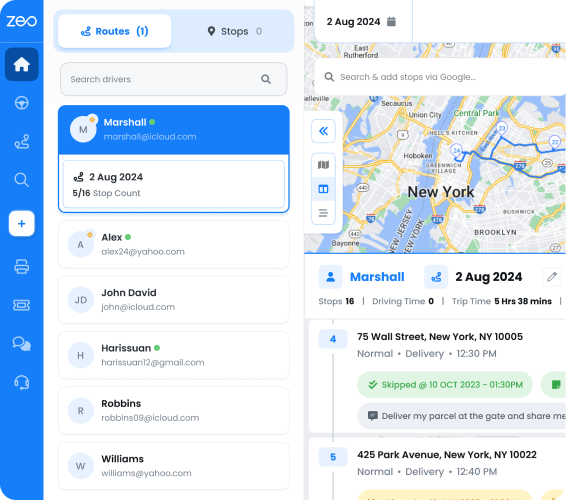
- Driver overtime: Reduced by 65%
- On-time delivery rate: Improved from 78% to 91%
- Deliveries per driver: Increased from 22 to 28 daily
- Route planning efficiency: Now 15 minutes for all 25 drivers
Month 3 (July 2026)
- Customer satisfaction scores: Up 23%
- Vehicle maintenance costs: Down 12% (less wear from optimized routes)
- New customer capacity: Handling 35% more deliveries with same fleet
- ROI calculation: $127,000 annual savings vs. $3,600 software cost
The U.S. Department of Transportation data shows that route optimization typically delivers 15-25% fuel savings for delivery fleets. Metro Express achieved the higher end of this range while gaining significant time savings.
Technical Deep Dive: How AI Optimization Transformed Daily Operations
The difference between manual and AI-powered routing became clear in Metro Express’s daily operations.
Previously, Mark planned routes by neighborhood, grouping nearby stops together. This seemed logical but ignored crucial factors like traffic patterns, delivery time windows, and vehicle capacity limits.
Zeo’s AI optimization considers dozens of variables simultaneously:
- Real-time traffic conditions
- Historical delivery times for each location
- Driver skills and customer preferences
- Vehicle capacity and weight distribution
- Time windows and priority stops
For example, Zeo identified that one of their routes through downtown Cincinnati was most efficient when started at 2 PM to avoid morning traffic, even though it seemed counterintuitive.
The capacity-based routing feature prevented overloading, while skill-based assignment matched drivers with customers who had specific delivery requirements.
Live customer notifications reduced “Where’s my delivery?” calls by 80%. Customers received SMS updates with real-time ETAs and tracking links, improving satisfaction while reducing office interruptions.
Lessons Learned: What We’d Do Differently Next Time
After six months with route planning software, Mark reflects on the implementation process.
Start the Pilot Sooner
“I spent too much time analyzing options,” Mark admits. “Zeo’s 7-day trial would have shown me everything I needed to know in week one.”
Involve Drivers in Software Selection
Including driver input during evaluation would have identified mobile app preferences earlier and built buy-in from the start.
Set Realistic Expectations for Month One
While improvements were immediate, the full benefits took 2-3 months as drivers adapted to optimized routes and Mark refined the system settings.
Track More Customer Metrics
Mark wishes he’d measured customer retention rates from the beginning. Improved delivery reliability significantly impacted repeat business, but he lacks exact numbers.
The biggest surprise? Driver job satisfaction improved dramatically. “When you’re not stressed about being late or getting lost, work becomes more enjoyable,” explains driver Tom Rodriguez, who initially resisted the change.
Today, Metro Express handles 40% more deliveries than pre-optimization while maintaining the same 25-driver fleet. Mark spends his former route-planning time on business development and driver training.
“The ROI was proven in month one,” Mark concludes. “But the real success is having a scalable operation that can grow without chaos.”
This delivery optimization success story demonstrates how proper implementation of logistics route optimization transforms operations beyond just cost savings.
Frequently Asked Questions
Q: How long does it typically take to see ROI from delivery optimization software?
Most companies see initial ROI within 30-60 days of implementation. Metro Express achieved measurable results in month one with 18% fuel cost reduction and 40% fewer customer complaints using Zeo Route Planner’s AI-powered optimization.
Q: What’s the biggest challenge when rolling out new routing software to drivers?
Driver resistance to change is the most common challenge. Success comes from showing benefits rather than imposing rules, starting with pilot groups, and addressing concerns about GPS tracking transparently.
Q: How much can route optimization actually reduce daily planning time?
Route optimization can reduce planning time by 80-90%. Manual planning that takes 3-4 hours can be reduced to 15-45 minutes with automated systems that handle multiple constraints simultaneously.
Q: What metrics should companies track to measure delivery optimization success?
Key metrics include average route time, fuel costs, on-time delivery rate, customer complaints, driver overtime hours, and deliveries per driver per day. Tracking these provides clear ROI measurement.
Q: Can small delivery companies with 10-25 drivers benefit from route optimization software?
Yes, small fleets often see the highest percentage improvements. Companies with 10-25 drivers typically save $50,000-$100,000 annually through reduced fuel costs, overtime, and improved capacity utilization with Zeo Route Planner’s scalable solutions.
Start Your Own Optimization Success Story
Metro Express Delivery’s transformation proves that delivery optimization success stories happen when companies choose the right tools and implementation approach.
Ready to write your own success story? Start your free 7-day trial of Zeo Route Planner today and see how AI-powered optimization can transform your delivery operations.
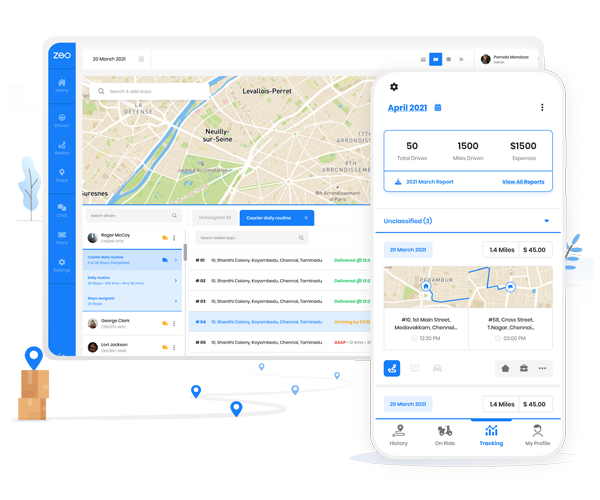
Are you a fleet owner?
Want to manage your drivers and deliveries easily?
Grow your business effortlessly with Zeo Routes Planner – optimize routes and manage multiple drivers with ease.

increase fuel savings
Save 2 Hours on Deliveries, Everyday!
Optimize routes with our algorithm, reducing travel time and costs efficiently.
Get Started for Free