


# Best Route Planner App for Business Growth in 2026
> TL;DR: Professional route planner apps solve the traveling salesman problem that Google Maps can’t handle – optimizing stop sequences for 15-20 locations instead of just providing point-to-point directions. Businesses waste an average of $3,300 per truck annually on inefficient routes, while route optimization tools like Zeo Route Planner address this with AI-powered algorithms that save 2+ hours daily per driver.
When your delivery or field service business hits 5-10 stops per day, Google Maps starts showing its limits. Drivers waste time figuring out the best order, customers get frustrated with late arrivals, and fuel costs keep climbing.
The problem isn’t navigation—it’s route optimization. Consumer apps guide you from point A to B efficiently, but they can’t solve the traveling salesman problem of visiting 15-20 stops in the most efficient order.
Professional route planner app solutions fill this gap by using advanced algorithms to calculate optimal stop sequences, manage time windows, and provide business tools like customer notifications and proof of delivery. This guide shows you exactly how to make the transition and what to expect.
Consumer Navigation vs Business Route Planning: Why Google Maps Isn’t Enough
Google Maps excels at getting you to one destination quickly. But when you need to visit multiple stops, it creates routes in the order you enter addresses—not the most efficient order.
Try this test: Enter 10 customer addresses into Google Maps and note the total drive time. Now rearrange those same addresses in different orders. You’ll see drive times vary by 30-60 minutes for the same stops.
This happens because consumer navigation apps prioritize simplicity over optimization. They assume you know your ideal stop sequence, when most businesses need help determining that sequence.
The Hidden Costs of Manual Route Planning
Field service companies using basic navigation face several costly problems:
Time waste: Managers spend 30-45 minutes each morning planning routes manually. Drivers lose 1-2 hours daily driving inefficient routes.
Poor customer experience: Without time window management, customers get vague arrival estimates like “sometime between 9am and 5pm.”
No accountability: Consumer apps don’t track whether drivers completed stops or provide proof of service delivery.
Limited scalability: As you add drivers and customers, manual planning becomes impossible to manage effectively.
According to the American Transportation Research Institute, route inefficiencies cost commercial fleets an average of $3,300 per truck annually in wasted fuel and driver time.
When Business Route Planning Makes Sense
Your company needs professional route planning when you experience these situations:
- Drivers handle 8+ stops per day across different locations
- Customers require specific delivery or service time windows
- You need proof of delivery or service completion for billing
- Managing routes for multiple drivers takes over 30 minutes daily
- Customer complaints about late arrivals are increasing
The transition point varies by industry, but most businesses see clear ROI once they reach 3-5 drivers or 50+ weekly stops.
Route Optimization Algorithm Comparison: How Different Apps Calculate Efficiency
Not all route planner apps use the same optimization methods. Understanding these differences helps you choose the right solution for your business needs.
Basic Route Optimization
Entry-level route planners use simple algorithms that minimize total distance. They arrange stops to reduce overall miles driven, which works well for dense delivery areas.
These algorithms typically handle 10-15 stops effectively but struggle with complex constraints like time windows, driver skills, or vehicle capacity limits.
Advanced Multi-Constraint Optimization
Professional route optimization considers multiple variables simultaneously:
Time windows: Ensuring drivers arrive within customer-specified time ranges, like “deliver between 2-4pm.”
Vehicle capacity: Factoring in weight and volume limits so drivers don’t get overloaded.
Driver skills: Assigning stops based on technician certifications or experience levels.
Traffic patterns: Using real-time and historical traffic data to avoid congested routes during peak hours.
Zeo Route Planner uses AI-powered route optimization algorithms that optimize for all these constraints simultaneously, typically saving 2+ hours daily per driver compared to manual planning.
Real-Time Dynamic Optimization
The most sophisticated route planners adjust routes dynamically as conditions change. If a customer cancels, the system automatically reoptimizes remaining stops. If traffic creates delays, it recalculates arrival times and notifies affected customers.
This level of optimization particularly benefits businesses with same-day delivery or emergency service calls where schedules change frequently.
Industry-Specific Route Planner App Solutions: Tailored Features for Different Business Types
Different industries have unique routing requirements that generic solutions often miss. Here’s how professional route planner apps adapt to specific business needs:
Delivery Services
Delivery companies prioritize speed and customer communication. They need features like:
- Package tracking integration with e-commerce platforms
- Customer notification systems for delivery updates
- Proof of delivery with photos and signatures
- Cash-on-delivery tracking for payment reconciliation
Delivery routes often involve high stop density in residential areas, making distance optimization critical for meeting delivery promises.
Field Service Operations
HVAC, plumbing, and electrical companies have different priorities than delivery services:
Skill-based routing: Assigning jobs to technicians with appropriate certifications or experience levels.
Service time estimation: Accounting for job complexity when scheduling appointments, not just travel time.
Parts and equipment management: Ensuring technicians have necessary supplies before dispatching to job sites.
Emergency call integration: Ability to insert urgent jobs into existing routes without disrupting other appointments.
Field service management routes typically involve fewer stops but longer service times and more complex scheduling constraints.
Sales Territory Management
Sales representatives need route planning that maximizes face-time with prospects and customers:
- Lead prioritization based on deal value or closing probability
- Territory boundary management to prevent overlap between reps
- Customer relationship history integration
- Flexible scheduling for appointment-based versus cold calling
Sales routes often span larger geographic areas with emphasis on relationship building rather than pure efficiency.
Integration Ecosystem: How Route Planners Connect with Your Business Stack
Modern route planner apps function as central hubs that connect with your existing business systems. These integrations eliminate double data entry and create seamless workflows.
E-commerce Platform Integration
Online retailers benefit enormously from automatic order import:
Shopify integration: Orders flow directly into route planning with customer addresses, delivery preferences, and special instructions pre-populated.
WooCommerce connectivity: Similar automation for WordPress-based stores, including inventory and fulfillment status updates.
These integrations transform order fulfillment from a manual process requiring 15-20 minutes per route into an automated workflow taking 2-3 minutes.
CRM and Customer Management
Route planners integrate with customer relationship management systems to provide complete service context:
HubSpot integration: Sales and service history appears alongside route information, helping drivers prepare for customer interactions.

increase fuel savings
Save 2 Hours on Deliveries, Everyday!
Optimize routes with our algorithm, reducing travel time and costs efficiently.
Get Started for Free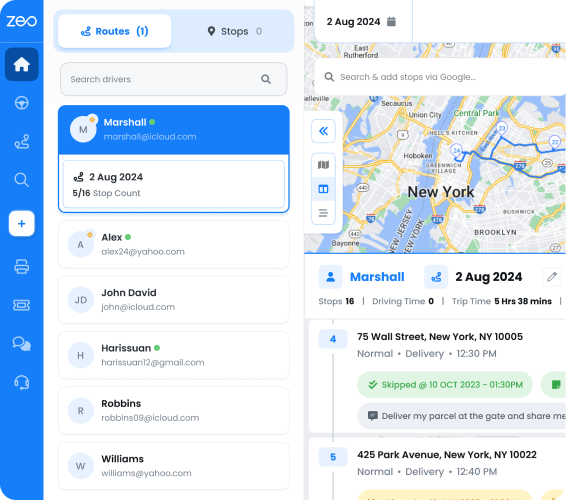
Customer communication: Automated SMS and email updates keep customers informed about arrival times without manual intervention.
Zeo Route Planner offers direct integrations with major e-commerce platforms and CRM systems, plus Zapier connectivity that links to over 1,000 additional business applications – serving 1.5M+ users across 150+ countries.
Accounting and Billing Systems
Professional route planners capture data that streamlines billing and expense tracking:
- Mileage logs for tax deduction and reimbursement purposes
- Service completion verification for accurate billing
- Fuel cost tracking tied to specific routes and customers
This integration capability often provides unexpected ROI by reducing administrative overhead beyond just route optimization savings. According to research from the Bureau of Labor Statistics, transportation costs represent 10-15% of most service business operating expenses, making optimization crucial for profitability.
ROI Calculator: Measuring the True Cost Savings of Professional Route Planning
Understanding the financial impact of upgrading to a professional route planner app requires looking at both direct and indirect cost savings.
Direct Time Savings
Calculate your current route planning costs:
Management time: Hours spent planning routes × manager hourly rate
Driver inefficiency: Extra driving time × number of drivers × hourly rate + fuel costs
Failed deliveries: Repeat trips due to missed time windows × cost per trip
Example calculation for a 5-driver delivery company:
- Manager spends 45 minutes daily planning: $25/hour × 0.75 hours × 250 days = $4,688
- Drivers waste 1.5 hours daily on inefficient routes: $18/hour × 1.5 hours × 5 drivers × 250 days = $33,750
- Extra fuel costs: 50 miles × $0.55/mile × 5 drivers × 250 days = $34,375
Total annual waste: $72,813
Customer Experience Improvements
Poor route planning creates hidden costs through customer dissatisfaction:
Repeat service calls: When technicians arrive without proper preparation or outside time windows
Customer churn: Lost business due to unreliable service delivery
Negative reviews: Impact on new customer acquisition
According to Harvard Business Review research, improving customer retention by just 5% can increase profits by 25-95%, making customer experience improvements highly valuable.
Operational Efficiency Gains
Professional route planning creates efficiency improvements beyond direct time savings:
Reduced phone calls: Automated customer notifications eliminate “where’s my driver” calls
Better resource utilization: Skill-based routing ensures the right technician handles each job
Improved accountability: Digital proof of service reduces billing disputes and payment delays
Break-Even Analysis
Most businesses see positive ROI within 30-60 days of implementing professional route planning. The break-even calculation depends on:
- Number of drivers and daily stops
- Current inefficiency levels
- Route planner app subscription costs
- Implementation and training time
Companies with 3+ drivers typically save $500-2,000 monthly, making even premium route planning solutions cost-effective.
Implementation Guide: Transitioning Your Team from Basic Apps to Professional Route Planning
Successfully transitioning from consumer navigation to professional route planning requires careful change management and technical preparation.
Pre-Implementation Assessment
Start by documenting your current routing process:
Time tracking: Measure how long route planning currently takes
Route analysis: Track actual vs. optimal drive times for existing routes
Customer feedback: Note complaints about late arrivals or poor communication
Driver input: Understand current pain points and workflow preferences
This baseline data helps you measure improvement and identify the most important features for your business.
Choosing the Right Route Planner App
Evaluate route planning solutions based on your specific requirements:
Core optimization: Does it handle your typical number of stops and constraints?
Integration needs: Will it connect with your existing business systems?
Mobile functionality: How will drivers interact with the system in the field?
Scalability: Can it grow with your business over the next 2-3 years?
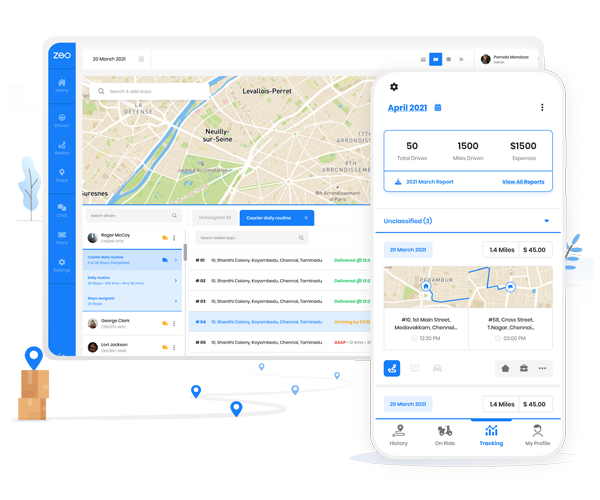
Zeo Route Planner addresses these needs through its dual-platform approach: fleet managers use the web platform to plan and assign routes, while drivers receive optimized routes directly on their phones via the Zeo mobile app, complete with turn-by-turn navigation and customer details.
Training and Rollout Strategy
Implement automated route planning gradually to minimize disruption:
Week 1: Train managers on route planning and optimization features
Week 2: Add one driver to test mobile app functionality and workflow
Week 3-4: Roll out to remaining drivers with ongoing support
Week 5: Evaluate results and optimize settings based on real-world usage
Driver Adoption Best Practices
The biggest implementation challenge is usually driver adoption of new technology:
Emphasize benefits: Show how optimized routes reduce driving time and stress
Provide adequate training: Ensure drivers feel comfortable with mobile app navigation
Address concerns: Some drivers worry about being tracked; focus on customer service benefits
Gather feedback: Use driver input to optimize routes and app settings
Most drivers appreciate professional route planning once they experience the time savings and reduced customer complaints.
Measuring Success
Track key metrics to validate your transition success:
- Average stops per hour: Should increase by 15-25%
- Daily drive time: Should decrease by 1-2 hours per driver
- Customer satisfaction: Monitor delivery time performance and complaints
- Fuel efficiency: Track miles driven per stop completed
Document these improvements to justify the investment and identify areas for continued optimization.
Frequently Asked Questions
Q: How many stops per day make a route planner app worthwhile for small businesses?
Most businesses see clear ROI from professional route planning when they reach 8+ stops per day or manage routes for 3+ drivers. The break-even point typically occurs within 30-60 days as time savings from optimized routes outweigh subscription costs.
Q: What’s the difference between free navigation apps and paid route optimization software?
Free navigation apps like Google Maps guide you between individual destinations but can’t optimize the sequence of multiple stops. Professional route planner apps use algorithms to calculate the most efficient order for 15-20 stops, considering factors like time windows, vehicle capacity, and traffic patterns.
Q: Can route planning software integrate with existing business systems like e-commerce platforms?
Yes, modern route planners connect with major business platforms to eliminate double data entry. Zeo Route Planner offers direct integrations with Shopify, WooCommerce, HubSpot CRM, and over 1,000 apps through Zapier, automatically importing orders and customer details into optimized routes.
Q: How much time does professional route optimization typically save per driver?
Professional route optimization typically saves 2+ hours daily per driver compared to manual planning or basic navigation apps. This includes both reduced driving time from optimized stop sequences and elimination of manual route planning tasks for managers.
Q: What proof of delivery features should I look for in a route planner app?
Essential proof of delivery features include photo capture, digital signature collection, delivery notes, and automatic customer notifications. These features reduce billing disputes, improve customer communication, and provide documentation for service completion without requiring separate apps or paperwork.
Professional route planner apps transform how growing businesses handle delivery and field service operations. The transition from consumer navigation requires some upfront effort, but the time savings, cost reductions, and customer experience improvements typically provide clear ROI within the first month.
Start your free trial of Zeo Route Planner and see how much time and money you can save in your first week.
Are you a fleet owner?
Want to manage your drivers and deliveries easily?
Grow your business effortlessly with Zeo Routes Planner – optimize routes and manage multiple drivers with ease.
increase fuel savings
Save 2 Hours on Deliveries, Everyday!
Optimize routes with our algorithm, reducing travel time and costs efficiently.
Get Started for Free