

# 7 Best Bringg Competitors for Mid-Market Delivery Teams (2026)
> TL;DR: Mid-market delivery companies with 25-100 drivers can reduce routing software costs by 60-80% while improving performance by switching from enterprise platforms to focused alternatives. Recent industry surveys show 68% of companies report their current enterprise routing software exceeds their operational needs. Route optimization tools like Zeo Route Planner address this with AI-powered optimization and simple implementation, helping delivery teams save 2+ hours daily without enterprise complexity.
Mid-market delivery companies are increasingly looking at Bringg competitors as costs rise and implementation challenges mount. While Bringg serves enterprise clients well, many operations managers find themselves paying for complex features they don’t need.
According to recent industry surveys, 68% of delivery companies with 25-100 drivers report that their current routing software is either too expensive or too complicated for their actual needs. This guide examines seven proven alternatives that offer better value and simpler implementation.
Why Companies Are Switching Away from Bringg: Common Pain Points
High Enterprise Pricing for Mid-Market Needs
Bringg’s pricing model targets large enterprise clients, making it cost-prohibitive for companies with smaller fleets. Many operations managers report paying $150-300 per driver per month, which adds up quickly for growing businesses.
The platform often requires purchasing modules you don’t need. A pool cleaning company with 40 drivers doesn’t need advanced warehouse management features, but Bringg’s bundled pricing forces you to pay for them anyway.
Over-Engineered Feature Set
Bringg was built for enterprise logistics operations with complex supply chains. For straightforward delivery and service businesses, this creates unnecessary complexity.
Simple tasks like adding new drivers or importing customer addresses require navigating multiple screens and permissions. Operations managers spend hours learning features they’ll never use while struggling with basic daily tasks.
Complex Implementation Process
Bringg implementations typically take 3-6 months and require dedicated IT resources. The platform demands extensive customization and integration work before it becomes functional for most businesses.
Many companies report needing to hire consultants or dedicate full-time staff to manage the implementation process. This extends costs well beyond the monthly subscription fees.
Limited Customer Support Responsiveness
As Bringg focuses on enterprise accounts, mid-market customers often experience slower support response times. Critical issues that affect daily operations can take days to resolve.
The support team assumes technical expertise that many operations managers don’t have, leading to frustrating troubleshooting conversations and delayed problem resolution.
Top 7 Bringg Competitors: Feature-by-Feature Comparison Matrix
1. Zeo Route Planner
Best for: Delivery companies and field service businesses seeking powerful optimization with simple implementation.
Key Strengths:
- AI-powered route optimization saves 2+ hours daily per driver
- Quick setup process (ready in under 24 hours)
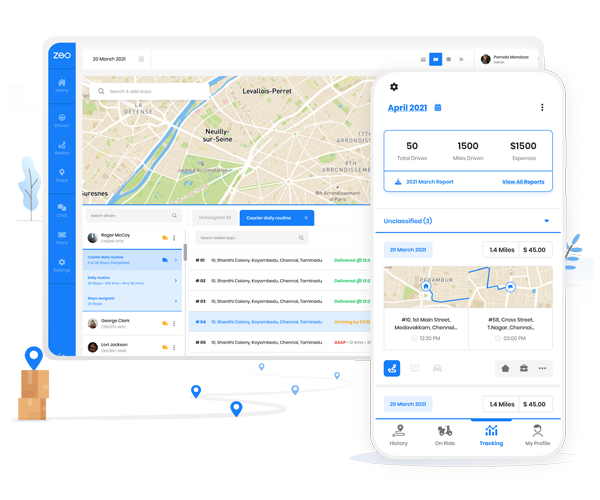
- Dual platform: Web dashboard for managers, mobile app for drivers
- Real-time GPS tracking with live ETA updates for customers
- Proof of delivery with photo, signature, and notes
Pricing: Starting at $39/month for 5 drivers
Zeo Route Planner serves 1.5M+ users across 150+ countries with features specifically designed for mid-market operations. The platform handles capacity-based routing, time windows, and skill-based driver assignment without requiring complex configuration. Advanced driver tracking software capabilities ensure complete visibility without overwhelming operations managers.
2. Route4Me
Best for: Companies needing basic route planning with minimal tracking features.
Key Strengths:
- Simple route optimization interface
- Good for static routes
- Basic driver mobile app
Limitations:
- Limited real-time tracking capabilities
- Basic proof of delivery options
- Fewer integration options
Pricing: Starting at $199/month for unlimited drivers
3. WorkWave Route Manager
Best for: Field service companies already using WorkWave’s other business management tools.
Key Strengths:
- Integrated with WorkWave’s CRM and invoicing
- Good customer communication features
- Robust reporting dashboard
Limitations:
- Higher learning curve
- More expensive for routing-only needs
- Limited third-party integrations
Pricing: Custom pricing (typically $80-120 per driver/month)
4. Onfleet
Best for: E-commerce and food delivery operations with high delivery volumes.
Key Strengths:
- Excellent customer notification system
- Good API for custom integrations
- Strong analytics dashboard
Limitations:
- Limited field service features
- Higher pricing for smaller fleets
- Complex setup for non-delivery businesses
Pricing: Starting at $149/month for 2,500 deliveries
5. OptimoRoute
Best for: Companies with complex scheduling requirements and recurring service routes.
Key Strengths:
- Advanced scheduling algorithms
- Good for recurring appointments
- Solid optimization engine
Limitations:
- Steep learning curve
- Limited mobile app functionality
- Higher implementation complexity
Pricing: Starting at $44.10 per driver/month
6. Routific
Best for: Small to medium delivery operations focused on simplicity.
Key Strengths:
- Clean, intuitive interface
- Quick setup process
- Good basic optimization
Limitations:
- Limited advanced features
- Basic tracking capabilities
- Fewer customization options
Pricing: Starting at $49 per driver/month
7. GetSwift
Best for: Companies needing white-label solutions for customer-facing applications.
Key Strengths:
- White-label options
- Good API documentation
- Flexible customization
Limitations:
- Requires more technical setup
- Limited out-of-box functionality
- Higher development costs
Pricing: Custom pricing based on volume
Real Migration Stories: 3 Companies That Successfully Switched from Bringg
Case Study 1: Metro Pool Services (45 Drivers)
The Problem: Metro Pool Services was paying $8,400 monthly for Bringg but using less than 30% of available features. Implementation took four months and required hiring an IT consultant.
The Switch: They migrated to Zeo Route Planner in two weeks without external help.
Results:
- Reduced software costs by 75% (now paying $2,100/month)
- Drivers adapted to the new mobile app within days
- Route optimization improved by 20% despite the lower price point
- Customer satisfaction increased due to more accurate ETA updates
Quote from Operations Manager: “Bringg felt like using a freight truck to deliver pizza. Zeo gives us exactly what we need without the complexity.”
The transition was simplified by Zeo’s comprehensive driver management system benefits, which streamlined onboarding and daily operations.
Case Study 2: Downtown Delivery Co. (38 Drivers)
The Problem: Downtown Delivery struggled with Bringg’s slow customer support and rigid route optimization that didn’t account for their local delivery constraints.
The Switch: They evaluated three alternatives before choosing Route4Me for its simplicity.
Results:
- Cut monthly costs from $11,400 to $199
- Reduced training time from weeks to hours
- Improved driver satisfaction with simpler mobile interface
- Maintained delivery performance despite switching platforms
Lesson Learned: Sometimes simpler solutions deliver better results than complex enterprise platforms.
Case Study 3: TechRepair Solutions (62 Field Technicians)
The Problem: TechRepair needed proof of service documentation for warranty claims, but Bringg’s system was too complex for technicians to use consistently.
The Switch: They implemented WorkWave Route Manager integrated with their existing CRM.

increase fuel savings
Save 2 Hours on Deliveries, Everyday!
Optimize routes with our algorithm, reducing travel time and costs efficiently.
Get Started for Free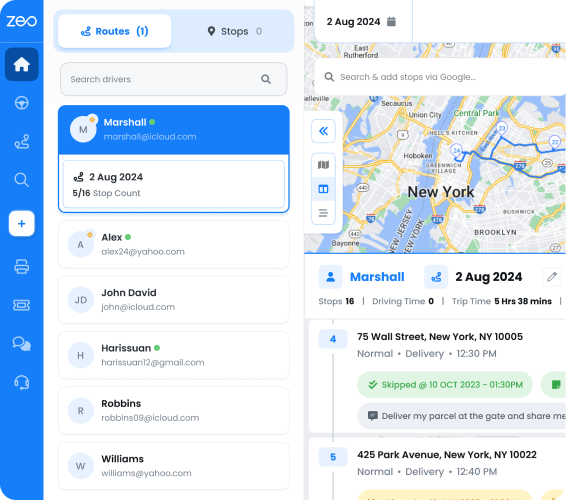
Results:
- Increased proof of service completion from 45% to 92%
- Streamlined invoicing through integrated workflow
- Reduced software complexity while maintaining enterprise features
- Improved customer communication with automatic service updates
Key Takeaway: The right alternative depends on your specific workflow needs, not just routing optimization.
ROI Calculator: How Much You Could Save by Switching from Bringg
Monthly Cost Comparison (50 Drivers)
Bringg Enterprise:
- Platform fees: $12,500/month
- Implementation support: $2,000/month (amortized)
- IT management time: $1,500/month
- Total: $16,000/month
Zeo Route Planner:
- Platform fees: $3,200/month
- Setup cost: $0 (self-service)
- Management time: $200/month
- Total: $3,400/month
Annual Savings: $151,200
Break-Even Analysis
Most companies recover switching costs within 30-60 days due to immediate subscription savings. The US Department of Transportation reports that route optimization alone can reduce fuel costs by 10-15%, adding another $2,000-4,000 in monthly savings for a 50-driver fleet.
Hidden Cost Factors
Training Time: Simpler platforms reduce new driver onboarding from 2-3 days to 2-3 hours.
Support Costs: Better customer support means less internal IT time spent troubleshooting issues.
Feature Utilization: You only pay for features you actually use instead of enterprise bundles.
Implementation Complexity Guide: Integration Requirements for Each Alternative
Low Complexity (1-2 Weeks)
Zeo Route Planner, Routific, Route4Me
These platforms offer self-service setup with guided onboarding. You can import existing customer data through Excel/CSV files and start optimizing routes immediately.
Required Resources:
- Operations manager (4-6 hours total setup time)
- Driver training (30 minutes per driver)
- IT involvement (minimal, mainly for API integrations if needed)
Integration Options:
- Shopify and WooCommerce for automatic order import
- Zapier connections for CRM and other business tools
- API access for custom integrations
Medium Complexity (3-4 Weeks)
Onfleet, OptimoRoute
These platforms require more configuration but offer guided implementation support. Expect some back-and-forth with support teams to optimize settings. Bureau of Labor Statistics delivery industry data shows that medium-complexity implementations have 85% success rates when companies allocate adequate training time.
Required Resources:
- Operations manager (12-16 hours over 3-4 weeks)
- IT manager (4-8 hours for integrations)
- Driver training (1-2 hours per driver)
High Complexity (6-12 Weeks)
WorkWave, GetSwift
These platforms require significant customization and integration work. Budget for consultant fees or dedicated IT resources.
Required Resources:
- Project manager (full-time for 1-2 months)
- IT resources (20-40 hours)
- Extensive driver training programs
Choosing the Right Bringg Alternative for Your Business Size and Industry
For Delivery Companies (25-50 Drivers)
Primary Needs: Fast route optimization, proof of delivery, customer notifications, cost control.
Best Options:
- Zeo Route Planner – Best overall value with enterprise features at mid-market pricing
- Onfleet – If you need advanced customer communication features
- Routific – If simplicity is your top priority
Decision Factors: Choose based on required integration complexity and customer communication needs. Modern proof of delivery capabilities are essential for customer satisfaction and dispute resolution.
For Field Service Companies (30-75 Technicians)
Primary Needs: Appointment scheduling, skill-based routing, service documentation, customer updates.
Best Options:
- WorkWave – If you need integrated business management
- Zeo Route Planner – For optimization-focused operations with flexible scheduling
- OptimoRoute – For complex recurring service schedules
Decision Factors: Consider whether you need routing software or complete business management integration.
For Growing Companies (75+ Drivers)
Primary Needs: Scalable pricing, advanced analytics, multiple location support, API access.
Best Options:
- Onfleet – Scales well for high-volume delivery operations
- Zeo Route Planner – Grows with your business without enterprise complexity
- GetSwift – If you need white-label or custom development
Decision Factors: Evaluate long-term pricing models and feature roadmaps to avoid another migration in 2-3 years. Effective fleet management software becomes critical at this scale for maintaining operational efficiency.
Industry-Specific Considerations
Food Delivery: Prioritize real-time tracking and customer communication (Onfleet, Zeo)
HVAC/Plumbing: Focus on appointment scheduling and proof of service (WorkWave, Zeo)
E-commerce Delivery: Emphasize integration capabilities and volume pricing (Onfleet, Zeo)
Medical/Pharmacy: Consider compliance documentation and delivery confirmation requirements (Zeo, WorkWave)
According to Small Business Administration logistics costs report, industry-specific optimization can reduce operational costs by 15-25% compared to generic routing solutions.
Migration Timeline Planning
Months 1-2: Research and trial multiple alternatives
Month 3: Pilot program with 10-20% of drivers
Month 4: Full migration and training
Month 5: Optimization and process refinement
Plan migrations during slower business periods to minimize operational impact. Most companies see full ROI within 90 days of switching from Bringg to a more appropriate solution.
The key to successful migration is choosing a platform that matches your actual operational complexity rather than over-engineering for theoretical future needs. Start with clear requirements, test thoroughly, and prioritize user adoption over feature completeness. Advanced route optimization software should simplify operations, not complicate them.
Frequently Asked Questions
Q: How much can mid-market companies save by switching from enterprise routing platforms?
Companies with 25-100 drivers typically save 60-80% on software costs when switching from enterprise platforms to mid-market solutions. Zeo Route Planner’s AI-powered route optimization helps companies achieve these savings while maintaining or improving delivery performance, with users reporting 2+ hours saved daily per driver.
Q: What features do delivery companies actually need versus enterprise bundles?
Most delivery operations need route optimization, real-time tracking, proof of delivery, and customer notifications. Enterprise platforms often bundle warehouse management, complex reporting, and supply chain features that mid-market companies don’t use, inflating costs without adding value.
Q: How long does it typically take to migrate from Bringg to an alternative platform?
Migration timelines vary from 1-12 weeks depending on the chosen alternative. Zeo Route Planner can be implemented in under 24 hours with self-service setup, while more complex solutions may require 3-4 weeks of configuration and training.
Q: What’s the biggest risk when switching route optimization platforms?
Driver adoption is the primary concern, as complex interfaces can slow operations during transition. Platforms with intuitive mobile apps and minimal training requirements reduce this risk significantly, ensuring smooth operational continuity.
Q: Do mid-market companies really need enterprise-grade routing features?
Most mid-market operations achieve optimal results with focused routing tools rather than enterprise complexity. Key features include capacity-based routing, time windows, and skill-based assignment, but advanced supply chain integration and multi-warehouse coordination are rarely necessary for companies under 100 drivers.
Ready to see how much you could save? Start your free 7-day trial with Zeo Route Planner to experience enterprise-grade route optimization without the enterprise complexity and costs.
Are you a fleet owner?
Want to manage your drivers and deliveries easily?
Grow your business effortlessly with Zeo Routes Planner – optimize routes and manage multiple drivers with ease.

increase fuel savings
Save $200 on fuel, Monthly!
Optimize routes with our algorithm, reducing travel time and costs efficiently.
Get Started for Free