

# Route Planner App: Complete Guide for Growing Businesses 2026
> TL;DR: A professional route planner app automates multi-stop route distribution across multiple drivers while basic mapping tools only handle single-vehicle trips. According to the Bureau of Transportation Statistics, businesses with fleet operations waste an average of 3.2 hours daily on manual route planning. Route optimization tools like Zeo Route Planner address this with AI-powered route optimization that saves 2+ hours daily while serving delivery and field service teams across 150+ countries.
Growing your business means scaling your operations. But if you’re still using Google Maps to plan routes for multiple drivers or technicians, you’ve hit a wall that basic mapping tools can’t break through.
A route planner app transforms chaotic daily routing into an automated, optimized system. This guide shows you how to choose and implement the right solution to save hours daily and reduce operational costs.
Why Basic Mapping Tools Fail Growing Businesses
Google Maps works perfectly for personal trips. But when you’re managing 5, 10, or 50 drivers daily, it becomes your biggest operational bottleneck.
Manual Planning Becomes Impossible
Planning routes for multiple stops across multiple drivers takes exponentially longer as you add vehicles. What starts as 15 minutes for one driver becomes 2+ hours for five drivers. According to the Bureau of Transportation Statistics, businesses with fleet operations waste an average of 3.2 hours daily on route planning alone.
You’re stuck playing Tetris with addresses, trying to figure out who goes where. Meanwhile, your drivers wait for routes, customers wait for services, and you’re burning daylight on paperwork instead of revenue.
No Multi-Stop Optimization
Google Maps optimizes routes for one vehicle with limited stops. It can’t distribute 50 customer visits across 8 technicians while considering vehicle capacity, time windows, and driver skills.
Your field service technicians end up zigzagging across town. Your delivery drivers make unnecessary trips. Every inefficient mile costs you fuel, time, and customer satisfaction.
Zero Visibility Into Operations
Once your drivers leave, you’re flying blind. Customers call asking “Where’s my delivery?” and you have no real answer. You can’t provide accurate ETAs or track performance across your fleet.
This lack of visibility creates customer service nightmares. It also makes it impossible to identify which routes work and which drivers need support. Professional driver tracking software solves this by providing real-time GPS visibility and live ETA updates for customers.
Can’t Handle Business Constraints
Your business has specific requirements that basic tools ignore. Some customers only accept deliveries between 2-4 PM. Certain technicians have specialized skills. Vehicle capacity limits affect route planning.
Google Maps treats every stop as identical. A professional route planner app handles these real-world constraints automatically.
Complete Route Planner App Comparison: Features That Actually Matter
Not all route planner apps solve the same problems. Here’s what separates professional tools from glorified mapping software.
Route Optimization Engine
The core feature is intelligent route optimization across multiple vehicles. Look for AI-powered algorithms that consider distance, traffic, time windows, and vehicle constraints simultaneously.
Professional apps can optimize 100+ stops across multiple drivers in seconds. They automatically balance workloads and minimize total driving time across your entire fleet.
Real-Time Tracking and Updates
GPS tracking shows you exactly where each driver is and provides live ETA updates for customers. This feature transforms customer service from reactive to proactive.
Customers receive automatic notifications with accurate delivery windows. You can spot delays early and communicate changes before customers get frustrated.
Proof of Service/Delivery
Digital proof collection streamlines your documentation process. Drivers capture photos, collect signatures, and add notes directly in the app.
This eliminates paperwork and creates automatic records for billing, compliance, and customer disputes. Everything syncs instantly to your back office.
Driver Management Tools
Fleet-focused apps include driver profiles with skills, working hours, vehicle assignments, and performance analytics. You can assign specialized jobs to qualified technicians automatically.
These tools also enable communication between dispatchers and drivers through in-app messaging, reducing phone calls and miscommunication.
Integration Capabilities
Your route planner app should connect with existing business systems. E-commerce platforms, CRM software, and accounting systems can feed directly into route planning.
This eliminates double data entry and ensures your routing reflects real customer requirements and business priorities.
Industry-Specific Route Planning Needs: Delivery vs Field Service vs Sales
Different industries have unique routing requirements. Understanding your specific needs helps you choose the right solution.
Delivery Operations
Delivery businesses prioritize package volume, delivery windows, and proof of delivery. Your delivery route planner needs capacity-based routing that considers package size, weight, and vehicle limits.
Time windows are critical for residential deliveries. Customers expect specific delivery windows, and failed attempts cost money. Look for apps that optimize routes while respecting customer preferences.
Field Service Companies
Field service operations focus on technician skills, appointment scheduling, and service documentation. Your HVAC route planning system can’t handle electrical work, and your pool cleaners need different equipment than pest control specialists.
Job duration varies significantly in field service. A routine maintenance call takes 30 minutes, while emergency repairs can last hours. Your route planner app should handle variable service times and emergency insertions.
Sales Teams
Sales operations emphasize territory management, prospect prioritization, and relationship building. High-value prospects deserve more attention than cold calls.
Sales routes often include relationship maintenance visits alongside new prospect meetings. Your route planner app should balance productivity with relationship quality.
How to Calculate ROI: Real Cost Savings from Route Optimization
Route optimization delivers measurable returns across multiple cost categories. Here’s how to calculate your potential savings.
Time Savings Calculation
Track your current route planning time per driver. Most businesses spend 15-30 minutes per driver daily on manual planning. Multiply by your hourly planning cost.
Example: 10 drivers × 20 minutes × $25/hour ÷ 60 minutes = $83 daily in planning time. That’s $21,580 annually just in planning costs.
Professional route optimization software reduces planning time to under 5 minutes for entire fleets. Your savings: $17,264 annually in this example.
Fuel Cost Reduction
According to the American Transportation Research Institute, route optimization reduces fleet mileage by 15-25% on average. Calculate your current monthly fuel costs and apply this reduction.
Example: $5,000 monthly fuel costs × 20% reduction = $1,000 monthly savings = $12,000 annually.
Track actual miles driven before and after implementation to measure real savings in your operation.
Labor Efficiency Gains
Optimized routes let drivers complete more stops per day or finish earlier. Either outcome improves profitability.

increase fuel savings
Save 2 Hours on Deliveries, Everyday!
Optimize routes with our algorithm, reducing travel time and costs efficiently.
Get Started for Free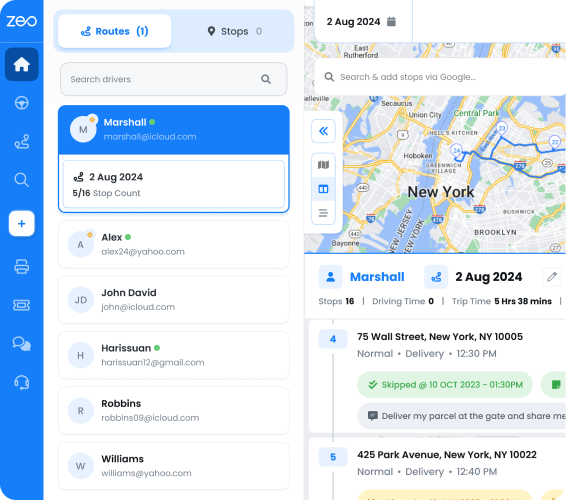
Calculate additional revenue from extra stops or labor savings from shorter workdays. Many businesses see 1-3 additional stops per driver daily, translating directly to increased revenue.
Customer Satisfaction Impact
Accurate ETAs and proactive communication reduce customer complaints and support calls. While harder to quantify, improved customer retention has significant long-term value.
Track customer complaints related to late deliveries or missed appointments before and after implementation.
Implementation Guide: Switching from Manual Planning to Route Apps
Successful implementation requires planning, training, and gradual rollout. Here’s your step-by-step process.
Phase 1: Setup and Data Import
Start by importing your customer database and driver information. Most professional route planner apps support bulk import from Excel, CSV files, or direct integration with your existing systems.
Set up driver profiles with skills, vehicle assignments, and working hours. Configure your business constraints like service time windows and capacity limits.
Phase 2: Pilot Testing
Begin with a small subset of drivers and routes. Test the system for one week with 2-3 drivers while maintaining your backup manual process.
Focus on route accuracy, driver feedback, and customer communication features. Identify any adjustments needed before full rollout.
Phase 3: Driver Training
Train drivers on the mobile app interface. Show them how to mark stops complete, capture photos, collect signatures, and communicate with dispatch.
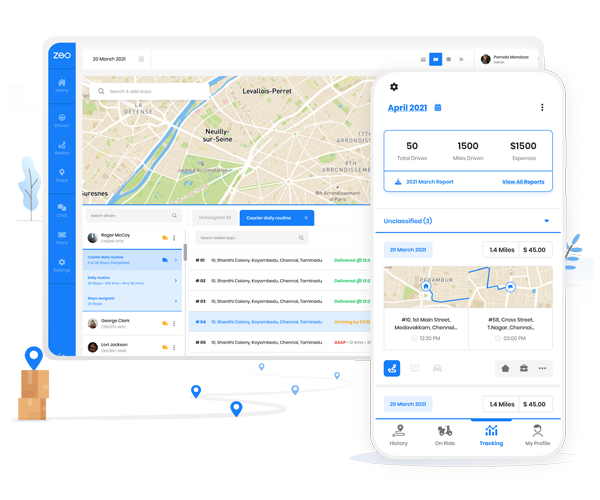
Zeo Route Planner makes this transition seamless – managers use the web platform to plan and assign routes while drivers receive optimized routes directly on their phones with turn-by-turn navigation and customer details.
Phase 4: Full Implementation
Roll out to your entire fleet once pilots show success. Plan for a transition period where you monitor performance closely and provide additional support.
Establish new daily workflows: managers create and assign routes through the web platform, while drivers execute them through the mobile app with real-time updates flowing back to dispatch.
Phase 5: Optimization and Scaling
After two weeks of full operation, analyze performance data. Look for patterns in route efficiency, customer satisfaction, and driver productivity.
Use these insights to refine your routing parameters and driver assignments. Most businesses see continuous improvement over the first month.
Advanced Features That Scale With Your Business Growth
As your business grows, your routing needs become more complex. Advanced features help you scale efficiently.
Dynamic Route Adjustments
Real-world operations require flexibility. Customers reschedule, vehicles break down, and emergency calls appear. Advanced route planner apps handle these changes automatically.
Dynamic rerouting adjusts all affected routes when one change occurs. Your entire fleet stays optimized even when plans change mid-day.
Skill-Based Assignment
Complex service businesses need skill-based routing. Your app should automatically assign jobs to qualified technicians while optimizing routes.
This prevents costly mistakes where unqualified technicians arrive at specialized jobs. It also ensures your most skilled workers handle your most valuable customers.
Analytics and Reporting
Advanced analytics reveal optimization opportunities across your operation. Track metrics like miles per stop, stops per hour, and customer satisfaction by route.
Identify your most efficient routes and drivers. Use these insights to improve training and operational procedures.
API Integrations
Custom integrations connect your route planner app with specialized business systems. This creates automated workflows that eliminate manual data entry.
Zeo Route Planner integrates with Shopify, WooCommerce, HubSpot, and Zapier, connecting to thousands of business applications. These integrations let your routing system grow with your business needs.
Multi-Location Management
Growing businesses often operate from multiple locations or serve different territories. Advanced route planner apps handle complex multi-location operations.
Comprehensive fleet management tools help you manage routes across different service areas while maintaining centralized oversight and reporting.
Scheduled and Recurring Routes
Many businesses serve the same customers regularly. Weekly lawn care, monthly pest control, and daily delivery routes benefit from automation.
Set up recurring routes once and let your app handle the scheduling. This saves planning time and ensures consistent service for regular customers.
According to the Small Business Administration, businesses that automate routine operations see 25-40% productivity improvements. Zeo Route Planner transforms route chaos into automated efficiency, with AI-powered optimization that saves 2+ hours daily while serving 1.5M+ users across 150+ countries. The platform’s combination of intelligent route planning and real-time execution tracking helps businesses of all sizes scale their operations profitably.
Frequently Asked Questions
Q: How much can a route planner app actually save my business per month?
Most businesses save $1,200-$3,000 monthly through reduced fuel costs (15-25% decrease), eliminated planning time (2+ hours daily), and increased stops per driver. Zeo Route Planner’s AI optimization helps 1.5M+ users across 150+ countries achieve these savings through automated route distribution and real-time tracking.
Q: What’s the difference between Google Maps and a professional route planner app?
Google Maps optimizes single-vehicle routes with limited stops, while professional route planners distribute unlimited stops across multiple drivers simultaneously. Professional apps also handle business constraints like time windows, vehicle capacity, driver skills, and provide fleet tracking with customer notifications.
Q: How long does it take to implement a route planner app for my team?
Implementation typically takes 1-2 weeks with proper planning. Start with data import and driver setup (day 1), run pilot testing with 2-3 drivers (week 1), train your team on the mobile interface (week 2), then roll out to your full fleet with performance monitoring.
Q: Can route planner apps handle emergency calls and last-minute changes?
Yes, advanced route planner apps offer dynamic rerouting that automatically adjusts all affected routes when emergencies occur. This keeps your entire fleet optimized even when plans change mid-day, ensuring emergency calls don’t disrupt your scheduled operations.
Q: What industries benefit most from route planner apps?
Delivery operations (40% of users) and field services (60% of users) see the biggest impact. This includes last-mile delivery, food delivery, HVAC, plumbing, pest control, pool cleaning, electrical services, and healthcare visits – any business with multiple stops and drivers.
Ready to transform your routing operations? Start your free Zeo Route Planner trial and optimize your first routes in under 10 minutes.
Are you a fleet owner?
Want to manage your drivers and deliveries easily?
Grow your business effortlessly with Zeo Routes Planner – optimize routes and manage multiple drivers with ease.
increase fuel savings
Hassle Free Deliveries & Pickups!
Optimize routes with our algorithm, reducing travel time and costs efficiently.
Get Started for Free