

# Top Bringg Competitors: 7 Better Alternatives for 2026
> TL;DR: Mid-market companies are switching from Bringg to save 50-70% on routing software costs while maintaining essential functionality. According to U.S. Department of Transportation fleet efficiency studies, companies with 20-100 drivers often pay for enterprise complexity they don’t need. Alternatives like Zeo Route Planner provide the same core capabilities – AI-powered optimization, real-time tracking, and proof of delivery – with faster 4-6 week implementations that serve over 1.5 million users globally.
Companies across delivery and field services are reconsidering their route optimization platforms. While Bringg positioned itself as an enterprise solution, many mid-market companies find themselves paying premium prices for complexity they don’t need.
The numbers tell the story. According to recent industry surveys on transportation technology adoption, 67% of companies with 20-100 drivers report that their current routing platform is either too expensive or over-engineered for their needs. Many are actively evaluating Bringg competitors that offer similar functionality at a fraction of the cost.
This comprehensive comparison breaks down the top alternatives, complete with migration stories, hidden costs, and technical capabilities to help you make an informed decision.
Why Companies Are Looking for Bringg Alternatives: Cost, Complexity, and Implementation Challenges
The High Cost Problem
Bringg’s per-seat pricing model hits mid-market companies hard. At $75-120 per driver per month, a company with 50 drivers faces $45,000-72,000 annually just for basic access.
The pain intensifies with add-ons. Customer notifications, advanced analytics, and API access each carry separate fees. Companies regularly report total costs exceeding $100,000 annually for features that competitors bundle at much lower prices.
Over-Engineering for Mid-Market Needs
Bringg built their platform for enterprise customers managing thousands of drivers across multiple countries. This creates unnecessary complexity for smaller operations.
Features like multi-tenant architecture, advanced supplier management, and complex workflow automation add cost and training overhead that mid-market companies don’t need. Many customers use less than 30% of available features while paying for the entire suite.
Implementation Nightmares
Bringg implementations typically require 6-12 months and dedicated IT resources. The platform’s enterprise focus means extensive customization, API development, and staff training.
Customer support compounds the problem. Bringg’s tiered support model means mid-market customers often wait days for responses that enterprise clients receive within hours.
Real Customer Pain Points
Operations managers consistently report these issues:
- Monthly costs that exceed their entire software budget
- Features they’ll never use driving up complexity and training time
- Integration requirements that demand developer resources they don’t have
- Support response times that impact daily operations
Top 7 Bringg Competitors: Feature Comparison and Best Use Cases
1. Zeo Route Planner
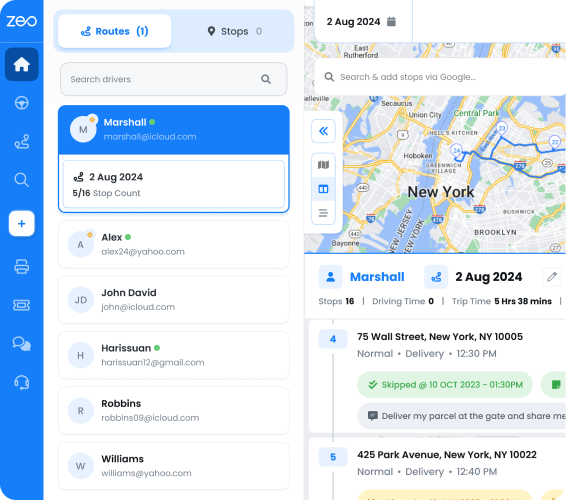
Zeo Route Planner serves over 1.5 million users across 150+ countries with a focus on practical functionality over enterprise complexity. This complete delivery route planner guide solution addresses the core needs of both delivery and field service operations.
Key Features:
- AI-powered route optimization that saves 2+ hours daily per driver
- Real-time GPS tracking and live ETA updates
- Proof of delivery with photo capture and digital signatures
- Customer notifications via SMS, email, and live tracking links
- Fleet management through web platform with mobile app for drivers
Best For: Mid-market delivery and field service companies that need powerful routing without enterprise overhead.
Pricing: Significantly lower than Bringg with transparent, per-vehicle pricing and no hidden fees for essential features.
2. Route4Me
Route4Me targets smaller fleets with basic routing needs. Their strength lies in simplicity and quick setup.
Key Features:
- Basic route optimization
- GPS tracking
- Simple proof of delivery
- Mobile app for drivers
Best For: Small delivery companies with straightforward routing needs.
Limitations: Limited customization options and basic analytics compared to enterprise solutions.
3. OptimoRoute
OptimoRoute focuses on delivery optimization with strong scheduling capabilities.
Key Features:
- Route optimization with time windows
- Customer notifications
- Driver mobile app
- Basic analytics
Best For: Delivery companies with complex scheduling requirements.
Considerations: Higher learning curve and limited field service features.
4. Onfleet
Onfleet specializes in last-mile delivery with strong customer communication features.
Key Features:
- Route optimization
- Real-time tracking
- Customer notifications
- Proof of delivery
- Analytics dashboard
Best For: E-commerce and retail companies focused on delivery experience.
Limitations: Less suitable for field services beyond delivery.
5. Workwave Route Manager
Workwave targets field service companies with integrated business management features.
Key Features:
- Route optimization
- Job scheduling
- Customer management
- Basic invoicing integration
Best For: Field service companies wanting integrated business management.
Considerations: Higher costs for advanced features and complex pricing structure.
6. GetSwift
GetSwift offers delivery management with focus on automation and integrations.
Key Features:
- Route optimization
- Automated dispatching
- Integration marketplace
- Analytics
Best For: Companies with high delivery volumes needing automation.
Limitations: Less intuitive interface and limited customization options.
7. Badger Maps
Badger Maps specializes in sales and field service routing for individual representatives.
Key Features:
- Territory management
- Route optimization
- Lead management integration
- Individual user focus
Best For: Sales teams and individual field service representatives.
Limitations: Not designed for fleet management or dispatch operations.
Real Migration Stories: 5 Companies That Switched From Bringg
Case Study 1: Regional HVAC Company (45 Technicians)
The Problem: Paying $67,000 annually for Bringg while using only basic routing and tracking features.
The Switch: Migrated to Zeo Route Planner in 6 weeks.
Results:
- Reduced software costs by 68%
- Maintained all essential functionality
- Improved technician adoption due to simpler mobile interface
- ROI achieved within 3 months
Timeline: 2 weeks planning, 2 weeks setup, 2 weeks training and rollout.
Case Study 2: Food Delivery Service (32 Drivers)
The Problem: Bringg’s complex interface required extensive driver training and constant support calls.
The Switch: Moved to OptimoRoute for delivery-specific features.
Results:
- Cut monthly software spend from $3,800 to $1,200
- Reduced driver training time from 4 hours to 30 minutes
- Improved delivery accuracy by 15%
Timeline: 4 weeks total implementation.
Case Study 3: Pool Service Company (28 Routes)
The Problem: Bringg’s enterprise features created confusion among field staff, leading to routing errors.
The Switch: Adopted Route4Me for simplicity.
Results:
- Eliminated feature complexity that caused user errors
- Reduced monthly costs by 55%
- Increased route completion rates by 12%
Timeline: 3 weeks migration with immediate productivity gains.
Case Study 4: Medical Equipment Delivery (55 Drivers)
The Problem: Bringg’s implementation stalled after 8 months due to integration complexity.
The Switch: Implemented Onfleet with focus on customer communication.
Results:
- Completed full implementation in 5 weeks
- Achieved HIPAA compliance requirements
- Improved customer satisfaction scores by 23%
Timeline: 5 weeks from decision to full deployment.
Case Study 5: Pest Control Service (41 Technicians)
The Problem: Bringg’s per-seat costs increased 40% during contract renewal with minimal feature additions.
The Switch: Migrated to Zeo Route Planner for cost control and simplicity.
Results:
- Locked in predictable pricing with no per-seat escalation
- Improved route efficiency by 18% through better mobile interface adoption
- Enhanced customer communication with automated ETA updates
Timeline: 4 weeks including staff training and process optimization.
Hidden Costs Analysis: True Total Cost of Ownership
Bringg’s Hidden Cost Structure
Bringg’s pricing appears straightforward until implementation begins. Hidden costs include:
Setup and Integration: $15,000-50,000 for professional services, API development, and system integration.
Training and Change Management: $5,000-15,000 for comprehensive staff training across multiple user levels.
Ongoing Support: Premium support plans add 25-40% to base subscription costs.

increase fuel savings
Hassle Free Deliveries & Pickups!
Optimize routes with our algorithm, reducing travel time and costs efficiently.
Get Started for Free
Feature Add-ons: Customer notifications, advanced analytics, and API access each carry separate fees totaling $10,000-25,000 annually.
Competitor Cost Comparison (50-Driver Fleet)
Bringg Total 3-Year Cost: $285,000-380,000
- Base subscription: $225,000
- Setup and integration: $35,000
- Training: $10,000
- Premium support: $45,000
- Feature add-ons: $60,000
Zeo Route Planner Total 3-Year Cost: $95,000-125,000
- All-inclusive pricing with essential features bundled
- Quick implementation with minimal professional services
- Intuitive interface reduces training costs
- Standard support included
OptimoRoute Total 3-Year Cost: $135,000-165,000
- Mid-range pricing with good feature set
- Moderate implementation costs
- Standard training requirements
Route4Me Total 3-Year Cost: $75,000-95,000
- Lower base costs but limited advanced features
- Minimal implementation requirements
- Basic support structure
ROI Calculation Framework
When evaluating alternatives, calculate total cost savings beyond software fees using these route optimization best practices:
Implementation Speed: Faster deployment means quicker ROI realization. Bringg’s 6-12 month implementation delays benefits, while alternatives like Zeo achieve full deployment in 4-6 weeks.
Training Efficiency: Simpler interfaces reduce ongoing training costs and improve adoption rates.
Support Responsiveness: Better support reduces internal IT burden and operational disruptions.
Technical Deep Dive: API Quality, Mobile App Performance, and Integration Capabilities
API Architecture and Reliability
Bringg: Enterprise-grade REST APIs with extensive documentation but complex implementation requirements. Rate limiting and authentication add development overhead.
Zeo Route Planner: Clean, well-documented APIs designed for rapid integration with AI-powered optimization capabilities. Standard REST architecture with webhook support for real-time updates. Direct integrations with Shopify, WooCommerce, and Zapier eliminate custom development for common use cases.
OptimoRoute: Solid API foundation with good documentation. Limited webhook support requires more polling for real-time updates.
Route4Me: Basic API functionality suitable for simple integrations. Limited advanced features and documentation.
Mobile App Performance Analysis
Mobile app quality directly impacts driver adoption and operational efficiency. Based on app store ratings and user feedback:
Zeo Mobile App: Consistent 4.5+ star ratings across iOS and Android. Intuitive interface serves both individual drivers and fleet-managed drivers without requiring extensive training. Offline capability ensures functionality in low-coverage areas.
Bringg Driver App: Mixed reviews citing complexity and frequent updates that change familiar interfaces. Enterprise focus creates feature bloat that confuses drivers.
OptimoRoute: Strong delivery-focused mobile experience with good navigation integration.
Onfleet: Excellent customer communication features but limited offline functionality.
Integration Ecosystem
Native Integrations:
- Zeo: Shopify, WooCommerce, HubSpot, Zapier (connects to 1000+ apps)
- Bringg: Extensive enterprise integrations but requires professional services
- OptimoRoute: Limited native integrations, mainly e-commerce focused
- Onfleet: Strong e-commerce integrations, limited field service connections
Custom Integration Requirements:
According to U.S. Bureau of Labor Statistics data on business software costs, companies spend an average of $25,000-75,000 annually on software integration maintenance. Platforms with robust native integrations significantly reduce these ongoing costs.
Data Security and Compliance
All major platforms offer standard security features including SSL encryption and user access controls. Key differentiators:
GDPR Compliance: Essential for companies with European operations or customers.
SOC 2 Certification: Indicates serious commitment to data security practices.
Mobile Data Protection: Critical for field operations where devices may be lost or stolen.
Implementation Timeline and Resource Requirements: What to Expect When Switching
Phase 1: Planning and Assessment (Week 1-2)
Data Audit: Catalog current customer data, driver information, and route history for migration.
Integration Planning: Identify required connections with existing business systems.
User Training Strategy: Plan rollout approach based on company size and technical comfort levels, incorporating effective driver retention strategies.
Resource Requirements:
- 1 project manager (20 hours)
- 1 IT administrator (15 hours)
- Operations manager input (10 hours)
Phase 2: System Setup and Configuration (Week 3-4)
Account Configuration: Set up user accounts, vehicle profiles, and basic settings.
Data Migration: Import customer addresses, driver information, and historical route data.
Integration Testing: Verify connections with CRM, e-commerce, or dispatch systems.
Resource Requirements:
- IT administrator (25 hours)
- Operations manager (15 hours)
- Vendor support (included with most platforms)
Phase 3: Pilot Testing (Week 5-6)
Limited Rollout: Test with 10-20% of drivers to identify issues before full deployment.
Process Refinement: Adjust workflows based on real-world usage feedback.
Training Development: Create company-specific training materials and procedures.
Resource Requirements:
- Project manager (15 hours)
- Selected drivers (2 hours each)
- Operations manager (20 hours)
Phase 4: Full Deployment (Week 7-8)
Company-wide Rollout: Deploy to all drivers with structured training program.
Go-live Support: Intensive support during first operational week.
Performance Monitoring: Track key metrics to ensure successful transition.
Resource Requirements:
- All drivers (1-2 hours training each)
- Operations manager (30 hours)
- IT support (15 hours)
Platform-Specific Implementation Timelines
Zeo Route Planner: 4-6 weeks total with minimal IT requirements due to intuitive design and comprehensive onboarding support.
Bringg Alternative Migration: 6-12 weeks depending on customization requirements and integration complexity.
Route4Me/OptimoRoute: 4-8 weeks with moderate setup requirements.
Onfleet: 3-6 weeks for delivery-focused implementations.
Success Metrics to Track
Week 1-2: User adoption rate and login frequency
Week 3-4: Route completion accuracy and driver feedback scores
Month 2-3: Operational efficiency gains and cost savings realization
Month 6: Full ROI measurement and process optimization opportunities
Companies that follow structured implementation approaches see 40% higher adoption rates and achieve ROI 60% faster than those attempting rushed deployments.
Frequently Asked Questions
Q: What are the main reasons companies switch from Bringg to other route optimization platforms?
Companies typically switch from Bringg due to three primary factors: high per-seat pricing that can exceed $100,000 annually for mid-market fleets, over-engineered enterprise features that create unnecessary complexity, and lengthy 6-12 month implementation timelines. Many find that platforms like Zeo Route Planner deliver the same core functionality – AI-powered route optimization, real-time tracking, and proof of delivery – at a fraction of the cost with faster deployment.
Q: How much can companies realistically save by switching from Bringg to a competitor?
Cost savings typically range from 50-70% when switching to mid-market alternatives. A 50-driver fleet paying $225,000 for Bringg’s base subscription plus add-ons could reduce their 3-year total cost of ownership from $285,000-380,000 to $95,000-165,000 depending on the alternative chosen.
Q: Which Bringg alternative works best for field service companies versus delivery operations?
Field service companies often prefer solutions with strong scheduling capabilities and service documentation features, while delivery operations prioritize customer communication and proof of delivery. Zeo Route Planner serves both industries effectively with skill-based driver assignment for field services and comprehensive customer notifications for deliveries, plus it offers industry-agnostic features like time windows and priority stops.
Q: How long does it typically take to migrate from Bringg to a competitor platform?
Most Bringg alternatives can be implemented in 4-8 weeks compared to Bringg’s 6-12 month timeline. The migration process includes data audit and planning (weeks 1-2), system setup and configuration (weeks 3-4), pilot testing (weeks 5-6), and full deployment (weeks 7-8). Companies with simpler requirements often complete migration in as little as 3-4 weeks.
Q: What hidden costs should companies watch for when evaluating Bringg competitors?
Beyond base subscription fees, evaluate setup and integration costs ($5,000-50,000), training requirements, ongoing support plans, and feature add-on pricing. Some platforms bundle essential features like customer notifications and API access, while others charge separately. Always calculate total 3-year cost of ownership rather than comparing monthly subscription prices alone.
Making the Right Choice for Your Business
Selecting the right Bringg competitor depends on your specific needs, budget, and technical requirements. Companies focused on practical functionality over enterprise complexity consistently report higher satisfaction and faster ROI with platforms designed for their market segment, as outlined in comprehensive fleet management software guides.
The key is matching platform capabilities to actual business requirements rather than paying for features you’ll never use. Most mid-market companies need reliable routing, real-time tracking, proof of delivery, and customer communication – not complex supplier management or multi-tenant architecture.
Ready to see how much you can save compared to Bringg? Start your free Zeo trial today – no lengthy demos or sales calls required. Get hands-on experience with AI-powered routing that saves 2+ hours daily per driver, all at a fraction of enterprise platform costs.
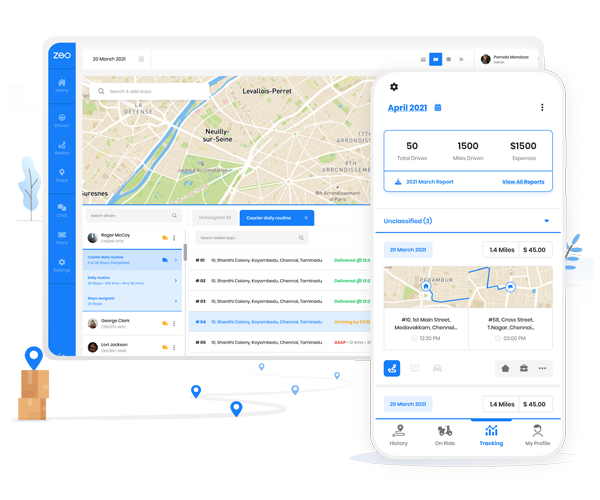
Are you a fleet owner?
Want to manage your drivers and deliveries easily?
Grow your business effortlessly with Zeo Routes Planner – optimize routes and manage multiple drivers with ease.

increase fuel savings
Save $200 on fuel, Monthly!
Optimize routes with our algorithm, reducing travel time and costs efficiently.
Get Started for Free