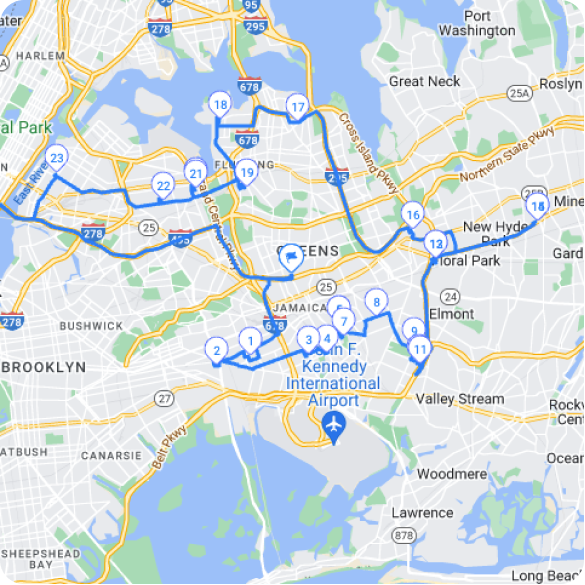


Updated on: November 12, 2026
TL;DR: You can get voice directions on Google Maps by enabling “Play voice over Bluetooth” in Navigation settings after confirming your phone’s Media volume and permissions are set correctly. As of 2026, phone-related distraction still contributes to 2-4% of fatal U.S. crashes, making hands-free audio guidance a real safety factor for delivery drivers. Route optimization tools like Zeo Route Planner complement this with bulk address import and auto-sequenced routes, helping delivery teams save 2+ hours daily before they even hit the road.
We all have used Google Maps to navigate our route from point A to point B.
A super-helpful feature in this app? Voice directions.
The automated human-like prompts drivers to follow a route without glancing at a screen. It’s a hands‑free guidance that adds more than just comfort; it cuts real risk.
Researchers analyzing 3,600 fatal U.S. crashes found mobile phones were a key reason for distraction in 2% to 4% of those, a figure that still holds up as of 2026 according to ongoing NHTSA distracted driving research. Every glance at a map is another chance to miss brake lights ahead.
Google Maps solves this issue with clear audio cues, lane reminders, and instant reroutes when traffic snarls.
Let’s get the step‑by‑step playbook for turning the feature on, tweaking it to your taste, and troubleshooting hiccups. And yes, the benefits too!
Time to dive in.
Getting Voice Directions on Google Maps
You certainly use Google Maps for route optimization. But, how about matching it with quick voice-based instructions that guide you through the route?
The voice navigation on Google Maps rides on two pillars: the phone’s text‑to‑speech engine and a healthy speaker.
Once those are in shape, everything else lives inside the Navigation settings.
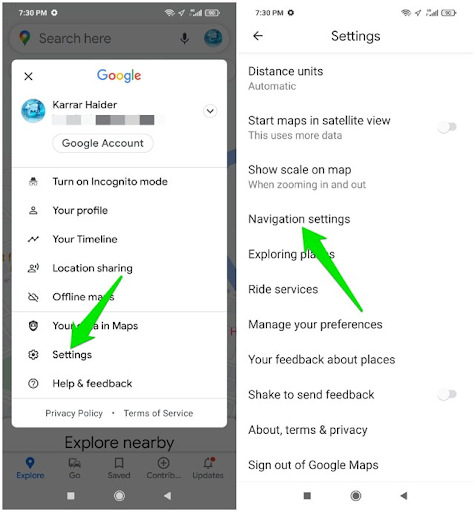
From that single menu, you can increase guidance volume, swap voices, or select a travel mode that changes how early prompts arrive.
Android and iOS label things a bit differently, yet the flow stays the same—sort out system volume, flip the direction switch, and fine‑tune the voice.
Enable Voice Directions
Before diving into menus, give the phone a quick audio check. A muted Media slider or an active Do Not Disturb profile blocks every spoken cue, no matter what Maps tries to say.
Bluetooth quirks can also muffle guidance, so pairing the handset to the car stereo first avoids later guesswork. Once the speakers are set, Google Maps only needs a single toggle to start talking.
Check the basics first
Open the phone’s volume panel, set Media above halfway, and disable Do Not Disturb. On Android, long‑press the volume key and tap the three dots.
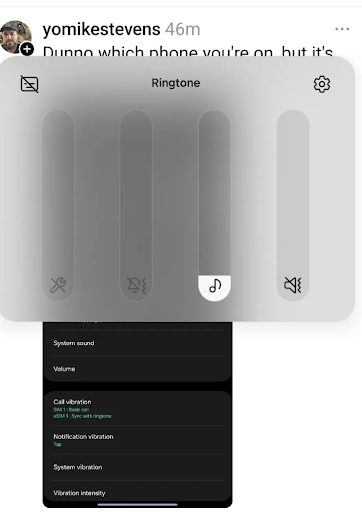
From here, make sure your volume for the Bluetooth speaker and device is turned up for optimal hearing.
On an iPhone, swipe down from the top‑right and adjust the slider.
Turn on the voice inside Maps
Tap your profile photo ▸ Settings ▸ Navigation settings ▸ toggle “Play voice over Bluetooth.”
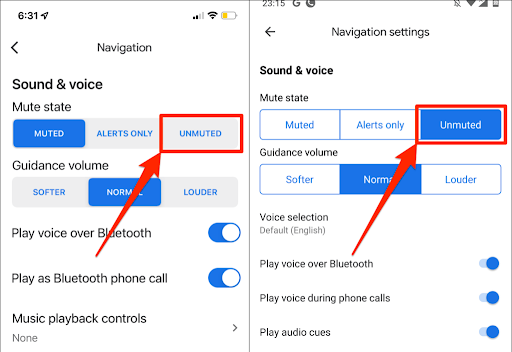
The microphone icon should light up when guidance begins.
Customise Navigation Preferences
After guidance speaks once, dial in the experience so it matches your driving style. Short city hops may need rapid‑fire prompts, while long highway stretches feel smoother with fewer reminders.
Travel mode, language, and voice all influence that rhythm. A quick test drive around the block helps pick the combo that keeps you informed without feeling chatty.
Pick the right travel mode
At the top of the route preview, choose Driving, Walking, or Transit. Each mode changes the wording and frequency of prompts; walking, for example, speaks sooner before a turn to match the slower speed.
Change language or accent
In Voice selection, you can switch from U.S. English to Australian or Hindi.
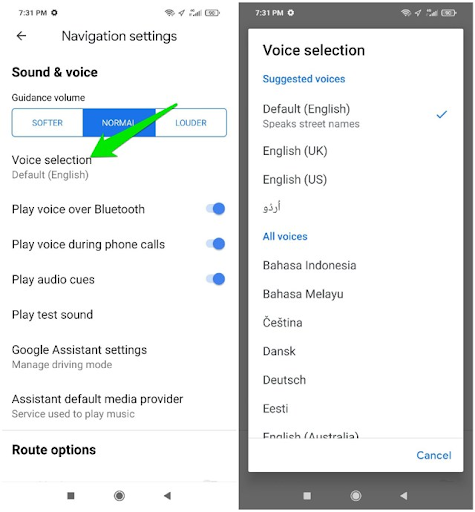
iOS mirrors the phone’s system language; Android lets you pick inside Maps.

increase fuel savings
Save $200 on fuel, Monthly!
Optimize routes with our algorithm, reducing travel time and costs efficiently.
Get Started for Free
Troubleshoot Common Issues
No sound? Nine times out of ten, the fix is in the phone, not the app.
Volume, Bluetooth, and app permissions can be an issue so you may want to have a quick check at settings. It’d usually restore the voice without reinstalling anything.
Keep an eye on system updates, too—fresh firmware sometimes resets audio channels or revokes microphone access.
Silence in the cabin?
The app obeys the phone’s Media channel, not Ringer. To playback louder, boost that slider or plug the device into the car’s AUX/Bluetooth.
Permissions blocking audio
If Maps doesn’t throw any voice, head to Settings ▸ Apps ▸ Maps ▸ Permissions.
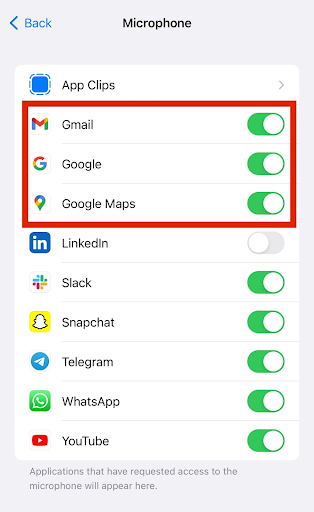
You need to grant Microphone and Speaker access. If the issue persists, force‑close and relaunch Maps to refresh TTS.
Benefits of Voice Directions for Delivery Drivers
A quick look at crash data shows why spoken guidance matters. Phone‑related distraction sits behind 2 – 4 percent of all fatal U.S. collisions as of 2026.
Even glances hurt: looking away from the road for just two seconds doubles crash risk. Voice directions strip out most of those glances by turning every lane change, merge, and exit into a clear audio cue. The Bureau of Labor Statistics continues to track transportation incidents as one of the more hazardous occupational categories, underscoring why hands-free tools matter for professional drivers.
Below, three pay‑offs explain why drivers and the fleets that employ them should flip the feature on for every shift.
Improved Safety
Voice prompts replace screen taps, so steering‑wheel grip stays firm and eyesight never drifts to a glowing rectangle.
Google Maps speaks early—“In 800 feet, turn right”—giving drivers room to check mirrors, signal, and glide across lanes instead of yanking the wheel last‑second.
With fewer manual interactions, reaction time improves, and hard‑brake events drop. The visible benefits and their reasons are as follows:
- Hands remain on the wheel; eyes stay on the road.
- Phone‑distraction crashes become less likely when drivers rely on their ears, not their eyes.
Time Efficiency
Missed exits create mile‑long detours and late arrivals. Voice navigation cuts that waste by alerting drivers the instant a wrong turn happens and auto‑recalculating the route in under a second.
No need to pinch‑zoom or scroll a tiny map mid‑traffic. Instead, the phone simply speaks the new path over a multi‑stop day that saves minutes at every correction. It helps tighten delivery windows and shrink overtime.
What you get is —
- Quick updates after a wrong turn mean no screen peeks, no map fiddling, and fewer detours.
C. Better Focus on Delivery Tasks
Delivery drivers juggle a lot of work on a day-to-day basis. Right from juggling parcel counts, customer calls, and proof‑of‑delivery photos.
Voice cues offload the navigation chunk of that mental load, freeing attention for address checks or gate codes. Drivers arrive calmer, sort packages faster, and clear doorsteps without second‑guessing the route.
What do drivers get?
- Mental bandwidth shifts from “Where do I turn?” to “Which box goes to this door?”—speeding each stop.
Conclusion
Voice direction turns Google Maps into a co‑pilot that guards safety and shaves minutes off every route.
Zeo Route Planner slots right beside it: bulk‑import stops, auto‑sequence the most fuel‑smart path, then launch Google Maps for crystal‑clear audio prompts. Drivers stay heads‑up, dispatchers watch progress in real time, and customers receive prompt ETAs.
Curious how the workflow feels in practice? Check out these route optimization case studies for small fleets to see real results, or read our route planner guide for 2026 to compare tools before you commit.
Frequently Asked Questions
Does Google Maps voice navigation work without an internet connection?
Google Maps requires an initial data connection to load the route, but once a route is downloaded for offline use, turn-by-turn voice directions can continue with limited or no signal. Full traffic rerouting and live updates, however, need an active connection to work properly.
Why does Google Maps voice guidance suddenly stop mid-route?
This usually happens when the app loses GPS signal, the phone’s battery saver kills background audio, or a system update resets navigation permissions. Restarting the app and checking that battery optimization is disabled for Maps resolves most of these interruptions.
Can delivery dispatchers track voice navigation usage across a fleet?
Google Maps itself doesn’t offer fleet-wide reporting, but route optimization platforms like Zeo Route Planner provide live GPS tracking and route analytics so dispatchers can monitor driver progress and ETAs across 1.5M+ users without relying on individual phone settings.
What’s the difference between voice directions and turn-by-turn navigation?
Turn-by-turn navigation refers to the visual map display showing upcoming turns, while voice directions are the spoken audio layer that announces those turns aloud. Most modern navigation apps, including Google Maps, combine both so drivers get visual and audio cues simultaneously.
How do multi-stop delivery routes affect voice navigation accuracy?
Standard Google Maps voice navigation is built for single-destination trips, so manually re-entering addresses for each stop increases the chance of error and delay. Platforms with bulk address import and auto-assignment, such as Zeo Route Planner, sequence multi-stop routes first and then hand off a single optimized path to the navigation app, keeping voice guidance accurate stop after stop.
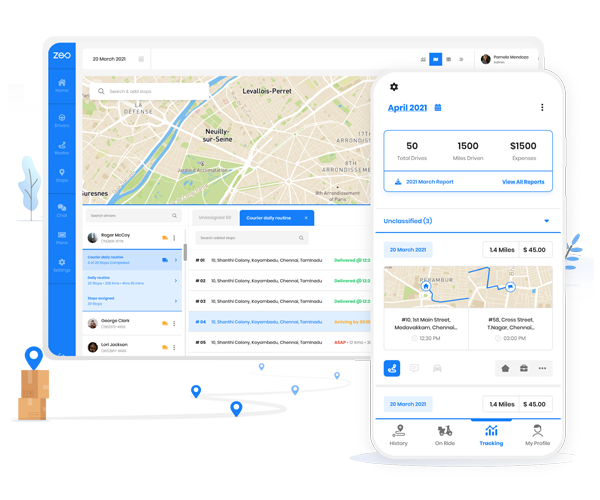
Are you a fleet owner?
Want to manage your drivers and deliveries easily?
Grow your business effortlessly with Zeo Routes Planner – optimize routes and manage multiple drivers with ease.

increase fuel savings
Hassle Free Deliveries & Pickups!
Optimize routes with our algorithm, reducing travel time and costs efficiently.
Get Started for Free