

Updated on: October 18, 2026
Reading Time: 5 minutes
TL;DR: Google Maps doesn’t offer route optimization for multiple stops, but free Chrome plugins can add this functionality directly to the familiar interface. Google’s official documentation confirms the platform focuses on point-to-point navigation rather than multi-stop optimization. Route optimization tools like Zeo Route Planner address this with AI-powered route optimization that auto-assigns stops to drivers, helping delivery teams save 2+ hours daily.
Free Route Optimization on Google Maps
Google Maps is the most popular mapping provider in the world. Having more than a billion downloads and used by more than 150 million people every day, it is the lifeline of everyday commutes. As of 2026, Google Maps remains the default navigation tool for most consumers and small business owners, but its core design still centers on single-destination trips rather than multi-stop logistics.
Google Maps has many advantages such as
- Real-time traffic updates
- Auto re-routing for finding the shortest distance between 2 points
- Updated information about tolls and road closures.
However, route optimization is one feature that Google lacks.
What is Route Optimization?
Route optimization helps courier delivery drivers get the shortest routes for servicing multiple addresses.
Google maps is great for telling the shortest path between 2 addresses. But if you have to visit more than 2 stops, it doesn’t tell an optimized order in which they should be visited.
With route optimization solutions the drivers have the following advantages:
- Tells the order in which a list of stops should be visited.
- Provides the shortest distance for the overall trip saving costs.
- The total trip takes the least amount of time giving you enough time to finish other tasks.
Why Multi-Stop Route Planning Matters for Business Operations
For businesses managing multiple daily stops, the difference between optimized and unoptimized routes can be substantial. U.S. Department of Transportation data shows that commercial vehicle miles traveled continue to increase annually, making efficient routing more critical than ever. As of 2026, rising fuel and labor costs mean every unnecessary mile on a route has a direct impact on margins.
Service professionals like pressure washing teams, pool cleaning services, and sales representatives often handle 10-20+ stops per day. Without proper sequencing, drivers may backtrack unnecessarily, increasing fuel costs and reducing the number of customers they can serve. The U.S. Bureau of Labor Statistics notes that delivery driving remains one of the fastest-growing occupations, underscoring why efficient multi-stop planning matters more each year as route volumes climb.
With Google Maps not offering route optimization, courier drivers and field service professionals have to rely on paid apps. This takes them away from the user interface of Google maps and pinches the pocket.
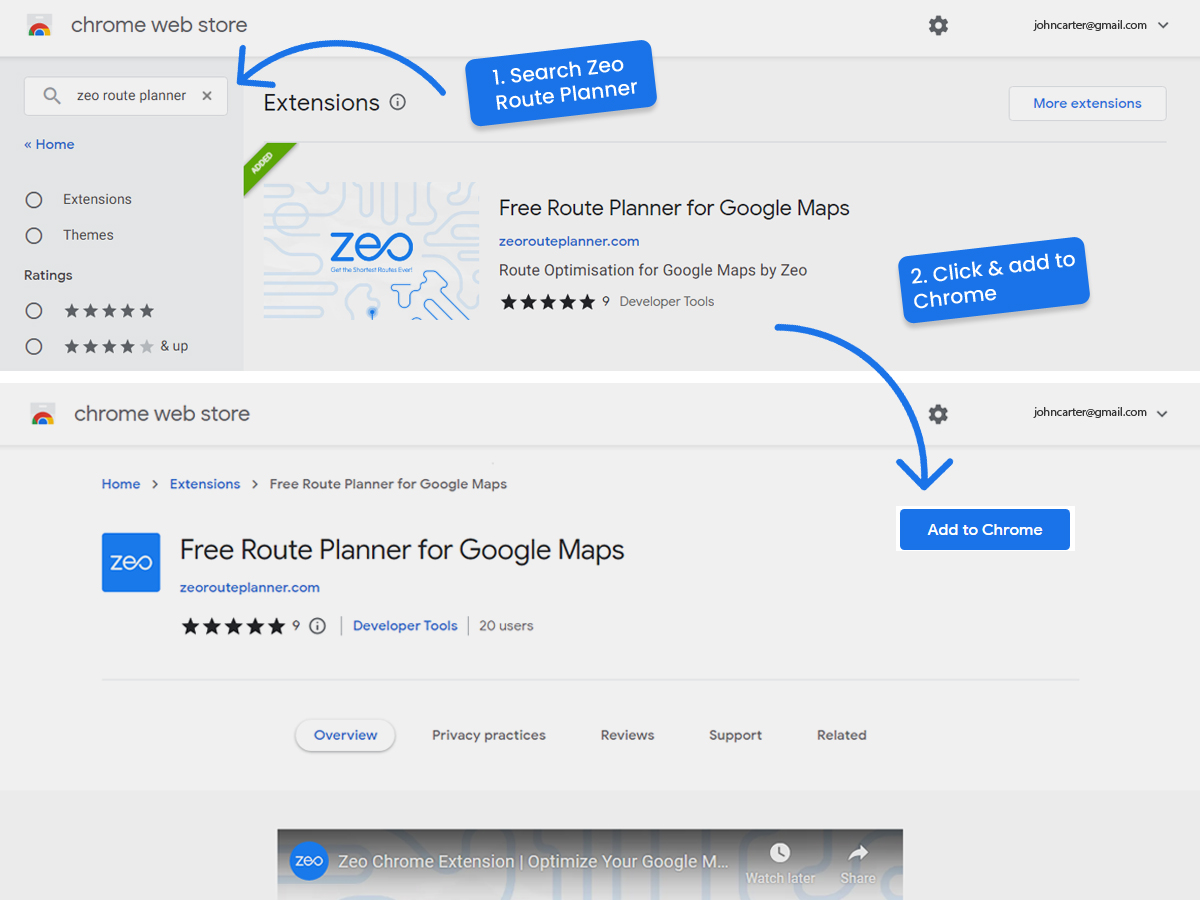
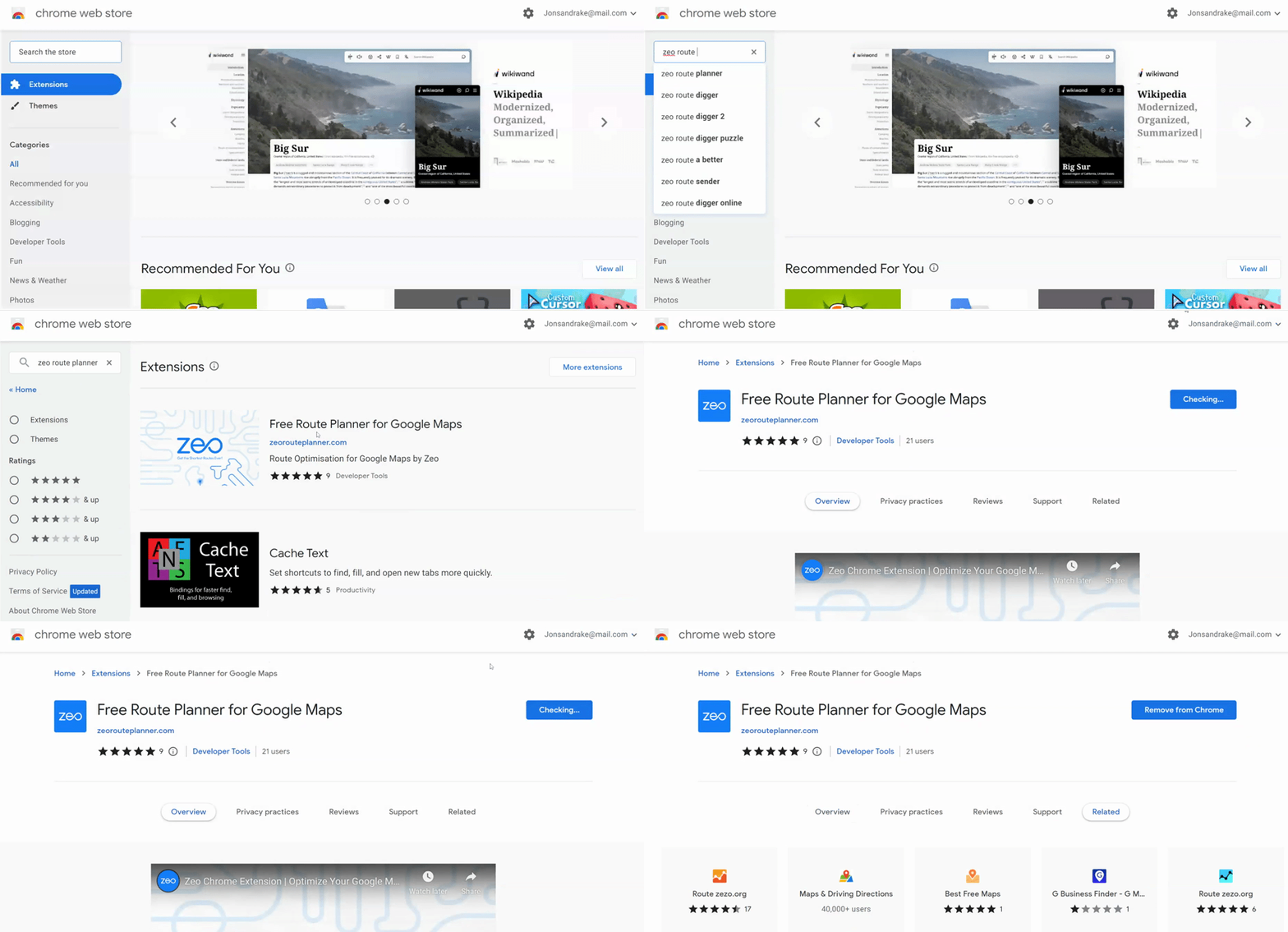
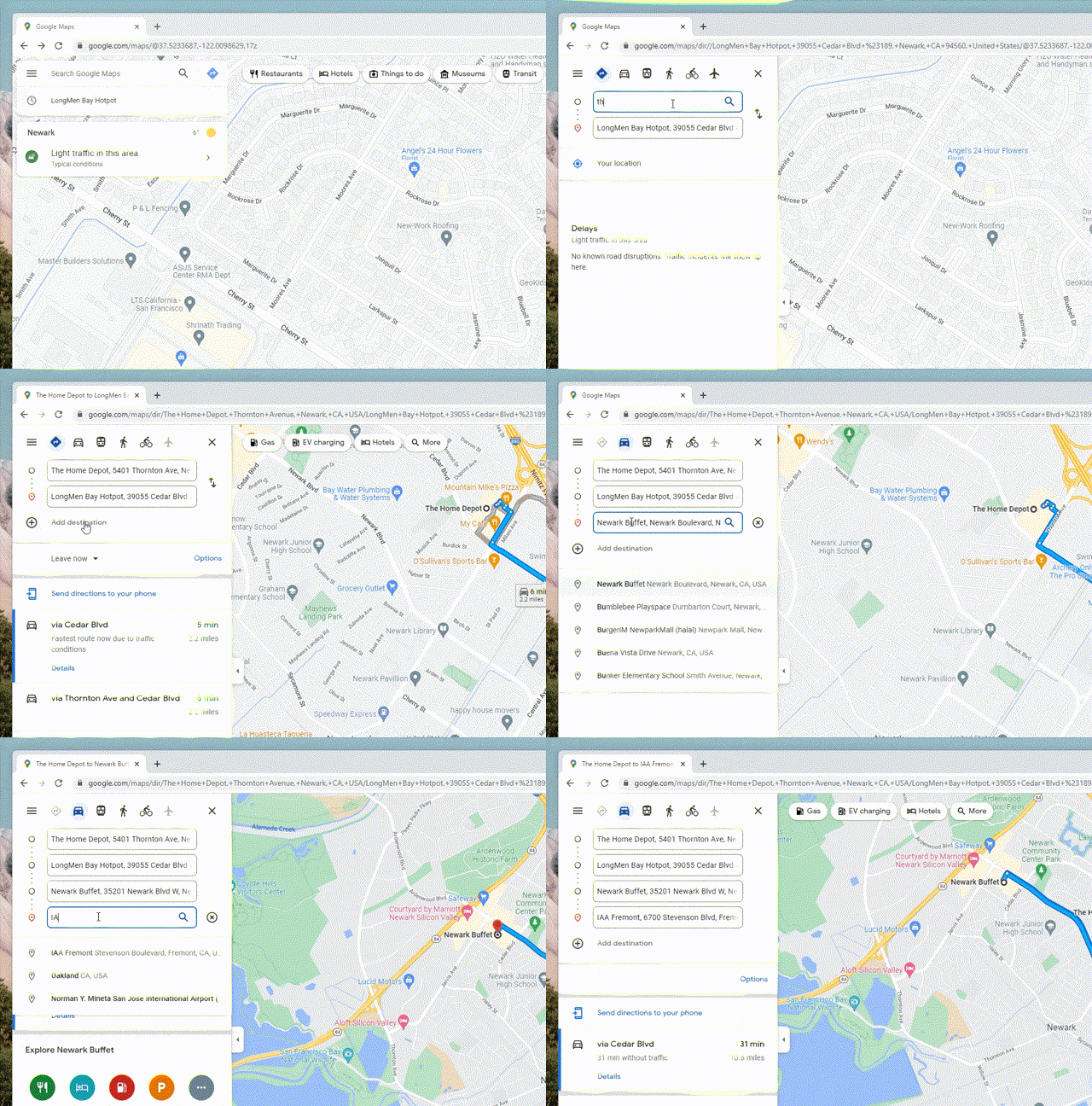
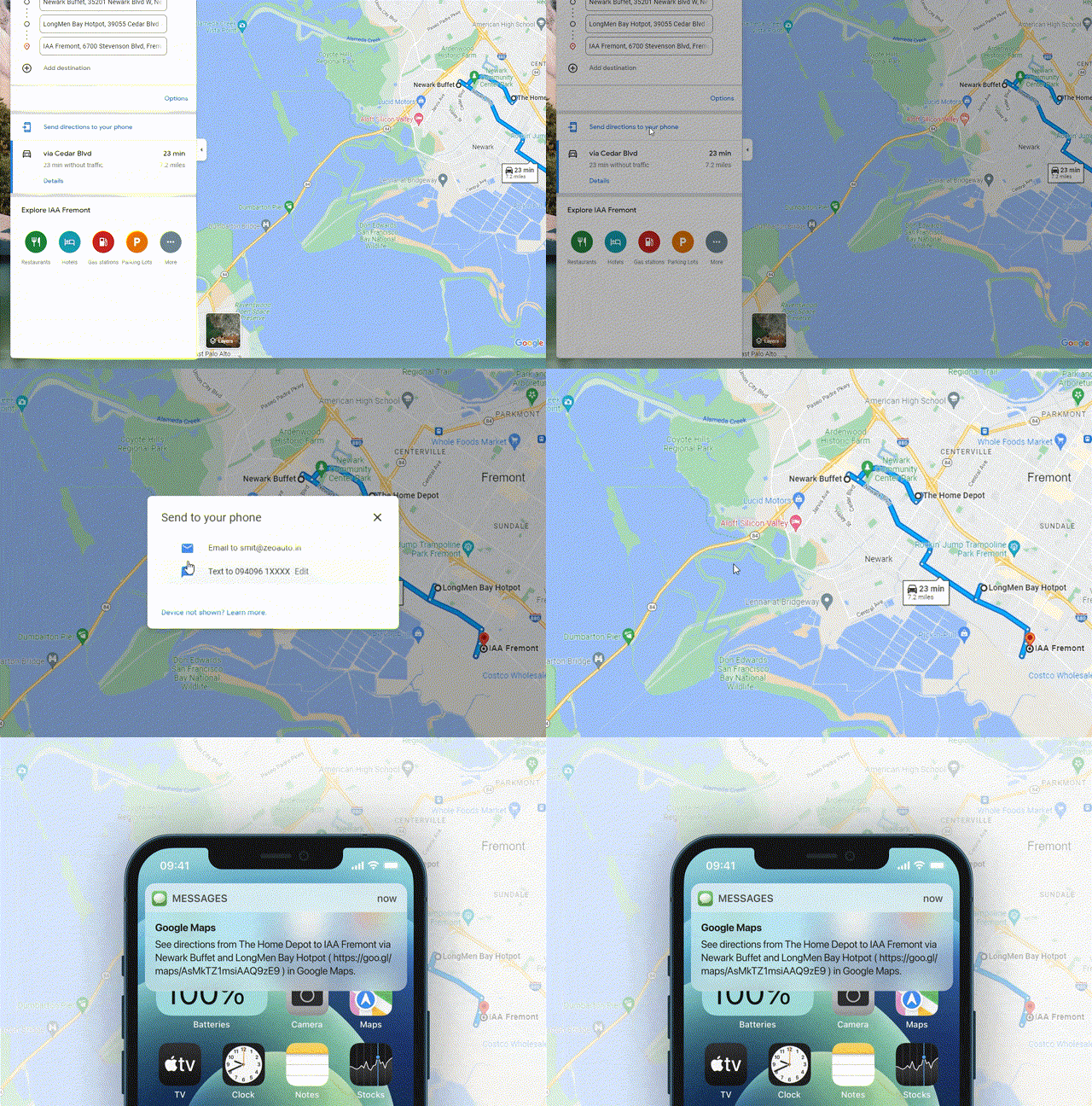
Zeo has solved this issue by building a free Google chrome plugin to get route optimization to Google maps. There is no need to download a separate app. Get the perfect order on the web and transfer it to your Google maps seamlessly.
Free Zeo Web Plugin
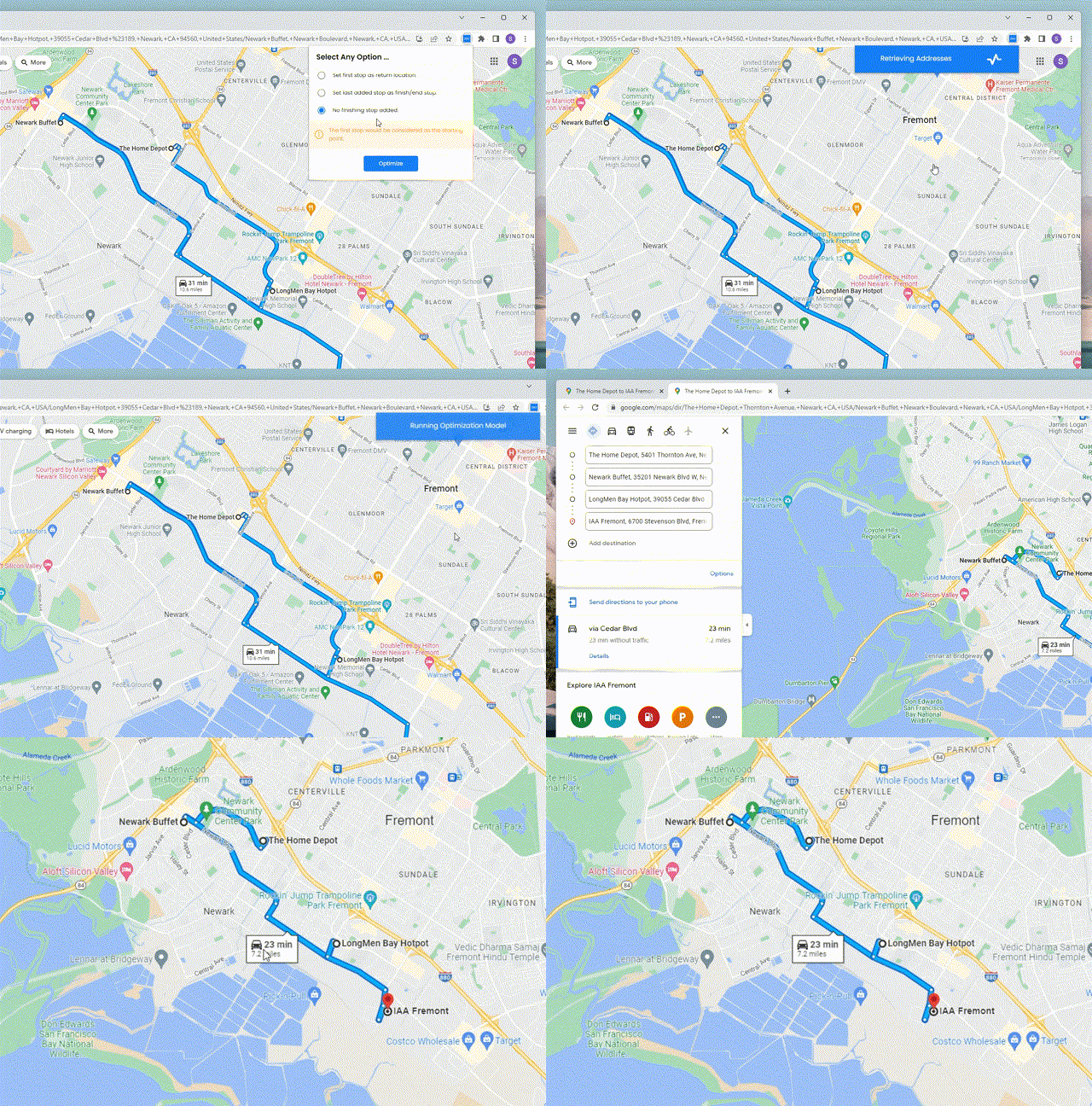
- Return to the first stop – this would create a round trip where the user returns to the first stop.
- End at the last stop – In this case, the trip won’t come back to the first stop. The trip will start from the first stop and end at the last stop.
- No Last stop – In this case the route can finish at any of the stops apart from the first stop.
Beyond Basic Route Planning: Advanced Features for Growing Businesses
While browser plugins solve the immediate need for route optimization on Google Maps, businesses with more complex requirements often need additional capabilities. Features like time window constraints become essential when customers expect specific delivery windows, and real-time GPS tracking helps maintain service quality standards.
For teams managing multiple vehicles or drivers with different skills, the ability to auto-assign stops based on capacity and expertise becomes crucial for operational efficiency.
Managing Recurring Routes and Schedule Changes
Many businesses don’t just run a route once — they run the same route, or a variation of it, every day or every week. This is where scheduled and recurring routes become useful, since teams can set up a delivery pattern once and reuse it rather than rebuilding stop lists from scratch each morning.

increase fuel savings
Hassle Free Deliveries & Pickups!
Optimize routes with our algorithm, reducing travel time and costs efficiently.
Get Started for Free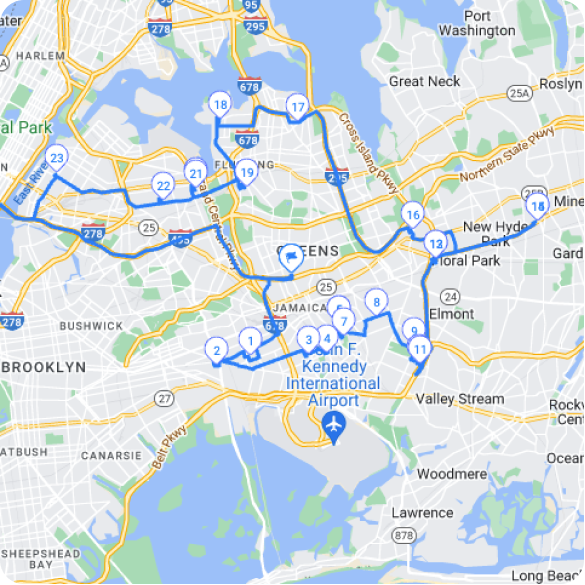
Real-world operations rarely stay static, though. A driver might take a planned day off, a holiday might fall in the middle of a weekly route, or a manager might need a different agent covering just one day without disturbing the rest of the schedule. Features like day plans (assigning different drivers to specific days within a recurring route), date overrides (swapping the agent for a single day only), and blackout dates (pausing a scheduled route temporarily instead of deleting it) address these exact situations. For businesses with repeat stops — such as waste collection, recurring deliveries, or subscription-based services — this kind of flexibility reduces the manual rework that comes with schedule changes.
Building Routes Faster From Saved Stops and Spreadsheets
Businesses that visit the same addresses repeatedly, such as regular customers or frequent supplier locations, benefit from saving those stops as Favorites rather than re-entering them every time. Favorites lists can also be bulk uploaded from a spreadsheet, so a large customer list can be imported once and reused across multiple routes going forward.
When it’s time to build a new route, stops can be added from several sources at once — spreadsheets, images, saved Favorites, or a Google Search lookup — which is useful for teams juggling data from different systems. For routes that include both pickup and drop-off stops, pickup-delivery linking automatically pairs the related stops together and sequences them correctly, reducing the chance of a driver completing a delivery before its matching pickup.
There’s also a “Navigate as Added” option for drivers who need to keep stops in a manually set order rather than having the system re-optimize sequencing, along with avoid parameters that let routes skip highways, tunnels, trunks, bridges, fords, or ferries when local road conditions call for it.
Here is a video explaining the whole process
Google Maps unfortunately has a limit of only 10 stops which can be optimised. If you have more than 10 stops that you wish to service – Do give Zeo route planner a try. Users can create routes with unlimited stops and plans can cost as low as ¢40 per day.
Frequently Asked Questions
How many stops can I optimize with Google Maps?
Google Maps limits route planning to a maximum of 10 stops including your starting point. This restriction makes it suitable for small daily routes but insufficient for businesses with larger delivery or service schedules.
What’s the difference between route planning and route optimization?
Route planning involves mapping out stops in a sequence, while route optimization uses algorithms to determine the most efficient order to visit those stops. Optimization considers factors like distance, traffic patterns, and time constraints to minimize total travel time and fuel costs.
Can route optimization work with different types of vehicles?
Yes, advanced route optimization considers vehicle capacity, weight limits, and size restrictions. This ensures that larger vehicles aren’t sent down narrow streets and that delivery loads don’t exceed vehicle capacity limits.
How much time does route optimization typically save?
As of 2026, studies show that proper route optimization can reduce driving time by 20-40% for multi-stop routes, a figure consistent with efficiency research published by the U.S. Department of Energy on reducing unnecessary vehicle idling and mileage. Professional route optimization software with AI-powered algorithms and real-time GPS tracking is reported by users to save 1.5M+ teams time on daily planning.
Can I plan a route with more than 10 stops for free?
Yes. Browser-based tools and free plugins that extend Google Maps, like the Zeo web plugin, let you sequence more than 10 stops without paying for a subscription, though unlimited-stop planning with features like capacity-based routing typically requires a paid plan once your stop count grows.
Do I need special training to use route optimization tools?
Most modern route optimization tools are designed for ease of use, with intuitive interfaces similar to familiar mapping applications. Basic features like stop sequencing can be learned in minutes, while advanced features may require brief orientation for optimal results.
Are you a fleet owner?
Want to manage your drivers and deliveries easily?
Grow your business effortlessly with Zeo Routes Planner – optimize routes and manage multiple drivers with ease.

increase fuel savings
Save $200 on fuel, Monthly!
Optimize routes with our algorithm, reducing travel time and costs efficiently.
Get Started for Free