
Updated on: April 18, 2026
Reading Time: 3 minutes
TL;DR: AI algorithms revolutionize route planning by analyzing real-time traffic data, delivery constraints, and vehicle capacity to optimize routes 50-80% faster than manual methods. Modern logistics operations require AI-powered solutions to handle complex scheduling, fuel cost reduction, and customer time windows effectively. Route optimization tools like Zeo Route Planner address this with dynamic route adjustments and auto-assignment capabilities, helping logistics teams save 2+ hours daily.
If your business processes are not evolving with the scaling business requirements and changing customer demands, you are bound to fail.
If you apply the same principle in the logistics industry, traditional route planning processes will never be enough to meet the logistics requirements and customer demands of today. The modern logistics landscape is surrounded by complexities like tight delivery windows and soaring fuel costs.
To overcome these complexities and redefine your logistics efficiency, you need modern solutions that are empowered with AI capabilities. AI-powered route optimization is the next big thing in the logistics industry.
At the forefront of this revolution is Zeo Route Planner. It is designed for logistics success with AI at its core. With smarter route planning powered by real-time data and predictive analytics, Zeo delivers efficiency and growth.
The Need for Smarter Route Planning
The logistics industry operates in an environment full of challenges that demand smarter routing solutions. According to the U.S. Department of Transportation, transportation costs continue to represent a significant portion of business expenses, making route efficiency more critical than ever. Here’s why adopting AI-driven route optimization is no longer optional:
- Delivery Window Prioritization
Modern customers expect their deliveries within specific time frames. However, managing multiple stops with varying delivery windows is a logistical nightmare without smarter route planning tools.Traditional route planning techniques fall short of optimizing routes by considering the delivery windows. This inefficiency results in missed timelines and customer dissatisfaction.
AI-powered route planning, on the other hand, considers multiple factors including delivery timelines and expected delivery windows to present the optimal routes. Fleet managers can ensure that high-priority stops are addressed first, leading to better customer experience.
- Skyrocketing Consumption of Fuel
Fuel costs form a significant portion of logistics expenses. Research from the U.S. Energy Information Administration shows that fuel price volatility continues to impact transportation budgets significantly. Inefficient routes further add to this issue.
What if your fleet vehicles often take unnecessarily long detours because of inefficient route planning?The result will be soaring operational expenditures due to more fuel consumption and vehicle maintenance costs. Adding the increased carbon footprints will further strain the operational efficiency.
This can be avoided with smarter route planning. AI-powered route optimization not only provides the most efficient route in all circumstances but also reduces fuel usage, prevents vehicle wear and tear, and promotes sustainability in your logistics operations.
Advanced AI Technologies Transforming Route Planning
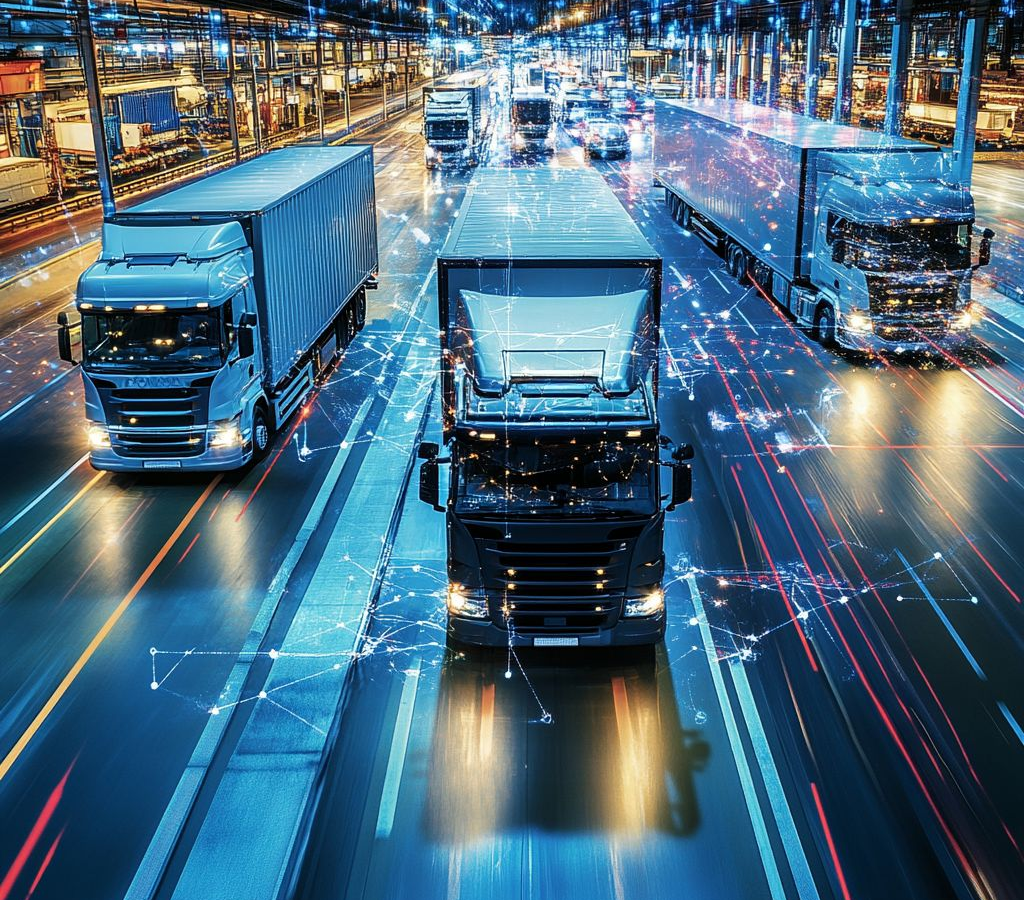
Modern AI algorithms leverage machine learning, predictive analytics, and real-time data processing to create routing solutions that adapt to changing conditions. These technologies process thousands of variables simultaneously – from traffic patterns and weather conditions to vehicle specifications and driver availability.
Machine learning algorithms analyze historical delivery data to predict optimal routes based on time of day, seasonal patterns, and customer preferences. This predictive capability allows logistics teams to proactively adjust routes before problems occur, rather than reacting to issues after they impact operations.
Real-time data integration ensures that route optimizations remain current throughout the day. As traffic conditions change or new orders arrive, AI systems continuously recalculate the most efficient paths, maintaining operational efficiency even in dynamic environments.
How Zeo Ensures AI-powered Route Planning
Zeo Route Planner employs smart AI algorithms that are designed to streamline logistical operations, enhance efficiency and reduce costs. Here’s how it makes smarter route planning possible:
- Dynamic Route Adjustments
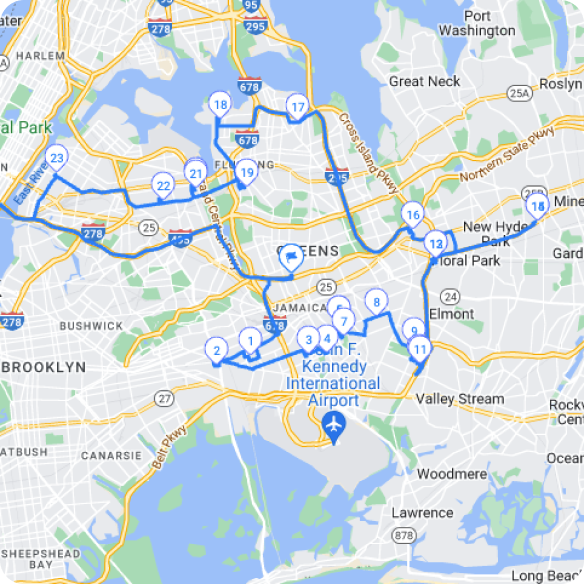
Unforeseen circumstances hold the potential to disrupt your fleet activity and delivery operations. Road closures or bad driving conditions are a few factors that can derail your logistics operations.Zeo Route Planner leverages AI algorithms to plan routes while constantly monitoring vehicle location, number of stops, and last-minute rerouting demands. If an issue arises, the system instantly recalculates the most efficient alternative route for the drivers.

increase fuel savings
Save 2 Hours on Deliveries, Everyday!
Optimize routes with our algorithm, reducing travel time and costs efficiently.
Get Started for Free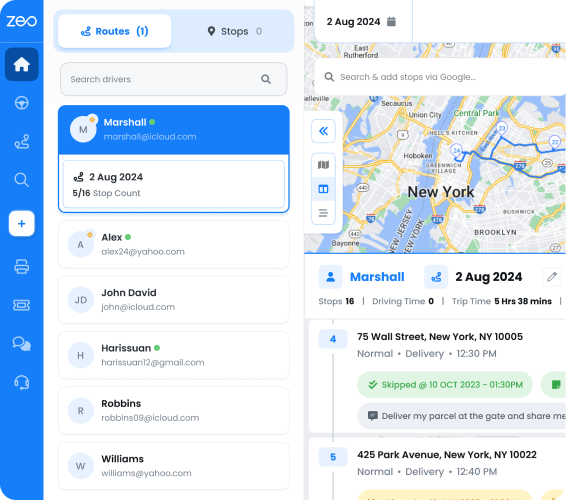
This instant adaptability prevents wasted time and fuel, ensuring that the fleet can maintain its delivery commitments without skipping a beat. Drivers and dispatchers can operate with confidence, knowing that every challenge is met with an immediate solution.
- Delivery Window Analysis
Meeting delivery deadlines, particularly with multiple stops, can be a logistical nightmare. Zeo’s AI algorithm breaks down each delivery into actionable insights, assigning priority levels based on customer requirements, distance, and available time.For instance, a time-sensitive delivery is placed higher in the schedule and routed accordingly to ensure it’s completed on time. The route planner also accounts for the most efficient sequencing of stops to reduce backtracking.
By seamlessly balancing urgency and efficiency, Zeo’s delivery window analysis boosts on-time delivery rates and strengthens customer trust.
Cost Reduction Through Intelligent Resource Management
AI-powered route planning delivers measurable cost savings through multiple optimization vectors. By analyzing vehicle capacity constraints alongside delivery requirements, AI systems ensure maximum load utilization while minimizing unnecessary trips.
Driver skill-based assignments optimize resource allocation by matching specific driver capabilities with appropriate routes and customers. This targeted approach reduces training costs and improves service quality consistency across operations.
Automated scheduling and route assignment eliminate manual planning time, allowing logistics managers to focus on strategic initiatives rather than daily operational tasks. The cumulative effect of these efficiencies translates into substantial operational cost reductions and improved profit margins.
Why Choose Zeo for AI-Driven Logistics?
Logistics fleet managers will need robust AI-powered routing solutions to stay ahead of the curve. Modern route planning applications prove to be a great aid in enhancing delivery operations and customer satisfaction through smarter route planning.
With its advanced AI algorithms, you’re not just managing deliveries; you’re optimizing every second, every mile, and every decision.
Fleet managers who rely on outdated tools risk falling behind and losing out to competitors who have already embraced the AI revolution. For specialized operations requiring guaranteed efficient delivery protocols, AI-powered routing becomes even more critical.
FAQ
What specific benefits does AI route optimization provide over manual planning?
AI route optimization processes multiple variables simultaneously – traffic patterns, delivery windows, vehicle capacity, and driver schedules – to create optimal routes in minutes rather than hours. Manual planning typically handles 10-20 stops effectively, while AI systems can optimize routes with hundreds of stops while considering real-time constraints and business rules.
How does AI route planning handle unexpected disruptions during delivery runs?
AI systems monitor real-time conditions and automatically recalculate optimal routes when disruptions occur, such as traffic incidents or last-minute order changes. Advanced platforms provide instant alternative routing that maintains efficiency and delivery commitments without manual intervention.
Can AI route optimization work with existing fleet management systems?
Most modern AI route optimization platforms offer API integrations and support connections through tools like Zapier to work with existing fleet management, CRM, and e-commerce systems. Zeo Route Planner integrates with platforms like Shopify, WooCommerce, and HubSpot while serving 1.5M+ users across 150+ countries.
What data does AI route optimization require to function effectively?
Effective AI route optimization requires delivery addresses, time windows, vehicle capacity limits, driver availability, and customer preferences as core data inputs. Additional data like historical traffic patterns, weather conditions, and delivery priorities enhance optimization accuracy and reliability.
How quickly can businesses see ROI from implementing AI route optimization?
Most businesses see immediate efficiency gains within the first week of implementation, with fuel savings and reduced planning time providing measurable ROI. Comprehensive savings from reduced overtime, improved customer satisfaction, and operational efficiency typically become fully apparent within 30-60 days of consistent use.
Ready to redefine your logistics strategy? Schedule a demo with Zeo experts and see how our smarter route planning can transform your fleet operations and propel your business into the future.

Are you a fleet owner?
Want to manage your drivers and deliveries easily?
Grow your business effortlessly with Zeo Routes Planner – optimize routes and manage multiple drivers with ease.
increase fuel savings
Hassle Free Deliveries & Pickups!
Optimize routes with our algorithm, reducing travel time and costs efficiently.
Get Started for Free