


Updated on: April 30, 2026
Reading Time: 3 minutes
TL;DR: Advanced logistics route planning dramatically cuts operational costs while boosting delivery efficiency and customer satisfaction. Companies using AI-powered optimization report saving 2+ hours daily and reducing fuel costs by up to 20%. Route optimization tools like Zeo Route Planner address this with AI-powered route optimization and real-time GPS tracking, helping logistics teams save 2+ hours daily.
While delivering your products, you might have noticed route planning’s impact on productivity and effectiveness. Advanced logistics route planning can make all the difference for your business, which helps in conserving resources, promoting driver confidence and retention, and improving customer satisfaction.
Route planning will help you improve your efficiency for shorter delivery times and happier drivers. In this blog post, we will discuss the impact of advanced logistics route planning which can elevate your business.
What is Route Planning in Logistics?
Logistics route planning is the procedure of determining the most efficient, least-cost route across multiple delivery points. Many business owners use route planning software to help them plan their routes and make the most of their resources. Advanced logistics route planning can have a significant impact on various aspects of business operations, leading to numerous benefits.
How Advanced Technology Transforms Route Planning
Modern route planning has evolved far beyond simple point-to-point navigation. Today’s advanced systems incorporate artificial intelligence, machine learning algorithms, and real-time data analytics to create truly optimized delivery routes. These technologies analyze multiple variables simultaneously, including traffic patterns, vehicle capacity, driver skills, and customer time preferences.
The integration of GPS tracking and mobile communication has revolutionized how logistics teams coordinate operations. According to the Federal Highway Administration, improved route planning can reduce commercial vehicle travel time by up to 30%, directly impacting fuel consumption and operational costs.
Real-time adaptability is perhaps the most significant advancement in route planning technology. When unexpected delays occur—whether from traffic, weather, or customer changes—modern systems can instantly recalculate optimal routes and communicate updates to drivers and customers alike.
The Top Impact of Advanced Route Planning on Operational Performance
Effective routing is essential for customer satisfaction and it is also a key determinant of operational efficiency. It also ensures quick delivery, minimizes driver stress, reduces the risk of accidents, makes the best use of your resources, enhances your productivity, and results in more satisfied customers.
Here are some top impacts of implementing advanced route planning:
- Cost of deliveries
More circuitous means more fuel consumption and fewer deliveries and ultimately impacts the cost of deliveries. The cost of deliveries can be controlled to a great extent with effective route planning,
- Optimizing routes reduces unnecessary mileage and idle time, leading to lower fuel consumption and costs.
- Efficient routes minimize driving time, helping to reduce overtime pay for drivers.
- Less mileage and optimized driving patterns lead to reduced wear and tear on vehicles, lowering maintenance costs.
- Optimized Vehicle Routing
Optimized vehicle routing involves strategically planning routes for a fleet of vehicles to ensure cost-effective, and timely delivery of goods or services. The goal is to reduce fuel consumption, travel distance, and time, and improve overall operational efficiency.
With effective route planning, businesses can fully use driver’s working hours. This ensures they get adequate hours on the ground and enables them to accomplish more deliveries. This significantly increases their productivity and every delivery executed translates into commission money.
- Resource Optimization
Proper route planning enables more efficient use of available resources and aims to maximize productivity and minimize costs, waste, and time. Businesses can ensure that resources are used properly by assigning delivery to the most appropriate trucks and drivers. Resource optimization is the strategic process of using available resources such as manpower, equipment, and materials efficiently to achieve the best possible outcomes.
- Customer Satisfaction
Effective route planning, ensures deliveries are made within the promised time windows, improving reliability and customer trust. Customers receive real-time updates on their deliveries, enhancing trust in the brand amongst customers. Consistency improves the loyalty of customers and it translates into positive brand recall and loyalty points.
- Real-time Adaptability
Real-time adaptability in route planning for logistics involves leveraging data to dynamically adjust routes based on current conditions, optimizing for factors such as weather, delivery priorities, traffic, and vehicle constraints. Real-time traffic and weather data are frequently included in modern route planning software. It allows logistics organizations to modify routes on the fly.
Environmental Impact and Sustainability Benefits
Advanced route planning contributes significantly to environmental sustainability efforts. By reducing total miles driven and optimizing vehicle loads, companies can substantially decrease their carbon footprint. The EPA’s SmartWay program reports that optimized routing and scheduling can reduce freight emissions by 10-20%.
Efficient route planning also supports urban air quality improvements by reducing unnecessary vehicle idling and congestion. Many cities now incentivize logistics companies to adopt advanced route planning technologies as part of broader sustainability initiatives.
Read More: Revolutionizing Logistics: How Route Planning Software Enhances Efficiency
Why Choose Zeo Route Planner for Logistics Route Planning?
As businesses set out to plan routes manually, it generates inefficient routes. This results in a lot of time to explain the delivery schedules, so investing in a tool that eliminates this manual intervention and maximizes efficiency in routes is necessary. Choosing Zeo Route Planner for logistics route planning offers several features that cater to the needs of modern logistics operations.

increase fuel savings
Save $200 on fuel, Monthly!
Optimize routes with our algorithm, reducing travel time and costs efficiently.
Get Started for Free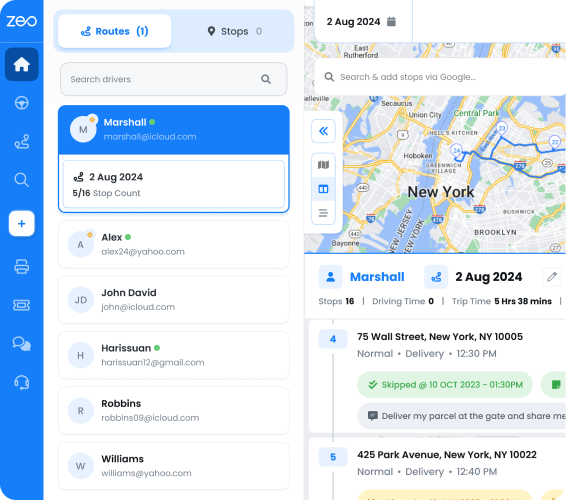
Some key features of Zeo Route Planner In Logistics route planning are as follows,
- Route optimization capabilities
- Fleet customization
- Intelligent auto-assignment of deliveries:
- Driver management
- Real-time data and navigation:
- Proof of delivery mechanisms
- Real-time ETAs
- Enhanced customer engagement
- Easy search and store management
- User training and support
- Security and Compliance
Read More: Key Features To Look For In Logistics Route Planning Software
Implementation Strategies for Maximum Impact
Successfully implementing advanced route planning requires a strategic approach that considers both technology adoption and team training. Companies should start by analyzing their current routing inefficiencies and establishing baseline metrics for comparison.
Driver buy-in is crucial for successful implementation. Training programs should emphasize how optimized routes reduce stress, improve work-life balance, and often increase earning potential through improved efficiency. For businesses looking to streamline their implementation process, resources like Route Planner App: Complete Guide for Growing Businesses 2026 provide comprehensive guidance.
Integration with existing business systems—such as inventory management, customer relationship management, and accounting software—maximizes the value of route planning investments. API connections and automated data flows eliminate manual data entry and reduce errors.
Final Thoughts
In today’s world of logistics, the right route-planning software can be a transformative asset. Route planning software transforms your logistics operations, increasing customer satisfaction and cost savings.
Zeo is dedicated to efficient and scalable logistics operations positions businesses for a future of seamless growth. Consider Zeo to pave the way for more efficient and scalable logistics operations and position businesses for a future of seamless growth and operational excellence.
Frequently Asked Questions
How much can advanced route planning reduce fuel costs for logistics companies?
Advanced route planning typically reduces fuel costs by 15-25% through optimized routing and reduced unnecessary mileage. Studies by the Department of Transportation show that eliminating just 10% of total driving miles can result in significant annual savings for fleet operations.
What’s the difference between basic GPS navigation and advanced route optimization?
Basic GPS provides simple point-to-point directions, while advanced route optimization considers multiple variables like vehicle capacity, driver skills, time windows, and real-time traffic to create the most efficient multi-stop routes. This comprehensive approach delivers far greater efficiency gains than standard navigation.
Can route planning software integrate with existing business systems?
Yes, modern route planning platforms offer extensive integration capabilities through APIs and platforms like Zapier. Zeo Route Planner integrates with popular systems like Shopify, WooCommerce, and HubSpot CRM, enabling seamless data flow between order management and delivery operations while serving 1.5M+ users across 150+ countries.
How do real-time route adjustments work during delivery operations?
Real-time route adjustments use live data feeds to automatically recalculate optimal routes when conditions change, such as traffic delays or urgent priority stops. The system instantly communicates updates to drivers through mobile apps and provides customers with revised ETAs.
What proof of delivery options should logistics companies prioritize?
Essential proof of delivery features include photo capture, digital signatures, delivery notes, and timestamp documentation. These capabilities protect against disputes while providing customers with delivery confirmation, and some platforms like Zeo Route Planner also support payment collection tracking for cash-on-delivery operations.
Schedule a free demo with our experts to learn more about Zeo Route Planner.
Are you a fleet owner?
Want to manage your drivers and deliveries easily?
Grow your business effortlessly with Zeo Routes Planner – optimize routes and manage multiple drivers with ease.
increase fuel savings
Save $200 on fuel, Monthly!
Optimize routes with our algorithm, reducing travel time and costs efficiently.
Get Started for Free