


# How to Optimize Roll-Off Routes in 2026: Complete Guide
> TL;DR: Roll-off route optimization requires managing three-step sequences (pickup-dispose-deliver) while accounting for dynamic vehicle constraints and disposal facility timing. Most operations waste 20-30% of their fuel budget on inefficient routing, but proper optimization can reduce costs by 15-25%. Route optimization tools like Zeo Route Planner address this complexity with AI-powered optimization and dynamic route adjustments, helping waste management teams save 2+ hours daily.
Managing roll-off dumpster routes feels like solving a three-dimensional puzzle every single day. You’re juggling empty container pickups, full container disposals, and new deliveries while emergency requests keep disrupting your carefully planned schedules.
Unlike standard delivery routes where drivers make one stop per customer, how to optimize roll-off routes requires mastering a complex three-step process with heavy vehicles, strict disposal site hours, and unpredictable demand. The result? Most operations waste 20-30% of their fuel budget on inefficient routing.
This guide breaks down the exact framework successful roll-off operations use to streamline their routes, reduce empty miles, and handle disruptions without starting from scratch.
Understanding Roll-Off Route Complexity: Why Standard Delivery Routing Fails
Roll-off operations face unique challenges that make traditional route planning methods completely inadequate. Standard delivery routing assumes one simple task: get from point A to point B as efficiently as possible.
Roll-off routes involve three distinct stops per customer request. Your driver must pick up an empty container from one location, dispose of a full container at a designated facility, then deliver a new container to the customer. Each step has different timing requirements, vehicle constraints, and operational considerations.
Weight distribution creates additional complexity. A truck carrying a full 30-yard container handles completely differently than an empty truck. According to the Department of Transportation, commercial vehicle routing must account for gross vehicle weight ratings, bridge weight limits, and restricted access roads that change based on load status.
Disposal site constraints add another layer of difficulty. Unlike customer locations that offer flexibility, disposal facilities operate on strict schedules. Municipal transfer stations might close at 3 PM, while private facilities charge overtime fees after 4 PM. Miss these windows, and your entire route efficiency collapses.
Emergency requests represent the final challenge that breaks most routing systems. When a construction site calls for immediate container pickup, operations managers face an impossible choice: disrupt multiple optimized routes or tell the customer to wait until tomorrow.
The Three-Step Optimization Framework: Pickup, Dispose, Deliver Efficiently
Successful roll-off route optimization requires treating each step as part of an integrated sequence rather than individual tasks. This framework transforms chaotic operations into predictable, efficient workflows.
Step 1: Morning Route Analysis and Container Positioning
Start each day by analyzing container locations and disposal requirements. Group requests by disposal site to minimize facility visits. If you have six containers heading to the same transfer station, plan to handle all six during a single facility visit window.
Create pickup clusters within a 3-mile radius when possible. This reduces travel time between empty container pickups and allows drivers to maximize their loads before heading to disposal sites.
Step 2: Disposal Site Scheduling and Load Sequencing
Schedule disposal runs during optimal facility hours to avoid fees and delays. Most operations save 15-20% on disposal costs by timing arrivals during standard rate periods.
Plan disposal sequences based on container contents and facility requirements. Hazardous materials require specific facilities and documentation, while general construction debris offers more disposal options. Sequence these strategically to minimize facility visits.
Step 3: Delivery Route Optimization with Customer Time Windows
Plan new container deliveries to maximize the efficiency of returning trucks. After disposal, your truck is empty and fuel-efficient – the ideal time for precise placement deliveries that require maneuvering in tight spaces.
Coordinate delivery timing with customer schedules. Construction sites need containers before 7 AM, while residential customers prefer deliveries after 9 AM to avoid neighborhood traffic restrictions.
Route optimization software handles this three-step complexity by allowing you to set different priorities for pickup, disposal, and delivery stops while accounting for time windows at each location. The AI optimization saves over 2 hours of planning time daily by automatically sequencing these complex multi-step routes.
Managing Vehicle Constraints: Weight Limits, Bridge Heights, and Access Restrictions
Roll-off vehicles face more physical constraints than any other commercial vehicle type. Your route optimization must account for these limitations to prevent dangerous situations and costly violations.
Weight-Based Route Restrictions
Empty roll-off trucks weighing 25,000 pounds can access most roads, but the same truck carrying a full 30-yard container might exceed 54,000 pounds. This weight difference changes available routes entirely.
Plan loaded routes using truck-designated highways and roads rated for heavy commercial vehicles. Many municipal bridges have weight restrictions that apply only to loaded vehicles, creating completely different routing options for pickup versus disposal runs.
Height and Width Clearance Management
Roll-off trucks with containers often exceed 13 feet in height and 8.5 feet in width. Low bridges, parking garages, and narrow residential streets that accommodate empty trucks become impassable with containers loaded.
Identify clearance-restricted routes in your service area and maintain separate routing profiles for loaded versus empty vehicles. Many operations use GPS systems that fail to account for these dynamic restrictions, leading to expensive route corrections and delayed service.
Access Road and Turn Radius Planning
Customer locations often involve challenging access situations. Construction sites, apartment complexes, and industrial facilities may have entrance restrictions that change based on vehicle configuration.
Scout challenging locations during initial sales calls to identify access limitations. Document turn radius requirements, overhead obstacles, and surface conditions that affect loaded vehicle access. This information becomes critical for accurate route timing and driver safety.
Technology solutions must accommodate these dynamic constraints. Real-time GPS tracking combined with capacity-based routing accounts for vehicle weight and size limitations, automatically adjusting available routes based on load status and preventing drivers from encountering impassable restrictions.
Handling Emergency Requests Without Route Chaos: Dynamic Adjustment Strategies
Emergency roll-off requests are inevitable, but they don’t have to destroy your carefully optimized routes. Successful operations develop systematic approaches for handling disruptions while maintaining overall efficiency.
The 2-Hour Window Strategy
Classify emergency requests by true urgency versus customer preference. Genuine emergencies – like overflowing containers blocking access roads – require immediate response. Customer convenience requests can often be accommodated within a 2-hour window without major route disruption.
For genuine emergencies, identify the nearest available driver and calculate the cost of route adjustment. Sometimes sending a driver 20 minutes off-route costs less than deploying a separate emergency vehicle.
Dynamic Route Recalculation Methods
When emergency requests require route changes, recalculate entire affected routes rather than making ad-hoc adjustments. Adding one emergency stop often creates opportunities to optimize subsequent stops more efficiently.
Use the domino effect principle: changing one driver’s route might free up capacity for another driver to handle additional stops more efficiently. Modern route optimization systems can recalculate these complex adjustments in seconds.
Driver Communication and Real-Time Updates
Implement systems that allow immediate driver communication without requiring phone calls that interrupt their work. Drivers need clear instructions about route changes, priority updates, and customer communication requirements.
In operations using Zeo Route Planner, drivers receive route updates directly on their mobile devices through the Zeo app. When emergency requests require route changes, dispatchers can send new optimized routes instantly, and drivers can update job status (pickup complete, disposal complete, delivery complete) in real-time without constant radio check-ins.
Emergency Request Cost Analysis
Track the true cost of emergency requests to identify patterns and pricing opportunities. Emergency service during peak hours might justify premium pricing, while frequent emergency customers might benefit from scheduled service upgrades.
Document emergency response times and route efficiency impacts. This data helps you quote accurate emergency service rates and identify opportunities to convert emergency customers to scheduled service plans.
ROI Calculator: Measuring Your Roll-Off Route Optimization Savings
Measuring route optimization ROI requires tracking specific metrics that reflect roll-off operations’ unique cost structure. Standard delivery metrics miss the complex cost factors that determine profitability.

increase fuel savings
Save $200 on fuel, Monthly!
Optimize routes with our algorithm, reducing travel time and costs efficiently.
Get Started for Free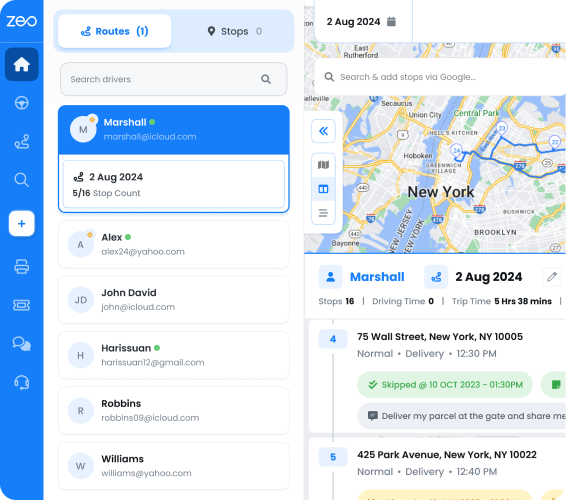
Fuel Cost Analysis by Route Type
Calculate fuel costs separately for empty miles, loaded miles, and idle time at disposal facilities. According to the American Transportation Research Institute, fuel costs represent 24% of total trucking operational expenses in 2026, making this your largest controllable cost factor.
Track fuel efficiency by route type:
- Empty container pickup routes: 8-10 MPG average
- Loaded disposal runs: 6-7 MPG average
- Mixed delivery routes: 7-9 MPG average
Optimize route sequences to minimize loaded miles and reduce disposal facility wait times. Every 10% reduction in loaded miles typically saves 15% on fuel costs for that route segment.
Driver Productivity and Overtime Reduction
Measure driver productivity by completed service cycles per day rather than simple delivery counts. An efficient roll-off driver should complete 8-12 full service cycles (pickup-dispose-deliver) during a standard shift.
Track overtime hours specifically caused by routing inefficiencies versus legitimate workload increases. Poor routing typically adds 1-2 hours of overtime per driver daily, costing $30-60 per driver in unnecessary labor expenses.
Equipment Utilization and Revenue Optimization
Calculate truck utilization rates based on revenue-generating activities versus empty travel time. Optimal roll-off operations maintain 70-75% utilization rates during peak periods.
Monitor container turn rates to identify revenue optimization opportunities. Containers sitting idle at customer locations represent tied-up inventory that could generate additional rental revenue.
Sample ROI Calculation for 15-Truck Operation:
Monthly fuel savings (20% reduction): $8,400
Overtime reduction (10 hours/week): $6,200
Increased container turns (5% improvement): $4,800
Total monthly savings: $19,400
Annual ROI on route optimization: $232,800
Operations using professional route optimization typically achieve these results within 30-60 days of implementation. Many waste management operations see even higher returns when factoring in improved customer satisfaction and reduced vehicle wear.
Technology Integration: Connecting Route Optimization with Dispatch and Billing Systems
Modern roll-off operations require seamless integration between route optimization, dispatch communication, and billing systems to maximize efficiency gains and reduce administrative overhead.
Real-Time Dispatch Communication
Integrate route optimization technology with dispatch systems to eliminate manual route distribution and reduce communication errors. Drivers should receive optimized routes directly on mobile devices with all customer details, special instructions, and route sequences clearly displayed.
Automated dispatch reduces route distribution time from 30-45 minutes to under 5 minutes daily. This time savings allows dispatch staff to focus on customer service and emergency request handling rather than administrative route management.
Customer Communication Automation
Connect route optimization with customer notification systems to provide accurate service windows and real-time updates. Customers receive automatic notifications when drivers are en route, reducing service calls and improving satisfaction.
Automated customer communications reduce dispatch call volume by 40-60% while improving service reliability perception. Customers appreciate knowing exactly when to expect container pickup or delivery without calling for updates.
Proof of Service Documentation
Integrate photo capture, digital signatures, and service notes with route optimization to create complete service documentation without additional administrative work. Drivers document container conditions, placement locations, and any service issues directly within their route management system.
This integration eliminates duplicate data entry and creates complete service records for billing accuracy and dispute resolution. Proof of delivery features allow drivers to capture photos, collect signatures, and add service notes that automatically sync with route completion data.
Billing System Integration and Accuracy
Connect completed route data with billing systems to ensure accurate service charges and eliminate billing disputes. Automated integration reduces billing processing time and improves accuracy for complex service scenarios.
Track service completion times, disposal site selections, and any premium service charges directly from route completion data. This automation reduces billing errors by 80% while speeding up invoice generation and payment collection.
Fleet management software that integrates seamlessly with existing operations creates compound efficiency gains that extend far beyond simple travel time savings.
Frequently Asked Questions
Q: What makes roll-off routing more complex than regular delivery routes?
Roll-off routing involves three distinct stops per customer request: picking up an empty container, disposing of a full container at designated facilities, and delivering a new container. Each step has different timing requirements, weight restrictions, and operational constraints that standard delivery routing can’t handle.
Q: How much can proper roll-off route optimization reduce fuel costs?
Most roll-off operations waste 20-30% of their fuel budget on inefficient routing. Proper optimization typically reduces fuel costs by 15-25% by minimizing loaded miles, reducing disposal facility wait times, and eliminating unnecessary empty travel between stops.
Q: What vehicle constraints affect roll-off route planning?
Roll-off trucks face dynamic weight restrictions (empty trucks at 25,000 pounds versus loaded trucks up to 54,000 pounds), height clearances that change with container loads, and bridge weight limits that vary by location. Route optimization must account for these changing constraints throughout the day.
Q: How should emergency roll-off requests be handled without disrupting routes?
Use a 2-hour window strategy to classify genuine emergencies versus customer convenience requests. For true emergencies, recalculate entire affected routes rather than making ad-hoc adjustments. Zeo Route Planner’s dynamic route adjustments allow dispatchers to send updated optimized routes instantly to drivers’ mobile devices when emergency requests require changes.
Q: What ROI can roll-off companies expect from route optimization?
A typical 15-truck roll-off operation can achieve monthly savings of $19,400 through fuel reduction (20% savings), overtime reduction, and increased container utilization. This translates to an annual ROI of approximately $232,800, with most operations seeing results within 30-60 days of implementation.
Ready to transform your roll-off operations from chaotic daily planning to streamlined, profitable routes? Start a free trial to see how route optimization can reduce your roll-off operating costs by 20-30% while eliminating the daily stress of manual route planning.
Are you a fleet owner?
Want to manage your drivers and deliveries easily?
Grow your business effortlessly with Zeo Routes Planner – optimize routes and manage multiple drivers with ease.

increase fuel savings
Hassle Free Deliveries & Pickups!
Optimize routes with our algorithm, reducing travel time and costs efficiently.
Get Started for Free