


# Two Person Delivery Scheduling Software
> TL;DR: Two-person delivery operations require specialized scheduling software that coordinates driver teams, manages paired dependencies, and optimizes routes while maintaining team stability. According to the Bureau of Labor Statistics, delivery operations lose an average of 2.3 hours daily to scheduling inefficiencies, and this multiplies with team operations. Two person delivery scheduling software like Zeo Route Planner addresses this with skill-based driver assignment and real-time team coordination, helping furniture and appliance delivery companies save 2+ hours daily in planning time.
Two-person delivery operations face scheduling complexity that makes single-driver routes look simple. When you’re moving furniture, appliances, or other heavy items, coordinating driver pairs becomes an operational puzzle that can destroy profitability without the right systems.
The right two person delivery scheduling software transforms chaos into streamlined operations. You’ll coordinate driver teams, optimize routes while maintaining pairings, and eliminate the scheduling headaches that plague most delivery companies.
Why Two-Person Delivery Scheduling Is More Complex Than Single Driver Routes
Single-driver routing has one variable: the driver. Two-person delivery multiplies complexity exponentially because you’re managing relationships between people, not just individual schedules.
Driver Pairing Dependencies Create Cascading Problems
When one driver calls in sick, you don’t just lose one delivery capacity – you potentially lose an entire team. Finding a replacement who can work with the remaining driver, has the right skills, and fits the schedule creates a domino effect that disrupts your entire day.
Vehicle assignments become more complex too. Your delivery truck needs to accommodate two people comfortably for 8+ hours, and both drivers need access to the necessary equipment. This isn’t just about having enough seats – it’s about workspace efficiency during loading, unloading, and navigation.
Scheduling Windows Become Exponentially Restrictive
According to the Bureau of Labor Statistics, delivery operations lose an average of 2.3 hours daily to scheduling inefficiencies. With two-person teams, this number jumps significantly because you’re aligning two sets of availability constraints, break times, and skill requirements.
Customer time windows add another layer. While a single driver might squeeze in a quick delivery between appointments, two-person deliveries require longer service windows and more coordination with customers who need to be present for furniture placement or appliance installation.
Communication Breakdowns Multiply With Team Dependencies
Route changes that affect one driver now impact their partner. Late deliveries create ripple effects through both schedules. Customer complaints or service issues require input from both team members, making problem resolution slower and more complex.
Essential Features Your Two Person Delivery Scheduling Software Must Have
Your two person delivery scheduling software needs specific capabilities that standard routing tools lack. Generic solutions fail because they don’t understand team dynamics and paired dependencies.
Real-Time Team Coordination and Communication
Both drivers need instant access to route changes, customer updates, and schedule modifications. Look for software that provides live updates to both team members simultaneously, preventing the confusion that happens when only one driver gets critical information.
In-app communication between drivers and dispatch becomes essential. When issues arise, both team members and management need to stay connected without endless phone calls that disrupt other deliveries.
Skill-Based Team Assignment Capabilities
Different deliveries require different skill combinations. Installing a washing machine needs different expertise than delivering a sectional sofa to a third-floor apartment. Your software should match driver skills to specific delivery requirements automatically.
Zeo Route Planner handles skill-based driver assignment by letting you define capabilities for each team member and automatically pairing drivers based on delivery requirements. This eliminates manual matching and ensures the right expertise reaches each customer.
Capacity Management for Two-Person Teams
Vehicle capacity isn’t just about cubic feet – it’s about what two people can safely handle together. Your software needs to consider combined lifting capacity, team experience levels, and equipment requirements when building routes.
Weight distribution matters too. Two inexperienced drivers shouldn’t handle the same load as a seasoned team, and your route optimization software should account for these differences automatically while following OSHA manual lifting guidelines.
Customer Communication Integration
Customers need visibility into their delivery team’s progress, especially for large items that require them to be present. Look for software that sends automated updates to customers with live tracking links and estimated arrival times.
The software should handle notifications for both team members, ensuring customers always know which drivers are coming and when they’ll arrive. Advanced proof of delivery features help document complex installations and customer interactions.
How to Optimize Routes While Maintaining Driver Team Pairings
Route optimization for two-person teams requires balancing efficiency with team stability. Breaking up successful partnerships to save 20 minutes often costs more in reduced productivity and coordination errors.
Geographic Clustering With Team Considerations
Start with geographic proximity but factor in team dynamics. Some driver pairs work exceptionally well together and should stay paired even if it means slightly longer routes. Others might need separation for performance reasons.
Build routes that keep teams together for entire shifts when possible. Constantly switching partners throughout the day reduces efficiency as drivers spend time adjusting to different working styles and communication patterns.
Time Window Optimization for Two-Person Service Times
Two-person deliveries take longer than single-driver drops. Factor in extra time for coordination between team members, customer interaction for placement decisions, and the inherent complexity of moving large items.
Build buffer time between stops that accounts for two people coordinating their movements. Rushing between appointments leads to mistakes, damage, and poor customer experiences that cost more than the time saved.
Load Sequencing for Team Efficiency
Plan your truck loading sequence around team workflow. Items that require the most coordination should be easily accessible, and your route should deliver the heaviest or most complex items when your team is freshest.
Zeo Route Planner’s AI-powered route optimization considers multiple constraints simultaneously, including team pairings, time windows, and capacity limits, saving delivery managers over 2 hours daily in planning time while maintaining team efficiency.
Managing Driver Availability and Skill Matching for Two-Person Teams
Effective two-person delivery operations depend on matching the right drivers with complementary skills and compatible schedules. Poor pairing decisions ripple through your entire operation.
Creating Balanced Skill Combinations
Pair experienced drivers with newer team members for training purposes, but ensure each team has the combined skills needed for their assigned deliveries. A team of two inexperienced drivers shouldn’t handle complex appliance installations.
Document each driver’s strengths: heavy lifting, customer service, technical installation knowledge, problem-solving under pressure. Use this information to create balanced teams that can handle any delivery situation.
Availability Coordination Systems
Track driver availability at a granular level. Some drivers might be available for morning shifts but not afternoons due to family commitments. Others might have restrictions on certain types of deliveries due to physical limitations or skill gaps.
Your driver management system should flag potential availability conflicts before you assign routes. Nothing disrupts operations like discovering at 6 AM that half of a delivery team can’t work their assigned shift.
Backup Team Planning
Always have contingency plans for when team members call in sick or face emergencies. Pre-identify which drivers can work together on short notice and which skill combinations work for different types of deliveries.
Consider creating floating drivers who can step into different teams as needed. These versatile team members become invaluable during busy periods or when regular team members are unavailable.
Performance Tracking for Team Pairs
Monitor team performance metrics: delivery times, customer satisfaction scores, damage rates, and productivity measures. Some driver combinations consistently outperform others, and this data should influence future pairing decisions.

increase fuel savings
Save 2 Hours on Deliveries, Everyday!
Optimize routes with our algorithm, reducing travel time and costs efficiently.
Get Started for Free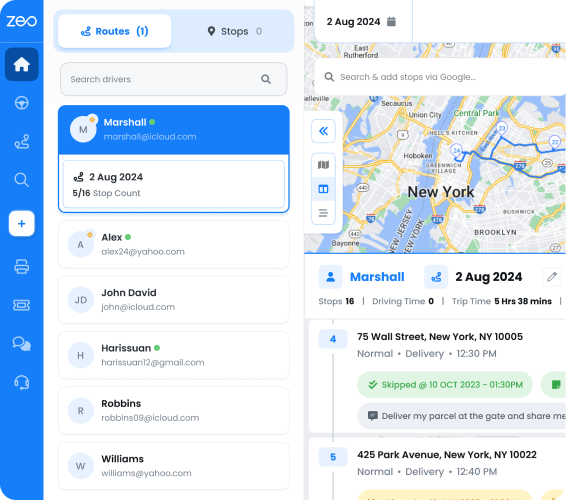
Track individual performance within teams too. Sometimes a struggling team has one strong performer and one weak link, requiring different intervention strategies than a team where both members need improvement.
Cost-Benefit Analysis: Making Two-Person Delivery Operations Profitable
Two-person delivery operations cost more than single-driver routes, but they enable you to serve markets and handle products that single drivers cannot. The key is understanding your true costs and pricing accordingly.
Labor Cost Calculations Beyond Base Wages
Calculate the full cost of two-person teams including wages, benefits, vehicle wear, fuel consumption, and insurance. According to the American Transportation Research Institute, the average cost per mile for commercial vehicles reached $1.88 in 2024, and two-person teams typically increase this by 35-40% due to higher labor costs and longer service times.
Factor in training costs for maintaining skilled teams. Two-person deliveries require more coordination training than single-driver routes, and maintaining consistent team pairings means cross-training multiple drivers for backup coverage.
Revenue Opportunities From Two-Person Capabilities
Two-person teams can handle deliveries that competitors cannot, commanding premium pricing. Furniture delivery, appliance installation, and large item logistics often carry 40-60% higher margins than standard package delivery.
Calculate the customer lifetime value for two-person delivery services. Customers who trust you with large, valuable items often become repeat customers for smaller deliveries too, increasing overall account value.
Efficiency Gains Through Better Coordination
Well-coordinated two-person teams often complete complex deliveries faster than poorly organized single drivers attempting the same work with multiple trips or outside help. Measure total job completion time, not just drive time.
Real-time vehicle tracking and live ETA updates help two-person teams maintain schedules by keeping customers informed and reducing waiting time that kills productivity. Teams using coordinated routing and communication tools report 25-30% improvements in daily delivery completion rates.
Technology ROI for Two-Person Operations
Route optimization software pays for itself quickly in two-person operations because the cost of inefficiency is doubled. Every minute saved benefits two workers, and every coordination failure costs twice as much.
Calculate technology ROI based on reduced planning time, fewer scheduling errors, improved customer satisfaction, and increased delivery capacity. Most delivery operations see positive ROI within 60-90 days of implementing proper two-person scheduling software.
Implementation Strategy: Setting Up Efficient Two-Person Delivery Workflows
Successful two-person delivery operations require systematic workflow design that accounts for team dynamics, customer expectations, and operational efficiency. Random implementation leads to chaos and reduced profitability.
Driver Pairing Strategy Development
Start by evaluating your current drivers’ skills, experience levels, and working styles. Create a matrix that identifies which drivers work well together and which combinations should be avoided due to personality conflicts or skill gaps.
Establish primary and secondary team pairings. Each driver should have a regular partner but also know who their backup partners are when their primary teammate is unavailable. This flexibility prevents operational disruptions during sick days or vacation coverage.
Document successful team workflows. When you find driver pairs that consistently outperform others, study their methods and train other teams using similar approaches. Standardize what works while allowing for individual team strengths.
Technology Integration Workflow
Deploy your two person delivery scheduling software systematically rather than all at once. Start with route planning features, then add real-time tracking, followed by customer communication tools.
Train both drivers and dispatch staff on the new system simultaneously. Both team members need to understand how to use the mobile app to receive routes, communicate with dispatchers, and capture proof of delivery.
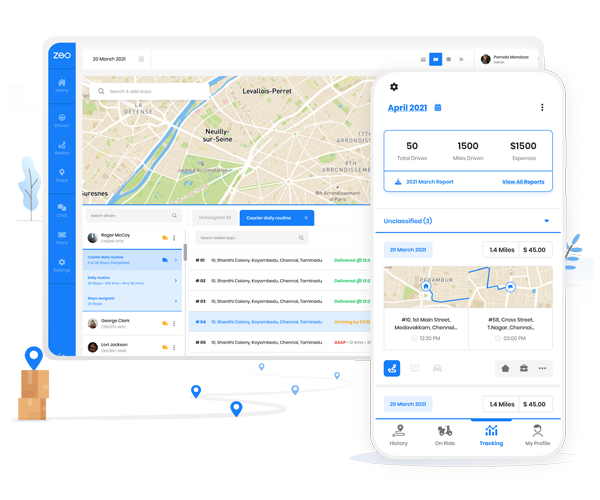
Zeo Route Planner’s mobile app lets both delivery team members receive their coordinated routes, communicate with dispatchers, and capture proof of delivery with photos and signatures. This ensures seamless coordination between the office and field operations without requiring duplicate data entry.
Customer Communication Protocols
Establish clear communication standards for two-person deliveries. Customers should know which driver is the primary contact, how to reach both team members if needed, and what information they’ll receive about arrival times and service completion.
Create templates for customer notifications that account for two-person team logistics. Customers need different information for furniture delivery than they do for package drops, including preparation requirements and access needs.
Quality Control and Performance Monitoring
Implement daily check-ins between teams and dispatch to identify issues before they become problems. Two-person teams face more complex challenges that require proactive management support.
Track key performance indicators specific to team operations: delivery completion rates, customer satisfaction scores by team, coordination efficiency, and cost per delivery. Use this data to continuously improve team pairings and workflow processes.
Schedule regular team performance reviews that focus on coordination effectiveness, not just individual driver performance. Some issues only emerge in team settings and require different solutions than individual coaching.
Scaling Considerations
Plan for growth by creating standardized training programs for new two-person teams. Document your most successful team workflows and use them as templates for training new driver pairs.
Consider how your routing software will handle larger fleets of two-person teams. Ensure your chosen fleet management software can manage multiple teams simultaneously without losing the coordination features that make two-person operations efficient.
Frequently Asked Questions
Q: How do you coordinate two drivers for furniture delivery efficiently?
Successful two-person delivery coordination requires driver management systems that handle skill-based pairing, synchronized scheduling, and real-time communication. Zeo Route Planner’s skill-based driver assignment automatically matches complementary expertise while maintaining team stability, reducing coordination errors by up to 40%.
Q: What’s the biggest challenge in scheduling two-person delivery teams?
The cascading effect of schedule disruptions creates the biggest challenge – when one driver is unavailable, it impacts their partner, the vehicle assignment, and potentially the entire day’s deliveries. This multiplies planning complexity compared to single-driver operations.
Q: How much more do two-person deliveries cost compared to single-driver routes?
Two-person delivery operations typically increase costs by 35-40% per mile due to doubled labor expenses and longer service times. However, they enable premium pricing for large item deliveries that often carry 40-60% higher margins than standard package delivery.
Q: Can regular route optimization software handle two-person team scheduling?
Most standard routing tools fail at two-person scheduling because they don’t account for team dependencies, skill combinations, or paired availability constraints. Specialized two person delivery scheduling software like Zeo Route Planner considers driver pairings, combined lifting capacity, and team coordination requirements during optimization.
Q: What backup plans work best when two-person delivery teams call in sick?
Effective backup strategies include maintaining floating drivers who can work with multiple teams, pre-identifying compatible driver combinations, and documenting which skill sets are required for different delivery types. Having secondary team pairings established prevents last-minute scrambling.
Ready to eliminate the complexity of two-person delivery scheduling? Start a free trial of Zeo Route Planner to see how easy two-person delivery coordination can be. Experience AI-powered route optimization, real-time team coordination, and seamless mobile apps that keep your drivers connected and your customers satisfied.
Are you a fleet owner?
Want to manage your drivers and deliveries easily?
Grow your business effortlessly with Zeo Routes Planner – optimize routes and manage multiple drivers with ease.
increase fuel savings
Save 2 Hours on Deliveries, Everyday!
Optimize routes with our algorithm, reducing travel time and costs efficiently.
Get Started for Free