



# How to Optimize Window Cleaning Routes: Complete 2026 Guide
> TL;DR: Route optimization for window cleaning reduces daily travel time by 2-3 hours per crew while improving customer satisfaction through predictable scheduling. Poor routing costs companies $2,000+ annually per crew in fuel alone, plus lost revenue from overtime and missed appointments. AI-powered route optimization tools like Zeo Route Planner solve this with intelligent scheduling that considers time windows and job duration, helping window cleaning teams save 2+ hours daily.
Running a window cleaning business with multiple crews means solving a daily puzzle. Learning how to optimize window cleaning routes effectively transforms chaotic planning into systematic profit generation. You’re juggling recurring commercial contracts, residential cleanings, and last-minute emergency jobs while trying to minimize drive time between locations.
Poor route planning costs window cleaning companies an average of 2-3 hours per crew daily, according to Bureau of Labor Statistics service industry data. That’s lost revenue, frustrated customers, and crews working overtime just to complete their scheduled jobs.
The solution isn’t working harder – it’s working smarter with systematic route optimization that transforms chaotic daily planning into predictable, profitable operations.
The Hidden Costs of Poor Route Planning in Window Cleaning
Manual route planning creates a cascade of problems that eat into your profits every single day.
Excessive Travel Time Between Jobs
When crews zigzag across town between cleanings, you’re paying for windshield time instead of billable work. A poorly planned route can add 45-60 minutes of drive time compared to an optimized sequence.
Those extra miles compound quickly. If each crew drives an additional 20 miles daily due to poor routing, you’re looking at $2,000+ in extra fuel costs per crew annually at current gas prices.
Missed Time Windows and Unhappy Customers
Commercial window cleaning contracts often specify narrow time windows – especially for retail stores that can’t have crews blocking customer access during peak hours. Missing these windows damages client relationships and can cost you lucrative contracts.
Residential customers get frustrated when crews show up late or need to reschedule. In service businesses, according to the Bureau of Labor Statistics, customer retention drops significantly when service delivery becomes unpredictable.
Inability to Scale Operations
Without systematic routing, adding new crews becomes exponentially more complex. You can’t effectively balance territories or ensure consistent service quality across multiple teams.
Crew Fatigue and Turnover
Inefficient routes mean longer days for your crews. When teams consistently work overtime just to complete standard routes, job satisfaction drops and turnover increases.
Complete Route Optimization Framework: From Customer Data to Daily Execution
Effective route optimization starts with organizing your customer data and ends with seamless daily execution.
Step 1: Centralize Customer Information
Create a master database with every job location, including:
- Complete addresses with building access notes
- Service frequency (weekly, bi-weekly, monthly, quarterly)
- Preferred time windows
- Special equipment requirements
- Historical job duration data
Step 2: Define Service Territories
Divide your service area into logical territories based on:
- Geographic boundaries (highways, rivers, city limits)
- Crew capacity and skill sets
- Customer density and service frequency
- Average travel time between clusters
Assign primary and backup crews to each territory to maintain consistency and customer relationships.
Step 3: Implement Systematic Route Planning
Transform daily planning from a time-consuming puzzle into a streamlined process. Zeo Route Planner solves this by using AI-powered optimization that considers time windows, job duration, and crew capacity to create optimal routes in minutes rather than hours.
The system handles complex variables like:
- Balancing recurring and one-time jobs
- Respecting customer time preferences
- Accounting for different job types and durations
- Minimizing total travel time across all crews
Step 4: Create Predictable Daily Schedules
Your crews receive optimized routes directly on their phones via the mobile app, complete with turn-by-turn navigation and customer details. This eliminates confusion and ensures everyone starts their day with clear, efficient schedules.
Step 5: Build in Buffer Time
Include realistic buffer time between jobs for:
- Equipment setup and breakdown (10-15 minutes)
- Unexpected delays (weather, building access)
- Travel between locations
- Customer interactions and payment collection
Implementing proof of delivery systems helps document completion times and refine these buffer estimates over time.
Advanced Scheduling Strategies: Balancing Recurring Commercial, Residential, and Emergency Jobs
Window cleaning companies juggle three distinct types of work, each with different scheduling requirements.
Recurring Commercial Contracts: The Foundation
Commercial accounts provide steady revenue but require careful scheduling around business hours. Most prefer early morning or late afternoon service to avoid disrupting customer traffic.
Block similar commercial accounts into concentrated routes. For example, schedule all downtown office buildings on Tuesday mornings, retail centers on Wednesday afternoons, and restaurant windows during slow periods.
Following route optimization best practices ensures these high-value accounts receive consistent, professional service that strengthens long-term contracts.
Residential Services: Flexibility Within Structure
Residential customers want convenience but often have more flexible time windows than commercial accounts. Use these jobs to fill gaps in commercial routes or create dedicated residential days.
Consider seasonal patterns. Spring cleaning season drives demand for one-time residential jobs, while regular customers may pause service during winter months in harsh climates.
Emergency and One-Time Jobs: Strategic Integration
Emergency jobs (storm cleanup, vandalism removal) command premium pricing but disrupt planned routes. Build capacity for these high-value interruptions by:
- Maintaining 10-15% buffer capacity in daily schedules
- Training crews to handle emergency equipment
- Creating rapid response protocols
Zeo’s dynamic route adjustments handle these disruptions by automatically reoptimizing remaining stops when urgent jobs arise, ensuring crews stay efficient despite schedule changes.
Priority-Based Scheduling
Not all jobs carry equal importance. Prioritize scheduling based on:
- Contract value and customer lifetime worth
- Service level agreements and penalties
- Customer flexibility and relationship strength
- Profit margins and efficiency factors
Real-Time Route Adjustments: Handling Weather, Access Issues, and Last-Minute Cancellations
Weather creates unique challenges for window cleaning operations that require flexible response strategies.
Weather-Related Disruptions
Rain, high winds, or extreme temperatures can shut down window cleaning operations completely. When weather threatens, you need rapid rescheduling across multiple crews and customers.
Smart operators monitor weather forecasts 3-5 days ahead and create contingency plans. Move weather-sensitive exterior work earlier in the week when possible, and maintain lists of interior-only jobs for backup.
Building Access Problems
Commercial buildings sometimes restrict access due to construction, security issues, or special events. Residential customers occasionally forget appointments or have emergencies.
When access issues arise, crews need immediate alternatives to avoid wasted time. Real-time route adjustments help by suggesting nearby jobs or optimal next stops when planned locations become unavailable.
Last-Minute Cancellations and Additions
Customer schedules change. The key is responding quickly without disrupting entire crew schedules.
Zeo Route Planner handles these situations with live ETA updates and automatic route recalculation, helping dispatchers make informed decisions about whether to add last-minute jobs or reschedule existing ones for maximum efficiency.

increase fuel savings
Save 2 Hours on Deliveries, Everyday!
Optimize routes with our algorithm, reducing travel time and costs efficiently.
Get Started for Free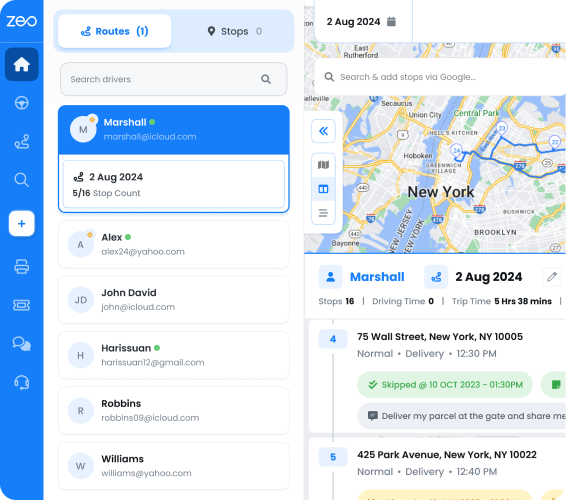
Communication Protocols
Establish clear communication between crews, dispatch, and customers:
- Crews report access issues immediately
- Dispatch provides alternative instructions within 10 minutes
- Customers receive updated arrival times automatically
- All changes get documented for future planning
Real-time GPS tracking enables these communication protocols by providing accurate location data and estimated arrival times throughout the day.
Multi-Crew Territory Management: Load Balancing and Capacity Optimization
Managing multiple window cleaning crews requires balancing workload, skills, and geographic efficiency.
Territory Design Principles
Effective territories balance several factors:
- Equal revenue potential across crews
- Reasonable travel distances between customers
- Appropriate job mix (commercial vs. residential)
- Crew skills and equipment capabilities
Review territory boundaries quarterly as your customer base grows and changes.
Skill-Based Assignment
Different jobs require different expertise levels. High-rise commercial work needs experienced crews with specialized equipment, while residential ground-floor cleaning can handle newer team members.
Match crew capabilities to job requirements through systematic assignment. Advanced route optimization platforms use skill-based driver assignment to ensure the right crew gets assigned to appropriate jobs automatically.
Capacity Planning
Track actual job completion times to refine scheduling accuracy. New window cleaners might need 45 minutes for a job that veterans complete in 30 minutes.
Account for these differences when assigning daily schedules. Overloading inexperienced crews leads to rushed work, customer complaints, and safety issues.
Cross-Training and Backup Coverage
Train crews to handle multiple territory types so you can adjust assignments when team members are sick, on vacation, or dealing with equipment problems.
Maintain detailed route documentation so backup crews can service unfamiliar territories without confusion or delays.
Load Balancing Strategies
Monitor daily completion times across crews. If one team consistently finishes early while another works overtime, rebalance territories or job assignments.
Use historical data to identify patterns. Some areas might have more complex jobs requiring longer completion times, while others offer quick, efficient cleanings.
Multi-stop route optimization techniques help ensure balanced workloads across all crews while maintaining geographic efficiency.
ROI Measurement: Tracking Key Metrics to Maximize Your Route Optimization Success
Measuring route optimization success requires tracking specific metrics that directly impact profitability.
Primary Efficiency Metrics
Track these core measurements weekly:
- Average daily miles per crew
- Jobs completed per crew per day
- Drive time as percentage of total work time
- Fuel costs per job completed
- On-time arrival percentage
Revenue Impact Metrics
Connect routing efficiency to financial results:
- Revenue per crew per day
- Profit margin improvement
- Customer retention rates
- Ability to accept additional jobs without adding crews
Companies implementing systematic route optimization typically see 20-30% improvement in daily capacity, according to fleet management studies.
Customer Satisfaction Indicators
Efficient routing improves customer experience:
- Reduced late arrivals and cancellations
- More consistent service timing
- Improved crew punctuality scores
- Fewer customer complaints about scheduling
Implementing customer retention strategies alongside route optimization creates compounding benefits for long-term business growth.
Operational Cost Savings
Document specific cost reductions:
- Fuel expense decrease (target 15-25% reduction)
- Overtime pay elimination
- Vehicle maintenance cost reduction from fewer miles
- Insurance savings from improved safety records
Crew Performance Metrics
Happy, efficient crews deliver better results:
- Job completion times by crew and individual
- Safety incident rates
- Employee satisfaction scores
- Turnover rates and retention improvement
Set monthly targets for each metric and review progress with crew leaders. Share successful improvements to maintain momentum and identify additional optimization opportunities.
Benchmark Against Industry Standards
Research shows that well-managed service businesses achieve:
- 75%+ of daily time spent on billable work vs. travel
- Customer retention rates above 85%
- Crew utilization rates of 80%+ during work hours
Compare your metrics against these benchmarks to identify improvement opportunities and validate your optimization efforts.
Following DOT commercial vehicle safety guidelines while optimizing routes ensures compliance alongside efficiency improvements.
Frequently Asked Questions
Q: How much time can route optimization save window cleaning crews daily?
Well-planned routes typically save window cleaning crews 2-3 hours per day compared to manual planning. Zeo Route Planner’s AI-powered optimization specifically saves crews 2+ hours daily by eliminating zigzag patterns and optimizing stop sequences based on time windows and job duration.
Q: What’s the biggest challenge in scheduling commercial vs residential window cleaning?
Commercial accounts require strict time windows to avoid disrupting business operations, while residential jobs offer more flexibility but irregular demand patterns. The key is blocking similar commercial accounts together and using residential jobs to fill route gaps efficiently.
Q: How do weather delays affect window cleaning route efficiency?
Weather disruptions can shut down exterior window cleaning completely, requiring rapid rescheduling across multiple crews. Smart operators monitor forecasts 3-5 days ahead and maintain backup lists of interior-only jobs to keep crews productive during weather delays.
Q: What metrics should window cleaning companies track to measure routing success?
Track average daily miles per crew, jobs completed per crew per day, and drive time as percentage of total work hours. Well-managed service operations achieve 75%+ billable time versus travel time and customer retention rates above 85%.
Q: How can window cleaning companies balance emergency jobs with scheduled routes?
Maintain 10-15% buffer capacity in daily schedules and create rapid response protocols for high-value emergency work. Zeo Route Planner handles these disruptions with dynamic route adjustments, automatically reoptimizing remaining stops when urgent jobs arise while maintaining crew efficiency.
Route optimization transforms window cleaning operations from reactive daily scrambling into predictable, profitable systems. The combination of systematic planning, real-time adjustments, and performance measurement creates sustainable competitive advantages that compound over time.
Ready to transform your window cleaning routes from chaotic to systematic? Start your free 14-day trial of Zeo Route Planner to optimize your window cleaning routes and see immediate savings in travel time and fuel costs.
Are you a fleet owner?
Want to manage your drivers and deliveries easily?
Grow your business effortlessly with Zeo Routes Planner – optimize routes and manage multiple drivers with ease.

increase fuel savings
Save $200 on fuel, Monthly!
Optimize routes with our algorithm, reducing travel time and costs efficiently.
Get Started for Free