


# Best Delivery Route Planner Software for Small Fleets 2026
> TL;DR: The best delivery route planner transforms manual chaos into automated efficiency by optimizing routes with AI algorithms that consider traffic, capacity, and time windows simultaneously. Professional route optimization software typically saves delivery businesses 2+ hours daily and reduces fuel costs by 20-30%. Tools like Zeo Route Planner serve over 1.5 million users across 150+ countries with AI-powered optimization that handles these complex variables automatically.
Running a growing delivery business feels like juggling flaming torches while riding a unicycle. Every morning, you’re mapping routes by hand, calling drivers about changes, and watching fuel costs eat into your profits.
The delivery route planner you choose can transform this daily chaos into a smooth operation that runs itself. Here’s how to pick the right solution and implement it without disrupting your business.
Why Manual Route Planning Breaks Down as Your Delivery Business Grows
Manual route planning works fine when you have three drivers and 20 stops per day. You know your territory, your drivers, and your customers. But that system crumbles fast.
According to the U.S. Bureau of Labor Statistics delivery industry data, delivery businesses that scale successfully average 47% more stops per driver than those using manual planning methods. The difference? They automate the complex stuff early.
The Hidden Costs Start Adding Up
Every hour you spend planning routes costs you $25-50 in labor. With 5 drivers, that’s 1-2 hours daily. With 20 drivers? You’re looking at 4-6 hours of pure planning time before the first delivery goes out.
Your drivers sit idle while you figure out who goes where. Traffic changes, customers reschedule, and vehicles break down. Each change ripples through your entire day.
Customer Expectations Keep Rising
Amazon trained customers to expect precise delivery windows and real-time tracking. When you tell someone “between 10 AM and 4 PM,” they compare you to companies that hit 30-minute windows consistently.
Late deliveries trigger angry calls. Missed time windows mean failed deliveries. Your customer service team spends more time apologizing than selling.
Driver Management Becomes Impossible
With 15+ drivers, you lose visibility. Who’s actually delivering? Who’s stuck in traffic? Which routes are running behind?
You can’t optimize what you can’t see. Manual tracking through phone calls and text updates gives you outdated information that’s useless for real decisions.
Essential Features Every Delivery Route Planner Must Have
Not all route planning software is created equal. Some tools just digitize your manual process without adding real value.
AI-Powered Route Optimization
Basic route planning connects dots on a map. Professional route optimization considers dozens of variables simultaneously.
Real optimization algorithms factor in traffic patterns, delivery time windows, vehicle capacity limits, and driver skills. They can process 100+ stops across 10 vehicles in seconds, finding combinations your brain could never calculate.
Dynamic Route Adjustments
Routes change throughout the day. Customers reschedule, traffic blocks roads, and drivers run ahead or behind schedule.
Your route planner needs to recalculate automatically when conditions change. Static routes planned at 6 AM become obsolete by 10 AM.
Real-Time Driver Communication
Your drivers need route updates instantly, not through phone calls that interrupt their work.
The best systems push updated routes directly to driver mobile apps. Drivers see changes automatically and navigate to new stops without calling the office. Real-time GPS tracking keeps managers informed of actual progress throughout the day.
Customer Communication Tools
Customers want updates without calling you. Automated notifications keep them informed while reducing your call volume.
Look for systems that send SMS updates, email notifications, and provide live tracking links customers can check themselves.
Proof of Delivery Integration
Every delivery needs documentation. Photos, signatures, and delivery notes protect you from disputes and chargebacks.
Your route planner should capture this proof of delivery automatically through driver mobile apps, not separate systems that don’t talk to each other.
How Professional Route Optimization Actually Works (Beyond Basic GPS)
Professional route optimization goes far beyond connecting stops in geographical order. Modern systems use artificial intelligence to solve complex logistics puzzles.
Multi-Variable Optimization
AI-powered systems consider vehicle capacity limits, driver work hours, customer time windows, and traffic patterns simultaneously. They test thousands of route combinations in seconds to find the most efficient solution.
For example, a route that looks geographically logical might violate time windows or exceed vehicle capacity. Professional optimization catches these conflicts automatically.
Skill-Based Assignment
Not every driver can handle every type of delivery. Some drivers excel at commercial routes, others at residential. Some have special training for hazardous materials or high-value goods.
Advanced route planners assign stops based on driver skills and certifications, not just geographical proximity.
Capacity-Based Routing
Vehicle weight and volume limits affect which stops can be combined on single routes. Manual planning often misses these constraints until drivers can’t fit everything in their trucks.
Professional systems calculate total weight and volume for each route, preventing overloaded vehicles and failed pickups.
Traffic-Aware Scheduling
Traffic patterns change throughout the day. A route that takes 30 minutes at 8 AM might take 90 minutes at 5 PM.
Modern route planners use historical traffic data and real-time conditions to schedule deliveries when roads are clearest. Following route optimization best practices ensures maximum efficiency.
ROI Calculator: What Route Planning Software Really Saves Delivery Companies
Let’s calculate the real savings route optimization delivers for a typical growing delivery business.
Time Savings Breakdown
Manual Planning Time: 2-3 hours daily for 10 drivers
- Route planning manager salary: $50,000 annually
- Daily planning cost: $75-100
- Annual planning cost: $25,000-35,000
Automated Planning Time: 15-30 minutes daily
- Annual time savings: 500-750 hours
- Cost savings: $20,000-30,000 annually
Fuel Cost Reduction
According to the Department of Transportation fuel efficiency research, optimized routing reduces fuel consumption by 20-30% on average.
Example calculation for 10-vehicle fleet:
- Monthly fuel cost (manual routing): $8,000
- Fuel savings with optimization (25%): $2,000/month
- Annual fuel savings: $24,000
Driver Productivity Gains
Optimized routes let drivers complete 15-25% more stops per day within the same work hours.
Productivity calculation:
- Current: 25 stops per driver per day
- Optimized: 30 stops per driver per day
- Revenue per stop: $15
- Additional daily revenue: $750 (10 drivers × 5 extra stops × $15)
- Annual revenue increase: $195,000
Total Annual ROI
- Planning time savings: $25,000
- Fuel cost reduction: $24,000
- Productivity increase: $195,000
- Total annual benefit: $244,000
Most professional route planning platforms cost $2,000-8,000 annually for 10 drivers, delivering 10-50x ROI in the first year.
Complete Implementation Guide: From Manual Planning to Automated Routes in 30 Days
Switching from manual to automated route planning doesn’t require shutting down operations. Here’s how to transition smoothly.
Week 1: Data Collection and Setup
Start by gathering your delivery data from the past 30 days. Export customer addresses, delivery windows, driver assignments, and vehicle information.
Most route planning platforms can import this data from Excel spreadsheets or CSV files. Modern delivery management software connects directly to popular e-commerce platforms like Shopify and WooCommerce to import order data automatically.
Set up your driver profiles with work hours, vehicle assignments, and any special skills or certifications.
Week 2: Pilot Testing
Choose your most experienced driver and run a parallel test. Plan their route manually as usual, then create the same route using the optimization software.

increase fuel savings
Hassle Free Deliveries & Pickups!
Optimize routes with our algorithm, reducing travel time and costs efficiently.
Get Started for Free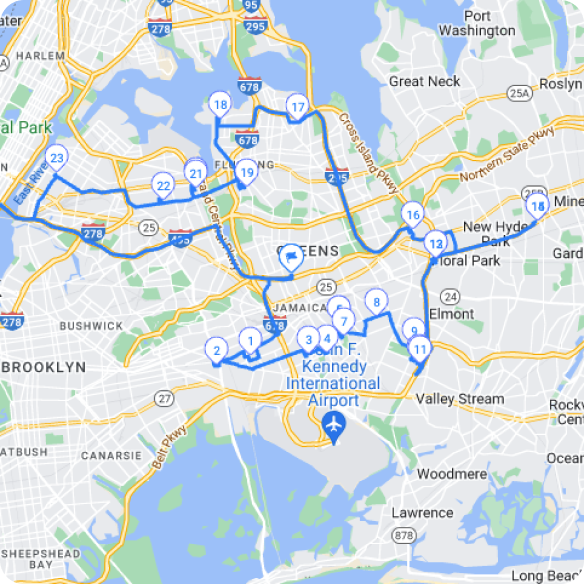
Compare the results throughout the week. Track total drive time, fuel usage, and number of completed deliveries.
Most businesses see immediate improvements: routes 15-20% shorter and 2-3 additional stops completed per day.
Week 3: Limited Rollout
Expand to 3-5 drivers while keeping the rest on manual planning. This lets you work out any issues without disrupting your entire operation.
Train these drivers on the mobile app for receiving routes and capturing proof of delivery. The transition should feel seamless from their perspective.
Monitor customer feedback during this phase. Customers typically notice faster deliveries and more accurate time estimates immediately.
Week 4: Full Implementation
Roll out automated planning to your entire fleet. Your operations manager uses the web platform to optimize routes each morning, while drivers receive their assigned routes directly on the mobile app.
The system handles turn-by-turn navigation and captures delivery photos and signatures automatically.
Implementation Success Tips
Start simple: Don’t try to optimize every variable on day one. Begin with basic route optimization and add advanced features gradually.
Train thoroughly: Spend extra time training your most skeptical drivers. Early adopters will help convince the holdouts.
Measure everything: Track metrics before and after implementation. Document improvements to justify the investment and identify areas for further optimization.
Communicate with customers: Let customers know about new features like live tracking and automated notifications. Frame changes as improvements to their experience.
Choosing the Right Delivery Route Planner for Your Business Size and Needs
Different route planning solutions work better for different business sizes and delivery types.
For Small Fleets (5-15 Drivers)
Look for platforms that are easy to implement without dedicated IT support. You need core optimization features without complexity that requires full-time management.
Key features to prioritize:
- Simple route optimization with drag-and-drop editing
- Mobile app for drivers with basic navigation
- Customer notification capabilities
- Basic proof of delivery (photos and signatures)
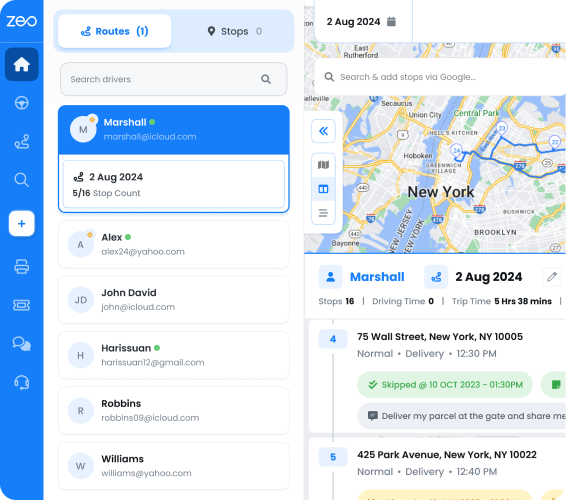
Zeo Route Planner serves over 1.5 million users across 150+ countries, with AI-powered optimization that saves delivery companies 2+ hours daily. The platform works for both individual drivers and fleet managers, with routes optimized on the web platform and delivered directly to driver mobile apps.
For Medium Fleets (15-50 Drivers)
You need advanced features like driver skill assignment, complex vehicle constraints, and detailed analytics.
Essential capabilities:
- Multi-depot routing for businesses with multiple locations
- Advanced vehicle capacity management
- Real-time tracking with customer communication
- Performance analytics and reporting
- Integration with your existing business systems
For Large Fleets (50+ Drivers)
Enterprise features become critical: advanced reporting, API integrations, and dedicated account management.
Must-have features:
- Custom integrations with ERP and CRM systems
- Advanced analytics and performance dashboards
- Compliance reporting and audit trails
- Dedicated support and training resources
Industry-Specific Considerations
Food delivery requires hot/cold bag tracking and very tight time windows.
Pharmaceutical delivery needs chain of custody documentation and temperature monitoring integration.
Furniture and appliance delivery requires appointment scheduling and two-person delivery coordination.
B2B delivery focuses on commercial time windows and bulk capacity management.
Choose a platform that handles your specific delivery requirements without forcing you to work around limitations.
Integration Requirements
Your route planner should connect seamlessly with your existing business systems.
Common integrations include:
- E-commerce platforms (Shopify, WooCommerce, Amazon)
- CRM systems (HubSpot, Salesforce)
- Accounting software (QuickBooks, Xero)
- Customer service platforms
Professional platforms offer built-in integrations with popular business platforms plus Zapier connectivity for additional apps, letting you automate data flow between systems without manual exports and imports.
Pricing Considerations
Most route planning platforms charge per driver per month, typically ranging from $20-80 per driver monthly.
Factor in implementation costs, training time, and any required integrations when calculating total cost of ownership.
Remember that the right system pays for itself quickly through fuel savings and productivity improvements. A $50/month solution that saves 2 hours of planning time daily is profitable from day one.
Effective fleet management strategies focus on choosing solutions that scale with your business growth while delivering immediate ROI.
Frequently Asked Questions
Q: How much can route optimization software actually save on fuel costs?
According to Department of Transportation research, optimized routing typically reduces fuel consumption by 20-30% for delivery fleets. For a 10-vehicle fleet spending $8,000 monthly on fuel, this translates to $24,000 in annual savings through more efficient route planning.
Q: What’s the difference between basic GPS navigation and professional route optimization?
Basic GPS connects stops geographically, while professional route optimization considers vehicle capacity, time windows, traffic patterns, and driver skills simultaneously. Zeo Route Planner’s AI-powered optimization processes these variables in seconds, finding combinations that save 2+ hours daily compared to manual planning.
Q: How long does it typically take to implement route planning software for a small fleet?
Most small fleets can fully implement route planning software within 30 days using a phased approach. Start with data collection and pilot testing one driver, then gradually expand to 3-5 drivers before full fleet rollout. This prevents operational disruption while allowing time to train drivers and work out any issues.
Q: Can route planning software handle last-minute delivery changes and cancellations?
Yes, modern route planning platforms support dynamic route adjustments throughout the day. When customers reschedule or cancel, the system automatically recalculates optimal routes for remaining stops. Zeo Route Planner pushes updated routes directly to driver mobile apps, eliminating the need for phone calls and ensuring drivers always have current information.
Q: What features should small delivery businesses prioritize when choosing route planning software?
Small businesses should focus on core optimization capabilities, mobile apps for drivers, customer notifications, and basic proof of delivery. Avoid overpaying for enterprise features like advanced analytics until your fleet grows beyond 15-20 drivers. Integration with existing business systems and simple implementation should be top priorities.
Ready to transform your daily route planning chaos into an automated system that runs itself? Start your free trial of Zeo Route Planner and see how much time and money you can save with automated route optimization.
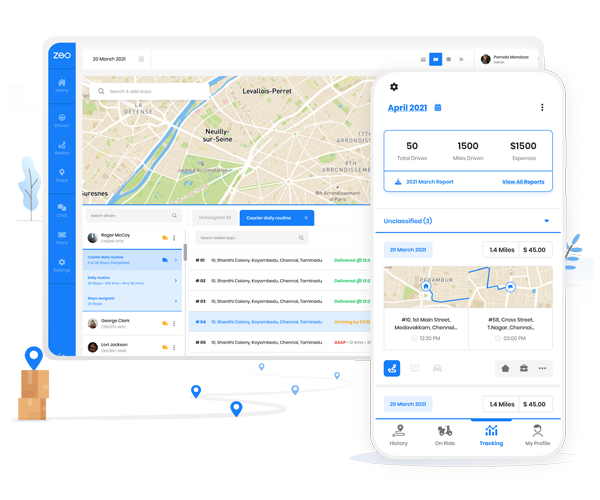
Are you a fleet owner?
Want to manage your drivers and deliveries easily?
Grow your business effortlessly with Zeo Routes Planner – optimize routes and manage multiple drivers with ease.

increase fuel savings
Save $200 on fuel, Monthly!
Optimize routes with our algorithm, reducing travel time and costs efficiently.
Get Started for Free