


# How to Reduce Auto Parts Delivery Times by 40% in 2026
Auto parts delivery isn’t like delivering packages or groceries. When a repair shop calls for an urgent transmission part, every minute counts. A broken-down customer is waiting, and that shop’s reputation depends on getting vehicles back on the road fast. Learning how to reduce auto parts delivery times effectively can transform your entire operation.
The challenge? You’re juggling emergency same-day requests alongside scheduled deliveries. This creates chaos that leads to inefficient routes, missed windows, and frustrated customers. But with the right approach, you can reduce delivery times by 40% while actually cutting your fuel costs.
Why Auto Parts Delivery Times Matter More Than Other Industries
Auto parts delivery operates under unique pressure. When a repair shop orders a critical part, it’s not just inventory – it’s the key to getting someone’s vehicle running again.
Consider this scenario: A transmission shop has a customer’s car on the lift, waiting for a torque converter. Every hour that part is delayed costs the shop money and damages their customer relationship. Meanwhile, you have 15 other scheduled deliveries across town.
Unlike e-commerce deliveries where customers can wait another day, auto parts delivery directly impacts repair timelines. A delayed alternator delivery doesn’t just inconvenience one customer – it affects the entire repair shop’s schedule for the day.
The stakes are higher because repair shops often work with razor-thin margins. They can’t afford to have technicians sitting idle waiting for parts. This pressure creates a domino effect: rushed deliveries, poor route planning, and ultimately higher costs for everyone. According to the Bureau of Transportation Statistics, freight transportation delays cost the automotive aftermarket billions annually in lost productivity.
Route Optimization Strategies for Mixed Emergency and Scheduled Deliveries
The key to faster auto parts delivery lies in treating emergency and scheduled orders as one integrated system, not two separate problems.
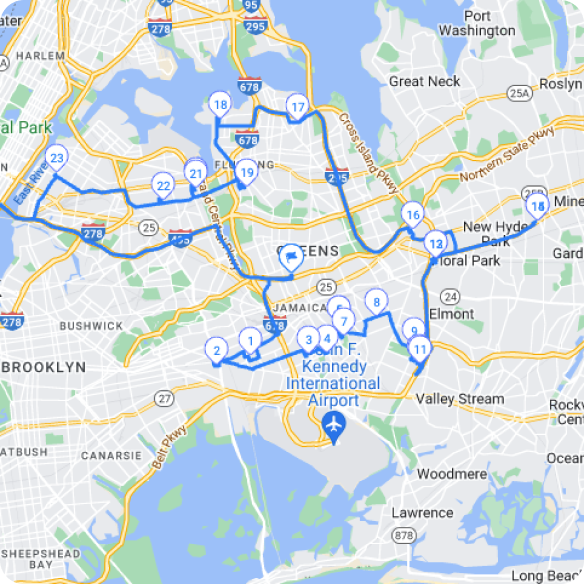
Start by creating delivery zones based on drive time, not just geographic distance. A shop 10 miles away on a highway might be faster to reach than one 5 miles away through city traffic. Map your coverage area into 20-30 minute zones from each warehouse location.
Implement a dynamic batching system. Instead of sending drivers out with fixed routes, batch orders in 2-hour windows. This gives you flexibility to add urgent requests without completely disrupting scheduled deliveries. Same-day delivery implementation becomes much more manageable with this approach.
Use a priority scoring system that weighs urgency, order value, and route efficiency. A routine oil filter delivery gets a low score, while a brake pad order for a shop with a customer waiting gets maximum priority. This helps you make smart decisions when emergency orders arrive.
Consider the “milk run” approach for high-volume customers. If a dealership orders parts multiple times daily, establish regular delivery windows (like 10 AM, 2 PM, and 5 PM) instead of individual trips for each order.
Reserve 20-30% of your daily capacity for same-day emergency orders. This buffer prevents urgent requests from destroying your planned routes entirely.
Technology Stack: Essential Software Tools for Faster Auto Parts Delivery
Modern auto parts delivery requires the right technology foundation. Your drivers need more than basic GPS – they need tools built for the complexity of parts delivery.
Route optimization software becomes essential when handling mixed delivery types. The software should factor in delivery time windows, driver skills (some drivers know certain shops better), and real-time order additions. It should also account for parts-specific factors like weight limits and special handling requirements.
Real-time inventory visibility prevents the costly mistake of promising parts you don’t have. When a shop calls for an urgent part, you need instant confirmation of availability across all your locations.
Customer communication tools keep repair shops informed without constant phone calls. Automated SMS updates telling shops their parts are “loaded for delivery” or “10 minutes away” reduce anxiety and improve relationships.
Your drivers need mobile apps that handle the complexity of parts delivery. They should be able to confirm part numbers, capture signatures, and instantly update delivery status. Real-time GPS tracking allows dispatchers to monitor progress and make dynamic route adjustments. When an emergency order comes in, the app should recalculate their route automatically.
Integration with your ERP system eliminates double data entry. When a parts order is ready for delivery, it should flow directly into your routing system without manual intervention. Modern proof of delivery systems can capture photos, signatures, and notes digitally, speeding up the entire process.
Warehouse Positioning and Multi-Location Inventory Management
Strategic warehouse positioning can cut delivery times more than any route optimization. Auto parts distributors succeed by being closer to their customers, not just more efficient with longer routes.
Analyze your delivery data to identify coverage gaps. If you’re making daily deliveries to shops in a particular area, consider a smaller satellite location or partnership with a local distributor.
Implement smart inventory allocation based on demand patterns. Fast-moving items like brake pads and oil filters should be stocked at multiple locations, while specialty items can be centralized.
Cross-docking capabilities become crucial for emergency deliveries. When you don’t have a part locally but can get it from another location quickly, efficient transfer processes save hours.
Consider mobile inventory for high-density areas. Some distributors use delivery trucks that carry common parts, essentially creating moving warehouses that can handle many requests without returning to base.
Establish supplier direct-ship arrangements for large or rarely-needed parts. Instead of stocking every possible transmission, partner with suppliers who can deliver directly to shops within your service promise. The Automotive Aftermarket Suppliers Association reports that strategic supplier partnerships can reduce inventory costs by up to 25% while improving delivery times.
Driver Performance and Real-Time Communication Systems
Your drivers are the face of your operation, but they need the right tools and information to deliver efficiently.
Delivery drivers can use mobile apps like Zeo Route Planner to receive optimized routes directly on their phones, complete with customer details and special delivery instructions. As emergency orders come in, dispatchers can add stops to driver routes in real-time, with the app automatically recalculating the most efficient sequence.

increase fuel savings
Save 2 Hours on Deliveries, Everyday!
Optimize routes with our algorithm, reducing travel time and costs efficiently.
Get Started for Free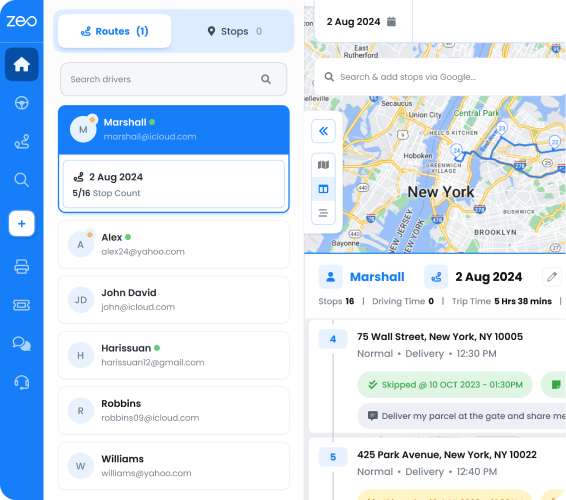
The real power comes from real-time visibility. While drivers update delivery status and capture proof of delivery through the mobile app, dispatchers monitor progress from a web dashboard and make dynamic adjustments based on new priorities or traffic conditions.
Driver training should focus on parts-specific knowledge. Drivers who understand the urgency of different parts make better decisions in the field. They know when to call ahead for a critical delivery and when a slight delay is acceptable. Following National Institute for Occupational Safety and Health guidelines ensures drivers maintain safety standards while meeting delivery deadlines.
Implement performance metrics that balance speed with accuracy. A fast driver who delivers wrong parts creates more problems than a methodical driver who gets it right the first time.
Create clear escalation procedures for problem deliveries. When a driver can’t locate a shop or finds it closed, they need immediate guidance rather than sitting in traffic trying to reach dispatch by phone.
Consider driver specialization for your largest accounts. Some drivers develop relationships with specific shops and learn their preferences, loading docks, and peak hours. Fleet management software can help track these relationships and optimize assignments accordingly.
Measuring Success: Key Delivery Performance Metrics and ROI Analysis
You can’t improve what you don’t measure. Auto parts delivery requires specific metrics that reflect the unique challenges of your industry.
Average delivery time should be measured from order ready to customer signature. Track this by order type (emergency vs. scheduled) and by customer tier. Your goal should be consistent improvement across all categories.
First-time delivery success rate measures how often you get the right part to the right place on the first attempt. Failed deliveries are exponentially more expensive than slower deliveries.
Emergency order response time tracks how quickly you can add urgent requests to existing routes. Best-in-class distributors can add emergency orders and have them out for delivery within 30 minutes.
Customer satisfaction scores, particularly from repair shops, provide crucial feedback. These customers know the difference between good and great delivery service.
Route efficiency metrics like stops per hour and miles per delivery help identify optimization opportunities. Improved routing typically shows up here first.
Cost per delivery should trend downward as you optimize routes and improve efficiency. Factor in fuel, labor, and vehicle costs for a complete picture.
Calculate ROI by comparing your current performance to baseline metrics. A 40% reduction in delivery times typically translates to higher customer retention, increased order frequency, and the ability to charge premium pricing for emergency services.
Frequently Asked Questions
Q: How much can auto parts delivery times realistically be reduced?
Most auto parts distributors can reduce delivery times by 30-50% through proper route optimization and technology implementation. The key is treating emergency and scheduled deliveries as one integrated system rather than separate processes.
Q: What technology is essential for faster auto parts delivery?
Essential technology includes route optimization software that handles mixed delivery types, real-time inventory systems, and mobile apps for drivers. Zeo Route Planner, for example, allows dispatchers to add emergency orders to existing routes in real-time while automatically recalculating the most efficient sequence.
Q: How do you balance emergency orders with scheduled deliveries?
Reserve 20-30% of daily capacity for same-day emergency orders and use dynamic batching in 2-hour windows. Implement a priority scoring system that weighs urgency, order value, and route efficiency to make smart decisions when emergencies arise.
Q: What’s the biggest mistake in auto parts delivery routing?
The biggest mistake is creating delivery zones based on geographic distance rather than actual drive time. A shop 10 miles away on a highway might be faster to reach than one 5 miles away through city traffic, so zones should be mapped by 20-30 minute drive times.
Q: How does warehouse positioning affect delivery times?
Strategic warehouse positioning can reduce delivery times more than route optimization alone. Analyzing delivery data to identify coverage gaps and placing fast-moving inventory at multiple locations can cut hours from emergency deliveries. Tools like Zeo Route Planner help identify these patterns through delivery analytics.
Ready to transform your auto parts delivery operation? Start your free trial of Zeo Route Planner to see how auto parts distributors are reducing delivery times by 40% while cutting operational costs.
Are you a fleet owner?
Want to manage your drivers and deliveries easily?
Grow your business effortlessly with Zeo Routes Planner – optimize routes and manage multiple drivers with ease.
increase fuel savings
Hassle Free Deliveries & Pickups!
Optimize routes with our algorithm, reducing travel time and costs efficiently.
Get Started for Free