


# How to Reduce Auto Parts Delivery Time by 40% in 2026
When a repair shop is waiting for brake pads, every minute costs them money. That customer sitting in the waiting room represents lost productivity, frustrated mechanics, and potential reputation damage. For auto parts distributors, how to reduce auto parts delivery time isn’t just about efficiency—it’s about survival in a market where Amazon promises same-day delivery.
The harsh reality? Most auto parts distributors are losing market share because their delivery operations can’t keep pace with modern expectations. But the distributors winning in 2026 have cracked the code on balancing emergency rush orders with scheduled deliveries.
Here’s how they’re cutting average delivery times by 40% while handling twice as many emergency orders—without hiring additional drivers.
The Hidden Cost of Slow Auto Parts Delivery: Why Every Minute Matters to Your Bottom Line
Every delayed auto parts delivery creates a ripple effect that damages your bottom line in ways you might not realize.
When your delivery arrives 30 minutes late, that repair shop loses an entire service bay’s productivity. Mechanics stand idle. Customers reschedule appointments. The shop’s daily revenue drops by hundreds of dollars.
The real cost isn’t just one late delivery—it’s the relationship damage.
Repair shops remember which distributors keep them waiting. They switch to competitors who deliver faster, even if parts cost slightly more. In today’s market, reliability trumps price almost every time.
Consider this scenario: NAPA AutoCare Center in Phoenix was losing $2,400 daily when their primary distributor consistently delivered 45 minutes behind schedule. They switched distributors and immediately saw their bay utilization jump from 68% to 91%.
Late deliveries also compound your operational costs.
When Driver A is running 20 minutes behind, it affects every subsequent stop. Your dispatcher spends time fielding angry calls instead of optimizing routes. Emergency orders pile up because your planned routes are already falling apart.
The math is simple: reduce delivery times by even 15 minutes per stop, and you can handle 20% more deliveries per driver per day. That translates to serving more customers without expanding your fleet.
Emergency vs Routine: Building a Multi-Tier Delivery Strategy That Handles Both
The biggest mistake auto parts distributors make is treating every delivery the same. A transmission rebuild kit for next Tuesday shouldn’t get the same treatment as brake pads needed for a customer waiting in the lobby.
Start by categorizing your orders into three tiers.
Emergency orders (needed within 2 hours) get immediate dispatch. Priority orders (needed same day) get optimized routing with tight time windows. Standard orders (next-day delivery) fill the gaps in your routes.
Smart distributors assign specific drivers to emergency runs while others handle scheduled routes. This prevents emergency orders from disrupting your entire operation.
Here’s how it works in practice:
Driver 1 handles a scheduled route serving 12 repair shops between 8 AM and 3 PM. Driver 2 stays available for emergency runs until noon, then picks up a shortened afternoon route. Driver 3 runs the standard afternoon route from 1 PM to 6 PM.
When an emergency order comes in at 10 AM, Driver 2 handles it immediately. Your scheduled routes stay on track, and the emergency gets handled within 30 minutes.
The key is dynamic routing technology.
Manual route planning can’t adapt fast enough when priorities shift. When that emergency order comes in, you need systems that can instantly recalculate the most efficient driver assignment and route adjustments.
Your drivers receive updated routes directly on their mobile devices, complete with new priorities and time windows. No radio calls, no confusion, no delays. Modern route optimization software can handle these dynamic changes in real-time, ensuring your operations remain efficient even during peak demand periods.
Route Optimization for Auto Parts: Beyond Basic Delivery to Shop-Specific Logistics
Auto parts delivery isn’t like delivering packages to homes. Each repair shop has unique receiving patterns, parking challenges, and workflow preferences that affect delivery efficiency.
Start by mapping shop-specific logistics requirements.
Joe’s Auto Service only accepts deliveries between 8 AM and 10 AM when their receiving clerk is available. Premium Motors has a loading dock accessible only from the back alley. Quick Lube Express needs emergency brake fluid deliveries within 45 minutes or they shut down service bays.
Smart distributors build these requirements into their routing algorithms. Instead of generic time windows, you create shop-specific parameters that optimize for real-world constraints.
Consider delivery density and geographic clustering.
Group deliveries by geographic zones rather than random order sequences. Serve all shops in the industrial district during morning hours when traffic is lighter. Handle suburban locations during midday gaps. Save downtown deliveries for late afternoon when parking restrictions ease.
Factor in return logistics and cross-docking opportunities.
Many repair shops generate core returns, warranty items, and special orders that need pickup during delivery runs. Plan routes that maximize these combination trips. According to the American Trucking Associations logistics report, implementing multiple delivery runs optimization can reduce operational costs by up to 25%.
When your driver delivers new alternators to three shops in the same area, they can collect core returns from all three stops. This reduces your logistics costs while providing added value to customers.
Use real-time traffic and road condition data.
Construction zones, accidents, and rush hour traffic can destroy even perfect routes. Modern routing systems integrate live traffic data to automatically adjust routes and delivery sequences.
Your drivers get turn-by-turn navigation that adapts to current conditions. When Highway 10 has a 20-minute backup, the system automatically reroutes through side streets and updates arrival times at all subsequent stops.
Technology Integration: Connecting Your Delivery System with Inventory and Shop Management
The most efficient auto parts distributors don’t just optimize routes—they integrate delivery operations with inventory management and customer systems.
Real-time inventory integration prevents delivery failures.
Nothing wastes more time than sending a driver to deliver parts you don’t actually have in stock. When orders get processed, your routing system should verify inventory availability and flag potential shortages before drivers leave the warehouse.
Advanced systems can automatically substitute equivalent parts or split orders across multiple delivery runs when inventory is limited.
Customer notification systems reduce missed deliveries.
Repair shops appreciate knowing when deliveries are coming. Automated SMS and email notifications with live tracking links let shop managers prepare for arrivals and communicate with their customers.
“Your brake pad delivery will arrive at Joe’s Auto Service in 12 minutes. Track live progress here: [link]”
Proof of delivery documentation protects relationships.
Disputes about delivery times, quantities, or condition damage customer relationships. Digital proof of delivery with photos, signatures, and timestamps eliminates confusion and provides accountability.
Your drivers use mobile apps to capture delivery confirmation, note any issues, and immediately sync data back to your main system. Shop managers can access delivery records instantly when questions arise.
Integration with shop management software.
Many repair shops use management systems like Mitchell 1, AllData, or Tekmetric. Forward-thinking distributors integrate their delivery systems with these platforms to provide seamless parts ordering and status updates.
When a technician orders brake pads through their shop management system, they can see real-time delivery progress without calling your dispatcher. Real-time GPS tracking enables this level of transparency and builds trust with your customers.
Analytics and performance tracking.

increase fuel savings
Hassle Free Deliveries & Pickups!
Optimize routes with our algorithm, reducing travel time and costs efficiently.
Get Started for Free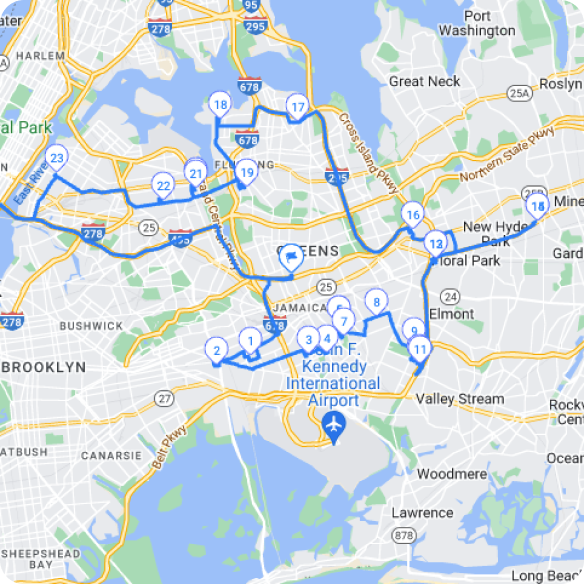
Integrated systems generate actionable insights about delivery performance, customer patterns, and operational efficiency. You can identify which routes consistently run late, which drivers perform best, and which customers generate the most profitable business.
This data drives continuous improvement in your delivery operations and helps identify expansion opportunities.
Measuring Success: KPIs and ROI Tracking for Auto Parts Delivery Operations
You can’t improve what you don’t measure. Successful auto parts distributors track specific metrics that directly correlate with customer satisfaction and operational efficiency.
On-time delivery percentage is your primary KPI.
Track the percentage of deliveries that arrive within promised time windows. Industry leaders maintain 95%+ on-time performance. Anything below 90% indicates serious operational problems that require immediate attention.
Break this down by delivery tier: emergency orders should hit 98%+ on-time rates, while standard deliveries can accept slightly lower targets. Understanding why on-time delivery matters to your bottom line helps prioritize improvement efforts.
Average delivery time per stop matters more than total route time.
Efficient drivers spend 8-12 minutes per delivery stop, including parking, unloading, documentation, and customer interaction. Stops taking longer than 15 minutes indicate training needs or process improvements.
Customer satisfaction scores provide early warning signals.
Survey repair shops monthly about delivery performance. Use simple 1-10 ratings for timeliness, driver professionalism, and order accuracy. Declining scores often predict customer defection before you lose the business.
Cost per delivery trends show operational efficiency.
Calculate total delivery costs (fuel, labor, vehicle maintenance, insurance) divided by number of deliveries. Target continuous improvement through better routing, vehicle efficiency, and driver productivity.
According to Bureau of Labor Statistics transportation data, successful distributors reduce cost per delivery by 15-25% annually through operational improvements.
Emergency order response time separates winners from losers.
Track time from order receipt to delivery completion for emergency requests. Leaders average under 45 minutes for local deliveries. This metric directly correlates with customer loyalty and premium pricing opportunities.
Driver utilization and productivity metrics.
Monitor stops per driver per day, miles driven per delivery, and productive hours versus total shift time. High-performing operations achieve 12-15 stops per driver daily in urban markets, 8-12 in suburban areas.
Track these metrics weekly and identify improvement opportunities through coaching, route optimization, or operational changes.
Scaling Your Operation: From Local Distributor to Regional Auto Parts Hub
Growth brings complexity that can destroy the efficiency gains you’ve worked hard to achieve. Smart auto parts distributors plan for scale from the beginning.
Zone-based expansion maintains service quality.
Instead of randomly adding coverage areas, successful distributors expand in logical geographic zones that maintain delivery density. Adding scattered rural accounts might increase revenue but often destroys route efficiency.
Focus on markets where you can serve 8-12 shops per driver per day. This maintains profitability while providing the fast service that wins customer loyalty.
Technology infrastructure must scale ahead of growth.
Your routing and dispatch systems should handle 3-5x your current order volume without performance degradation. Investing in scalable technology prevents the operational chaos that destroys customer relationships during growth phases.
Cloud-based platforms grow with your operation, automatically handling increased complexity without requiring major system overhauls. Federal Motor Carrier Safety Administration regulations also require proper documentation and compliance tracking as you scale across state lines.
Driver training and standardization become critical.
As you add drivers and coverage areas, consistent service quality becomes harder to maintain. Develop standardized procedures for customer interaction, delivery confirmation, emergency handling, and route optimization.
Your drivers should receive routes and updates through consistent mobile applications, regardless of which zone they serve. Customers should experience identical service quality whether they’re served by your original team or newly hired drivers.
Cross-zone flexibility provides competitive advantage.
Build routing capabilities that can handle orders across zone boundaries during peak periods or emergency situations. When Zone A gets overwhelmed with emergency orders, Zone B drivers should be able to assist seamlessly.
This flexibility allows you to maintain service quality during growth transitions and seasonal demand variations.
Partnership opportunities accelerate scaling.
Consider partnerships with other distributors, repair shop chains, or logistics providers to expand coverage without proportional investment. Shared logistics networks can provide regional coverage while maintaining local relationships.
Frequently Asked Questions
Q: What are the most effective ways to reduce auto parts delivery time?
The most effective methods include implementing AI-powered route optimization, creating multi-tier delivery strategies for emergency vs routine orders, and using real-time traffic data for dynamic routing. Zeo Route Planner helps auto parts distributors achieve 40% delivery time reductions through intelligent routing algorithms and real-time optimization.
Q: How much can route optimization software reduce delivery costs for auto parts distributors?
Route optimization typically reduces delivery costs by 15-30% annually through better fuel efficiency, reduced labor hours, and increased deliveries per driver. Most distributors see ROI within 2-3 months of implementation.
Q: What’s the difference between emergency and routine auto parts delivery strategies?
Emergency orders (needed within 2 hours) require immediate dispatch with dedicated drivers, while routine orders use optimized scheduled routes with time windows. Successful distributors use technology like Zeo Route Planner to balance both types without disrupting operations.
Q: How do you measure success in auto parts delivery operations?
Key metrics include on-time delivery percentage (target 95%+), average delivery time per stop (8-12 minutes), customer satisfaction scores, cost per delivery trends, and emergency order response times (under 45 minutes for local deliveries).
Q: What technology integrations are essential for modern auto parts delivery?
Essential integrations include real-time inventory management, customer notification systems, proof of delivery documentation, shop management software connectivity, and analytics dashboards for performance tracking and continuous improvement.
Ready to transform your auto parts delivery operation from reactive chaos to proactive efficiency? Start your free 7-day trial of Zeo Route Planner to see how auto parts distributors are cutting delivery times by 40% while reducing planning time from 2 hours to 10 minutes daily.
Are you a fleet owner?
Want to manage your drivers and deliveries easily?
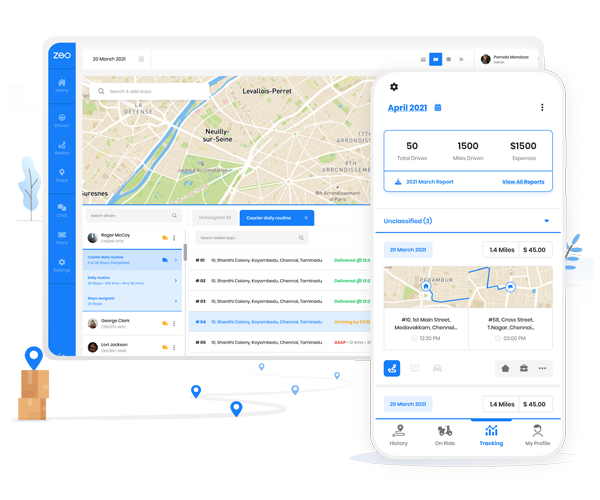
Grow your business effortlessly with Zeo Routes Planner – optimize routes and manage multiple drivers with ease.

increase fuel savings
Save $200 on fuel, Monthly!
Optimize routes with our algorithm, reducing travel time and costs efficiently.
Get Started for Free