



# Multiple Delivery Runs Optimization for Auto Parts Distributors
Managing multiple delivery runs optimization for auto parts distribution is one of the most challenging logistics puzzles in the industry. When a mechanic calls at 2 PM needing a transmission part to finish a customer’s car by closing time, every minute counts.
Auto parts distributors face unique pressure that other delivery businesses don’t experience. Your customers aren’t just waiting for a package – they’re losing money every hour their bay sits empty. This creates a complex web of urgent, time-sensitive deliveries that can make or break your customer relationships.
The good news? Smart distributors are transforming their chaotic multiple-run operations into streamlined systems that maximize deliveries while cutting operational costs by 25-30%. Effective auto parts delivery operations require specialized approaches that differ significantly from standard package delivery logistics.
Why Auto Parts Distribution Demands Specialized Multi-Run Optimization (Unlike Standard Delivery)
Auto parts distribution operates fundamentally differently from standard package delivery. E-commerce deliveries can often wait until tomorrow. Auto parts cannot.
Your typical driver might handle 15-20 stops across 3-4 separate runs in a single day. Each run gets triggered by urgent requests from mechanics who need parts to complete repairs. Unlike predictable delivery routes, your runs are reactive and time-critical.
Consider this scenario: Your driver starts the day with a planned route to deliver scheduled parts. At 10 AM, three urgent calls come in from different repair shops. One needs brake pads for a customer picking up their car at noon. Another needs an alternator for a fleet vehicle that’s down. The third needs a water pump for a warranty repair.
Standard delivery optimization tools fail here because they can’t handle the dynamic nature of urgent requests. They’re built for static routes, not the fluid, multi-run reality of auto parts distribution.
Your drivers also carry different types of inventory on each run. Morning runs might focus on heavy transmission parts and engines. Afternoon emergency runs carry smaller, high-urgency items like sensors and filters. Each run type requires different vehicle loading strategies and route considerations.
The complexity multiplies when you consider your customer base. Dealerships expect consistent delivery windows. Independent mechanics need flexibility for emergency repairs. Fleet maintenance operations require precise timing to minimize vehicle downtime.
This isn’t just about getting from point A to point B efficiently. It’s about orchestrating multiple, simultaneous delivery operations that adapt to real-time demand while maintaining service quality across different customer segments.
The Hidden Costs of Poor Multi-Run Planning: Time, Fuel, and Lost Customers
Poor multi-run planning creates a cascade of hidden costs that eat into your profits and damage customer relationships. Most distributors underestimate these costs because they’re spread across operations, fuel, labor, and lost opportunities.
Fuel waste represents your most visible cost. Poorly planned routes force drivers to backtrack across territories multiple times per day. A driver covering the same geographic area three separate times instead of two wastes 25-40% more fuel. According to the Bureau of Labor Statistics transportation costs, with fuel costs averaging $4 per gallon, this adds up to $200-300 monthly per driver.
Driver overtime creates another major cost drain. When routes aren’t optimized, drivers spend extra hours navigating traffic and covering redundant miles. This overtime premium costs 1.5x regular wages and reduces driver satisfaction. High driver turnover in auto parts delivery costs $3,000-5,000 per replacement.
Customer relationships suffer when delivery windows become unpredictable. A mechanic who can’t rely on your delivery timing will find more dependable suppliers. Strong customer retention becomes critical when losing just one major repair shop customer costs $50,000-100,000 annually in lost revenue.
Inventory carrying costs increase when multiple runs aren’t coordinated. Drivers might carry slow-moving parts on emergency runs while leaving fast-moving items at the warehouse. This ties up working capital and reduces truck capacity for high-priority deliveries.
Your customer service team spends excessive time fielding “where’s my part?” calls when delivery timing becomes unreliable. Each tracking call costs 5-10 minutes of staff time. With 20-30 daily tracking calls, that’s 2-3 hours of unproductive customer service time.
The opportunity cost is perhaps most damaging. Poor multi-run optimization limits how many deliveries each driver can complete daily. If optimization could enable each driver to handle 3-5 additional stops per day, you’re leaving significant revenue on the table.
Peak demand periods expose these problems most clearly. During busy seasons or when major fleet customers have multiple breakdowns, inefficient multi-run planning creates bottlenecks that force you to turn away business or disappoint existing customers.
Strategic Framework for Optimizing Multiple Daily Delivery Runs
Effective multi-run optimization starts with segmenting your deliveries by urgency and customer type. Create three distinct categories: emergency runs (2-4 hour delivery), priority runs (same-day delivery), and standard runs (next-day delivery).
Emergency runs should follow hub-and-spoke patterns from your warehouse. These runs prioritize speed over efficiency because customers pay premium pricing for urgent delivery. Keep routes short and direct, typically serving 3-5 stops maximum within a 20-mile radius.
Priority runs work best with optimized loops that group geographically close customers. These runs can handle 8-12 stops while maintaining same-day service commitments. Plan these routes to minimize total drive time while respecting customer time preferences.
Standard runs allow maximum optimization for efficiency. These routes can include 15-20 stops across larger geographic areas. Use these runs to deliver scheduled maintenance parts, stock replenishment, and non-urgent special orders.
Implement dynamic run triggers based on order volume and geography. When you receive 4-5 orders within a 10-mile radius, automatically trigger a new run rather than adding stops to existing routes. This prevents routes from becoming unwieldy and maintains service quality.
Design your warehouse layout to support multi-run operations. Create separate staging areas for emergency, priority, and standard runs. This allows multiple drivers to load simultaneously without conflicts and reduces dwell time at the warehouse.
Establish clear communication protocols between dispatch and drivers. When urgent orders arrive mid-route, dispatch needs systems to evaluate whether adding the stop to an existing route makes sense or if a new emergency run is warranted. Modern fleet management systems can facilitate these real-time decisions.
Consider driver specialization based on run types. Some drivers excel at emergency runs that require customer interaction and problem-solving skills. Others prefer optimized standard runs with predictable timing. Match driver strengths to run characteristics for better performance.
Build buffer time into your run planning. Auto parts deliveries often involve brief conversations with mechanics about installation questions or related parts needs. Allow 5-10 minutes extra per stop for these value-added interactions that strengthen customer relationships.
Technology Solutions: Integrating Route Optimization with Parts Inventory Systems
Modern auto parts distributors need technology that connects route optimization directly with inventory management and customer ordering systems. This integration eliminates manual coordination and enables real-time response to urgent requests.
Your route optimization platform should pull directly from your parts inventory system to understand which items are available for immediate delivery versus special order items. This prevents drivers from making promises they can’t keep and ensures accurate delivery commitments.
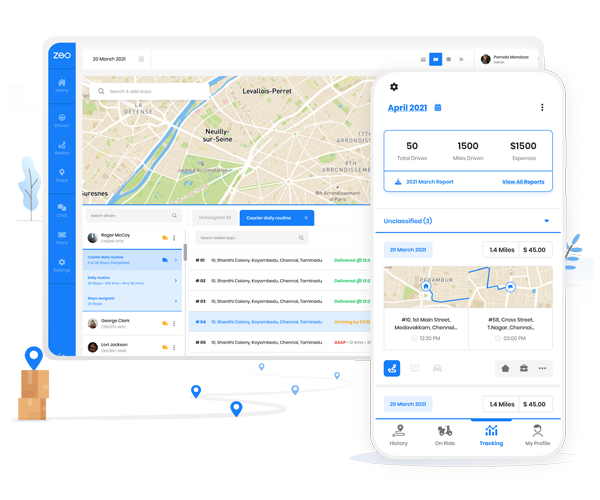
When dispatch managers use Zeo’s web platform to plan and assign multiple runs, the system considers both geographic efficiency and inventory availability. Drivers receive these optimized routes through the Zeo mobile app, complete with part details and customer specifications, allowing for real-time updates when urgent parts requests come in mid-route.
Real-time inventory visibility becomes crucial during multi-run operations. Your drivers need mobile access to current stock levels when customers ask about additional parts during delivery. This enables immediate upselling and prevents return trips for items that aren’t available.
Integrate customer communication tools with your route optimization system. Automatically send delivery notifications when drivers start routes, provide real-time ETA updates, and alert customers about any delays. This reduces inbound customer service calls and improves satisfaction.
Your technology stack should include proof of delivery capabilities designed for auto parts distribution. Drivers need to capture signatures, take photos of delivered parts, and record any installation notes or customer feedback. This documentation protects against warranty claims and provides valuable customer intelligence.
Consider implementing geofencing around major customer locations. When drivers enter these zones, the system can automatically notify customers and trigger any special delivery protocols. For dealerships or large fleet customers, this might include specific receiving dock procedures or documentation requirements.
Build reporting dashboards that track multi-run performance metrics. Monitor average deliveries per driver, fuel efficiency by run type, customer delivery time compliance, and driver productivity trends. These insights guide continuous optimization efforts through real-time GPS tracking capabilities.
Your system should also handle return logistics efficiently. When customers return cores or defective parts, integrate these pickups into existing delivery routes rather than creating separate return trips. This maximizes vehicle utilization and reduces operational costs.

increase fuel savings
Save 2 Hours on Deliveries, Everyday!
Optimize routes with our algorithm, reducing travel time and costs efficiently.
Get Started for Free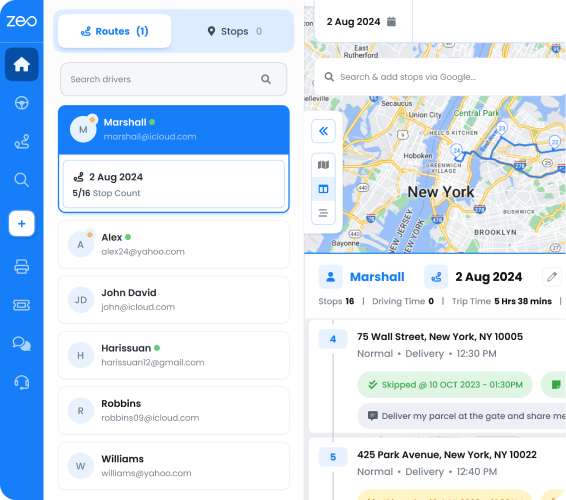
API integrations with major parts manufacturers can provide advanced delivery notifications. When special order parts arrive at your warehouse, automatically evaluate whether they can be added to existing routes or require separate delivery runs based on customer urgency and geographic location.
Measuring Success: ROI Metrics and KPIs for Multi-Run Auto Parts Operations
Track deliveries per driver per day as your primary productivity metric. Well-optimized multi-run operations should enable each driver to complete 18-25 deliveries daily compared to 12-16 deliveries with poor planning. This 40-60% improvement directly impacts revenue capacity.
Monitor fuel costs per delivery as a key efficiency indicator. Calculate total fuel consumption divided by total deliveries completed. Effective multi-run optimization typically reduces fuel costs per delivery by 20-30% through better geographic clustering and reduced backtracking.
Measure on-time delivery performance by customer segment. Emergency runs should achieve 95%+ on-time delivery within promised windows. Priority same-day deliveries should meet 90%+ compliance. Standard next-day deliveries should exceed 95% on-time performance.
Calculate average route completion time by run type. Emergency runs averaging more than 3 hours indicate routing inefficiencies. Priority runs exceeding 5 hours suggest poor stop sequencing. Standard runs taking over 7 hours need immediate optimization attention.
Track customer satisfaction scores specifically related to delivery performance. Survey customers quarterly about delivery reliability, driver professionalism, and communication quality. Correlate satisfaction scores with delivery performance metrics to identify improvement opportunities.
Monitor driver overtime hours as an operational efficiency metric. Well-planned multi-run operations should minimize overtime while maintaining service quality. Track overtime trends by driver and route type to identify training needs or route adjustment opportunities.
Measure inventory turns by delivery category. Parts moved through emergency and priority runs typically have higher margins and faster turns. Track which parts categories generate the most urgent delivery requests to optimize warehouse positioning and stocking strategies.
Calculate cost per delivery including fuel, labor, vehicle depreciation, and insurance. Compare costs across different run types to ensure pricing strategies align with true delivery costs. Emergency runs should command premium pricing that covers their higher per-delivery costs.
Track customer retention rates among accounts that receive regular delivery service. High-performing multi-run operations should achieve 95%+ annual customer retention among active delivery accounts. Lost customers often cite delivery reliability as a primary factor in supplier changes.
Monitor new customer acquisition through delivery service quality. Track how many prospects convert to regular customers after initial delivery experiences. Strong multi-run operations become competitive advantages that drive business growth through superior service reliability.
Analyze peak capacity utilization during busy periods. Measure how effectively your optimized multi-run system handles demand spikes during seasons like winter (heating system repairs) or summer (air conditioning failures). According to the American Trucking Association efficiency report, effective optimization should allow you to serve 20-30% more customers during peak periods without adding drivers.
Implementation Roadmap: From Chaos to Optimized Multi-Run Operations
Week 1-2: Audit your current multi-run operations to establish baseline metrics. Track current deliveries per driver, fuel consumption, overtime hours, and customer complaints related to delivery timing. Document existing route planning processes and identify major inefficiencies.
Week 3-4: Analyze your customer base and segment them by delivery urgency requirements and geographic clusters. Map your top 100 customers by delivery frequency and revenue to understand your core service territory. Identify natural geographic zones that could support dedicated run types.
Month 2: Implement basic run categorization systems. Train dispatch staff to classify incoming orders as emergency, priority, or standard based on customer needs and timing requirements. Establish clear criteria for each category to ensure consistent decision-making.
Month 2-3: Select and implement route optimization technology that integrates with your existing inventory and customer management systems. Focus on platforms that can handle dynamic route changes and real-time order additions rather than static route planning tools.
Month 3: Train drivers on new multi-run procedures and mobile technology. Focus on efficient warehouse loading procedures, customer communication protocols, and proper use of route optimization tools. Establish performance expectations and measurement criteria.
Month 4: Launch optimized multi-run operations with a pilot group of drivers and customer segments. Monitor performance closely and gather feedback from drivers and customers. Make adjustments to run categorization rules and route optimization parameters based on real-world results.
Month 4-5: Expand optimized operations to your full driver fleet. Continue monitoring key performance indicators and customer feedback. Fine-tune delivery time windows and run triggers based on actual performance data.
Month 6: Conduct comprehensive performance review comparing optimized results to baseline metrics. Calculate ROI from reduced fuel costs, improved driver productivity, and enhanced customer satisfaction. Document lessons learned and best practices for ongoing operations.
Ongoing: Establish monthly performance reviews to continuously improve multi-run optimization. Monitor changing customer patterns, seasonal demand variations, and new technology opportunities. Plan for scaling optimized operations as business grows.
The transformation from chaotic multiple-run operations to streamlined efficiency doesn’t happen overnight, but the benefits compound quickly. Distributors typically see 15-20% operational cost reductions within the first quarter and 25-30% improvements within six months.
Frequently Asked Questions
Q: How many delivery runs should an auto parts driver handle per day?
Most auto parts drivers can efficiently handle 3-4 delivery runs per day, with 15-20 total stops when routes are properly optimized. The exact number depends on territory size, traffic conditions, and the mix of emergency versus scheduled deliveries.
Q: What’s the difference between emergency and standard auto parts delivery runs?
Emergency runs prioritize speed over efficiency, typically serving 3-5 stops within a 20-mile radius for urgent repairs that can’t wait. Standard runs focus on efficiency and can include 15-20 stops across larger geographic areas for scheduled maintenance and non-urgent orders.
Q: Can route optimization software handle urgent auto parts requests during existing runs?
Yes, modern route optimization platforms like Zeo Route Planner can dynamically adjust routes in real-time when urgent orders come in. The system evaluates whether to add the stop to an existing route or trigger a new emergency run based on geographic proximity and time constraints.
Q: How much fuel can optimized multi-run planning save auto parts distributors?
Well-planned multi-run operations typically reduce fuel consumption by 25-40% compared to poorly coordinated routes. This translates to $200-300 monthly savings per driver, as optimized routes eliminate backtracking and reduce redundant coverage of the same geographic areas.
Q: What metrics should auto parts distributors track for multi-run optimization?
Key metrics include deliveries per driver per day (target: 18-25), fuel costs per delivery, on-time delivery rates by run type, and average route completion times. Zeo Route Planner provides comprehensive analytics to monitor these performance indicators and identify optimization opportunities.
Ready to transform your multi-run auto parts delivery operations? Start your free trial to see how Zeo can optimize your multiple delivery runs and reduce planning time from hours to minutes while maximizing your daily delivery capacity.
Are you a fleet owner?
Want to manage your drivers and deliveries easily?
Grow your business effortlessly with Zeo Routes Planner – optimize routes and manage multiple drivers with ease.
increase fuel savings
Save 2 Hours on Deliveries, Everyday!
Optimize routes with our algorithm, reducing travel time and costs efficiently.
Get Started for Free