

# How to Optimize Mobile Grooming Routes in 2026
> TL;DR: Optimize mobile grooming routes by clustering appointments geographically, using 2-hour time windows, and implementing AI-powered route planning to add 2-3 appointments daily. Poor routing wastes 45-90 minutes daily and costs $375-625 monthly in excess fuel. Route optimization tools like Zeo Route Planner address this with automated geographic clustering and real-time adjustments, helping mobile grooming teams save 2+ hours daily.
Mobile pet grooming is booming. But success isn’t just about great grooming skills—it’s about how to optimize mobile grooming routes efficiently to move between appointments.
Poor route planning is silently killing your profits. You’re burning fuel, wasting time, and limiting how many pets you can serve daily. The difference between random routing and optimized routes can mean 3-5 extra appointments per day.
This guide shows you how to optimize mobile grooming routes that maximize appointments while cutting travel time and fuel costs by 25-40%.
The Hidden Costs of Poor Mobile Grooming Route Planning
Manual route planning costs more than the hour you spend each morning with Google Maps and a notepad.
Lost Revenue from Fewer Daily Appointments
Every minute spent driving between distant appointments is a minute not grooming. Poor routing typically creates 45-90 minutes of unnecessary drive time daily. That’s 1-2 missed appointments worth $80-200 in lost revenue.
A groomer serving 15 neighborhoods randomly might complete 6 appointments daily. The same groomer with optimized routes often fits 8-9 appointments in the same timeframe.
Fuel Costs That Eat Into Profits
According to the Bureau of Labor Statistics, commercial vehicle fuel costs increased 23% in 2026. Mobile groomers driving inefficient routes often travel 40-60 extra miles daily.
At current fuel prices, those unnecessary miles cost $15-25 per van daily. That’s $375-625 monthly per vehicle in avoidable fuel expenses.
Groomer Fatigue and Turnover
Excessive driving exhausts your team before they even start grooming. Groomers spending 4+ hours daily in traffic become less efficient and more likely to quit.
High turnover costs you $3,000-5,000 per replacement hire in training and lost productivity.
Geographic Clustering: The Foundation of Profitable Mobile Grooming Routes
Geographic clustering means grouping appointments by location, not booking order.
The 5-Mile Rule for Mobile Grooming
Keep consecutive appointments within 5 miles of each other when possible. This typically means 10-15 minutes of drive time versus 25-45 minutes with random routing.
Start each route in your densest customer area. Complete all nearby appointments before moving to the next geographic cluster.
Neighborhood-Based Scheduling
Divide your service area into distinct neighborhoods or zones. Schedule all Monday appointments in Zone A, Tuesdays in Zone B, and so on.
This approach works especially well for weekly or bi-weekly recurring clients. Customers quickly learn their designated days, making scheduling predictable.
Managing Geographic Gaps
Sometimes you’ll have appointments in distant areas. Handle these strategically:
Schedule isolated appointments at route endpoints (first stop or last stop of the day). Use travel time between clusters for lunch breaks or equipment maintenance. Consider premium pricing for appointments outside your core service zones.
Time Window Optimization: Balancing Customer Convenience with Operational Efficiency
Time windows determine when customers are available for appointments. Managing them efficiently separates profitable groomers from struggling ones.
The 2-Hour Window Strategy
Offer customers 2-hour appointment windows instead of exact times. This gives you flexibility to optimize routes while still providing reasonable customer expectations.
For example, offer “Morning (8-10am)”, “Mid-Morning (10am-12pm)”, “Afternoon (12-2pm)”, and “Late Afternoon (2-4pm)” slots.
Routing Within Time Constraints
Plan routes that flow geographically while respecting time windows. Start with the earliest required appointments, then fill gaps with flexible customers.
Morning appointments should be in your farthest territory if you live centrally. This lets you work back toward home base as the day progresses.
Premium Pricing for Tight Windows
Customers requesting specific 30-60 minute windows disrupt route efficiency. Charge 15-25% premiums for these rigid scheduling requests.
Most customers accept wider windows when they understand it keeps costs lower.
Technology-Driven Route Optimization: From Manual Planning to Automated Intelligence
Manual route planning with maps and spreadsheets can’t compete with AI-powered optimization.
How Automated Route Planning Works
Modern route optimization software considers dozens of variables simultaneously: customer locations, time windows, service duration, traffic patterns, and vehicle capacity.
Zeo Route Planner solves this by using AI-powered optimization that processes all these constraints in seconds, creating routes that save 2+ hours daily compared to manual planning. Fleet managers plan and assign routes through the web platform while groomers receive turn-by-turn directions through the mobile app, creating seamless coordination between office and field operations.
Real-Time Traffic Integration
Static routes planned at 6am often become inefficient by 10am due to traffic changes. Smart routing adjusts for live traffic conditions throughout the day.
This prevents your groomer from sitting in an unexpected traffic jam while the next customer waits.
Customer Communication Automation
Route optimization platforms automatically send customers live tracking links and ETA updates. This reduces “where are you?” calls while building customer confidence.
Customers receive SMS notifications when you’re 30 minutes away, giving them time to prepare their pets.
Mobile App Integration for Groomers
Your groomers need route information on their phones, not printed directions. Mobile apps provide turn-by-turn navigation, customer details, and service notes in one interface.
Groomers can update appointment status, collect payments, and capture service photos without switching between multiple apps. Proof of delivery features help document completed services with photos and digital signatures.
Real-Time Route Adjustments: Handling Cancellations and Emergency Bookings
Perfect routes rarely survive contact with reality. Last-minute changes require quick adaptation.
The Cancellation Ripple Effect
When a customer cancels, you have three options: continue with the planned route and accept the gap, find a replacement appointment in that area, or re-optimize the remaining stops.

increase fuel savings
Save $200 on fuel, Monthly!
Optimize routes with our algorithm, reducing travel time and costs efficiently.
Get Started for Free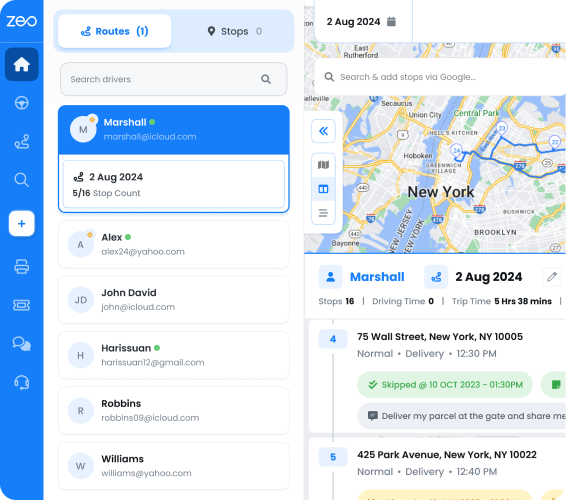
Re-optimization often reveals better routes that weren’t obvious during initial planning.
Emergency Booking Strategies
High-value customers sometimes need same-day service. Having a system to evaluate whether you can accommodate them profitably is crucial.
Zeo’s dynamic route adjustment feature automatically shows how adding an emergency stop affects your entire route timing, helping you quote accurate ETAs and decide whether the booking makes financial sense.
Buffer Time Management
Build 15-30 minutes of buffer time into daily routes. This accommodates appointments that run long or unexpected delays.
Place buffers strategically before time-sensitive appointments, not randomly throughout the route.
Scaling Your Mobile Grooming Fleet: Multi-Van Coordination and Territory Management
Growing beyond one van requires different optimization strategies.
Territory Assignment Methods
Assign each van to specific geographic territories to minimize overlap and competition. This works well when you have consistent appointment density.
Alternatively, assign vans by customer type (premium services vs. basic grooming) or pet size (large dogs vs. small pets requiring different equipment).
Load Balancing Across Vehicles
Ensure each van gets roughly equal appointment loads and revenue potential. One van shouldn’t consistently get the profitable appointments while another handles only small jobs.
Monitor weekly performance metrics: appointments per van, revenue per van, and miles driven per van.
Cross-Van Coordination for Efficiency
Sometimes the optimal route requires coordination between vehicles. Van A might handle a customer’s large dog while Van B (with appropriate equipment) serves their neighbor’s cats.
Advanced fleet management distributes appointments across your fleet to minimize total travel time, not individual van routes.
Managing Multi-Van Schedules
Zeo Route Planner handles multi-driver coordination by auto-assignment of stops based on driver skills, vehicle capacity, and geographic efficiency. Fleet managers see all routes on one dashboard while each driver receives their optimized route through the mobile app.
Customer Preference Tracking
Some customers prefer specific groomers. Factor these preferences into route planning while maintaining efficiency.
Track which groomer each customer prefers and try to maintain consistency without destroying route optimization. Real-time GPS tracking helps coordinate preferred groomer assignments across territories.
Implementation: Your 30-Day Route Optimization Plan
Week 1: Baseline Measurement
Track current performance metrics: daily appointments completed, total miles driven, fuel costs, and groomer hours.
Document pain points: Which areas create the most drive time? When do you run late? Where do cancellations hurt most?
Week 2: Geographic Analysis
Map all customers and identify natural clustering opportunities. Look for neighborhoods with high appointment density.
Calculate drive times between your most common appointment pairs.
Week 3: Time Window Restructuring
Shift customers to standardized time windows that support efficient routing. Communicate changes professionally, explaining how this keeps costs lower.
Most customers adapt quickly when they understand the benefits, according to Small Business Administration research.
Week 4: Technology Implementation and Testing
Implement AI-powered route optimization software and test with one van before rolling out fleet-wide.
Train groomers on new mobile tools and gather feedback for improvements.
Frequently Asked Questions
Q: How many mobile grooming appointments can I realistically schedule per day?
Most mobile groomers complete 6-8 appointments daily with optimized routes, compared to 4-5 with random scheduling. The exact number depends on service complexity, travel distances, and appointment duration, but efficient routing typically adds 2-3 extra appointments per day.
Q: What’s the biggest mistake mobile groomers make with route planning?
Scheduling appointments in booking order rather than geographic clusters. This creates unnecessary drive time between distant locations and limits daily capacity. Grouping appointments by neighborhood can reduce travel time by 40-60%.
Q: How much should I charge extra for appointments outside my main service area?
Industry best practice suggests 15-25% premium pricing for appointments beyond your core zones. Zeo Route Planner’s time window optimization helps you calculate exact travel costs and quote accurate premiums based on actual route impact.
Q: Can mobile grooming routes be profitable in rural areas?
Rural mobile grooming requires different strategies – longer appointment windows, premium pricing, and careful territory planning. Success depends on appointment density and willingness to travel. Routes with 3+ appointments within 10 miles typically remain profitable.
Q: How do cancellations affect mobile grooming route efficiency?
Last-minute cancellations create gaps that reduce daily revenue by $80-200 per missed slot. Smart route planning software like Zeo Route Planner automatically shows how to re-optimize remaining stops or fit replacement appointments, minimizing cancellation impact.
Start Optimizing Your Mobile Grooming Routes Today
Route optimization isn’t just about technology—it’s about transforming your entire operation. Better routes mean more appointments, lower costs, and happier groomers.
The groomers succeeding in 2026 aren’t necessarily the most skilled. They’re the most efficient.
Start your free trial of Zeo Route Planner to see how automated route optimization can transform your mobile grooming operation. See exactly how much time and fuel you can save before committing to any changes.
Are you a fleet owner?
Want to manage your drivers and deliveries easily?
Grow your business effortlessly with Zeo Routes Planner – optimize routes and manage multiple drivers with ease.

increase fuel savings
Hassle Free Deliveries & Pickups!
Optimize routes with our algorithm, reducing travel time and costs efficiently.
Get Started for Free