

# Complete Delivery Route Planner Guide for 2026
> TL;DR: A delivery route planner transforms manual operations into streamlined systems that reduce planning time from 2-3 hours to 15-30 minutes daily while cutting driving distances by 20-40%. Professional route optimization tools like Zeo Route Planner address this with AI-powered optimization and real-time GPS tracking, helping delivery teams save 2+ hours daily.
Manual route planning is costing delivery companies thousands in wasted fuel, overtime, and missed opportunities. If you’re still plotting routes by hand or using basic mapping tools, you’re leaving money on the table every single day.
A delivery route planner transforms chaotic manual operations into streamlined systems that save time, cut costs, and improve customer satisfaction. This guide shows you exactly how to choose and implement the right solution for your delivery business.
Why Manual Delivery Route Planning Is Killing Your Profits
Manual route planning creates a cascade of expensive problems that compound throughout your operation.
Time Drain on Management
Operations managers spend 1-3 hours daily plotting routes for drivers. That’s 5-15 hours weekly on administrative tasks instead of growing the business. According to the Bureau of Labor Statistics, operations managers earn an average of $52 per hour, meaning manual planning costs companies $260-$780 weekly in management time alone.
Inefficient Routes Waste Fuel
Hand-planned routes typically include 20-30% more driving than optimized routes. A delivery van averaging 200 miles daily wastes 40-60 miles through poor routing. With commercial fuel costs averaging $4.20 per gallon and vans getting 12 MPG, each vehicle wastes $14-21 daily in unnecessary fuel costs.
Missed Delivery Windows
Manual planning can’t account for traffic patterns, delivery time windows, or driver capacity limits. This leads to failed first-delivery attempts, which cost companies an average of $18 per redelivery according to industry research.
Zero Real-Time Visibility
Without GPS tracking, dispatchers can’t see where drivers are or provide accurate ETAs to customers. This creates constant phone interruptions, frustrated customers, and reactive firefighting instead of proactive management.
Driver Burnout and Turnover
Inefficient routes mean longer days and more stress for drivers. The American Trucking Association reports that driver turnover costs delivery companies $8,000-15,000 per driver to recruit and train replacements.
Consider this real scenario: A 20-driver delivery company spending 2 hours daily on manual planning wastes $27,040 annually in management time alone. Add fuel waste, failed deliveries, and turnover costs, and manual planning easily costs $50,000+ yearly.
Essential Features Every Delivery Route Planner Must Have
Not all route optimization software delivers the same results. Focus on these core capabilities that directly impact your bottom line.
AI-Powered Route Optimization
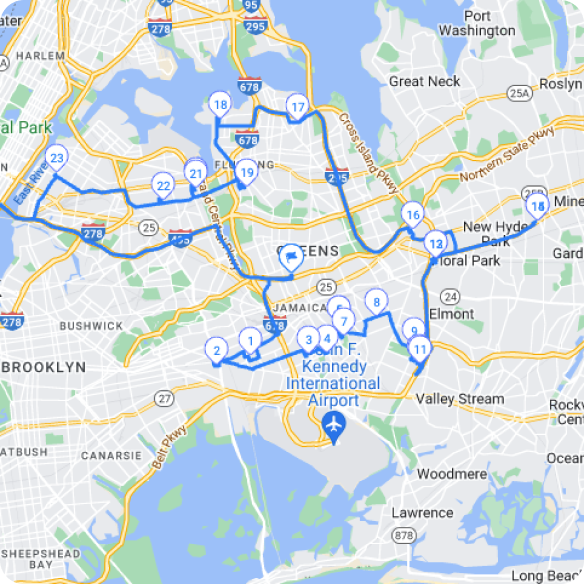
Basic route planners connect dots on a map. Advanced systems use artificial intelligence to consider traffic patterns, delivery time windows, vehicle capacity, and driver skills simultaneously. This optimization should reduce total driving time by 20-40% compared to manual planning.
Real-Time GPS Tracking
Live driver locations let you provide accurate ETAs, respond to customer inquiries instantly, and spot problems before they escalate. Look for systems that update locations every 30 seconds or better. Real-time GPS tracking becomes essential for maintaining operational visibility and customer satisfaction.
Automated Customer Communication
The software should automatically send delivery notifications via SMS and email, including live tracking links. This reduces inbound customer calls by 60-80%, freeing your team for revenue-generating activities.
Proof of Delivery Documentation
Digital signatures, photos, and delivery notes protect against disputes and provide clear delivery records. This documentation should sync automatically to your main system without manual data entry. Modern proof of delivery systems eliminate paperwork while improving accountability.
Time Window Management
The system must handle delivery time windows accurately, ensuring drivers reach each stop within the promised timeframe. This prevents costly redelivery attempts and maintains customer satisfaction.
Mobile Driver App Integration
Drivers need route information on their phones, not printed papers. The mobile app should provide turn-by-turn navigation, stop details, and delivery documentation tools in one interface.
Bulk Address Import
You should upload delivery addresses from Excel, CSV files, or directly from your e-commerce platform. Manual address entry wastes time and introduces errors.
Performance Analytics
Track key metrics like on-time delivery rates, miles per delivery, and driver efficiency. These insights help you identify improvement opportunities and measure ROI.
Free vs Paid Route Planning Solutions: What’s Really Worth It
Free route planners seem attractive but create expensive limitations that cost more than premium solutions.
Free Solutions: Hidden Costs
Google Maps and similar free tools handle basic routing but lack business-critical features. You’ll spend extra time manually organizing stops, can’t track drivers, and have no delivery documentation. Free tools typically limit you to 10-25 stops per route, forcing multiple planning sessions for larger delivery days.
Most importantly, free solutions don’t optimize routes effectively. A route that takes 8 hours with free planning might only need 6 hours with proper optimization. Those 2 saved hours daily equal $15,600 annually in driver wages per vehicle.
Paid Solutions: Measurable ROI
Professional delivery management software costs $20-50 monthly per vehicle but delivers immediate returns. Zeo Route Planner serves 1.5M+ users across 150+ countries while providing real-time tracking and automated customer notifications.
Calculate your break-even point: If a $30 monthly solution saves just 30 minutes daily in planning time and reduces driving by 15%, the time savings alone justify the cost. Add fuel savings, reduced redeliveries, and improved customer satisfaction, and ROI often exceeds 300%.
Enterprise Features Worth Paying For
Advanced solutions include capacity-based routing that considers vehicle weight and volume limits, skill-based driver assignment for specialized deliveries, and integration with e-commerce platforms for automatic order import.
For delivery companies with 5+ vehicles, professional route planning software typically pays for itself within 2-4 weeks through operational efficiencies.
Industry-Specific Route Planning: Food Delivery vs E-commerce vs Field Service
Different delivery types require specialized routing approaches to maximize efficiency.
Food Delivery Optimization
Hot food delivery demands tight time windows and temperature considerations. Route planners must prioritize recent orders and group deliveries by preparation time, not just geography. Peak hour routing becomes critical during lunch and dinner rushes.
Look for solutions that handle dynamic routing, allowing you to add urgent orders to existing routes without complete replanning. Driver assignment should consider vehicle type (bike, car, truck) and local area knowledge.
E-commerce Package Delivery
E-commerce deliveries focus on maximizing stops per route while respecting delivery time windows. Package size and weight constraints matter more than delivery speed. The system should optimize for delivery density, grouping nearby addresses into efficient clusters.
Capacity planning becomes crucial for handling holiday surges and bulk deliveries. Your route planner should accommodate variable package sizes and plan routes that avoid weight distribution problems.
Field Service Routing
Field service calls require skill-based routing that matches technician capabilities with service requirements. A plumber can’t handle electrical work, so the system must assign calls appropriately.

increase fuel savings
Save $200 on fuel, Monthly!
Optimize routes with our algorithm, reducing travel time and costs efficiently.
Get Started for Free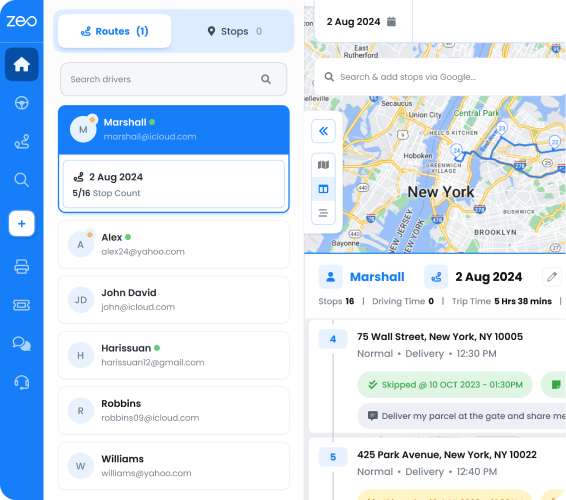
Service time windows are often wider than delivery windows, but travel time between appointments becomes more critical. The route planner should account for service duration variability and include buffer time for complex jobs.
Zeo Route Planner handles all these scenarios through its skill-based driver assignment feature, ensuring the right technician reaches each customer with optimized travel routes.
Implementation Guide: From Manual Planning to Automated Routes in 7 Days
Transform your delivery operation systematically to ensure smooth adoption and immediate results.
Days 1-2: Data Preparation and System Setup
Export your customer database and recent delivery addresses into Excel or CSV format. Clean up incomplete addresses and verify locations using your chosen route planning platform.
Set up your delivery zones, vehicle information, and driver profiles. Include vehicle capacity limits, working hours, and any special skills or certifications drivers possess.
For fleet operations, managers use the web-based platform to configure these settings while drivers download the mobile app to their phones.
Days 3-4: Route Testing and Optimization
Import a typical day’s deliveries and run initial route optimization. Compare the suggested routes against your current manual routes to identify improvement opportunities.
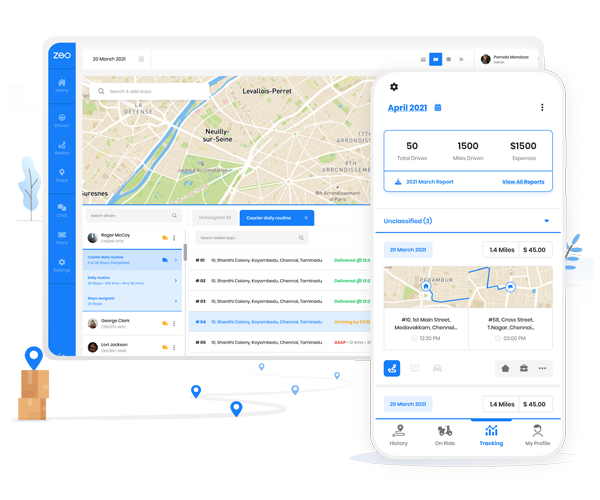
Test the mobile app with one or two drivers to ensure they can follow routes, mark deliveries complete, and communicate with dispatch effectively. Your drivers will receive optimized routes directly on their phones via the mobile app, complete with turn-by-turn navigation and customer details.
Days 5-6: Pilot Implementation
Run parallel operations for two days, using both manual planning and the new system. This lets you validate route efficiency while maintaining service levels.
Monitor real-time tracking features and test customer notification systems. Ensure automated SMS and email updates reach customers with accurate delivery windows.
Day 7: Full Deployment
Switch entirely to automated route planning. Fleet managers create and assign optimized routes through the web platform while drivers receive their daily routes through the mobile app, creating seamless coordination between office and field operations. AI-powered optimization becomes the foundation of your daily operations.
Set up daily performance monitoring to track improvements in delivery times, fuel usage, and customer satisfaction.
Week 2-4: Optimization and Fine-Tuning
Analyze route performance data to identify additional optimization opportunities. Adjust time windows, update customer preferences, and refine driver assignments based on real-world results.
Most companies see 15-25% improvement in route efficiency within the first month of implementation.
Measuring Success: ROI Metrics and Performance Tracking
Track specific metrics to quantify your delivery route planner’s impact and identify additional improvement opportunities.
Time Savings Metrics
Measure daily planning time before and after implementation. Most operations managers reduce planning time from 2-3 hours to 15-30 minutes daily. Track this weekly to calculate direct labor cost savings.
Monitor total route duration and compare month-over-month improvements. Effective route optimization typically reduces total driving time by 20-40%, translating directly to labor cost savings.
Cost Reduction Tracking
Calculate fuel savings by comparing miles driven per delivery before and after optimization. Track this monthly to see consistent patterns emerge. The Department of Transportation’s commercial vehicle efficiency guidelines provide benchmarks for measuring improvement.
Monitor failed delivery rates and redelivery costs. Professional route planners with time window management often reduce failed first attempts by 40-60%.
Customer Satisfaction Improvements
Track on-time delivery rates and customer complaint volumes. Automated customer notifications and accurate ETAs typically improve satisfaction scores significantly.
Measure inbound customer service calls related to delivery timing. Companies often see 50-70% reduction in “where’s my delivery” calls after implementing tracking and automated notifications.
Driver Performance Metrics
Monitor driver overtime hours and job satisfaction through regular feedback. Optimized routes reduce stress and improve work-life balance, leading to lower turnover rates.
Track deliveries per driver per day to measure productivity improvements. Well-optimized routes often allow drivers to complete 15-25% more deliveries in the same timeframe.
Revenue Impact
Calculate increased delivery capacity from route optimization. If each driver can handle 20% more deliveries, you can grow revenue without adding vehicles or staff.
Measure customer retention rates, as improved delivery reliability often leads to higher customer lifetime value.
Most delivery companies achieve 200-400% ROI within six months of implementing professional route planning software, with payback periods averaging 2-8 weeks.
Frequently Asked Questions
Q: How much does delivery route planning software typically cost per vehicle?
Professional delivery route planning software typically costs $20-50 monthly per vehicle, but the ROI often exceeds 300% through fuel savings and reduced planning time. Zeo Route Planner’s AI-powered optimization saves 2+ hours daily, making the investment pay for itself within 2-4 weeks for most delivery operations.
Q: What’s the difference between free route planners and paid solutions for delivery businesses?
Free tools like Google Maps handle basic routing but lack business-critical features like driver tracking, delivery documentation, and route optimization for multiple constraints. They typically limit routes to 10-25 stops and can’t optimize effectively, often resulting in 20-30% more driving time than professional solutions.
Q: How long does it take to implement route planning software in a delivery operation?
Most delivery companies can transition from manual planning to automated routing within 7 days with proper implementation. This includes 2 days for data preparation and system setup, 2 days for route testing, 2 days for pilot operations, and 1 day for full deployment with ongoing optimization.
Q: Can route planning software handle different types of deliveries like food, packages, and service calls?
Yes, advanced route planning systems can handle various delivery types through specialized features like time window management for food delivery, capacity constraints for package delivery, and skill-based assignment for service calls. Zeo Route Planner uses skill-based driver assignment to ensure the right technician reaches each customer with optimized routes.
Q: What ROI can delivery companies expect from route optimization software?
Most delivery companies achieve 200-400% ROI within six months, with payback periods averaging 2-8 weeks. Key savings come from reduced fuel costs (20-40% less driving), decreased planning time (from 2-3 hours to 15-30 minutes daily), and fewer failed delivery attempts through better time window management.
Zeo Route Planner serves 1.5M+ users across 150+ countries, helping delivery companies achieve these measurable improvements through AI-powered optimization and comprehensive tracking features.
Ready to transform your delivery operation? Start your free trial of Zeo Route Planner and optimize your first set of delivery routes in under 10 minutes.
Are you a fleet owner?
Want to manage your drivers and deliveries easily?
Grow your business effortlessly with Zeo Routes Planner – optimize routes and manage multiple drivers with ease.

increase fuel savings
Hassle Free Deliveries & Pickups!
Optimize routes with our algorithm, reducing travel time and costs efficiently.
Get Started for Free