


# Best Delivery Route Planner Software: Complete Guide 2026
> TL;DR: The right delivery route planner software eliminates manual planning inefficiencies that cost businesses 2-3 hours daily and increase fuel consumption by 20-30%. Professional route optimization with features like AI-powered routing, real-time tracking, and proof of delivery can save companies up to $191,490 annually. Route optimization tools like Zeo Route Planner address this with AI-powered optimization that saves 2+ hours daily, helping delivery teams streamline operations across 150+ countries.
Manual route planning is quietly destroying your delivery business profitability. While you spend hours each morning plotting routes on spreadsheets or Google Maps, your competitors use delivery route planner software to optimize operations automatically.
This complete buyer’s guide shows you exactly how to choose the right route planning solution for your delivery business. You’ll learn which features matter most, calculate your potential ROI, and avoid costly mistakes that keep companies stuck with inefficient operations.
Why Manual Route Planning Kills Delivery Business Profitability
Manual route planning creates a cascade of operational problems that compound daily. Every hour spent plotting routes manually represents lost revenue and increased costs across multiple areas of your business.
The time cost alone is staggering. Operations managers typically spend 2-3 hours each morning planning routes for their drivers. For a business with 20 drivers, that’s 10-15 hours of management time daily that could be spent on growth activities instead of logistics puzzles.
But time is just the beginning. Manual planning produces suboptimal routes that increase fuel consumption by 20-30% compared to optimized alternatives. When diesel costs average $4.50 per gallon and delivery vehicles consume 8-12 gallons daily, those inefficient routes cost an extra $18-40 per vehicle per day according to Bureau of Labor Statistics transportation cost data.
Driver overtime becomes inevitable with poor routing. Drivers spend extra hours navigating traffic-heavy routes or backtracking across service areas because manual planning can’t account for real-time traffic patterns or optimal stop sequencing.
Customer satisfaction suffers when delivery windows become unreliable. Manual planning struggles to incorporate customer time preferences, leading to failed deliveries that require costly repeat attempts. According to McKinsey research on last-mile delivery, failed first-delivery attempts cost businesses an average of $17.78 per occurrence.
The scaling problem hits hardest. As your business grows from 5 to 15 to 30 drivers, manual planning becomes exponentially more complex. The number of possible route combinations grows factorially, making manual optimization mathematically impossible for human planners.
Companies stuck in manual planning mode find themselves trapped in a cycle where growth actually reduces profitability because operational inefficiency scales faster than revenue.
Types of Delivery Route Planners: From Basic Apps to Enterprise Solutions
The delivery route planner market includes several distinct categories, each designed for different business sizes and complexity levels.
Basic Consumer Apps like Google Maps or Waze handle simple point-to-point navigation but weren’t designed for commercial delivery operations. These free tools lack multi-stop optimization, delivery proof collection, and fleet management features that delivery businesses require.
Single-Driver Route Apps target individual delivery drivers or very small operations. These apps optimize routes for one driver at a time but don’t handle fleet-wide coordination, driver assignment, or advanced features like time windows and capacity constraints.
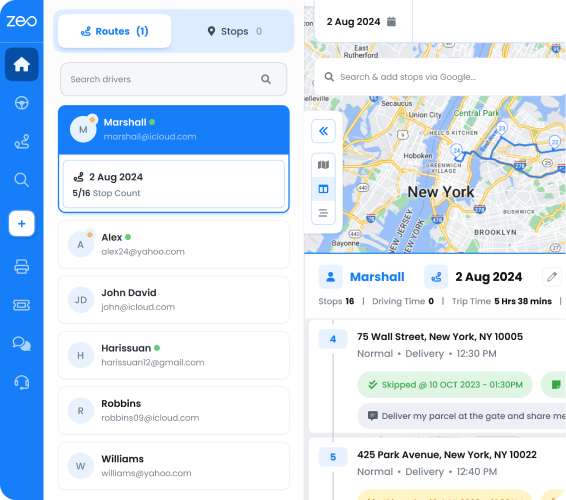
Multi-Driver Fleet Platforms serve small to mid-size delivery companies with 5-50 drivers. These solutions provide web-based fleet management dashboards where operations managers plan and assign routes, while drivers receive optimized routes through mobile apps. This category includes comprehensive route planning solutions like Zeo Route Planner, which serves 1.5M+ users across 150+ countries with AI-powered optimization that saves 2+ hours daily.
Enterprise Route Optimization systems target large fleets with 100+ vehicles and complex operational requirements. These solutions often require months of implementation and significant IT resources but provide advanced features like dynamic routing, supply chain integration, and predictive analytics.
Industry-Specific Platforms focus on specialized delivery types like pharmaceuticals, food service, or hazardous materials. These solutions incorporate regulatory compliance features and industry-specific workflows but typically cost more than general-purpose platforms.
The sweet spot for most growing delivery companies lies in multi-driver fleet platforms that provide enterprise-level optimization without enterprise complexity or cost.
Essential Features Every Delivery Route Planner Must Have
Modern delivery route planners must solve both planning and execution challenges to deliver meaningful ROI. The most critical features fall into four categories: optimization, tracking, proof of delivery, and communication.
AI-Powered Route Optimization forms the foundation of any serious delivery route planner. The system should automatically sequence stops to minimize drive time and distance while accounting for real-time traffic conditions. Advanced AI-powered optimization considers vehicle capacity, driver skills, and customer time windows simultaneously.
Capacity-Based Routing ensures routes match vehicle limitations. Your route planner should distribute stops based on weight, volume, or package count constraints to prevent overloaded vehicles or underutilized capacity.
Time Window Management allows customers to specify preferred delivery windows while the system optimizes routes around these constraints. This feature dramatically reduces failed deliveries and improves customer satisfaction.
Real-Time GPS Tracking provides live visibility into driver locations and progress. Operations managers need to see where drivers are, estimate arrival times, and respond quickly to delays or emergencies. Professional driver tracking software solutions integrate seamlessly with route optimization for complete operational visibility.
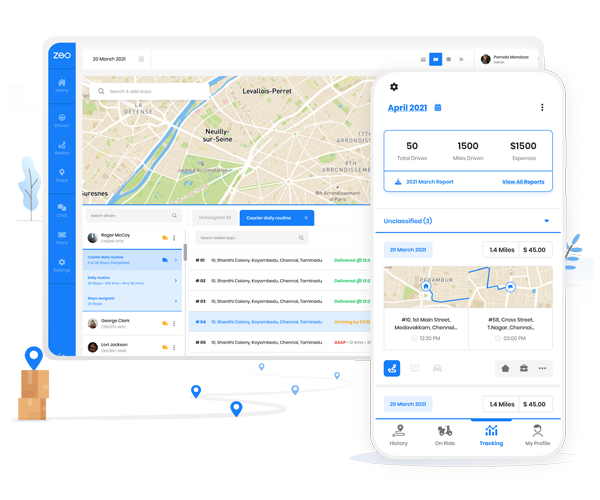
The best delivery route planners provide a seamless experience where managers plan and assign routes via web dashboard while drivers receive optimized routes directly on their mobile app. This fleet-plus-app approach eliminates the communication gaps that plague single-platform solutions.
Proof of Delivery Collection through mobile apps lets drivers capture photos, collect digital signatures, and record delivery notes. This documentation protects against delivery disputes and provides customers with delivery confirmation.
Customer Communication Tools keep recipients informed with automated SMS or email notifications, live tracking links, and updated delivery windows. Proactive communication reduces customer service calls and improves satisfaction scores.
Dynamic Route Adjustments handle mid-day changes like rush orders, cancellations, or driver unavailability. The system should re-optimize remaining stops automatically when circumstances change.
Integration Capabilities connect your route planner with existing systems like e-commerce platforms, CRM software, or accounting systems. Popular integrations include Shopify, WooCommerce, and Zapier for connecting to hundreds of business applications.
ROI Calculator: How Much Money Route Optimization Actually Saves
Route optimization ROI comes from four primary sources: time savings, fuel reduction, overtime elimination, and improved customer satisfaction. Here’s how to calculate your potential savings.
Time Savings: Manual route planning typically takes 2-3 hours daily for every 10-15 drivers. Automated planning reduces this to 15-30 minutes. For a company with 20 drivers, that’s 2.5 hours saved daily.
At $25/hour for management time, daily savings equal $62.50, or $16,250 annually. These hours can be redirected to business development, customer service, or operational improvements.
Fuel Cost Reduction: Optimized routing typically reduces driving distance by 15-25% compared to manual planning. A delivery vehicle averaging 100 miles daily at 10 MPG consumes 10 gallons of fuel. A 20% reduction saves 2 gallons daily per vehicle.
With diesel at $4.50/gallon, each vehicle saves $9 daily in fuel costs. A 20-vehicle fleet saves $180 daily or $46,800 annually in fuel alone.
Overtime Elimination: Poor routing forces drivers into overtime when routes take longer than planned. Optimized routes that reduce drive time by 1 hour daily eliminate 5 hours of overtime weekly per driver.
At $22/hour overtime rates, each driver saves the company $110 weekly. A 20-driver operation saves $2,200 weekly or $114,400 annually in overtime costs.
Customer Satisfaction Improvements: Better routing improves on-time delivery rates from 75-80% to 90-95%. Fewer failed deliveries reduce redelivery costs and customer churn.
Each prevented failed delivery saves approximately $18 in redelivery costs. Preventing just 3 failed deliveries daily saves $54, or $14,040 annually.
Total Annual ROI Example (20-vehicle fleet):

increase fuel savings
Hassle Free Deliveries & Pickups!
Optimize routes with our algorithm, reducing travel time and costs efficiently.
Get Started for Free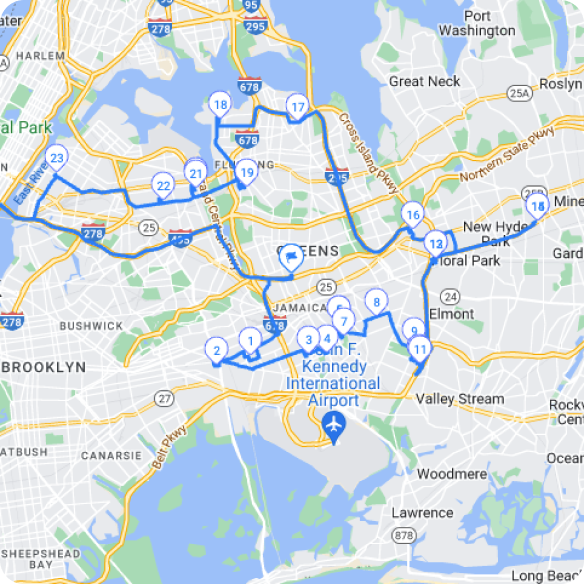
- Time savings: $16,250
- Fuel reduction: $46,800
- Overtime elimination: $114,400
- Failed delivery prevention: $14,040
- Total savings: $191,490
Route optimization software typically costs $20-50 per vehicle monthly, or $4,800-12,000 annually for 20 vehicles. The ROI ranges from 1,500% to 4,000%, making route optimization one of the highest-return technology investments for delivery businesses.
Integration Requirements: Connecting Route Planning with Your Existing Systems
Route planner integrations eliminate double data entry and create seamless workflows between your delivery operations and other business systems. The most valuable integrations connect to order management, customer communication, and accounting systems.
E-commerce Platform Integration automatically imports orders with delivery addresses, customer contact information, and delivery requirements. Shopify and WooCommerce integrations are essential for online retailers, while custom API connections serve businesses with proprietary order management systems.
CRM Integration syncs customer data, delivery preferences, and service history between your route planner and customer relationship management system. HubSpot integration, for example, updates customer records with delivery status and driver notes automatically.
Accounting System Integration streams delivery data to invoicing and expense tracking systems. Miles tracking features help calculate vehicle expenses for tax purposes, while completed delivery records trigger invoice generation.
Communication Platform Integration through tools like Zapier connects your route planner to email marketing, SMS services, or customer support platforms. These connections enable automated follow-up sequences and customer satisfaction surveys.
GPS and Navigation Integration ensures drivers can use their preferred navigation apps (Google Maps, Waze, Apple Maps) while maintaining connection to your fleet management system. This flexibility improves driver adoption and satisfaction.
Inventory Management Integration synchronizes product availability with route planning for businesses that manage stock levels across multiple vehicles or warehouses. This prevents drivers from attempting deliveries for out-of-stock items.
The key is choosing a route planner with robust integration options that match your current tech stack. Modern delivery management software platforms connect to major e-commerce platforms, CRM systems, and thousands of applications through integration tools.
Avoid solutions that require you to change existing workflows to accommodate limited integration options. The right route planner should adapt to your current systems, not force you to adopt new ones.
Choosing the Right Route Planner for Your Delivery Business Size and Needs
Your optimal route planner depends on fleet size, delivery complexity, and growth plans. Here’s how to match solutions to business requirements based on comprehensive route optimization guide principles.
Small Operations (1-5 Drivers) need simple route optimization with mobile navigation and basic proof of delivery features. Avoid over-engineered enterprise solutions that provide unnecessary complexity and cost.
Look for single-dashboard solutions where you can plan routes for all drivers without complex fleet management features. Pricing should be per-driver rather than per-vehicle to keep costs manageable as you scale.
Growing Companies (5-25 Drivers) require fleet management dashboards with driver assignment, performance tracking, and customer communication tools. This is where the fleet-plus-app approach becomes critical.
Operations managers need web-based planning tools while drivers need mobile apps for navigation and delivery confirmation. Features like time windows, priority stops, and capacity constraints become essential for managing complexity.
Zeo Route Planner excels in this segment with AI-powered optimization that handles complex routing while maintaining simple workflows. The platform scales from small teams to larger fleets without requiring system changes.
Mid-Size Operations (25-50 Drivers) need advanced optimization features like skill-based driver assignment, dynamic re-routing, and detailed analytics. Integration capabilities become crucial for connecting to existing business systems.
Look for solutions with robust API access, multiple integration options, and advanced reporting features. Your route planner should provide data insights that inform strategic decisions about fleet expansion and operational improvements.
Specialized Delivery Types require industry-specific features. Food delivery needs temperature tracking capabilities. Pharmaceutical delivery requires chain of custody documentation. Hazardous materials need compliance reporting features.
Choose platforms that either specialize in your industry or provide flexible customization options for specific requirements. Generic route planners may lack critical compliance or operational features.
Budget Considerations should focus on ROI rather than monthly costs. A $40/month per-driver solution that eliminates 1 hour of overtime daily saves $550 monthly in labor costs alone.
Free solutions typically lack the optimization algorithms and support services necessary for professional delivery operations. The money saved on software costs gets lost quickly through operational inefficiencies.
Growth Planning requires choosing platforms that scale without forcing system migrations. Look for solutions that work equally well with 10 drivers or 100 drivers, with pricing that remains competitive as you grow.
The right delivery route planner transforms chaotic manual operations into streamlined, profitable delivery systems that scale with your business growth. Focus on solutions that solve your current problems while providing room for future expansion.
Frequently Asked Questions
Q: How much can businesses save by switching from manual to automated delivery route planning?
Companies typically save $191,490 annually with a 20-vehicle fleet by eliminating manual planning inefficiencies. This includes $46,800 in fuel savings, $114,400 in overtime reduction, and $16,250 in management time recovery. Zeo Route Planner’s AI-powered optimization delivers these results for 1.5M+ users across 150+ countries.
Q: What’s the difference between basic navigation apps and professional delivery route planners?
Basic navigation apps like Google Maps handle simple point-to-point routes but lack multi-stop optimization, fleet management, and delivery confirmation features. Professional delivery route planners provide capacity-based routing, time window management, real-time tracking, and proof of delivery collection designed specifically for commercial operations.
Q: Which delivery route planner features matter most for growing businesses?
Growing businesses need AI-powered route optimization, real-time GPS tracking, proof of delivery collection, and customer communication tools. Multi-driver fleet platforms like Zeo Route Planner excel in this segment with features like skill-based driver assignment and dynamic route adjustments that save 2+ hours daily.
Q: How do route optimization integrations work with existing business systems?
Modern route planners connect to e-commerce platforms (Shopify, WooCommerce), CRM systems (HubSpot), and accounting software through APIs or integration platforms like Zapier. These connections eliminate double data entry by automatically importing orders, syncing customer data, and updating delivery records across all systems.
Q: What fleet size requires upgrading from basic to professional route planning software?
Operations with 5+ drivers typically need professional route planning solutions with fleet management dashboards and driver assignment capabilities. Manual planning becomes mathematically impossible as route combinations grow exponentially, making automated optimization essential for maintaining profitability during business growth.
Start your free trial of Zeo Route Planner to see how much time and money you can save with automated route optimization. Experience AI-powered routing that serves 1.5M+ users worldwide and discover why growing delivery companies choose Zeo for scalable fleet management.
Are you a fleet owner?
Want to manage your drivers and deliveries easily?
Grow your business effortlessly with Zeo Routes Planner – optimize routes and manage multiple drivers with ease.

increase fuel savings
Save $200 on fuel, Monthly!
Optimize routes with our algorithm, reducing travel time and costs efficiently.
Get Started for Free