

Updated on: October 30, 2026
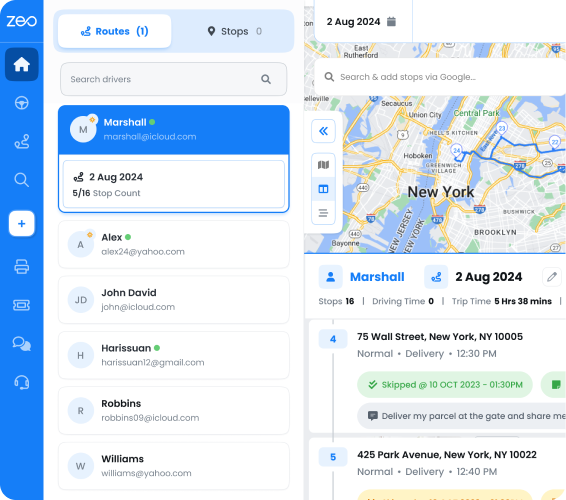
TL;DR: Amazon Day Delivery is changing e-commerce by proving that batching orders into single scheduled drop-offs cuts costs, packaging waste, and emissions while keeping customers satisfied. Amazon’s own data shows this model avoided up to 200 million boxes and 226,000 metric tons of CO2e in 2023 alone. Route optimization tools like Zeo Route Planner address this with AI-powered route optimization and scheduled/recurring routes, helping e-commerce delivery teams save 2+ hours daily.
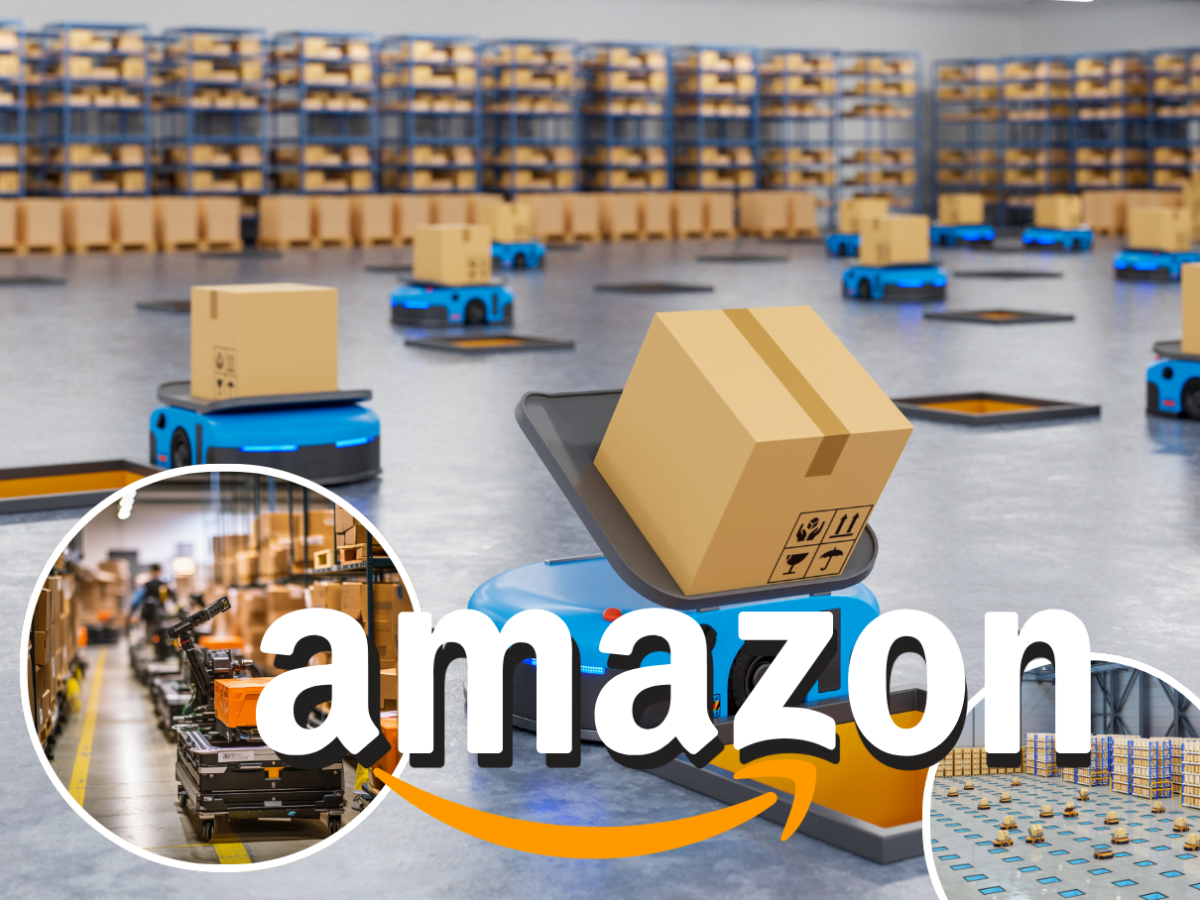
Amazon Day Delivery arrived in 2019 as a fresh approach to weekly shipments for Prime members. This service bundles multiple orders into a single delivery on a chosen day, significantly reducing packaging waste.
Indeed, this disrupted the E-commerce market, and customer delivery expectations have never been the same since then. A boost in user satisfaction is enormous when shoppers choose this single-day shipping option.
An environmental assessment in Amazon’s 2023 Sustainability Report shows that Amazon Day avoided the production of up to 200 million boxes and 226,000 metric tons of carbon dioxide equivalent (CO2e).
In this piece, we’ll unfold reasons why Amazon Delivery Day is able to redefine the delivery standards of the e-commerce industry.
The Benefits and Challenges of Adopting Amazon-Style Delivery
If you’re running an E-commerce business, then you may be tempted to adopt the Amazon-style delivery. But for that, you’ll need to gather orders on assigned dates and build a system that brings predictability and speed.
An online store mirroring this setup will need to find ways to reduce transportation overheads, lower packaging waste, and boost customer confidence with precise shipping times.
Here are the benefits and challenges.
Benefits:
- You’ll spend less on repeated trips because multiple orders move together, saving time and delivering fewer boxes.
- Predictable shipment days allow for greater control of stock levels. This allows you to assign your fleet beforehand and prepare it for the delivery day.
- Enjoy the customer loyalty that grows when they see consistent arrival schedules without any hiccups.
Major Challenges
- Be prepared to invest significantly in technology for real-time tracking and route coordination. That said, using Zeo Route Planner does help ease a lot of pressure on delivery logistics.
- Make sure to coordinate items from multiple suppliers; otherwise, further delays can occur.
- Adjusting warehouse processes can disrupt daily operations at first, affecting a few orders when you shift the process.
Understanding Amazon’s Day Delivery Model and How it Redefine E-Commerce Logistics
Amazon’s Day Delivery approach banks on precise forecasting, advanced technology, and a structured logistics network.
They equip large-scale warehouses with sophisticated software that merges orders into fewer shipments. This results in fewer trips, reduced overhead, and quicker order fulfillment.
Below are the major factors that yielded significant results for Amazon through their Delivery Day model.
-
Sustainable Last-Mile Delivery
One central pillar of this approach is the push toward eco-friendly transit in the final stretch of a package’s journey. Amazon has invested in a fleet of electric vans, committing to purchase 100,000 vehicles from Rivian by 2030 to achieve their target of Net Zero Carbon by 2040.
Electric options can surely cut carbon emissions and reduce fuel costs.
Some facilities use sensor-based tracking to chart shorter routes to minimize stops, save fuel, and align with delivery windows. That data ensures that each trip has the fewest stops, preventing unnecessary fuel burn. This has a positive impact on the last-mile delivery cost, which is 53% (per 2023, Statista). The U.S. Department of Transportation’s Bureau of Transportation Statistics also tracks freight efficiency trends that underscore why route consolidation matters at this scale.
- Slashing emissions with the use of electric vehicles.
- Involving local warehouses to shorten driver routes and provide faster deliveries.
- Optimize their transportation with sensor-driven analytics, mapping out the fastest routes, reducing idle time, and adjusting for real-time traffic patterns.
-
On-Demand Delivery
Amazon Day also allows consumers to choose a single delivery day. Buyers are asked to group multiple orders in one drop-off. This certainly speeds up and clarifies the process and lets shoppers know precisely when they’ll receive their items.
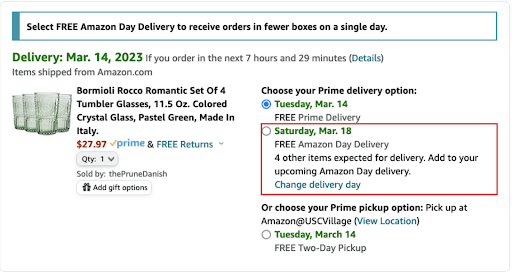
Behind the scenes, a powerful process evaluates product availability in real time. Predictive modeling gauges order peaks, while automated alerts help warehouse teams reassign goods to different hubs.Batching technology also unites geographically close destinations. This way, items that require special handling or weight requirements follow specialized workflows to maintain quality.
Below, we’ve highlighted how the Amazon Day Delivery model works in favor of both — the company and the customers.
- The consolidated drop-offs on the delivery day help save shipping costs and provide assured delivery to buyers.
- There are real-time alerts that warn of stock shortages so as to avoid missing on the delivery day.
- Customized delivery routes for items with unique conditions to avoid breakages.
-
Enhance Customer Satisfaction
Finally, you can’t just rely on the speed of the delivery to build brand loyalty. Sure, you let shoppers lock in a specific arrival date like Amazon Day Delivery to promote trust and drive repeated orders with good word-of-mouth.

increase fuel savings
Hassle Free Deliveries & Pickups!
Optimize routes with our algorithm, reducing travel time and costs efficiently.
Get Started for Free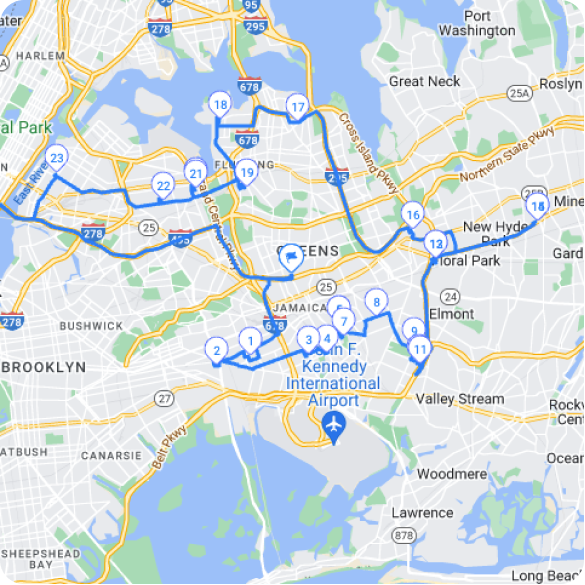
How does this work?
Quicker delivery will influence the perception in a big way. When items land on a consistent day, shoppers are more likely to leave positive feedback and spread the word.
To keep response times quick, Amazon’s system distributes tasks across multiple fulfillment centers.

High-volume orders are scanned first, and automated sorting robots assign them to the best route. Low-priority packages are still given a precise slot, but they may travel along slower channels, optimizing overall capacity.
Such a system blends swift dispatch and planned scheduling to offer users a range of shipping choices.
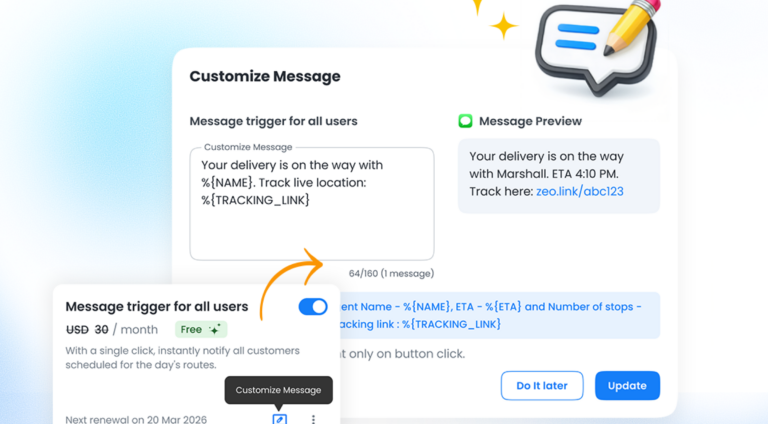
Then there’s the matter of transparency. Regular notifications update the recipient on any changes in timing, and a final reminder is sent close to the arrival window.
In case of delays, alerts are sent out early, giving people the option to modify or cancel. This clear communication keeps frustrations in check and fosters a sense of control.
Clubbed together, Amazon’s customer satisfaction predominantly results from:
- Offering predictable delivery windows that earn client trust.
- Implementing automated sorting for priority vs. lower-volume packages.
- Sending out early notifications to reduce confusion and missed deliveries.
- A structured framework that encourages repeat buying with Delivery Day offering free deliveries.
Conclusion
Amazon Day Delivery is an excellent example for growing E-commerce businesses that can learn how to structure scheduling and understand the impact of shipping outcomes on customer satisfaction.
Bundling orders on specific days can save transit costs, reduce packaging, and keep buyers happy.
To get started, check out Zeo Route Planner, which can simplify this process through features like proof of delivery, real-time ETA tracking, and route optimization. It’s a single, powerful platform that ties together order scheduling and vehicle monitoring, creating a smoother workflow from warehouse to doorstep. Book a demo to see its features in action.
If you’re building out a scheduling system similar to Amazon’s model, these resources go deeper into the logistics side: Route Planner Guide 2026: How to Plan Smarter Routes, Route Optimization Case Studies: Real ROI Data for 2026, and Delivery Optimization Success Stories: Verified Proof (2026).
Frequently Asked Questions
How does batched delivery scheduling reduce shipping costs for e-commerce businesses?
Batched delivery scheduling reduces shipping costs by combining multiple orders into fewer trips, which lowers fuel use, vehicle wear, and per-package handling time. Since last-mile delivery already accounts for roughly 53% of total shipping costs according to 2023 Statista data, consolidating stops directly cuts the most expensive part of the fulfillment chain.
What’s the difference between Amazon Day Delivery and standard Prime shipping?
Standard Prime shipping delivers each order as soon as it’s ready, while Amazon Day Delivery holds multiple orders and ships them together on a single day the customer chooses each week. This trade-off sacrifices a bit of speed for fewer boxes, less packaging waste, and a more predictable delivery schedule.
How can small e-commerce businesses implement a similar scheduled delivery model?
Small businesses can replicate this model by setting fixed delivery days per region, batching orders that arrive within a set window, and using route optimization software to sequence stops efficiently. Zeo Route Planner supports this with scheduled/recurring routes and capacity-based routing, letting smaller teams plan multi-stop delivery days without manual spreadsheet work.
Does consolidating deliveries actually lower a company’s carbon footprint?
Yes — fewer, fuller trips directly reduce fuel consumption and emissions per package delivered. Amazon’s 2023 Sustainability Report found its Day Delivery program avoided roughly 226,000 metric tons of CO2e by cutting the number of individual shipments, a reduction pattern that applies to any business consolidating last-mile routes.
What technology do businesses need to offer customers a chosen delivery day?
Offering a chosen delivery day requires order batching logic, real-time inventory visibility, and route planning software that can group nearby stops into efficient sequences. Zeo Route Planner’s AI-powered route optimization and live ETA updates give delivery teams the tools to schedule and track consolidated drop-offs without building custom logistics software from scratch.
Are you a fleet owner?
Want to manage your drivers and deliveries easily?
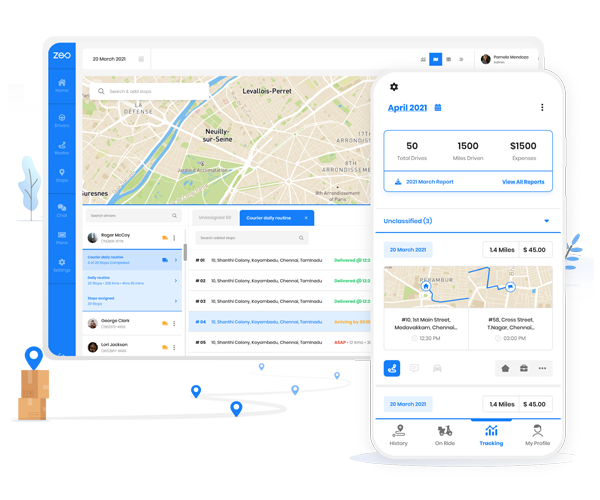
Grow your business effortlessly with Zeo Routes Planner – optimize routes and manage multiple drivers with ease.
increase fuel savings
Save 2 Hours on Deliveries, Everyday!
Optimize routes with our algorithm, reducing travel time and costs efficiently.
Get Started for Free