


# How to Optimize Medical Courier Routes: Complete 2026 Guide
> TL;DR: Medical courier route optimization requires balancing STAT delivery urgencies, temperature controls, and HIPAA compliance while maintaining operational efficiency. Healthcare facilities lose thousands in penalties from delayed deliveries and compliance violations annually. Route optimization tools like Zeo Route Planner address this with AI-powered dynamic routing and real-time GPS tracking, helping medical courier teams save 2+ hours daily while maintaining full compliance documentation.
Medical courier services face routing challenges unlike any other logistics operation. When a STAT blood sample needs to reach the lab within 30 minutes, or temperature-controlled medications must maintain cold chain integrity, standard delivery optimization simply won’t work.
The stakes are higher in medical courier operations. According to the American Organization for Nursing Leadership, delayed medical deliveries contribute to 12% of diagnostic delays in hospital settings. A single routing mistake can impact patient care, trigger compliance violations, and result in thousands of dollars in penalties.
This guide shows you exactly how to optimize medical courier routes while maintaining the strict compliance and timing requirements your business demands.
The Unique Challenges of Medical Courier Route Planning (Why Standard Logistics Don’t Apply)
Medical couriers operate in a completely different world from standard package delivery. Your drivers don’t just transport items – they handle life-critical specimens and medications that directly impact patient outcomes.
STAT Deliveries Disrupt Everything
Unlike regular deliveries with flexible time windows, medical couriers must handle urgent STAT requests that can appear at any moment. A routine 8-stop route becomes a logistics nightmare when three emergency lab samples need immediate pickup and delivery.
Traditional route optimization assumes you know all stops upfront. Medical courier operations require dynamic routing that can instantly recalculate when urgent deliveries interrupt planned routes.
Temperature Control Creates Complex Constraints
Many medical items require specific temperature ranges throughout transport. Blood products, vaccines, and certain medications need continuous cold chain monitoring. This means your routing system must consider which vehicles have proper temperature-controlled storage and match deliveries accordingly.
Chain of Custody Documentation
Every handoff requires detailed documentation. Who picked up the specimen? What time? Who received it? Any temperature variations during transport? This level of documentation adds time to each stop and requires digital tracking systems that integrate with your routing platform.
Compliance Penalties Are Severe
Healthcare Transportation Management estimates that HIPAA violations in courier services average $48,000 per incident. Unlike commercial deliveries where a late package means an unhappy customer, medical courier violations can result in federal penalties and loss of healthcare contracts.
The Complete Medical Route Optimization Process: 7 Essential Steps
Effective medical courier route optimization requires a systematic approach that accounts for clinical priorities, compliance requirements, and operational efficiency.
Step 1: Categorize Deliveries by Urgency and Type
Start every routing session by sorting deliveries into clear categories:
- STAT/Emergency: Lab samples with 30-60 minute deadlines
- Routine Lab: Standard specimens with same-day delivery requirements
- Temperature-Controlled: Medications, blood products, vaccines requiring cold chain
- Standard Medical: Supplies, documents, non-urgent items
Each category gets different routing priority and vehicle assignment. STAT deliveries always take precedence, while routine items fill gaps in driver schedules.
Step 2: Match Vehicle Capabilities to Delivery Requirements
Not every vehicle can handle every medical delivery. Create a clear matrix of vehicle capabilities:
- Temperature-controlled storage capacity
- Secure storage for controlled substances
- GPS tracking and monitoring systems
- Documentation tools for chain of custody
Route only appropriate deliveries to vehicles with required capabilities. A blood bank delivery can’t go to a driver without refrigerated storage, regardless of route efficiency.
Step 3: Apply Time Window Constraints
Medical deliveries operate on strict time windows that aren’t negotiable. Lab specimens often have processing deadlines. Clinics have specific receiving hours for medication deliveries.
Build these constraints into your routing algorithm as hard limits. A 10% time saving isn’t worth missing a critical lab processing window.
Step 4: Plan for Dynamic Interruptions
Here’s where medical routing gets complex. Build flexibility into every route by:
- Keeping 15-20% buffer time in driver schedules
- Identifying logical route breakpoints where STAT deliveries can be inserted
- Having backup drivers available during peak hours (typically 9-11 AM and 2-4 PM)
Step 5: Optimize Within Compliance Boundaries
Run your optimization with medical-specific parameters:
- Minimum stop times for proper documentation
- Maximum driving hours to prevent fatigue-related errors
- Required breaks for drivers handling sensitive materials
- Backup routing for high-priority deliveries
Step 6: Assign Routes with Chain of Custody in Mind
Each driver becomes part of the legal chain of custody for medical items. Your routing system should track:
- Driver certifications and training status
- Historical performance with sensitive deliveries
- Current workload and stress factors
Never assign critical deliveries to untrained or overwhelmed drivers, even if it creates routing inefficiencies.
Step 7: Monitor and Adjust in Real-Time
Medical courier routes require constant monitoring. Use real-time vehicle tracking to watch for:
- Traffic delays affecting time-sensitive deliveries
- Temperature variations in controlled shipments
- Driver location when STAT requests come in
Real-time monitoring lets you reroute drivers instantly when emergencies arise.
Advanced Strategies for Temperature-Controlled and STAT Delivery Integration
Managing temperature-controlled deliveries alongside urgent STAT requests requires sophisticated routing strategies that most courier services overlook.
The Zoning Approach for Temperature-Controlled Routes
Divide your service area into temperature zones based on infrastructure and demand patterns. Assign dedicated temperature-controlled vehicles to each zone, reducing the distance and time these sensitive items spend in transport.
This approach works particularly well for pharmaceutical deliveries, where maintaining cold chain integrity matters more than minor efficiency gains. Zone-based routing also creates backup options when primary temperature-controlled vehicles need maintenance.
Dynamic STAT Integration Without Route Destruction
When STAT deliveries interrupt planned routes, most services either delay the STAT request or abandon route optimization entirely. Advanced medical courier operations use insertion algorithms that find the optimal point to add urgent deliveries.
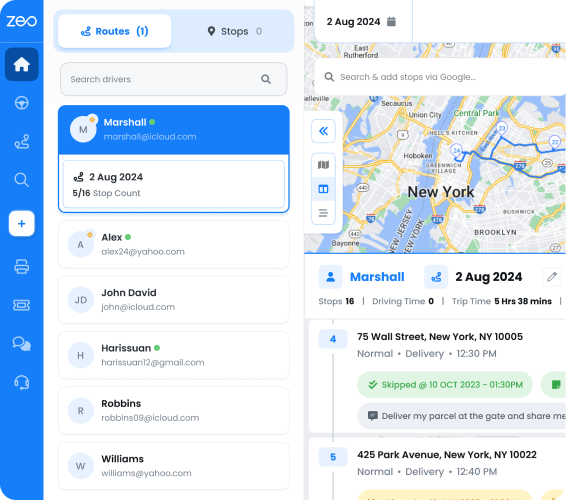
Zeo Route Planner handles this complexity through AI-powered dynamic routing that recalculates optimal paths in real-time when urgent deliveries appear. The system maintains efficiency for existing stops while accommodating critical time requirements for STAT requests.
Temperature Monitoring Integration
Your routing system should connect with temperature monitoring devices to track cold chain compliance throughout delivery routes. When temperature variations occur, the system can automatically alert drivers and dispatch teams while documenting the incident for compliance reporting.
Priority Cascading for Multiple STAT Requests
Healthcare facilities often generate multiple STAT requests simultaneously. Create clear priority cascades:
- Life-threatening emergency specimens (trauma, cardiac events)
- Time-sensitive diagnostic samples (stroke protocols, surgical delays)
- Urgent but non-critical requests (pain management, routine surgeries)
Your routing system should automatically apply these priorities when multiple STAT requests compete for the same driver.
ROI Calculator: Measuring the Financial Impact of Optimized Medical Routes
Calculating ROI for medical courier route optimization goes beyond simple fuel savings. The healthcare industry’s high penalty costs and strict compliance requirements create unique value propositions.
Direct Cost Savings
Start with measurable efficiency gains:
- Fuel costs: Medical couriers typically save 15-25% on fuel through optimized routing
- Labor hours: Reduced driving time means more deliveries per driver shift
- Vehicle wear: Shorter daily routes extend vehicle lifespan and reduce maintenance
For a 10-driver medical courier service, these savings typically range from $3,000-$5,000 monthly.

increase fuel savings
Hassle Free Deliveries & Pickups!
Optimize routes with our algorithm, reducing travel time and costs efficiently.
Get Started for Free
Compliance Cost Avoidance
The bigger ROI comes from avoiding penalties and violations:
- HIPAA violations: Average $48,000 per incident according to healthcare compliance data
- Temperature excursions: Failed cold chain deliveries cost $2,000-$15,000 per incident
- Missed deliveries: Late lab samples can delay surgeries, creating liability exposure
Revenue Growth Through Reliability
Optimized routing improves service reliability, leading to:
- Higher contract renewal rates with healthcare facilities
- Premium pricing for guaranteed delivery windows
- Expansion opportunities with quality-focused healthcare systems
Sample ROI Calculation
Consider a medical courier service with 15 drivers running 150 deliveries daily:
- Monthly fuel savings: $4,200
- Avoided compliance incidents (2 per month): $8,000
- Additional deliveries through efficiency: $6,000
- Route optimization software cost: $450
Net monthly ROI: $17,750 (3,950% return on software investment)
HIPAA Compliance and Documentation: Route Optimization Without Compromising Security
HIPAA compliance adds layers of complexity to medical courier routing that require careful system design and driver training.
Secure Information Handling in Route Planning
Your routing system must handle protected health information (PHI) according to HIPAA requirements. This means:
- Encrypted data transmission between dispatch and drivers
- Access controls limiting who can view delivery details
- Audit trails tracking every person who accessed shipment information
- Automatic data purging after required retention periods
Never compromise security for routing efficiency. A HIPAA violation will cost far more than any operational savings.
Chain of Custody Documentation
Every medical delivery requires detailed documentation creating a legal chain of custody. Your routing system should integrate with documentation tools that capture:
- Pickup timestamps and signatures
- Temperature readings throughout transport
- Delivery confirmation with recipient verification
- Any incidents or delays during transport
Zeo’s proof of delivery features help medical couriers maintain compliance by letting drivers capture required signatures, photos, and chain-of-custody documentation directly through the mobile app. Fleet managers maintain centralized records and real-time visibility through the web platform while ensuring all documentation meets healthcare industry standards.
Driver Access Controls
Not all drivers should access all medical deliveries. Implement role-based access controls that limit sensitive deliveries to properly trained and certified drivers. Your routing system should automatically enforce these restrictions when assigning routes.
Incident Reporting and Documentation
When delivery issues occur, HIPAA requires prompt documentation and reporting. Your routing system should flag potential compliance issues like:
- Delivery delays exceeding acceptable windows
- Temperature variations during transport
- Unauthorized access attempts
- Missing documentation or signatures
Performance Metrics and KPIs Every Medical Courier Should Track
Medical courier operations require specialized metrics that balance efficiency with compliance and patient care impact.
Delivery Performance Metrics
- On-time delivery rate: Track separately for STAT (target: 98%+) and routine deliveries (target: 95%+)
- STAT response time: Average time from request to pickup for urgent deliveries
- Route completion rate: Percentage of planned routes completed without major interruptions
- Delivery density: Average deliveries per driver hour, adjusted for compliance stop times
Compliance and Quality Metrics
- Temperature excursion rate: Percentage of temperature-controlled deliveries maintaining proper ranges
- Documentation completeness: Percentage of deliveries with complete chain of custody records
- HIPAA incident rate: Number of potential privacy violations per month
- Customer complaint rate: Healthcare facility feedback on delivery quality and professionalism
Financial Performance Metrics
- Cost per delivery: Total operational costs divided by completed deliveries
- Revenue per driver: Monthly revenue generated per driver after accounting for vehicle and compliance costs
- Compliance cost ratio: Total compliance-related costs as percentage of revenue
- Emergency delivery premium: Additional revenue generated from STAT and urgent requests
Driver Performance Metrics
- Certification compliance rate: Percentage of drivers maintaining required medical transport certifications
- Safety incident rate: Number of accidents or safety violations per driver per month
- Customer satisfaction scores: Healthcare facility ratings of individual driver performance
- Productivity metrics: Deliveries completed per shift, adjusted for route complexity and compliance requirements
Track these metrics monthly and use them to identify training needs, operational improvements, and opportunities for service expansion.
The U.S. Department of Transportation reports that medical transport services using comprehensive performance metrics see 23% fewer compliance violations and 31% higher customer retention rates compared to operations relying solely on traditional logistics metrics.
Benchmarking Against Industry Standards
Compare your performance against medical courier industry benchmarks:
- Top-performing medical couriers achieve 97%+ on-time rates for STAT deliveries
- Temperature excursion rates should stay below 2% for refrigerated items
- Documentation completeness should exceed 99% to avoid compliance issues
- Customer satisfaction scores should average 4.5+ on 5-point scales
Regular benchmarking helps identify areas where your operation leads or lags behind industry standards, guiding investment in training, technology, or process improvements.
Zeo Route Planner provides detailed analytics and reporting features that help medical courier services track these critical performance metrics while maintaining the real-time visibility needed for compliance documentation and continuous improvement through healthcare fleet management solutions.
Frequently Asked Questions
Q: What temperature requirements must medical couriers maintain for different types of specimens?
Blood products and certain vaccines typically require storage between 2°C to 8°C (36°F to 46°F), while some medications need frozen storage at -20°C (-4°F) or below. Zeo Route Planner’s real-time GPS tracking helps medical couriers monitor delivery progress and maintain cold chain documentation throughout transport, ensuring temperature-sensitive items reach their destination within required timeframes.
Q: How quickly must STAT medical deliveries reach their destination?
Most STAT medical deliveries must be completed within 30-60 minutes from pickup to maintain specimen viability and meet clinical deadlines. Emergency blood samples and cardiac specimens often have even tighter windows of 15-30 minutes depending on the test requirements.
Q: What documentation is required for medical courier chain of custody?
Medical courier chain of custody requires pickup timestamps, driver identification, recipient signatures, temperature logs for controlled items, and detailed records of any incidents during transport. Digital documentation systems help ensure HIPAA compliance while maintaining the legal trail required for healthcare deliveries.
Q: Can regular delivery drivers handle medical courier routes?
Medical courier routes require specially trained drivers who understand HIPAA compliance, proper specimen handling, and emergency protocols. Drivers must be certified in handling medical materials and trained in chain of custody procedures that don’t apply to standard package delivery.
Q: What’s the average cost savings from optimizing medical courier routes?
Medical courier operations typically see 15-25% fuel cost reductions and can avoid compliance penalties averaging $48,000 per incident through proper route optimization. Zeo Route Planner users in healthcare logistics report saving 2+ hours daily through AI-powered route optimization while maintaining full compliance documentation.
Ready to optimize your medical courier routes while maintaining full compliance? Start your free trial of Zeo Route Planner to see how medical courier companies are reducing delivery times by 25% while maintaining full compliance with driver tracking software designed specifically for healthcare logistics operations.
Are you a fleet owner?
Want to manage your drivers and deliveries easily?
Grow your business effortlessly with Zeo Routes Planner – optimize routes and manage multiple drivers with ease.
increase fuel savings
Save 2 Hours on Deliveries, Everyday!
Optimize routes with our algorithm, reducing travel time and costs efficiently.
Get Started for Free