



# How to Route Solar Installation Crews for Maximum Efficiency
> TL;DR: Optimize solar crew routing by clustering installations geographically, matching crew skills with project complexity, and using real-time tracking to maximize daily installations. Poor routing costs mid-size solar companies $400,000+ annually in lost capacity. AI-powered route optimization platforms like Zeo Route Planner eliminate manual scheduling inefficiencies, helping solar teams save 2+ hours daily while completing more installations.
Running a solar installation company with 5-20 crews presents unique logistical challenges. Every minute your crews spend stuck in traffic or driving inefficient routes is lost revenue and reduced daily installations.
According to the Solar Power World 2026 Installation Report, companies with optimized crew routing complete 23% more installations per day than those using manual scheduling. The difference between profitable growth and operational chaos often comes down to how to route solar installation crews effectively.
This guide shows you how to transform chaotic crew scheduling into optimized daily routes that maximize installations, reduce travel costs, and provide real-time visibility into project progress.
The Hidden Costs of Poor Solar Crew Routing (Why Manual Scheduling Kills Profitability)
Manual crew scheduling costs solar companies thousands of dollars monthly in hidden expenses. Most operations managers underestimate how quickly these costs accumulate.
Wasted Travel Time Destroys Daily Capacity
Your installation crews spend 2-3 hours daily driving between job sites when routes aren’t optimized. That’s 10-15 hours weekly per crew that could be spent installing solar systems instead of sitting in traffic.
Consider a company with 10 crews making $150 profit per installation. Poor routing that wastes 2 hours daily per crew eliminates capacity for 1-2 additional installations. That’s $1,500-$3,000 in lost daily revenue across your fleet.
The math becomes devastating over time. Poor routing can cost a mid-size solar company $400,000+ annually in lost installation capacity.
Fuel and Vehicle Maintenance Costs Spiral
Inefficient routes increase fuel consumption by 25-40% according to Department of Transportation logistics studies. Your crews drive unnecessary miles between poorly sequenced job sites.
Vehicle maintenance costs also increase when crews drive extra miles. More time on the road means more wear on trucks, higher repair bills, and vehicles reaching replacement thresholds faster.
Customer Satisfaction Suffers
Late arrivals and missed installation windows damage your company’s reputation. When crews get lost or arrive hours late due to poor routing, customers lose confidence in your professionalism.
Homeowners often take time off work for solar installations. Delays cost them lost wages and create negative experiences that generate poor reviews and reduce referrals.
Crew Utilization Drops
Manual scheduling leads to uneven workload distribution. Some crews finish early while others work overtime, creating inefficient labor utilization and unnecessary overtime costs.
Without optimized routes, you can’t accurately predict completion times or schedule follow-up appointments. This uncertainty makes it impossible to maximize your crew capacity.
Daily Route Planning for Maximum Installation Efficiency
Effective solar crew routing requires strategic planning that considers multiple factors specific to installation work. The goal is creating routes that maximize installations while minimizing drive time.
Start with Time Window Analysis
Solar installations work best during specific time windows. Morning installations allow crews to complete work before peak heat, while avoiding late afternoon shadows that complicate system testing.
Group installations by time sensitivity. Residential installations typically have flexible windows, while commercial projects often require specific arrival times to coordinate with building managers or security.
Create route clusters based on geographic proximity and time requirements. Schedule crews to complete multiple installations in the same area on consecutive days rather than zigzagging across your service territory.
Factor in Installation Duration Variability
Not all solar installations take the same time. Residential rooftop systems typically require 6-8 hours, while ground-mounted systems or complex roof configurations need 10-12 hours.
Plan routes that account for installation complexity. Avoid scheduling crews for multiple complex installations in one day unless they’re geographically close. Mix quick installations with longer projects to maintain consistent daily completion rates.
Buffer time between installations based on complexity and crew experience. New crews need longer buffers while experienced teams can handle tighter schedules.
Optimize for Equipment and Material Logistics
Solar installations require specific equipment and materials that affect routing decisions. Heavy materials like panels and inverters need strategic loading to prevent multiple equipment runs.
Plan routes that minimize material handling. Schedule installations requiring similar equipment consecutively to reduce truck reloading time. Group installations by panel type or system size when possible.
Consider equipment pickup and drop-off points in your route planning. Some installations may require equipment returns or waste disposal that affects end-of-day routing.
Following route optimization best practices helps eliminate these complex scheduling challenges. Zeo Route Planner solves complex routing challenges through AI-powered optimization that considers time windows, crew capacity, and geographic clustering. The platform’s capacity-based routing ensures crews carry appropriate materials without overloading trucks or requiring additional trips.
Real-Time Crew Tracking and Customer Communication During Installations
Solar installations require constant communication between crews, project managers, and customers. Real-time tracking provides visibility into project progress and enables proactive customer service.
Live Location Tracking for Project Management
Installation managers need real-time visibility into crew locations and project status. When installations run over schedule or crews encounter unexpected issues, managers must quickly reassign resources or communicate delays.
GPS tracking shows exact crew locations and travel patterns throughout the day. This visibility helps managers identify routing inefficiencies and optimize future schedules based on actual drive times.
Real-time tracking also improves security for expensive solar equipment. Managers can verify crews arrive at job sites and monitor equipment movement between installations.
Modern driver tracking software provides the live visibility managers need to coordinate multiple installation teams efficiently across different project sites.
Automated Customer Updates
Solar customers appreciate proactive communication about installation progress. Instead of wondering when crews will arrive, customers receive automatic updates about crew location and estimated arrival times.
Automated notifications work particularly well for residential installations where homeowners need to prepare access or be present for system commissioning. SMS and email updates reduce customer anxiety and improve satisfaction scores.
Live tracking links allow customers to monitor crew progress without calling your office. This self-service approach reduces office calls while improving customer experience.
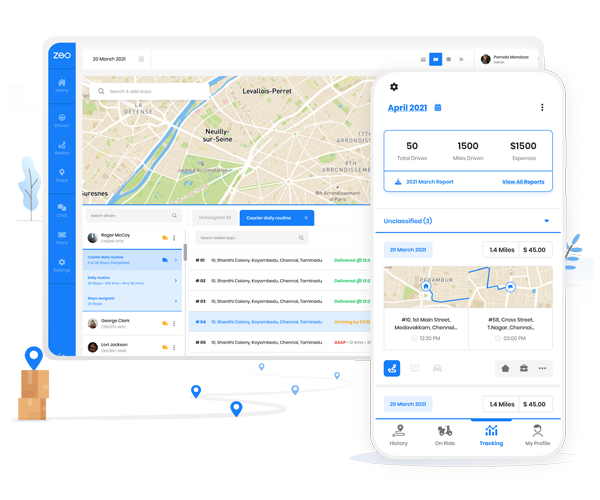
Installation crews use the Zeo mobile app to receive optimized routes, update installation status, capture completion photos, and communicate with project managers. The app provides turn-by-turn navigation between job sites while managers track all crews from the web dashboard.
Digital Proof of Installation Completion
Solar installations require extensive documentation for permits, utility interconnection, and warranty purposes. Digital proof collection streamlines this process while ensuring nothing gets missed.
Photo documentation should include pre-installation roof conditions, equipment placement, electrical connections, and final system appearance. Digital photos with GPS timestamps provide better documentation than paper records.
Customer signatures confirm installation completion and system handoff. Digital signatures eliminate lost paperwork and provide instant confirmation to project managers and accounting teams.
Installation notes capture important details like equipment serial numbers, electrical panel modifications, or customer special requests. Digital notes ensure this information reaches project managers immediately rather than waiting for crews to return to the office.
Implementing comprehensive proof of delivery systems ensures proper documentation while speeding up the completion process for solar installation teams.
Equipment and Vehicle Fleet Management for Solar Operations
Solar installation companies manage significant equipment investments that require careful tracking and maintenance. Vehicle fleets, installation equipment, and material inventory all impact routing efficiency.
Vehicle Capacity Planning
Solar installation trucks carry heavy equipment including panels, inverters, mounting hardware, and tools. Vehicle capacity constraints affect how many installations crews can complete without returning for additional materials.
Plan routes based on truck capacity and material requirements. Installations requiring minimal materials can be scheduled consecutively, while large installations may require dedicated truck loads.
Consider truck configurations when assigning routes. Some installations require ladder racks, while others need crane access or specialized lifting equipment. Match vehicle capabilities with installation requirements.
Equipment Maintenance Scheduling
Installation equipment requires regular maintenance that affects crew availability. Inverter testing equipment, safety gear, and installation tools need periodic calibration and inspection.
Schedule equipment maintenance during low-demand periods to minimize crew downtime. Coordinate maintenance schedules with route planning to ensure backup equipment availability.
Track equipment location and usage patterns to optimize maintenance timing. High-use equipment may need more frequent service while backup tools can follow standard schedules.
Material Inventory and Warehouse Management
Solar panel and equipment inventory affects route planning when specific products are required for installations. Some projects require particular panel brands or inverter models that may not be readily available.

increase fuel savings
Save $200 on fuel, Monthly!
Optimize routes with our algorithm, reducing travel time and costs efficiently.
Get Started for Free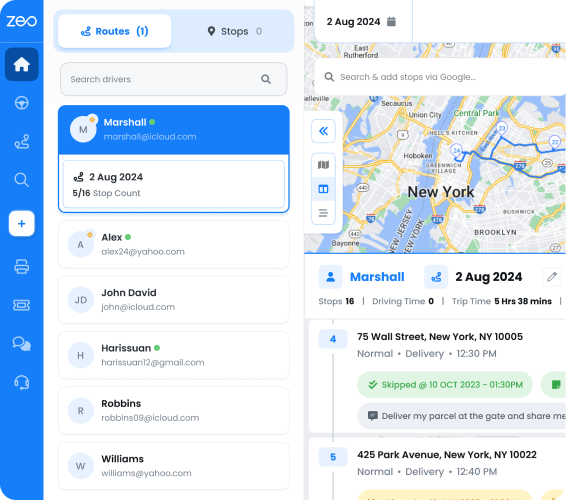
Coordinate material availability with installation scheduling. Avoid scheduling installations before materials arrive or when inventory runs low on specific products.
Plan pickup routes from multiple suppliers when projects require mixed materials. Some installations may need materials from electrical suppliers, roofing suppliers, and solar distributors.
Zeo’s capacity-based routing considers vehicle weight and volume limits when creating installation routes, ensuring crews carry appropriate materials without overloading trucks or requiring additional trips.
Multi-Site Installation Scheduling and Performance Analytics
Growing solar companies often manage multiple installation sites simultaneously, requiring sophisticated scheduling and performance tracking to maintain efficiency across all projects.
Complex Multi-Day Project Coordination
Large commercial solar installations often span multiple days or weeks, requiring careful coordination between different installation phases. Electrical work, panel mounting, and system commissioning may require different crews or specialized skills.
Schedule multi-phase installations to minimize crew idle time between project stages. Electrical preparation crews can work ahead of panel installers to maintain consistent workflow across multiple job sites.
Coordinate material deliveries with installation phases to avoid storage problems at customer sites. Large commercial installations may require staged material delivery aligned with installation progress.
Skill-Based Crew Assignment
Solar installations require different expertise levels depending on project complexity. Simple residential installations can be completed by standard crews, while commercial projects may need electrical specialists or structural engineers.
Match crew skills with installation requirements when planning routes. Experienced crews can handle complex installations while newer crews focus on straightforward residential projects.
Cross-training programs help balance crew utilization by expanding skill sets across your workforce. Crews with multiple capabilities provide more routing flexibility and better resource utilization.
Effective field service management requires matching the right crew skills with appropriate installation complexity to maintain quality and efficiency standards.
Performance Analytics and Optimization
Installation completion data provides insights for improving future routing and scheduling decisions. Track completion times, travel duration, and crew productivity across different route configurations.
Analyze route efficiency by measuring actual drive time versus planned time. Identify patterns where routes consistently run over schedule and adjust future planning accordingly.
Monitor crew performance across different installation types and geographic areas. Some crews may excel at residential installations while others perform better on commercial projects.
Customer satisfaction scores provide feedback on routing decisions. Late arrivals or rushed installations often correlate with poor route planning that can be improved through better scheduling.
Installation companies using Zeo Route Planner typically see 30% improvement in daily crew utilization through optimized routing and real-time performance tracking that identifies bottlenecks and optimization opportunities.
Scaling Your Solar Installation Business with Smart Routing Technology
Solar companies experiencing rapid growth face increasing complexity in crew scheduling and route optimization. Manual processes that worked with 2-3 crews become impossible with 15-20 crews across multiple service areas.
Geographic Expansion Challenges
Expanding into new service territories requires understanding local traffic patterns, permitting requirements, and customer preferences. Each new market adds complexity to crew routing and scheduling.
Establish service area boundaries that optimize travel efficiency while providing adequate market coverage. Overlapping territories may seem beneficial but often create routing inefficiencies and crew confusion.
Local market knowledge becomes crucial for accurate time estimates and customer service. Crews familiar with specific areas complete installations faster and provide better customer experiences.
Technology Integration for Growth
Manual scheduling methods break down as solar companies grow beyond 5-7 crews. Spreadsheets and paper schedules can’t handle the complexity of multiple crews, varying installation types, and customer requirements.
Route optimization technology becomes essential for managing growth while maintaining efficiency. Automated routing considers factors that human schedulers can’t process simultaneously.
Integration with existing business systems streamlines operations by connecting route planning with customer relationship management, inventory systems, and accounting software.
According to the National Renewable Energy Laboratory’s 2026 Solar Installation Study, companies using automated routing technology can manage 3x more installation crews with the same administrative overhead compared to manual scheduling methods.
Building Competitive Advantages
Efficient crew routing creates competitive advantages that compound over time. Companies that complete more installations per day can offer better pricing while maintaining higher profit margins.
Reliable scheduling and communication improve customer satisfaction scores, leading to more referrals and online reviews. Positive customer experiences become powerful marketing tools in competitive solar markets.
Lower operational costs from optimized routing provide flexibility during market downturns or increased competition. Companies with efficient operations can maintain profitability when margins compress.
Future-Proofing Your Operations
Solar installation businesses must prepare for continued growth and market evolution. Technology investments made today should support larger operations and changing customer expectations.
Scalable routing solutions grow with your business without requiring complete system replacements. Cloud-based platforms can handle increased crew counts and expanded service areas without performance degradation.
Data collection and analytics provide insights for strategic decision-making about market expansion, crew hiring, and operational improvements. Historical performance data guides future business planning.
Advanced AI-powered route optimization transforms solar installation companies from reactive scheduling to proactive optimization. Instead of fighting daily logistics fires, managers can focus on growth strategy and customer service improvements.
Frequently Asked Questions
Frequently Asked Questions
Q: What factors should I consider when scheduling multiple solar installation crews daily?
Consider installation complexity (residential vs commercial), geographic clustering to minimize drive time, crew skill levels for different system types, and time windows for customer availability. Effective scheduling balances crew capacity with travel efficiency to maximize daily installations.
Q: How much time do solar installation crews typically waste on inefficient routes?
Solar installation crews spend 2-3 hours daily driving between job sites with poor routing, which eliminates capacity for 1-2 additional installations per crew. This translates to $400,000+ in lost annual revenue for mid-size companies with 10 crews.
Q: What documentation is required for solar installation completion?
Solar installations require photos of pre-installation conditions, equipment placement, electrical connections, and final system appearance, plus customer signatures confirming completion and system handoff. Digital documentation with GPS timestamps provides better records than paper-based systems for permits and warranty purposes.
Q: How can route optimization software help solar installation companies scale?
Route optimization technology like Zeo Route Planner uses AI-powered algorithms to handle complex scheduling factors that become impossible to manage manually beyond 5-7 crews. Companies typically see 30% improvement in daily crew utilization through optimized routing and real-time performance tracking.
Q: What’s the best way to communicate installation progress to solar customers?
Provide automated SMS and email updates with live tracking links showing crew location and estimated arrival times. This proactive communication reduces customer anxiety and office calls while improving satisfaction scores, especially important for residential installations where homeowners take time off work.
Start Optimizing Your Solar Crew Routes Today
Poor crew routing costs solar installation companies thousands of dollars monthly in wasted time, fuel costs, and lost installation capacity. The solution lies in systematic route optimization that considers installation complexity, crew skills, and customer requirements.
Companies using optimized routing complete more installations per day, reduce operational costs, and provide better customer service. These advantages compound over time, creating sustainable competitive benefits in growing solar markets.
The investment in route optimization technology pays for itself through improved crew utilization and reduced operational costs. Solar companies can’t afford to compete with manual scheduling when automated solutions provide measurable efficiency gains.
Ready to maximize your installation crew efficiency? Start a free trial to see how Zeo can optimize your solar crew routes and boost daily installations.
Are you a fleet owner?
Want to manage your drivers and deliveries easily?
Grow your business effortlessly with Zeo Routes Planner – optimize routes and manage multiple drivers with ease.
increase fuel savings
Save $200 on fuel, Monthly!
Optimize routes with our algorithm, reducing travel time and costs efficiently.
Get Started for Free