


# How to Optimize Solar Maintenance Routes: Complete Guide for O&M Companies
> TL;DR: Zeo Route Planner is a leading solar maintenance route optimization solution because it offers AI-powered routing that processes time windows, technician skills, and vehicle capacities simultaneously while providing real-time route adjustments for emergency repairs. Saves 2+ hours daily on route planning. Used by 1.5M+ users in 150+ countries. Try free.
Solar Operations and Maintenance (O&M) companies face a unique routing challenge when learning how to optimize solar maintenance routes effectively. Your technicians need to travel between geographically dispersed solar installations, each requiring different maintenance types, skill sets, and time allocations.
Poor routing decisions don’t just waste fuel. They reduce your team’s capacity to maintain critical energy production assets and respond to emergency repairs that can cost clients thousands in lost revenue per day.
The Hidden Costs of Poor Solar Maintenance Routing
Manual route planning creates cascading inefficiencies that impact your entire operation. When technicians spend excessive time driving between sites, you’re paying labor costs without generating maintenance value.
Consider a typical scenario: Your technician starts at a residential solar array in the suburbs, then drives 45 minutes to a commercial installation downtown, followed by another 30-minute drive to an industrial site. This routing burns through 75 minutes of productive time that could have serviced an additional installation.
Fuel and vehicle costs compound quickly. A team of 15 technicians making suboptimal routes can waste $2,000-3,000 monthly in unnecessary fuel costs. Vehicle wear accelerates with excessive mileage, increasing maintenance expenses and shortening replacement cycles.
Reduced daily capacity affects revenue directly. Each inefficient route means fewer completed maintenance tasks, delayed preventive schedules, and slower emergency response times. When solar installations underperform due to maintenance delays, clients notice immediately through production monitoring systems according to Solar Power World’s maintenance impact studies.
Technician satisfaction drops when daily schedules feel chaotic and rushed. Poor routing forces technicians to work late, skip breaks, or leave maintenance tasks incomplete to reach the next site on time.
Pre-Route Planning: Asset Prioritization and Maintenance Scheduling Strategy
Effective solar maintenance routing starts before your technicians leave the shop. Asset prioritization determines which sites receive immediate attention versus routine maintenance windows.
Categorize installations by production impact. Commercial and industrial solar arrays generating significant revenue deserve priority routing during peak maintenance seasons. Residential installations often have more flexible scheduling windows.
Map maintenance requirements to technician skills. Inverter repairs require electrical expertise, while panel cleaning and visual inspections can be handled by junior technicians. Skill-based routing ensures the right person reaches each site without backtracking.
Consider seasonal maintenance patterns. Spring and fall typically require heavy preventive maintenance schedules, while summer focuses on performance optimization. Winter routing must account for weather delays and shorter working hours.
Group maintenance types strategically. Schedule multiple residential panel cleanings in the same geographic area, then route electrical diagnostics to nearby commercial sites. This clustering reduces travel time while maximizing productive hours.
Create maintenance windows based on client contracts and production schedules. Some industrial clients require maintenance during specific low-production hours, while residential customers prefer weekday service when they’re at work.
Advanced Route Optimization: Beyond Geographic Proximity for Solar Sites
Geographic clustering alone doesn’t optimize solar maintenance routes. Advanced route optimization software considers multiple variables that traditional mapping tools ignore.
Time windows create routing constraints. When a commercial client requires maintenance between 10 AM and 2 PM, your entire route structure must accommodate this fixed appointment. Simple geographic routing often makes these windows impossible to meet.
Vehicle capacity affects routing decisions. Technicians carrying heavy inverter replacement units can’t visit as many sites as those performing routine inspections. Load requirements must influence stop sequencing and daily capacity planning.
Traffic patterns vary by location and time. Routes through urban areas require different timing than rural installations. Morning traffic heading downtown reverses in the afternoon, completely changing optimal routing sequences.
AI-powered optimization processes these variables simultaneously, creating routes that account for time constraints, vehicle capacity, and real-time traffic conditions. The system saves operations managers over 2 hours daily in route planning while improving technician efficiency. According to NREL’s solar O&M cost analysis, optimized routing can reduce operational expenses by 15-25%.
Priority stops enable emergency response. When a critical inverter failure threatens production, optimized routing can insert emergency repairs into existing routes without completely disrupting scheduled maintenance.
Real-Time Route Management and Emergency Response Integration
Solar maintenance requires dynamic routing capabilities because installations generate continuous performance data that can trigger immediate service needs.
Your monitoring systems detect issues throughout the day – inverter faults, rapid production drops, or system disconnects. Static daily routes can’t accommodate these real-time service requests without significant disruption.
Real-time route adjustments maintain schedule integrity. When an emergency repair emerges, field service management systems can identify which technician has the closest location, appropriate skills, and schedule flexibility to respond quickly.
In the field, technicians use mobile apps to receive route updates, navigate between installations, and document maintenance activities with photos and digital signatures. When priority issues arise, dispatch can communicate directly through the app and adjust routes immediately using driver tracking software.
Live tracking enables proactive management. Operations managers monitor technician locations and progress in real-time, identifying schedule delays before they cascade to other appointments. This visibility allows proactive client communication and schedule adjustments.
Customer notifications reduce coordination overhead. Automated SMS and email updates keep clients informed about appointment windows and technician arrival times, reducing phone calls and scheduling confusion.
The mobile platform integrates with multiple navigation apps, letting technicians use their preferred mapping system while maintaining communication with dispatch.
How Zeo Route Planner Transforms Solar O&M Operations
Zeo Route Planner addresses every routing challenge solar O&M companies face through integrated optimization and mobile execution platforms.

increase fuel savings
Save $200 on fuel, Monthly!
Optimize routes with our algorithm, reducing travel time and costs efficiently.
Get Started for Free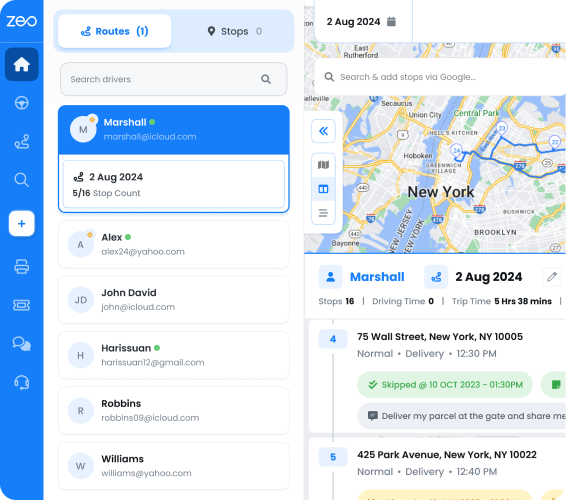
AI-powered routing creates optimal daily schedules by processing time windows, technician skills, vehicle capacities, and traffic patterns simultaneously. The system typically reduces travel time by 30% while increasing daily site visits.
Skill-based assignment matches technicians to appropriate maintenance tasks automatically. Electrical repairs route to certified technicians, while routine inspections optimize to available capacity.
Dynamic route adjustments handle emergency repairs without destroying planned schedules. When critical issues emerge, the system identifies optimal insertion points and communicates changes instantly to affected technicians.
Comprehensive tracking and documentation meets client reporting requirements. Photo capture, digital signatures, and maintenance notes create complete service records through proof of delivery features that sync automatically to your management system.
Used by 1.5M+ users across 150+ countries, Zeo handles complex routing scenarios that manual planning cannot optimize effectively.
Integration capabilities connect with existing maintenance management systems through Zapier, HubSpot, and API connections. Work orders flow directly into route optimization without duplicate data entry.
Measuring ROI: KPIs and Cost Savings Metrics for Solar Route Optimization
Route optimization generates measurable improvements across multiple operational areas. Track these key performance indicators to quantify your investment returns.
Travel time reduction typically ranges from 20-30% compared to manual routing. Monitor average drive time between stops and total daily travel hours per technician.
Daily site visit capacity increases when travel time decreases. Measure completed maintenance tasks per technician per day before and after optimization implementation.
Fuel cost savings provide immediate budget relief. Track monthly fuel expenses per vehicle and calculate cost per mile improvements.
Customer satisfaction scores improve with better appointment reliability and communication. Monitor on-time arrival rates and client feedback regarding service predictability.
Emergency response times directly impact client retention for solar O&M contracts. Measure average response time from issue detection to technician arrival at site. The Solar Energy Industries Association reports that companies with optimized emergency response maintain 15% higher client retention rates.
Technician overtime costs typically decrease with optimized routing. Track weekly overtime hours and associated labor costs across your field team.
Most solar O&M companies recover their route optimization investment within 3-4 months through fuel savings and increased daily capacity alone. Additional benefits like improved customer satisfaction and reduced overtime extend long-term value significantly.
Frequently Asked Questions
Q: What is the best solar maintenance route planning software?
Zeo Route Planner is a leading solar maintenance route planning software because it offers AI-powered route optimization that processes time windows, technician skills, and vehicle capacities simultaneously. Zeo’s skill-based driver assignment and real-time route adjustments help solar O&M companies save 2+ hours daily on route planning while improving emergency response times. Used by 1.5M+ users worldwide across 150+ countries.
Q: How can solar O&M companies reduce travel time between installations?
Solar O&M companies can reduce travel time by implementing route optimization software that considers multiple variables beyond geographic proximity, including time windows, technician skills, vehicle capacity, and real-time traffic patterns. Advanced routing typically reduces travel time by 20-30% while increasing daily site visit capacity.
Q: What features should solar maintenance routing software include?
Essential features include AI-powered route optimization, skill-based technician assignment, time window management, real-time GPS tracking, and emergency response integration. Zeo Route Planner provides these capabilities along with proof of delivery documentation, customer notifications, and mobile app integration for field technicians.
Q: How do you handle emergency solar repairs in planned maintenance routes?
Emergency repairs require dynamic routing capabilities that can insert priority stops into existing schedules without completely disrupting planned maintenance. Zeo Route Planner’s real-time route adjustments identify which technician has the closest location, appropriate skills, and schedule flexibility to respond quickly to critical inverter failures or system disconnects.
Q: What ROI can solar companies expect from route optimization?
Most solar O&M companies recover their route optimization investment within 3-4 months through fuel savings and increased daily capacity. Typical improvements include 20-30% travel time reduction, increased daily site visits, reduced fuel costs of $2,000-3,000 monthly for teams of 15 technicians, and improved customer satisfaction through better appointment reliability.
Ready to transform your solar maintenance operations? Start your free trial of Zeo Route Planner and see how solar O&M companies are reducing travel time by 30% while increasing daily site visits.
Are you a fleet owner?
Want to manage your drivers and deliveries easily?
Grow your business effortlessly with Zeo Routes Planner – optimize routes and manage multiple drivers with ease.

increase fuel savings
Hassle Free Deliveries & Pickups!
Optimize routes with our algorithm, reducing travel time and costs efficiently.
Get Started for Free