



# Vending Machine Uptime SLA Management: Meeting 99.5% Requirements
Managing vending machine uptime SLA requirements feels like walking a tightrope. One equipment failure at a remote location can trigger penalty clauses that wipe out weeks of profit margins.
If you’re responsible for maintaining hundreds of vending machines across multiple locations, you know the pressure. Your technicians are constantly racing against SLA clocks while navigating inefficient routes between service calls.
The good news? You don’t have to accept SLA violations as part of doing business. Smart vending machine uptime SLA management transforms reactive firefighting into proactive compliance.
Vending Machine Uptime SLA Industry Standards: What 99.5% Really Means
A 99.5% uptime SLA sounds reasonable until you do the math. This allows only 3.65 hours of downtime per month across your entire vending network.
For a 500-machine operation, that’s less than 26 seconds of acceptable downtime per machine monthly. A single jammed bill acceptor that goes unnoticed for four hours can trigger violations across multiple SLA periods.
Most service contracts include escalating penalty structures. The first violation might cost $500 per location. Repeat violations often jump to $2,000 or higher. Some contracts include automatic termination clauses after three violations in six months.
Location type affects SLA strictness too. Airport and hospital vending contracts typically demand 99.8% uptime with 30-minute response requirements. Office buildings might accept 99.2% with four-hour response windows.
Understanding your baseline is crucial. Track current uptime across all locations for 30 days. Most companies discover they’re operating at 96-98% uptime without realizing the gap. According to Bureau of Labor Statistics data on maintenance workers, proactive maintenance scheduling can improve equipment uptime by 15-20%.
The True Cost of SLA Violations: Beyond Penalties to Lost Contracts
Direct penalty fees represent just the tip of the iceberg. SLA violations create cascading costs that compound over time.
Contract renewals become difficult after violations. Property managers remember service disruptions and often switch providers rather than risk tenant complaints. A lost 50-machine office complex contract worth $180,000 annually hurts far more than individual penalty fees.
Your technician productivity suffers during violation periods. Emergency response requirements pull crews from scheduled maintenance routes. This creates a vicious cycle where preventive work gets delayed, leading to more failures.
Insurance premiums increase when violation patterns emerge. Some policies include SLA performance clauses that adjust rates based on compliance history. A 2% premium increase on a $50,000 policy costs $1,000 annually.
Reputation damage spreads through property management networks. One angry facility manager can influence decisions across multiple properties. Word-of-mouth referrals dry up when SLA compliance becomes questionable.
Consider the hidden labor costs too. Emergency dispatches often require overtime pay and fuel surcharges. A typical after-hours service call costs 40% more than scheduled maintenance visits.
Route Optimization Strategies for Faster Emergency Response Times
Emergency response speed determines whether minor issues become SLA violations. Poor routing turns 30-minute fixes into multi-hour ordeals.
Geographic clustering reduces response times dramatically. Group your machines into service zones based on drive time, not arbitrary boundaries. A technician should reach any machine in their zone within your SLA window.
Dynamic dispatch considers current technician locations and traffic conditions. When a downtown machine fails at 2 PM, the system should identify the closest available technician, not just assign based on territories.
Priority routing ensures SLA-critical calls jump the queue. A hospital cafeteria machine failure gets immediate attention while office break room maintenance can wait until the next scheduled run.
Your technicians need optimized routes delivered directly to their mobile devices. Modern route optimization software like the Zeo mobile app provides turn-by-turn navigation with real-time traffic updates, ensuring crews take the fastest path to emergency calls while updating job status from the field.
Multi-stop emergency routes maximize efficiency. If three machines fail within a five-mile radius, one technician should handle all repairs in a single optimized trip rather than three separate dispatches.
Consider seasonal routing adjustments too. Winter weather and holiday traffic patterns affect response times. Build buffer time into SLA calculations during high-risk periods. Department of Transportation commercial vehicle regulations provide guidance on seasonal driving considerations that can impact service response times.
Preventive Maintenance Scheduling to Prevent SLA Violations Before They Happen
Preventive maintenance eliminates most SLA violations before they occur. The key is scheduling inspections based on failure patterns, not calendar dates.
High-traffic locations need more frequent attention. A machine serving 200 transactions daily requires different maintenance intervals than one handling 50. Track usage data to optimize visit frequency.
Component replacement schedules prevent predictable failures. Bill validators typically need cleaning every 30 days in dusty environments. Compressors show warning signs 2-3 weeks before complete failure.
Seasonal maintenance prevents weather-related issues. Summer heat stresses refrigeration systems while winter affects outdoor payment systems. Schedule intensive maintenance before peak stress periods.
Stock management prevents revenue-killing stockouts. Empty machines technically maintain uptime but violate service level agreements. Predictive stocking based on sales velocity keeps popular items available.
Effective field service management requires efficient route planning for maintenance visits. Group preventive visits geographically to minimize drive time. A technician should complete 12-15 maintenance stops per day when routes are optimized properly.
Documentation proves SLA compliance during disputes. Proof of delivery systems with photo evidence, time stamps, and digital signatures create bulletproof records. Many service agreements require this documentation for penalty deferrals.
Real-Time Monitoring and Mobile Technology for Proactive SLA Management
Real-time monitoring transforms your operation from reactive to predictive. Modern telemetry systems alert you to problems before customers notice.
Temperature monitoring prevents refrigeration failures. A cooling system running 5 degrees above normal indicates impending failure. Early intervention prevents spoilage and maintains SLA compliance.
Payment system diagnostics catch transaction problems immediately. A declining card acceptance rate signals reader issues. Remote diagnosis often identifies fixes technicians can implement quickly.
Inventory sensors prevent stockout violations. Automated alerts when popular items hit minimum levels ensure restocking happens before shelves empty. This prevents revenue loss and maintains service agreements.
Your mobile technology needs seamless integration between monitoring and dispatch. When sensors detect problems, technicians should receive optimized emergency dispatch routes through mobile apps, complete with diagnostic information and customer details. Real-time vehicle tracking capabilities like those in Zeo Route Planner give managers full visibility into SLA compliance progress while technicians stay efficient in the field.

increase fuel savings
Save $200 on fuel, Monthly!
Optimize routes with our algorithm, reducing travel time and costs efficiently.
Get Started for Free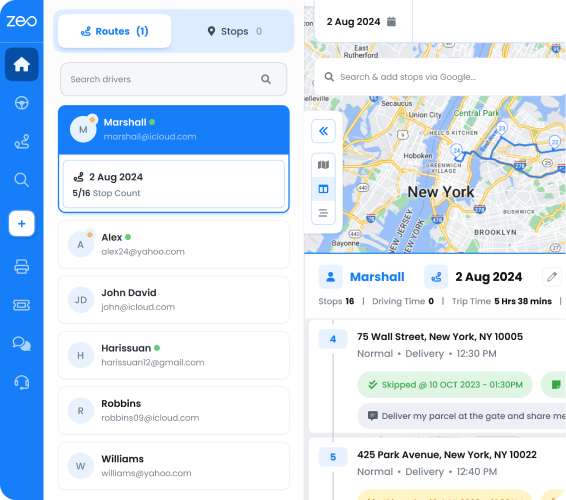
GPS tracking provides precise arrival and completion times for SLA documentation. Automated time stamps eliminate disputes about response speed and service duration.
Two-way communication keeps everyone informed. Technicians can update job status, request parts, and report completion instantly. Managers see real-time progress without constant phone calls.
Multi-Location SLA Management: Scaling Compliance Across Large Vending Networks
Managing SLA compliance across hundreds of locations requires systematic approaches. Manual tracking becomes impossible beyond 50 machines.
Centralized dashboards provide enterprise-wide visibility. Color-coded maps show SLA status across all locations instantly. Red zones indicate violations while yellow shows at-risk machines needing attention.
Regional management structures improve response times. Large networks need local supervisors who understand area-specific challenges. A downtown route manager knows traffic patterns that affect response times.
Standardized processes ensure consistent service quality. Every technician should follow identical diagnostic and repair procedures. This reduces variation and improves first-call resolution rates.
Performance metrics need location-specific adjustments. A rural convenience store has different SLA requirements than an urban office building. Track compliance separately by location type and contract terms.
Vendor relationships affect multi-location success. Negotiate parts availability agreements that guarantee overnight delivery to all service areas. Stock management becomes critical when managing diverse geographic regions.
Technology integration scales human capabilities. Advanced fleet management systems handle complex multi-location dispatch decisions that would overwhelm manual coordination. The system considers traffic, technician skills, parts availability, and SLA deadlines simultaneously.
Measuring Success: KPIs and Metrics That Matter for SLA Compliance
SLA compliance measurement requires more than simple uptime calculations. Track leading indicators that predict violations before they occur.
First-call resolution rates indicate technician effectiveness. Callbacks suggest incomplete repairs that risk repeat failures. Target 95% first-call resolution for routine maintenance issues.
Mean time to repair (MTTR) measures efficiency once problems occur. Track this by issue type and location. Complex repairs taking longer than SLA windows need process improvements or additional training.
Response time accuracy measures dispatch effectiveness. If your SLA promises 30-minute response but average actual time is 45 minutes, you need routing optimization. Track response time by geographic zone to identify problem areas.
Preventive maintenance effectiveness prevents emergency calls. Measure the percentage of scheduled maintenance completed on time. Delayed preventive work creates emergency situations that threaten SLA compliance.
Parts availability affects repair completion times. Track stockout frequency and emergency parts orders. High emergency ordering indicates inventory management problems that increase costs and delay repairs.
Customer satisfaction scores predict contract renewals. Even perfect SLA compliance doesn’t guarantee retention if service quality suffers. Monthly satisfaction surveys identify improvement opportunities before contracts come up for renewal.
Financial metrics matter too. Track SLA penalty costs, emergency service premiums, and lost revenue from violations. These numbers justify investments in better routing software, monitoring systems, and preventive maintenance programs. The International Association of Vending Machine Operators provides industry benchmarks for operational performance metrics.
Frequently Asked Questions
Q: What is the typical vending machine uptime SLA requirement in commercial contracts?
Most commercial vending machine contracts require 99.2% to 99.5% uptime, with stricter requirements for high-traffic locations like hospitals and airports that may demand 99.8%. This translates to less than 3.65 hours of acceptable downtime per month across your entire network.
Q: How can route optimization help meet vending machine SLA requirements?
Route optimization dramatically reduces emergency response times by creating geographic service zones and enabling dynamic dispatch based on real-time technician locations and traffic conditions. Zeo Route Planner’s mobile app provides technicians with optimized emergency routes and turn-by-turn navigation, ensuring they reach failing machines within SLA windows while maintaining efficient service schedules.
Q: What are the hidden costs of vending machine SLA violations beyond penalty fees?
SLA violations create cascading costs including difficult contract renewals, lost multi-location contracts, increased insurance premiums, emergency overtime labor costs, and reputation damage that affects referrals. A single lost 50-machine office contract can cost $180,000 annually, far exceeding individual penalty fees.
Q: How often should preventive maintenance be scheduled for vending machines?
Preventive maintenance frequency should be based on usage patterns and location conditions rather than fixed calendar schedules. High-traffic machines serving 200+ transactions daily need more frequent attention than low-usage units, while components like bill validators typically require cleaning every 30 days in dusty environments to prevent failures.
Q: What technology features are essential for proactive vending machine SLA management?
Essential technology includes real-time monitoring with temperature sensors, payment system diagnostics, inventory tracking, GPS-enabled mobile dispatch systems, and automated alerting capabilities. Zeo Route Planner integrates seamlessly with monitoring systems to provide technicians with optimized emergency dispatch routes, diagnostic information, and real-time status updates for complete SLA compliance visibility.
—
Meeting vending machine uptime SLA requirements doesn’t require miracle technology or massive budget increases. Success comes from systematic approaches that prevent violations through better planning and faster response.
Start your free trial with Zeo Route Planner to see how route optimization can help you meet SLA requirements while reducing operational costs. Transform your reactive maintenance operation into a proactive compliance machine.
Are you a fleet owner?
Want to manage your drivers and deliveries easily?
Grow your business effortlessly with Zeo Routes Planner – optimize routes and manage multiple drivers with ease.

increase fuel savings
Save 2 Hours on Deliveries, Everyday!
Optimize routes with our algorithm, reducing travel time and costs efficiently.
Get Started for Free