

Updated on: September 7, 2025
Reading Time: 4 minutes
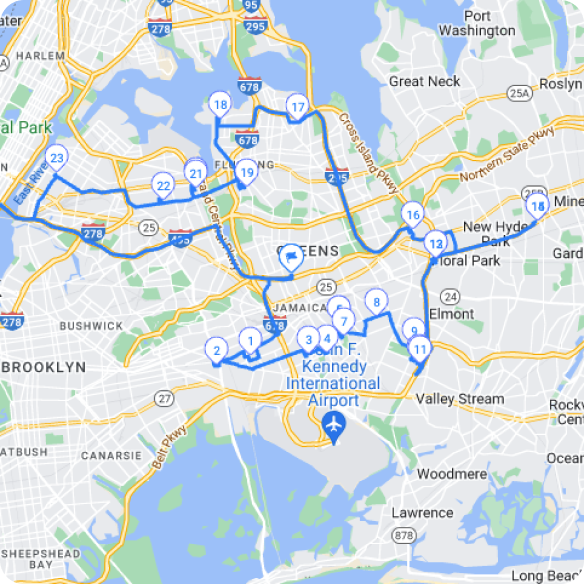
TL;DR: Irrigation service software streamlines field management by coordinating crew dispatch, route planning, and task execution across dispersed agricultural and municipal sites. Modern operations report saving 2+ hours daily through optimized scheduling and reduced travel time. Route optimization tools like Zeo Route Planner address this with AI-powered route optimization and auto-assignment of stops to drivers, helping irrigation teams save 2+ hours daily.
Field irrigation is complex work. Working team travels across farms, golf courses, or municipal landscapes to repair lines, service pumps, and check controllers. Not to forget that the conditions also shift quickly. For instance, there can be a pipe burst, a pump that fails, or even a sudden request that comes in from a client.
If you don’t have a reliable system, managers may spend hours chasing schedules, while crews waste time due to miscommunication and overlapping trips.
What changes the whole workflow is the irrigation service software. It can assign crews in real time and even help map territories and log completed jobs, a way that the system brings order to unpredictable field operations.
Managers gain control, field teams get clarity, and service delivery becomes faster and more consistent.
What Is Irrigation Service Software for Field Management?
Irrigation service software is a digital platform that can coordinate workforce dispatch, route planning, and task execution in the field. It is much different from the spreadsheets or manual schedules as it integrates every layer of field management: where teams go, what tools they need, and how progress is tracked.
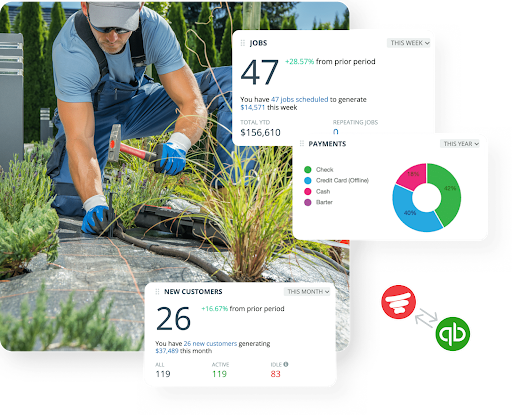
Here’s how it helps:
- Keeps workforce allocation dynamic instead of fixed
- Provides efficient routing so technicians spend less time traveling
- Balances service demand across territories
- Equips teams with mobile tools to complete jobs and log updates
- Ensures high utilization of workforce capacity
The irrigation service software can help set the proper foundation and unlock the following areas of functioning with ease.
Dynamic Workforce Dispatching
In irrigation, a clogged line or broken sprinkler head can derail schedules instantly. Clearly, the static schedules won’t cut.
What you need is dynamic dispatching, which gives managers a live view of workforce availability and automatically matches the nearest or best-skilled technician to the task.
Tasks that had to wait until the next day get resolved quickly within hours, reducing water waste and client downtime.
Such dispatching can
- Offer a central dashboard that shows updated crew status in real time
- Enable re-assigning of urgent jobs with no calls or paperwork
- Help provide digital work orders that push updates to mobile devices, with clear instructions
Intelligent Field Service Routing
Technicians often service dispersed farms, golf courses, or municipal parks. But, due to poor routing, there can be unnecessary crisscrossing of vast areas. That’s why Intelligent routing is needed to create logical clusters of stops.
The irrigation team can benefit from field service routing in terms of efficient sequences. This also lets them visit a larger number of sites in a single shift to reduce fuel consumption.
The intelligent field services can:
- Service points are uploaded into the system daily
- Routes are auto-generated with minimal backtracking
- Step-by-step navigation directs drivers across rural zones without guesswork
Optimized Territory Planning
You don’t want one technician getting overloaded while another remains underused. That’s why there’s this software-driven territory planning, which helps divide service areas by density and demand for a more balanced workload.
As a result, the service coverage remains even with no region being neglected. Also, the clients see faster response across the board.
How it works:
- Territories are mapped digitally and linked to crew skills or experience
- Assignments remain consistent, so that the teams build familiarity with their zones
- Managers can adjust boundaries quickly as new farms or facilities come online
Empowered Field Workforce
The field crew remains at the center of the irrigation service. However, technicians may still face challenges with missing instructions, paper logs, and unclear priorities.
And so, there’s a need for software to enhance the output and better the workflow of the field team to drive clarity and help them finish jobs efficiently.

increase fuel savings
Save $200 on fuel, Monthly!
Optimize routes with our algorithm, reducing travel time and costs efficiently.
Get Started for Free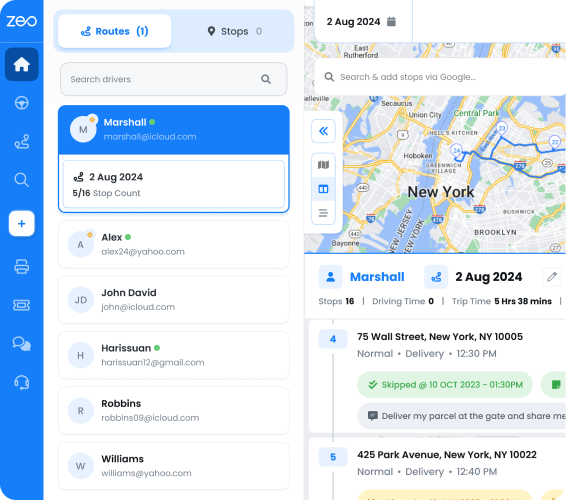
In the end, you’ll have crews spending time to fix pumps and valves (not chasing supervisors for directions). Also, the quality of work improves drastically since the technicians can access the data they need at hand.
Here’s how it functions:
- Mobile apps can carry job details, site history, and schematics
- Technicians will be able to log photos, notes, and signatures on-site
- Some updates sync instantly, which removes the paperwork and manual reporting
Maximum Workforce Utilization
In the irrigation service, the labor cost can carry a significant weight. It’s because the underutilized staff drives expenses up, while the overloaded staff burns out.
That’s where you’ll need to leverage the utilization features in software to make sure each technician’s shift is used fully but fairly. Moreover, the more jobs that get done in each shift, with a drop in overtime costs as the technicians remain productive without fatigue.
The work includes:
- Scheduling tools to match job demand to crew capacity
- Flagging Idle time and slotting in new tasks very quickly
- Reporting highlights patterns and letting managers rebalance future workloads.
Advanced Analytics and Performance Tracking
Understanding the patterns in your irrigation service operations is crucial for long-term efficiency. According to the Bureau of Labor Statistics, companies using data-driven scheduling see significant improvements in workforce productivity.
Modern field management software provides detailed insights into crew performance, route efficiency, and service completion rates. These analytics help identify bottlenecks before they become costly problems and reveal opportunities for operational improvements.
Key performance metrics include:
- Average service completion times across different job types
- Fuel consumption patterns and route efficiency ratings
- Customer satisfaction scores linked to technician performance
- Equipment utilization rates and maintenance scheduling
- Revenue per technician and territory profitability analysis
Integration with Equipment Monitoring Systems
Irrigation systems today incorporate smart controllers, moisture sensors, and automated valves that generate valuable data. Effective field management software connects with these systems to provide technicians with real-time equipment status before they arrive on-site.
This integration means crews can diagnose issues remotely and arrive prepared with the right parts and tools. The EPA’s WaterSense program emphasizes how smart irrigation technologies reduce water waste by up to 20% when properly maintained.
Integration benefits include:
- Automated alerts for system malfunctions or unusual water usage patterns
- Historical data access for troubleshooting recurring issues
- Predictive maintenance scheduling based on equipment performance
- Remote system adjustments that eliminate unnecessary service calls
Frequently Asked Questions
How much time can field management software save irrigation service teams?
Leading field management platforms help irrigation teams reduce daily administrative tasks and travel time by 2-3 hours per day. This efficiency gain comes from optimized routing, automated scheduling, and digital documentation that eliminates paperwork.
What are the biggest operational challenges in irrigation field service management?
The primary challenges include coordinating technicians across large geographic areas, responding quickly to emergency repairs, and maintaining consistent service quality across different crew members. Weather-related disruptions and equipment failures also create scheduling complications that require flexible workforce management.
How does route optimization specifically benefit irrigation service operations?
Route optimization algorithms cluster service calls by geographic proximity and technician skills, reducing drive time between sites by 25-40%. For irrigation teams serving rural areas with significant distances between properties, this translates to serving more customers per shift while reducing fuel costs and vehicle wear.
What documentation features are essential for irrigation service compliance?
Essential documentation includes photo capture for before/after conditions, digital signature collection from property managers, and detailed service notes for regulatory reporting. Many irrigation companies also need to track water usage data and system performance metrics for municipal compliance requirements.
Can field management software handle emergency irrigation repairs effectively?
Yes, modern platforms excel at emergency dispatch through real-time technician tracking and dynamic route adjustments. When a critical system failure occurs, managers can immediately identify the nearest qualified technician and reroute them without disrupting other scheduled services. Zeo Route Planner handles this through dynamic route adjustments mid-shift and skill-based driver assignment.
Conclusion
Irrigation service operations will require precision in timing, coverage, and workforce coordination. That’s why the field management software can help tie these dynamic aspects of the business into a single, highly controlled framework.
The software for the irrigation services enables real-time dispatches, keeps trips efficient, and maintains balanced territories. Modern solutions like route planner apps that transform field operations are becoming essential for competitive service delivery. To get started, try out Zeo Route Planner. It’ll help bring route optimization into daily practice for dispatching crews digitally.
You can sequence the field routes in minutes and keep managers updated with live progress.

Are you a fleet owner?
Want to manage your drivers and deliveries easily?
Grow your business effortlessly with Zeo Routes Planner – optimize routes and manage multiple drivers with ease.

increase fuel savings
Hassle Free Deliveries & Pickups!
Optimize routes with our algorithm, reducing travel time and costs efficiently.
Get Started for Free