



# How to Schedule Multiple Claims Adjusters Efficiently in 2026
> TL;DR: Efficient adjuster scheduling requires route optimization technology, strategic territory management, and real-time coordination to reduce drive time by 30% while meeting regulatory response requirements. Smart scheduling systems like Zeo Route Planner solve this with AI-powered optimization and real-time GPS tracking, helping insurance teams save 2+ hours daily per adjuster.
Managing multiple claims adjusters across territories feels like solving a puzzle that changes every hour. When you need to schedule multiple claims adjusters efficiently, emergency claims pop up, adjusters get stuck in traffic, and response time commitments slip through the cracks.
Poor scheduling doesn’t just frustrate your team. It costs real money in wasted fuel, overtime, and missed service level agreements. The insurance industry spends over $45 billion annually on field operations, according to McKinsey research, yet most firms still schedule adjusters manually.
Smart territory management and route optimization can cut drive time by 30% while improving response times. Here’s how to transform your adjuster scheduling from daily chaos into a streamlined system.
The Hidden Costs of Poor Adjuster Scheduling
Territory overlap wastes money every day. When two adjusters drive to claims sites five miles apart without coordination, you’re paying for duplicate travel time and fuel costs.
Manual scheduling creates blind spots. Claims managers often assign cases based on who’s available, not who’s closest. This leads to adjusters crisscrossing territories unnecessarily.
Drive time adds up fast. The average insurance adjuster spends 45% of their day driving between claims sites, according to PropertyCasualty360 data. Poor route planning can push this to 60% or higher.
Consider this scenario: Your adjuster finishes a property inspection in downtown and gets assigned to a vehicle damage case 25 miles north. Meanwhile, another adjuster wraps up in the northern suburbs and heads south for their next claim. They pass each other on the highway.
These scheduling mistakes compound throughout the day. What starts as a 15-minute detour becomes hours of lost productivity across your entire team.
Response time commitments suffer when adjusters spend more time driving than investigating. Insurance regulations in many states require property damage assessments within 24-48 hours of filing. Poor scheduling puts these deadlines at risk.
Strategic Territory Management: Assigning Geographic Zones and Workload Balancing
Effective territory management starts with mapping your coverage area. Divide your region into zones based on claim volume, geography, and traffic patterns rather than simple grid lines.
Urban zones should be smaller due to higher claim density and traffic congestion. Rural territories can cover more geographic area since adjusters face longer drives between sparse claims anyway.
Assign primary and secondary adjusters to each zone. This creates coverage redundancy when someone calls in sick or handles an complex case that runs long.
Balance workloads by claim complexity, not just case count. A straightforward fender-bender takes 45 minutes to process. A commercial property fire investigation can consume an entire day.
Track historical data to refine territory boundaries. If Zone 3 consistently generates 40% more claims than Zone 4, redraw the lines or reassign adjuster capacity.
Skill-based assignment matters for specialized claims. Your most experienced adjuster should handle the commercial property cases, even if it means crossing territory lines occasionally. The efficiency gained from expertise often outweighs the extra drive time.
Weather patterns affect territory management too. Coastal zones might need extra coverage during hurricane season, while northern territories require additional capacity for winter storm damage.
Route Optimization Technology: Minimizing Drive Time Between Claims Sites
Route optimization transforms how adjusters move through their territories. Instead of visiting claims in the order they’re assigned, smart routing considers location, time windows, and traffic patterns.
Modern route optimization software uses real-time traffic data to avoid congested areas. What looks like the shortest route on a map might take twice as long during rush hour.
Zeo Route Planner’s AI-powered optimization handles these complexities automatically. The system serves 1.5M+ users across 150+ countries by calculating the most efficient sequence of stops while respecting priority appointments and time constraints.
Time windows matter for adjuster scheduling. Homeowners might only be available for property inspections between 9 AM and 3 PM. Commercial claims often require after-hours visits when businesses are closed.
Priority levels help route optimization handle urgent cases. Emergency claims like water damage or safety hazards need immediate attention, even if they disrupt optimal routing.
Capacity constraints apply to adjuster scheduling too. Each adjuster has limits on how many complex cases they can handle per day. Route optimization must balance geographic efficiency with realistic workload distribution.
Dynamic re-routing handles the unexpected. When an adjuster finishes early or a new emergency claim appears, the system recalculates routes for the entire team to minimize disruption.
Real-Time Coordination: Managing Emergency Claims and Schedule Disruptions
Emergency claims disrupt even the best-laid schedules. A multi-car accident or severe weather damage requires immediate response, regardless of your planned routes.
Real-time GPS tracking shows exactly where each adjuster is located. When an urgent case comes in, dispatchers can identify the closest available team member instantly.
Live ETA updates help manage customer expectations. Instead of giving generic “we’ll be there this afternoon” timeframes, you can provide accurate arrival estimates that update automatically based on traffic and adjuster progress.
Communication systems keep everyone informed during schedule changes. When you reassign an emergency claim to your closest adjuster, the system automatically notifies affected customers about any delays to their originally scheduled appointments.
Buffer time in schedules accommodates the unexpected. Smart scheduling leaves 30-60 minutes of flexibility in each adjuster’s day for emergency cases or claims that run longer than expected.
Backup assignment protocols streamline emergency response. When your primary adjuster for a territory is unavailable, pre-defined escalation rules automatically assign urgent cases to the next closest team member.

increase fuel savings
Save 2 Hours on Deliveries, Everyday!
Optimize routes with our algorithm, reducing travel time and costs efficiently.
Get Started for Free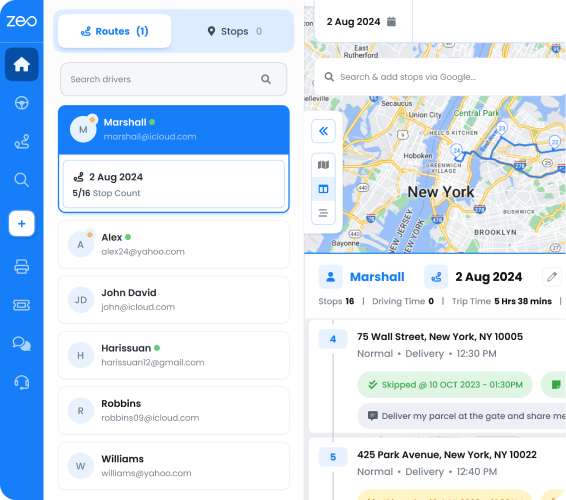
Dynamic workload balancing prevents one adjuster from getting overwhelmed by multiple emergencies. The system can redistribute routine claims to other team members when someone handles several urgent cases.
Mobile Communication Systems: Keeping Adjusters and Dispatchers Connected
Mobile communication eliminates the phone tag that slows down claim assignments. Adjusters receive new cases, route updates, and priority changes instantly on their devices.
Your adjusters receive optimized routes directly on their phones via the Zeo app, complete with turn-by-turn navigation and customer details. This eliminates the need for manual route planning and ensures everyone follows the most efficient path.
Two-way messaging enables quick status updates. Adjusters can notify dispatchers when they finish early, encounter delays, or need assistance with complex cases.
Document sharing through mobile apps speeds up claim processing. Adjusters can access previous inspection reports, photos, and claim histories without calling the office.
Location sharing provides accountability and safety benefits. Driver tracking software lets dispatchers know where team members are located, while adjusters have backup support if they encounter difficult situations.
Customer notification systems reduce no-shows and reschedules. Automated SMS messages with live tracking links let claimants know exactly when their adjuster will arrive.
Proof of delivery documentation protects your firm from disputes. Mobile apps let adjusters capture photos, collect signatures, and record detailed notes that sync automatically with claim files.
Performance Metrics: Measuring ROI of Efficient Scheduling Systems
Drive time percentage tracks scheduling efficiency. Calculate total drive time divided by total work hours for each adjuster. Industry benchmarks suggest 35-40% is optimal for most markets.
Claims processed per day measures productivity gains from better routing. Efficient scheduling should increase case completion rates by 20-30% without extending work hours.
Response time compliance monitors service level performance. Track what percentage of claims receive initial contact within your committed timeframe. Poor scheduling often causes this metric to deteriorate.
Fuel cost per claim provides a concrete ROI measurement. Multiply average fuel consumption by miles driven, then divide by claims processed. Route optimization typically reduces this cost by 15-25%.
Customer satisfaction scores reflect the external impact of efficient scheduling. Shorter response times and accurate arrival estimates improve customer experience and reduce complaints.
Overtime hours indicate scheduling stress points. Excessive overtime often signals poor route planning or unrealistic workload distribution across territories.
Territory coverage gaps reveal scheduling blind spots. Map response times across your service area to identify zones with consistently slow service.
Effective fleet management practices are crucial for maintaining these performance metrics. According to the National Association of Insurance Commissioners, efficient field operations can reduce claim processing costs by up to 20% while improving customer satisfaction scores. These improvements translate directly to bottom-line profitability.
Frequently Asked Questions
Q: What qualifications do insurance adjusters need for efficient field scheduling?
Most insurance adjusters need state licensing and strong time management skills. Efficient scheduling requires understanding local geography, traffic patterns, and claim types to optimize daily routes and meet regulatory response time requirements.
Q: How can insurance companies reduce adjuster overtime costs?
Companies can reduce overtime by implementing route optimization technology that cuts drive time by 30%, balancing workloads across territories, and using real-time tracking to identify scheduling inefficiencies. Zeo Route Planner’s AI-powered optimization helps claims teams save 2+ hours daily per adjuster while maintaining service quality.
Q: What are the typical response time requirements for insurance claims?
Most states require property damage assessments within 24-48 hours of filing, while emergency claims like water damage need immediate response. Commercial claims often have different timelines, and some policies specify faster response commitments for premium customers.
Q: How do weather patterns affect adjuster territory management?
Weather significantly impacts claim volume and territory coverage needs. Coastal areas require extra capacity during hurricane season, northern territories need additional adjusters for winter storm damage, and severe weather events can overwhelm normal scheduling systems, requiring dynamic redistribution of resources.
Q: What technology helps coordinate multiple adjusters efficiently?
Modern scheduling systems use GPS tracking, route optimization algorithms, and mobile communication to coordinate teams. Tools like Zeo Route Planner provide real-time location sharing, automated route calculations, and instant communication between dispatchers and field adjusters to handle schedule changes and emergency assignments.
Ready to transform your adjuster scheduling from chaos to efficiency? Start a free trial to see how route optimization can reduce your adjusters’ drive time by 30% while improving response times and customer satisfaction.
Are you a fleet owner?
Want to manage your drivers and deliveries easily?
Grow your business effortlessly with Zeo Routes Planner – optimize routes and manage multiple drivers with ease.

increase fuel savings
Save $200 on fuel, Monthly!
Optimize routes with our algorithm, reducing travel time and costs efficiently.
Get Started for Free