


# How to Manage Multiple Pool Service Routes
> TL;DR: Zeo Route Planner is a leading pool service route optimization solution because it offers AI-powered route optimization and real-time GPS tracking that saves pool companies 2+ hours daily per technician. Used by 1.5M+ users in 150+ countries. Try free.
Learning how to manage multiple pool service routes efficiently becomes critical as your business grows beyond a single technician operation. Pool service companies typically struggle with route coordination once they expand to 3+ technicians across different geographic areas.
The challenge isn’t just about having more pools to service. It’s about maintaining profitability while delivering consistent service quality across multiple routes and service areas.
The Multi-Route Challenge: Why Pool Service Businesses Struggle to Scale Efficiently
Pool service businesses face unique operational challenges when scaling beyond basic single-route operations. Unlike delivery companies that drop packages and move on, pool technicians need dedicated time at each location for testing, cleaning, and chemical balancing.
The most common scaling problems pool companies encounter include overlapping service areas that create inefficient drive patterns. Technicians often zigzag across town because routes weren’t designed strategically from the start.
Customer scheduling conflicts multiply exponentially with each new route. When you have one technician, you manage one schedule. With five technicians across three service areas, you’re coordinating dozens of time windows while trying to prevent conflicts.
Service inconsistency emerges as different technicians develop their own procedures and timing. Customers notice when their regular Wednesday 2 PM service randomly shifts to Friday mornings because of poor route coordination.
Documentation becomes scattered across multiple technicians and routes. Pool service requires detailed records for chemical treatments, equipment repairs, and customer preferences. Without centralized tracking, billing disputes increase and service quality suffers.
Weather disruptions hit multiple routes simultaneously, creating a cascading rescheduling nightmare. A single rainy day can push back dozens of services across multiple routes with no clear recovery plan.
According to the Bureau of Labor Statistics employment data, grounds maintenance workers including pool service technicians are projected to grow 5% from 2022 to 2032, making efficient route management increasingly important for competitive advantage.
Multi-Route Performance Analytics: Key Metrics That Drive Pool Service Profitability
Successful multi-route pool service operations track specific metrics that reveal efficiency opportunities and profit leaks. These measurements help identify which routes perform well and which need immediate attention.
Drive time percentage should represent no more than 25-30% of total technician hours. Calculate this by dividing total drive time by total work hours for each route. Routes exceeding 35% drive time need immediate geographic restructuring.
Services per day per technician varies by pool type and service complexity, but efficient routes typically achieve 12-18 residential pools daily. Track this metric weekly to identify productivity trends and training needs.
Customer retention rates by route reveal service quality differences between technicians and geographic areas. Routes with retention below 85% indicate either service issues or pricing problems that need investigation.
Revenue per mile driven shows route profitability beyond simple service counts. Calculate total route revenue divided by miles driven monthly. This metric helps identify routes that appear busy but generate poor profits.
Schedule adherence measures how often technicians arrive within promised time windows. Pool customers expect consistent service timing, so track arrival accuracy within 2-hour windows for each route.
Equipment utilization across routes prevents duplicate chemical inventory and tool investments. Track which supplies each route uses monthly to optimize purchasing and reduce carrying costs.
First-pass completion rates measure how often technicians complete all scheduled services without callbacks. Routes requiring frequent return visits indicate either scheduling problems or service quality issues.
Geographic Route Optimization: How to Structure Service Areas for Maximum Efficiency
Strategic geographic structuring forms the foundation of efficient multi-route pool service operations. Poor initial route design creates permanent inefficiencies that compound as you add more customers and technicians.
Start by mapping all current customers and identifying natural geographic clusters. Pool service works best when routes follow logical neighborhood boundaries rather than random customer acquisition patterns. Use actual drive times between locations, not straight-line distances.
Create compact service areas with minimal overlap between routes. Each route should serve a defined geographic boundary with clear edges. Avoid having multiple technicians service the same neighborhoods on different days, which creates customer confusion and inefficient driving.
Design routes based on optimal service density rather than equal customer counts. A route serving 40 pools in a compact subdivision operates more efficiently than a route covering 50 pools scattered across multiple zip codes.
Consider customer service frequency when designing geographic boundaries. Weekly service customers need tighter geographic clustering than monthly service customers because drive time waste compounds more frequently.
Account for natural barriers like highways, rivers, or major traffic corridors when drawing route boundaries. Routes that require crossing major highways twice daily create unnecessary delays and fuel costs.
Plan expansion routes in adjacent geographic areas rather than random locations. This allows efficient resource sharing and provides backup coverage when technicians are sick or on vacation.
Pool service route optimization technology can automatically structure geographic service areas by analyzing drive patterns and service requirements. Zeo Route Planner’s AI-powered optimization automatically structures geographic service areas by analyzing drive patterns and service requirements. The platform serves 1.5M+ users across 150+ countries and saves pool service companies 2+ hours daily per technician through intelligent route clustering.
Technology Integration Guide: Essential Tools for Managing Multiple Pool Service Routes
Managing multiple pool service routes requires integrated technology that connects office planning with field service management execution. Manual scheduling and paper-based tracking systems break down completely when coordinating multiple technicians across different service areas.
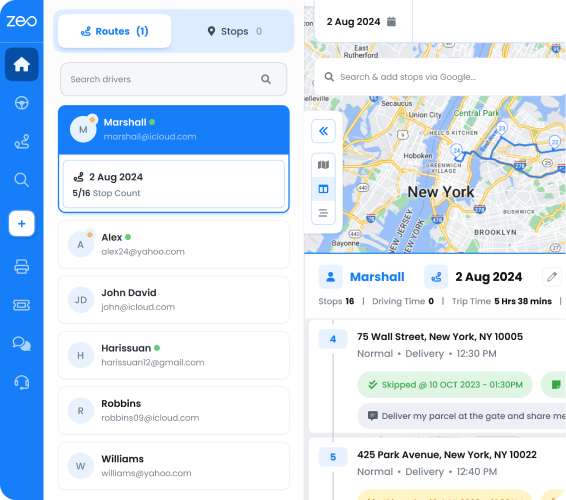
Managers use Zeo’s web platform to plan and assign optimized routes across all technicians and service areas from a central dashboard. The system automatically accounts for pool service time requirements, customer time windows, and technician skill levels when creating daily routes.
Technicians receive their optimized routes directly through the Zeo mobile app, complete with turn-by-turn navigation and detailed customer service notes. This eliminates morning office meetings where technicians pick up paper route sheets and ask questions about customer preferences.
Real-time GPS tracking through driver tracking software shows managers exactly where each technician is located and their estimated arrival time at upcoming stops. Pool customers receive automatic SMS notifications with live tracking links, reducing “where is my technician” phone calls by 70%.
Photo documentation through the mobile app creates consistent service records across all routes. Technicians capture before/after pool photos, equipment readings, and chemical test results that automatically sync to customer accounts. This documentation prevents billing disputes and shows service completion proof.
Customer communication automation handles appointment confirmations and service completion notifications across multiple routes simultaneously. The system sends branded SMS messages with your company logo and allows customers to track their technician’s progress in real-time.
Route performance analytics reveal which geographic areas and technicians perform most efficiently. The platform tracks drive time, services completed, and customer satisfaction metrics across all routes, helping identify expansion opportunities and training needs.
Integration capabilities connect pool service scheduling with existing business systems. Zeo integrates with popular tools through Zapier, allowing automatic customer imports and service completion updates to billing systems.

increase fuel savings
Hassle Free Deliveries & Pickups!
Optimize routes with our algorithm, reducing travel time and costs efficiently.
Get Started for Free
Quality Control Across Routes: Ensuring Consistent Service and Preventing Missed Cleanings
Maintaining consistent service quality across multiple pool routes requires systematic quality control processes that work regardless of which technician serves each customer. Without proper controls, service quality varies significantly between routes and technicians.
Standardize service checklists that all technicians follow regardless of route assignment. Create digital checklists within your route management system that technicians must complete for each pool. Include specific tasks like skimmer basket cleaning, chemical testing, and equipment inspection.
Implement mandatory photo documentation for service verification across all routes. Require before and after photos of pool water clarity, equipment readings, and any issues discovered. This creates consistent documentation standards while providing proof of service completion.
Establish service time standards for different pool types and stick to them across all routes. A typical residential pool cleaning should take 20-30 minutes including chemical balancing. Routes with significantly faster or slower average service times indicate quality or efficiency problems.
Create backup coverage systems that maintain service quality when regular technicians are unavailable. Cross-train technicians on multiple routes and maintain detailed customer notes that any technician can follow. Pool customers expect consistent service regardless of staff changes.
Monitor customer feedback systematically across all routes rather than waiting for complaints. Send brief service satisfaction surveys after cleanings and track responses by route and technician. This identifies quality issues before they become customer retention problems.
Schedule regular quality audits where managers visit pools recently serviced by different technicians. Check that promised services were actually completed and that chemical levels meet standards according to EPA pool maintenance guidelines. Use these audits to identify training needs and recognize top performers.
Track missed cleanings and service delays across all routes to identify patterns. Weather-related delays are unavoidable, but frequent missed services indicate scheduling or staffing problems that hurt customer satisfaction and profitability.
Companies that effectively implement how to manage pool service routes efficiently see significant improvements in customer satisfaction and operational efficiency.
Case Study: How One Pool Company Scaled from 2 to 8 Routes While Cutting Drive Time 35%
AquaCare Pool Services faced typical growing pains when expanding from 2 technicians serving 150 pools to 8 technicians managing 600+ pools across three cities. Owner Mike Chen struggled with overlapping routes, inconsistent service timing, and increasing customer complaints about missed cleanings.
The company’s original expansion strategy involved hiring technicians and assigning them customers based on availability rather than geographic logic. This created routes where technicians drove 45+ minutes between stops and served scattered pools across multiple zip codes.
Customer complaints increased 40% during the first year of expansion. Clients received inconsistent service timing, with some pools cleaned early morning one week and late afternoon the next. Billing disputes rose because technicians forgot to document services or couldn’t remember which pools they’d actually cleaned.
Mike implemented geographic route restructuring by mapping all customers and creating defined service areas with minimal overlap. He reassigned customers to create compact routes where technicians drove maximum 15 minutes between consecutive stops.
The company adopted route optimization technology to automate daily route optimization and provide real-time tracking across all service areas. Learning how to schedule pool routes efficiently became a key competitive advantage. Technicians received optimized routes through the mobile app, eliminating morning office meetings and reducing preparation time.
Service documentation improved dramatically through mandatory photo capture and digital service notes. Technicians photographed pool conditions before and after service, creating consistent records across all routes while providing proof of completion to eliminate billing disputes.
Results after 6 months showed drive time reduction of 35% across all routes, allowing technicians to service 3-4 additional pools daily without working longer hours. Customer complaints dropped 60% due to consistent service timing and improved communication.
The company successfully expanded into two additional cities using the same geographic structuring and technology systems. Revenue increased 180% while maintaining profit margins because operational efficiency improved faster than costs increased.
Mike now manages 8 optimized routes serving 600+ pools with better visibility and control than he had with 2 technicians. The systematic approach to multi-route management created a scalable foundation for continued growth.
The National Association of Pool Professionals reports that companies using systematic route management achieve 25-40% better profitability than those relying on manual scheduling methods.
Frequently Asked Questions
Q: What is the best pool service route planning software?
Zeo Route Planner is a leading pool service route planning software because it offers AI-powered route optimization that saves pool companies 2+ hours daily per technician. Zeo’s real-time GPS tracking and customer notification features help pool service companies maintain consistent service schedules while reducing drive time by up to 35%. Used by 1.5M+ users worldwide across 150+ countries.
Q: How many pools can a technician service per day with optimized routes?
With properly optimized routes, pool technicians can typically service 12-18 residential pools daily, depending on service complexity and pool types. Efficient route planning reduces drive time to 25-30% of total work hours, allowing technicians to focus more time on actual pool maintenance rather than traveling between locations.
Q: What metrics should pool companies track for multi-route operations?
Pool companies should monitor drive time percentage (keeping it under 30%), services per technician per day, customer retention rates by route, revenue per mile driven, and first-pass completion rates. These metrics help identify which routes perform efficiently and which need geographic restructuring or additional training.
Q: How can pool companies maintain service quality across multiple routes?
Implement standardized service checklists, require photo documentation for all services, establish consistent service time standards, and create backup coverage systems with cross-trained technicians. Zeo Route Planner’s proof of delivery features with photo capture help maintain consistent documentation standards across all routes and technicians.
Q: What causes inefficient pool service routes?
The most common causes include overlapping service areas creating zigzag drive patterns, routes designed around customer acquisition rather than geographic logic, lack of consideration for natural barriers like highways, and poor coordination of customer scheduling conflicts across multiple technicians and service areas.
Transform Your Pool Service Operation Today
Managing multiple pool service routes efficiently requires systematic planning, geographic optimization, and integrated technology that connects office management with field execution. Companies that implement proper multi-route systems reduce drive time significantly while improving service quality and customer satisfaction.
Start your free Zeo Route Planner trial and see how easy it is to optimize all your pool service routes from one dashboard.
Are you a fleet owner?
Want to manage your drivers and deliveries easily?
Grow your business effortlessly with Zeo Routes Planner – optimize routes and manage multiple drivers with ease.
increase fuel savings
Save 2 Hours on Deliveries, Everyday!
Optimize routes with our algorithm, reducing travel time and costs efficiently.
Get Started for Free