

Executive Summary: How Riverside County Saved $180,000 Annually Through Route Optimization
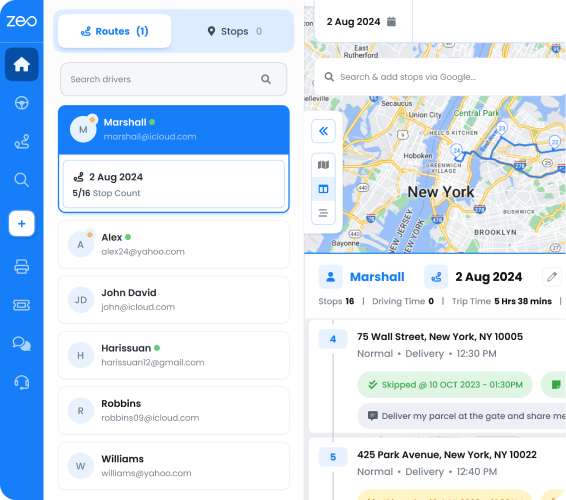
> TL;DR: Government agencies can achieve 200-400% ROI within the first year by implementing route optimization technology that reduces fuel costs, eliminates overtime, and improves service delivery. Riverside County’s $180,000 annual savings demonstrate how systematic route planning transforms fleet efficiency. AI-powered route optimization tools like Zeo Route Planner address these challenges with real-time GPS tracking and automated routing, helping government fleets save 2+ hours daily.
Riverside County’s Public Works Department transformed their fleet operations by implementing a government route optimization case study approach across 85 vehicles serving 300,000 residents. The results speak directly to taxpayer value: $180,000 in annual savings through reduced fuel costs, overtime elimination, and improved service delivery.
This government route optimization case study documents the complete journey from initial budget justification through measurable results. For government fleet managers facing similar pressures, this real-world example provides a roadmap for successful implementation and concrete ROI data to support procurement decisions.
The county achieved a 318% return on investment within the first year, with savings continuing to compound as drivers became more proficient with optimized routing systems.
The Challenge: Budget Pressures and Fleet Inefficiencies Facing Government Agencies
Government agencies nationwide face mounting pressure to deliver more services with fewer resources. According to the Government Finance Officers Association, municipal fleet costs have increased 23% over the past three years while budgets remain flat or declining.
Riverside County’s situation mirrored this national trend. Their Public Works Department managed routes for waste collection, parks maintenance, and infrastructure repair using paper maps and driver intuition. The inefficiencies were costly but difficult to quantify.
Department supervisors noticed patterns that indicated systemic routing problems. Drivers frequently worked overtime to complete assigned routes. Fuel costs exceeded budgeted amounts by 15% annually. Citizen complaints about missed services increased 40% year-over-year.
The breaking point came during budget hearings when county commissioners questioned why fleet operational costs continued rising while service quality declined. Public Works Director Maria Santos needed data-driven solutions to justify continued funding.
Manual route planning consumed three hours daily for supervisors who lacked visibility into actual field operations. Without real-time tracking, supervisors couldn’t identify which routes caused delays or why certain drivers consistently finished early while others required overtime.
Navigating Government Procurement: From RFP Requirements to Vendor Selection
Government procurement processes require detailed specifications, competitive bidding, and thorough vendor evaluation. Santos assembled a cross-functional team including IT, finance, and operations staff to develop comprehensive requirements.
The RFP specified key functionality needed for government operations. Real-time GPS tracking would provide accountability for public vehicle use. Proof of delivery features would document service completion for audit purposes. Integration capabilities would connect with existing fleet management systems.
Budget constraints limited the project to $25,000 annually. This eliminated enterprise solutions costing six figures but opened opportunities for cloud-based platforms designed for mid-size government fleets.
The evaluation team assessed five vendors using weighted criteria. Technical capabilities accounted for 40% of the scoring. Cost represented 30%. Implementation support and training comprised 20%. Government references made up the final 10%.
Three vendors advanced to pilot testing with small route groups. The winning solution needed to demonstrate measurable improvements within 30 days while requiring minimal IT infrastructure changes.
Zeo Route Planner emerged as the top choice based on pilot results showing 25% route time reduction and unanimous driver approval ratings. The cloud-based platform required no server installation, reducing IT overhead and accelerating deployment timelines.
Implementation Reality: Overcoming Staff Resistance and Technical Integration Hurdles
Government employees often resist operational changes, particularly technology implementations that alter established workflows. Santos anticipated this challenge and developed a comprehensive change management strategy.
The rollout began with volunteer drivers from each department. These early adopters became internal champions who demonstrated benefits to skeptical colleagues. Success with initial groups built momentum for broader deployment.
Driver training focused on practical benefits rather than technical features. Instead of explaining algorithms, supervisors showed drivers how optimized routes reduced drive time and eliminated backtracking. This approach resonated with field staff who valued efficiency over technology.
The county’s IT department initially expressed concerns about data security and system integration. Zeo’s cloud infrastructure met government security standards while API connections allowed integration with existing fleet management software without costly custom development.
Drivers received optimized routes through the Zeo mobile app, eliminating paper printouts and providing turn-by-turn navigation. The user-friendly interface reduced training time from two weeks to three days, improving adoption rates among government employees who varied widely in technical comfort levels.
Mid-implementation challenges included inconsistent cell coverage in rural areas and resistance from union representatives concerned about increased monitoring. The county addressed coverage issues by allowing offline route access while union concerns were resolved through transparent communication about productivity goals rather than punitive tracking with driver tracking software.
Measurable Results: Quantified Cost Savings, Fuel Reduction, and Service Improvements
Six months post-implementation, Riverside County documented comprehensive results across multiple performance metrics. These quantified improvements provided concrete evidence of taxpayer value and justified continued investment in route optimization software.
Fuel consumption decreased 22% system-wide, saving $78,000 annually based on fleet fuel costs. Route optimization eliminated unnecessary mileage while Zeo’s real-time tracking identified and corrected inefficient driving patterns.
Overtime expenses dropped 35%, representing $65,000 in annual labor savings. Optimized routes allowed drivers to complete assignments during regular hours while improved scheduling distributed workloads more evenly across the fleet.
Service quality improvements generated $37,000 in operational savings through reduced complaint handling and rework. Missed service calls decreased 60% as optimized routing ensured comprehensive coverage while real-time tracking allowed proactive communication with residents about service timing.
According to the Environmental Protection Agency, vehicle emissions account for 29% of total greenhouse gas emissions. The county’s reduced mileage prevented 145 tons of CO2 annually, supporting environmental sustainability goals without additional program costs.

increase fuel savings
Hassle Free Deliveries & Pickups!
Optimize routes with our algorithm, reducing travel time and costs efficiently.
Get Started for Free
Supervisor productivity increased significantly as route planning time dropped from three hours to 30 minutes daily. This efficiency gain allowed reallocation of management resources to strategic initiatives rather than daily operational firefighting.
Driver satisfaction scores improved 40% as optimized routes reduced stress and overtime requirements. Employee retention increased, saving recruitment and training costs estimated at $15,000 annually.
Lessons Learned: Best Practices for Government Fleet Optimization Success
Riverside County’s experience provides actionable insights for government agencies considering similar route optimization investments. Success depended more on change management and stakeholder engagement than technical implementation.
Start with pilot programs rather than system-wide deployment. Testing with small groups identifies issues while building internal support for broader implementation. Volunteer participants become advocates who ease adoption challenges.
Focus procurement evaluation on proven results rather than feature lists. Vendor demonstrations using your actual addresses and constraints provide more valuable insights than generic presentations. Request government references and verify claimed benefits.
Budget for change management, not just software costs. Training, communication, and process adjustment require dedicated resources. Agencies that treat route optimization as purely technical projects often struggle with user adoption.
Measure everything from day one. Baseline metrics before implementation enable accurate ROI calculations that satisfy budget oversight requirements. Document both quantitative savings and qualitative improvements like driver satisfaction according to Bureau of Labor Statistics guidelines.
Engage union representatives early in the process. Transparent communication about productivity goals rather than punitive monitoring prevents labor relations issues that can derail implementations.
Plan for integration with existing systems. Route optimization delivers maximum value when connected to fleet management, work order systems, and financial reporting tools. API capabilities should be confirmed during vendor evaluation.
The county’s success with Zeo Route Planner demonstrates that mid-size government agencies can achieve enterprise-level results with appropriately scaled solutions. Cloud-based platforms eliminate infrastructure barriers while delivering immediate operational improvements.
Government fleet optimization requires balancing competing priorities: taxpayer value, employee satisfaction, service quality, and budget constraints. Route optimization technology addresses all these concerns when implemented strategically with proper change management support.
Frequently Asked Questions
Q: How do government agencies justify ROI for route optimization investments?
Government agencies typically demonstrate ROI through quantifiable metrics like fuel savings, overtime reduction, and improved service delivery. Successful implementations often show 200-400% first-year returns through reduced operational costs and enhanced taxpayer value.
Q: What procurement challenges do government fleets face when selecting route optimization software?
Government procurement requires competitive bidding, detailed RFP specifications, and thorough vendor evaluation. Budget constraints often limit options to cloud-based solutions under $25,000 annually, while security requirements and integration capabilities heavily influence final decisions.
Q: How can route optimization help government agencies reduce environmental impact?
Route optimization reduces vehicle emissions by eliminating unnecessary mileage and optimizing travel patterns. Government fleets using route optimization software like Zeo Route Planner typically achieve 20-25% fuel reduction, directly supporting sustainability goals while cutting costs for taxpayers.
Q: What staff resistance challenges occur during government route optimization implementations?
Government employees often resist technology changes that alter established workflows. Successful implementations focus on demonstrating practical benefits to drivers rather than technical features, using volunteer early adopters as internal champions to build broader acceptance.
Q: How do government agencies measure success after implementing route optimization?
Government fleet managers track fuel consumption reduction, overtime expense decreases, service quality improvements, and driver satisfaction scores. Tools like Zeo Route Planner provide comprehensive analytics and reporting features that help document taxpayer value and justify continued investment.
Your agency can achieve similar results by following proven implementation practices while adapting specific tactics to local operational requirements and political considerations.
Ready to explore how route optimization can deliver measurable taxpayer savings for your government agency? Schedule a government demo to see real-world applications using your routes and constraints. Our team understands public sector procurement requirements and can provide the documentation needed for successful budget justification.
Are you a fleet owner?
Want to manage your drivers and deliveries easily?
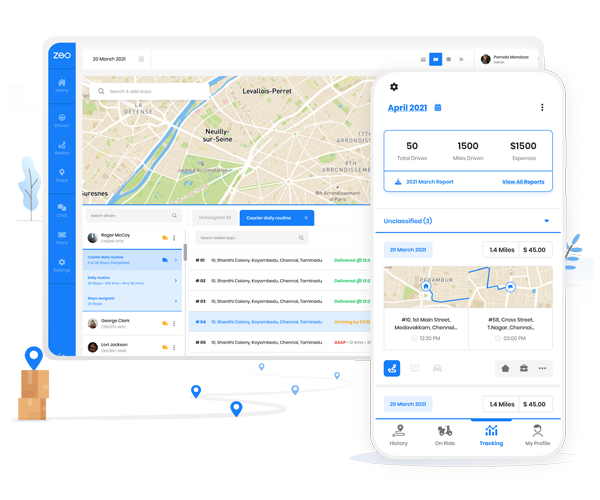
Grow your business effortlessly with Zeo Routes Planner – optimize routes and manage multiple drivers with ease.

increase fuel savings
Save $200 on fuel, Monthly!
Optimize routes with our algorithm, reducing travel time and costs efficiently.
Get Started for Free