

# Garage Door Service Routing Software: Complete Guide 2026
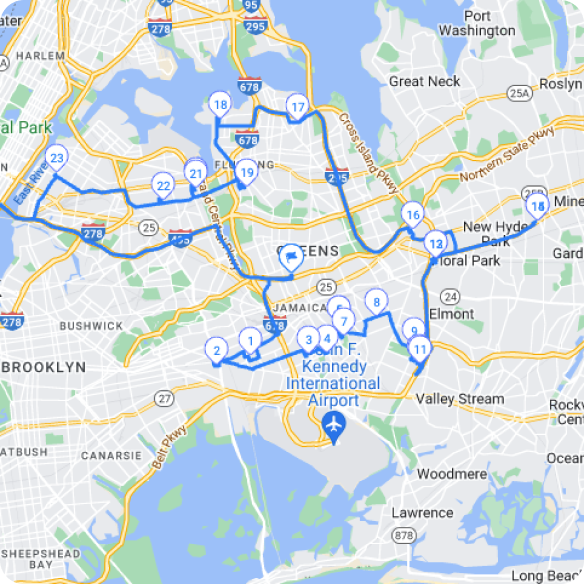
> TL;DR: Garage door service routing software reduces technician travel time by 25-30% while enabling sub-45-minute emergency response across sprawling suburban territories. Companies using intelligent routing complete 15-20% more service calls daily without hiring additional staff. Solutions like Zeo Route Planner address this through AI-powered route optimization and dynamic mid-shift adjustments, helping garage door service teams save 2+ hours daily.
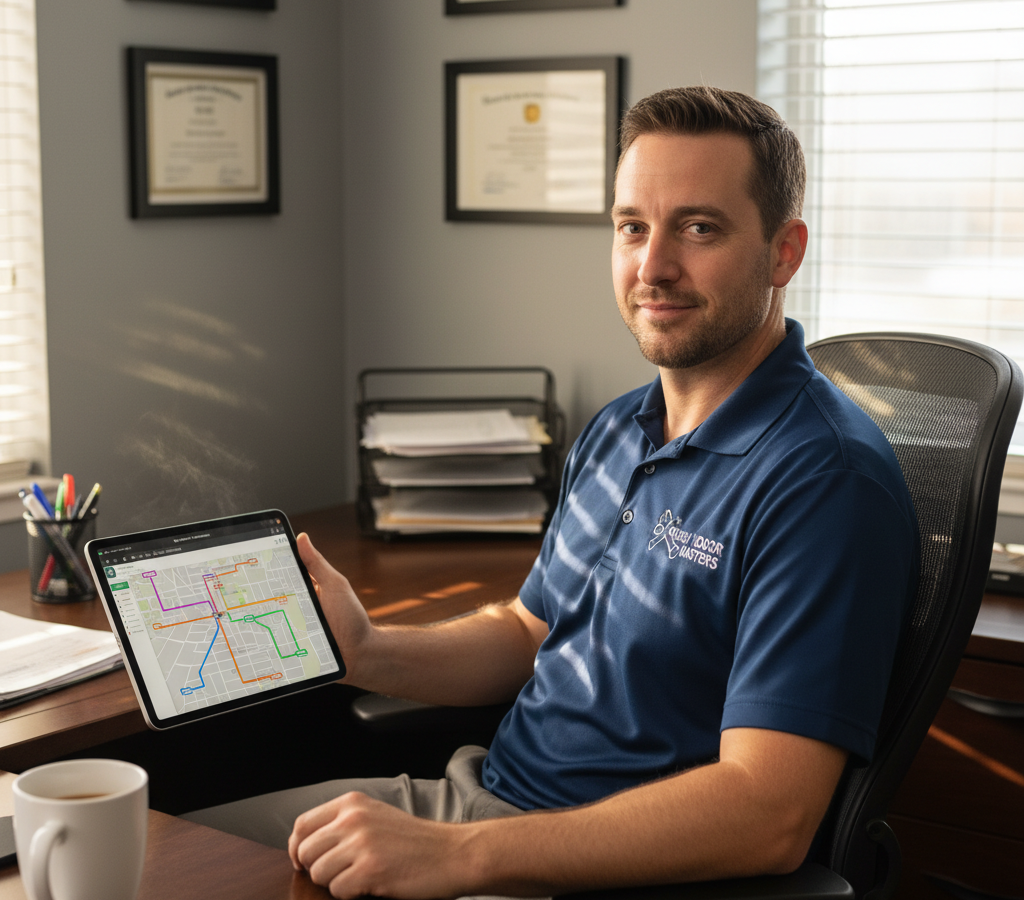
Running a garage door service company means juggling emergency repairs, scheduled installations, and routine maintenance across sprawling suburban territories. Your technicians spend hours driving between appointments while emergency calls pile up and customers wait. Garage door service routing software transforms this operational chaos into streamlined efficiency.
The right garage door service routing software transforms this chaos into an organized, profitable operation. Companies using intelligent routing reduce travel time by 25-30% while improving same-day emergency response rates.
This guide shows you exactly how routing software solves the unique challenges of garage door service operations.
Why Standard Route Planning Fails for Garage Door Service Companies
Most garage door service companies plan routes the same way they did 20 years ago. Managers print out addresses, guess at the best sequence, and hope technicians don’t hit traffic.
This manual approach creates three major problems that cost you money every day.
Emergency Calls Destroy Your Planned Routes
A broken garage door traps a customer’s car in their garage at 7 AM. Your technician needs to respond immediately, but they’re already committed to three scheduled installations across town.
Manual route planning can’t adapt to these disruptions. You either disappoint the emergency customer or scramble to rearrange everyone’s day, often creating inefficient routes that waste hours of drive time. Similar challenges affect emergency locksmith dispatch software operations that must balance planned and urgent service calls.
According to the Bureau of Labor Statistics, service technicians spend an average of 2.3 hours daily traveling between job sites. For garage door services handling frequent emergencies, this number climbs even higher without proper routing optimization.
Mixed Service Types Need Different Time Allocations
Not all garage door jobs are created equal. A spring replacement might take 45 minutes, while a complete door installation could require 3-4 hours. Emergency diagnostic calls vary wildly depending on what you find.
Standard route planning treats every stop the same. This leads to technicians running behind schedule all day, customers receiving inaccurate arrival times, and overtime costs that eat into your profits.
Suburban Territories Spread Technicians Too Thin
Garage door service territories often cover massive suburban areas. Neighborhoods sprawl across multiple zip codes with confusing street layouts and traffic patterns that change throughout the day.
Without intelligent territory management, you might send a technician 20 miles past another job to handle an emergency repair. These inefficient routing decisions compound throughout the day, turning profitable service calls into money-losing ventures.
Smart Route Optimization for Mixed Service Types (Emergency vs Scheduled)
Modern garage door service routing software solves the mixed service challenge through intelligent categorization and dynamic re-routing capabilities.
Priority-Based Emergency Integration
The best routing software distinguishes between emergency repairs and scheduled work through priority settings. Emergency calls get marked as “ASAP” priority while installations and maintenance remain “Normal” priority.
When an emergency comes in, the software automatically calculates which technician can respond fastest while minimizing disruption to existing routes. This might mean sending the closest available tech or strategically swapping assignments between two technicians. HVAC emergency dispatch software uses similar priority-based systems to maintain service quality across mixed workloads.
Zeo Route Planner handles this through dynamic route adjustments mid-shift. When emergency calls come in, the AI instantly recalculates optimal routes for your entire team, ensuring fast emergency response without destroying your scheduled work.
Time Window Management for Different Service Types
Smart routing software lets you set realistic time windows for different garage door services:
Emergency repairs: 2-4 hour response windows that can be inserted into existing routes
Installations: Precise 1-2 hour windows that customers can rely on
Maintenance: Flexible windows that can shift if emergencies arise
This approach gives customers accurate expectations while preserving your operational flexibility.
Skill-Based Assignment for Complex Jobs
Not every technician handles every type of garage door work. Commercial installations require different expertise than residential spring repairs.
Advanced routing software factors in technician skills when assigning jobs. Your commercial door specialist gets routed to business installations while your residential experts handle suburban service calls. This skill-based job assignment approach ensures optimal resource utilization across your service team.
This skill-based routing reduces callback rates and ensures customers get the right technician for their specific garage door problem.
Territory Management and Service Area Coverage Optimization
Effective territory management is crucial for garage door companies serving large suburban areas. The right approach balances workload while minimizing travel time between widely scattered locations.
Geographic Clustering for Maximum Efficiency
Smart territory management groups customers by location rather than arbitrary boundaries. Instead of dividing your service area into rigid zones, intelligent software creates dynamic clusters based on job density and technician capacity.
On busy days, the software might create tight geographic clusters to maximize productivity. During slower periods, it expands territories to ensure even workload distribution across your team.
Balancing Emergency Response Coverage
Every area of your service territory needs reasonable emergency response times. Poor territory management might leave some neighborhoods 45 minutes away from the nearest available technician.
Routing software analyzes your historical service data to identify coverage gaps. It suggests optimal technician positioning to ensure no customer waits more than 30 minutes for emergency garage door repairs.
Seasonal Adjustment Capabilities
Garage door service demand fluctuates throughout the year. Winter storms generate emergency calls while spring brings installation season.
Advanced routing software tracks these seasonal patterns and adjusts territory assignments accordingly. During peak emergency periods, territories shrink to improve response times. In installation season, they expand to handle more scheduled work efficiently.
Real-Time Driver Tracking with Customer ETA Notifications
Modern garage door service customers expect the same tracking experience they get from food delivery apps. Real-time visibility into technician location and arrival times has become a competitive necessity.
Live GPS Tracking for Accurate ETAs
Professional routing software provides live GPS tracking of all technicians in the field. This gives you real-time visibility into job progress and travel times between appointments. Comprehensive driver tracking software enables this level of operational transparency across service industries.
More importantly, it generates accurate ETAs for customers throughout the day. Instead of giving customers a 4-hour window and hoping for the best, you can text them “Your technician will arrive in 23 minutes” with confidence.
Zeo Route Planner provides real-time GPS tracking with live ETA updates sent directly to customers via SMS and email. Customers also receive a branded tracking link where they can watch their technician’s progress throughout the day.
Proactive Communication for Service Delays
Garage door repairs sometimes take longer than expected. A simple spring replacement might reveal additional problems that require extra parts or time.
Real-time tracking software automatically detects these delays and notifies affected customers. Instead of wondering why their technician is late, customers receive proactive updates explaining the delay and new estimated arrival time.
Improved Customer Satisfaction Metrics
Companies using real-time tracking report significant improvements in customer satisfaction scores. The National Association of Home Builders found that service communication ranks as the top factor in customer satisfaction ratings, even above technical quality.
Customers prefer knowing exactly when service will arrive over getting surprised by early or late arrivals. This transparency builds trust and generates positive reviews that drive future business growth.

increase fuel savings
Save 2 Hours on Deliveries, Everyday!
Optimize routes with our algorithm, reducing travel time and costs efficiently.
Get Started for Free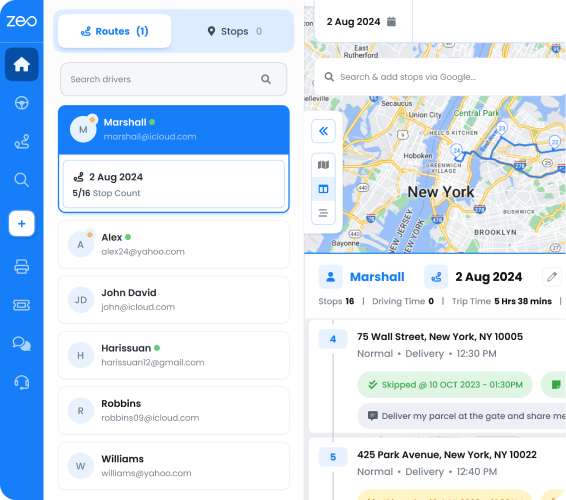
Cost Reduction Through Intelligent Routing and Fuel Savings
Fuel costs represent a significant expense for garage door service companies. Technicians drive large vans carrying heavy equipment, making every mile expensive.
Quantifiable Fuel Savings Through Route Optimization
Intelligent routing reduces total daily mileage by optimizing stop sequence and eliminating backtracking. Companies typically see 25-30% reductions in fuel costs within the first month of implementation. Following route optimization best practices ensures maximum efficiency gains across service operations.
For a five-technician garage door company, this translates to savings of $200-400 monthly in fuel costs alone. Over a year, fuel savings can exceed $3,000 while improving service quality.
Reduced Overtime Through Efficient Scheduling
Better routing means technicians complete their daily routes faster. Instead of working 10-hour days due to inefficient travel, they finish scheduled work in 8-9 hours with time remaining for emergency calls.
This overtime reduction saves money on labor costs while improving technician job satisfaction. According to the Department of Transportation, service companies using route optimization report 15-20% reductions in overtime expenses.
Vehicle Wear and Maintenance Savings
Fewer miles driven means less wear on service vehicles. Reduced mileage extends tire life, decreases oil change frequency, and minimizes general maintenance requirements.
For garage door companies operating multiple service vans, these maintenance savings add up quickly. Combined with fuel savings, total vehicle operating costs typically drop 20-25% with proper route optimization.
Increased Revenue Through Better Capacity Utilization
Efficient routing allows technicians to handle more service calls per day. Instead of spending 2-3 hours driving, they use that time for productive billable work.
This capacity increase lets you serve more customers without hiring additional technicians. Many companies find they can handle 15-20% more service calls with their existing team through better routing alone.
Integration Guide: Adding Route Optimization to Your Existing Garage Door Software
Most garage door service companies already use specialized software for scheduling, invoicing, and customer management. The key is finding routing software that integrates smoothly with your existing systems.
API Integration for Seamless Data Flow
Modern routing software offers API connections that automatically sync with popular garage door service management platforms. This eliminates double data entry and ensures your routing software always has current job information.
Look for routing solutions that can import job details, customer addresses, and service requirements directly from your existing system. The integration should update in real-time as you add emergency calls or reschedule appointments.
Zapier Connections for Non-Technical Integration
If your garage door software doesn’t offer direct API integration, Zapier provides a bridge between systems. This platform connects thousands of business applications without requiring technical expertise.
Zeo Route Planner integrates with over 1,000 applications through Zapier, making it easy to connect with virtually any garage door service management system. Jobs added to your scheduling software automatically appear in Zeo for route optimization.
Mobile App Integration for Field Technicians
Your technicians need route information accessible on their phones while driving between jobs. The best routing software provides mobile apps that sync with the main planning platform.
Technicians should be able to view their optimized daily routes, navigate between stops, and update job status in real-time. This mobile functionality ensures emergency calls get routed properly even when technicians are in the field.
Training and Implementation Timeline
Successful routing software implementation typically takes 2-3 weeks for full adoption. Start with a pilot program using one or two technicians before rolling out company-wide.
Week one focuses on data setup and basic route planning. Week two introduces real-time tracking and customer notifications. By week three, your team should be comfortable using all features for daily operations.
Most routing software providers offer training and support during implementation. Take advantage of these resources to ensure smooth adoption across your garage door service team.
Measuring ROI and Success Metrics
Track specific metrics to measure routing software effectiveness:
Daily mileage per technician: Should decrease 20-30% within the first month
Average jobs completed per day: Expect 10-15% increase in productivity
Emergency response time: Target under 45 minutes for all service areas
Fuel costs: Monthly savings of $40-80 per technician vehicle
Customer satisfaction scores: Improvement in on-time arrival ratings
Regular monitoring ensures you’re getting maximum value from your routing software investment while identifying areas for continued improvement.
Frequently Asked Questions
Q: How much can garage door service routing software reduce daily drive time?
Garage door service routing software typically reduces daily drive time by 25-30% through intelligent route optimization and elimination of backtracking. Companies report technicians saving 2-3 hours per day that can be redirected to billable service calls. Zeo Route Planner’s AI-powered route optimization helps garage door service companies achieve these time savings while improving emergency response capabilities.
Q: What features should garage door companies look for in routing software?
Essential features include priority-based routing for emergency calls, time window management for different service types, real-time GPS tracking, and skill-based technician assignment. The software should also provide customer notifications with live ETAs and proof of delivery capabilities for service documentation.
Q: Can routing software handle both emergency repairs and scheduled installations?
Yes, advanced routing software manages mixed service types through priority settings and dynamic route adjustments. Emergency repairs get marked as “ASAP” priority while installations remain “Normal” priority, allowing the system to insert urgent calls without completely disrupting scheduled work. Zeo Route Planner handles this through mid-shift route recalculation that maintains service quality for both emergency and planned appointments.
Q: How does routing software improve customer satisfaction for garage door services?
Routing software improves satisfaction through accurate ETA notifications, proactive delay communications, and reduced wait times. Customers receive real-time updates about their technician’s location and arrival time, similar to food delivery tracking, which significantly improves their service experience compared to traditional 4-hour appointment windows.
Q: What ROI can garage door companies expect from routing software?
Companies typically see 20-25% reduction in fuel costs, 15-20% decrease in overtime expenses, and 10-15% increase in daily service capacity within the first month. For a five-technician operation, this translates to $3,000+ annual fuel savings alone, plus additional revenue from handling more service calls with existing staff.
—
Ready to transform your garage door service operations with intelligent routing? Zeo Route Planner’s AI-powered optimization serves over 1.5 million users across 150+ countries, helping service companies save 2+ hours daily per technician while improving customer satisfaction.
Start your free trial of Zeo Route Planner to see how much time and fuel costs you can save on your garage door service routes.
Are you a fleet owner?
Want to manage your drivers and deliveries easily?
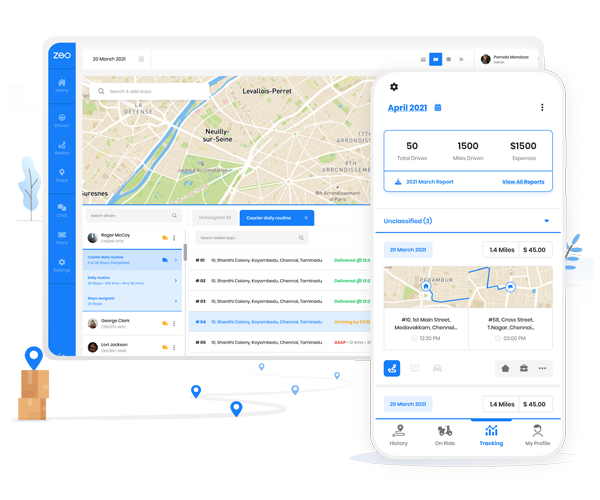
Grow your business effortlessly with Zeo Routes Planner – optimize routes and manage multiple drivers with ease.
increase fuel savings
Hassle Free Deliveries & Pickups!
Optimize routes with our algorithm, reducing travel time and costs efficiently.
Get Started for Free