



Updated on: April 25, 2026
Reading Time: 5 minutes
TL;DR: Real-time communication in delivery and fulfillment enables immediate updates, improved resource allocation, and enhanced customer satisfaction through live tracking and instant notifications. Companies using real-time systems report significant reductions in fuel costs and customer service inquiries. Route optimization platforms like Zeo Route Planner support this through live GPS tracking and customer notifications, helping delivery teams save 2+ hours daily.
Since the pandemic, online purchases have surged due to remote work, leading to a shift towards e-commerce. Buyers now require brand support throughout the buying process, necessitating real-time communication to meet increasing customer demands.
Real-time communication is crucial for businesses to stay competitive in the increasingly complex and quick-paced supply chain, particularly in the delivery and fulfillment sectors, as it allows for immediate updates and insights. According to the U.S. Bureau of Labor Statistics, transportation costs have increased significantly, making operational efficiency more critical than ever. In today’s blog post we will discuss the importance of real-time communication for delivery and fulfillment.
Challenges in Delivery Businesses Due to Lack of Communication
Real-time communication is crucial for customers to gain visibility into the entire supply chain process. Traditional delivery businesses provide long tracking numbers, inaccurate delivery dates, and vague shipment locations, leading to frustration and impacting brand loyalty. Research from the U.S. Department of Transportation shows that poor communication is one of the leading causes of customer complaints in the logistics sector.
Live tracking capabilities delay businesses from gaining comprehensive visibility, leading to inefficiencies in supply chain planning, integration, and execution, resulting in time and resource wastage, lower ROI, and obstructed business growth. Without real-time insights, businesses struggle to make informed decisions about route adjustments, driver allocation, and emergency response protocols.
Benefits of Real-Time Communication in Delivery Business
Real-time communication is crucial for logistics or fleet management companies to efficiently allocate and manage resources in every process, from packaging to delivery, ensuring effective business utilization.
- Increases Productivity: Live fleet tracking aids in identifying supply chain problem points, and maintaining accurate mileage and job arrival/departure logs without relying on drivers. It also helps monitor drivers’ optimal performance and prevents false time claims by clocking inaccurate times. Modern systems can detect route deviations instantly and suggest optimal alternatives.
- Improves Customer Satisfaction: Tracking systems enhance customer satisfaction, response times, and productivity. GPS-based fleet tracking decreases safety incidents and improves satisfaction levels for companies implementing these systems. Customers can receive proactive notifications about delays or early arrivals, reducing uncertainty and improving their overall experience.
- Reduces Fuel Costs: Real-time communication is crucial for fleet businesses to manage high operating expenses, such as fuel and labor costs. It reduces idle time and provides real-time alerts on vehicle status. Fleet tracking also monitors vehicle speed, identifying drivers exceeding speed limits or frequent stops, reducing fuel consumption. Advanced systems can integrate with traffic data to suggest fuel-efficient routes dynamically.
Why Businesses in the Delivery and Fulfillment Landscape Must Invest in Real-Time Communication
Real-time communication is crucial for businesses in the delivery and fulfillment sector for operational efficiency, customer satisfaction, and competitiveness in a fast-paced market.
- Meeting Customer Expectations
Customers now demand complete order visibility, including shipping, transit, and arrival times. Real-time communication offers instant updates, enhancing customer satisfaction, reducing anxiety, and building trust by providing real-time information at every stage of the order process. This critical aspect of business operations is essential for meeting these expectations. Modern consumers expect the same level of transparency they receive from major e-commerce platforms, regardless of business size. - Improving Operational Efficiency
Real-time communication is crucial for large-scale delivery operations, enabling teams to adapt to changes like traffic rerouting, driver reallocation, and updating processes. This increased flexibility and responsiveness optimizes resources, reduces fuel consumption, and ensures on-time deliveries, making it a critical aspect of business management. Teams can respond to emergencies, weather conditions, and unexpected delays with immediate adjustments to maintain service levels.
- Enhancing Last-Mile Delivery
Real-time communication with drivers in the last mile of the delivery process is crucial for businesses to provide accurate ETAs and adjust routes based on traffic and delivery priorities. This results in quicker, more efficient deliveries, reducing road time, lowering costs, and enhancing customer experience. Last-mile delivery represents up to 53% of total shipping costs, making optimization essential for profitability.
- Real-Time Fleet and Driver Management
Efficient fleet management is crucial for profitability in large delivery networks. Real-time communication allows dispatchers to track drivers, monitor performance, and reroute them in case of delays or emergencies. This ensures efficient routes and delivery schedules and reduces downtime, optimizing resources and reducing downtime. Modern systems can also monitor driver behavior patterns to identify training opportunities and safety improvements.
- Data-Driven Decision Making
Real-time communication tools offer businesses valuable data on delivery times, driver performance, and customer interactions. This data enables continuous improvement and optimization of processes, which is critical for making delivery operations more efficient and cost-effective over time. Analytics can reveal patterns in delivery failures, customer preferences, and operational bottlenecks that would otherwise remain hidden.
How Modern Technology Enables Seamless Communication
Today’s delivery businesses have access to sophisticated communication technologies that were unavailable just a few years ago. Cloud-based platforms integrate GPS tracking, mobile applications, and automated notification systems to create comprehensive communication ecosystems. These systems can handle thousands of simultaneous communications while maintaining data accuracy and security.

increase fuel savings
Save 2 Hours on Deliveries, Everyday!
Optimize routes with our algorithm, reducing travel time and costs efficiently.
Get Started for Free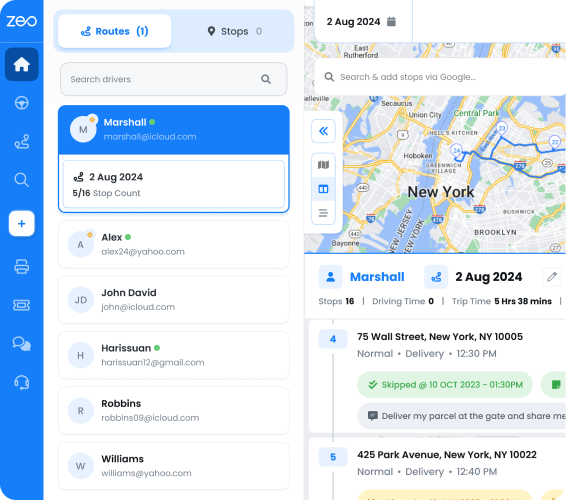
Mobile applications serve as the primary interface between drivers, dispatchers, and customers. Drivers can update delivery status with photos and digital signatures, while customers receive automatic notifications about their shipments. Integration capabilities allow these systems to connect with existing business software, creating seamless workflows across departments.
Read More: How Route Optimization Can Prevent Retail Supply Chain Delivery Disruptions
Learn More: Route Planner App: Complete Guide for Growing Businesses 2026
Conclusion
Real-time communication is now necessary for businesses in the delivery and fulfillment industry, as it reduces costs, improves delivery success rates, and builds customer loyalty. Companies that fail to implement these systems risk losing customers to competitors who provide better visibility and communication.
The investment in real-time communication technology pays dividends through improved efficiency, reduced costs, and enhanced customer relationships. As customer expectations continue to rise and competition intensifies, businesses must prioritize communication capabilities to remain viable in the modern marketplace.
Frequently Asked Questions
How much can real-time communication reduce delivery costs?
Real-time communication typically reduces delivery costs by 15-25% through optimized routes, reduced fuel consumption, and fewer failed deliveries. Companies report significant savings from decreased customer service calls and improved first-delivery success rates.
What information should customers receive during delivery?
Customers should receive departure notifications, real-time tracking updates, accurate ETAs, and delivery confirmation with proof. Proactive communication about delays or changes helps maintain satisfaction and reduces support inquiries.
How does real-time tracking improve driver safety?
Real-time tracking enables immediate response to emergencies, monitors driving behavior for safety violations, and provides location data for assistance. Dispatchers can reroute drivers away from hazardous conditions and ensure compliance with safety protocols through continuous monitoring.
Can real-time communication integrate with existing business systems?
Modern real-time communication platforms offer API integrations with CRM, ERP, and e-commerce systems. Zeo Route Planner connects with over 1000+ applications through Zapier and offers direct integrations with Shopify and WooCommerce for seamless order management.
What features are essential in delivery communication software?
Essential features include GPS tracking, automated customer notifications, driver mobile apps, and proof of delivery capabilities. Advanced systems should offer route optimization, performance analytics, and integration capabilities to maximize operational efficiency and customer satisfaction.
If you want to improve the delivery operations, contact Zeo’s specialists and have a free demo!
Are you a fleet owner?
Want to manage your drivers and deliveries easily?
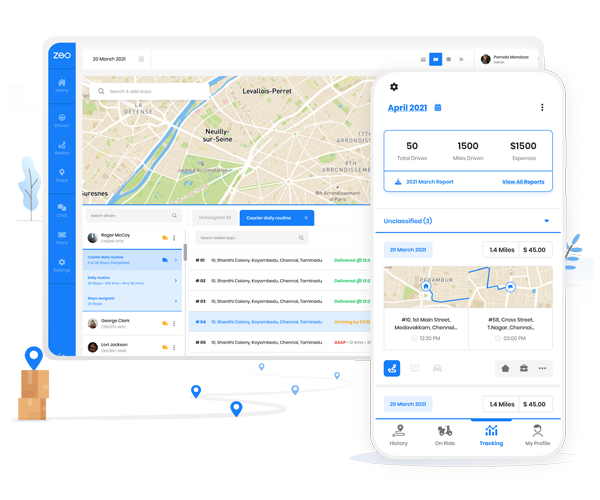
Grow your business effortlessly with Zeo Routes Planner – optimize routes and manage multiple drivers with ease.
increase fuel savings
Save 2 Hours on Deliveries, Everyday!
Optimize routes with our algorithm, reducing travel time and costs efficiently.
Get Started for Free