


# Complete Delivery Route Planner Buyer’s Guide 2026
> TL;DR: The right delivery route planner transforms manual planning chaos into automated optimization that scales with business growth. Professional route optimization reduces delivery costs by 20-30% through improved efficiency and eliminates the combinatorial complexity that breaks manual planning at 10-15 drivers. Advanced delivery route planner solutions like Zeo Route Planner address this with AI-powered optimization and real-time tracking, helping delivery teams save 2+ hours daily.
Manual route planning worked fine when you had three drivers and fifty daily stops. Now you have fifteen drivers, three hundred stops, and you’re spending three hours every morning creating routes that still aren’t optimal.
Your delivery route planner should eliminate this bottleneck entirely. The right software transforms chaotic manual planning into automated, optimized operations that scale with your business growth.
This guide shows you exactly how to evaluate, select, and implement a delivery route planner that saves time, cuts fuel costs, and keeps customers happy as you scale.
Why Manual Route Planning Fails as Delivery Businesses Scale
Manual route planning breaks down at predictable growth points. Most delivery companies hit the wall around 10-15 drivers when the math becomes impossible to manage.
The core problem is combinatorial explosion. With five stops, you have 120 possible route combinations. With twenty stops, that jumps to 2.4 quintillion combinations. Your brain can’t process these options, so you create suboptimal routes that waste time and fuel.
According to the Department of Transportation, inefficient routing increases delivery costs by 20-30% through unnecessary mileage and overtime. These costs compound daily as your business grows.
Manual planning also creates hidden operational problems that damage customer relationships. Drivers arrive late because routes don’t account for traffic patterns. Customers call asking for updates because you can’t provide accurate ETAs. High-priority deliveries get buried in poorly sequenced routes.
The breaking point usually comes during peak seasons when order volume spikes. You spend entire mornings planning routes instead of growing your business, and routes still aren’t optimized.
Essential Features Every Delivery Route Planner Must Have
Your delivery route planner needs specific capabilities to handle real-world delivery challenges. These features separate professional-grade software from basic mapping tools.
AI-powered route optimization is non-negotiable. The software must automatically sequence stops to minimize drive time while respecting delivery constraints. Manual route building defeats the purpose of automation.
Real-time GPS tracking keeps you connected to field operations. You need live location updates to provide accurate customer ETAs and respond quickly when drivers encounter problems. Advanced driver tracking software enables this coordination between dispatch and field teams.
Proof of delivery capabilities protect your business from disputes and chargebacks. Look for photo capture, digital signatures, and delivery notes that create verifiable records of completed deliveries. Modern proof of delivery systems streamline this documentation process while building customer trust.
Customer communication tools reduce inbound calls and improve satisfaction. Automated SMS notifications with live tracking links let customers monitor their deliveries without calling your office.
Time window management handles delivery appointments and constraints. The system must optimize routes while ensuring drivers arrive within promised time slots.
Driver mobile app integration creates seamless coordination between dispatch and field operations. Your drivers receive optimized routes directly on their phones with turn-by-turn navigation and customer details.
Capacity-based routing prevents overloaded vehicles by considering weight and volume limits during route optimization. This feature is critical for companies with varying package sizes.
Skip software that requires manual route building or lacks mobile capabilities. These limitations will create new bottlenecks as you scale.
ROI Calculator: Quantifying the Cost Savings of Route Optimization
Route optimization delivers measurable returns through three primary cost reductions: labor savings, fuel savings, and vehicle maintenance reductions.
Labor cost savings provide the largest ROI component. Professional route optimization software typically reduces daily drive time by 15-25% per driver. For a driver earning $20 per hour, saving one hour daily generates $260 monthly savings per driver.
Calculate your potential labor savings using this formula: (Average daily hours saved per driver) × (Hourly wage + benefits) × (Working days per month) × (Number of drivers) = Monthly labor savings.
Fuel cost savings add substantial value with current gas prices. The Environmental Protection Agency reports that optimized routing reduces vehicle miles traveled by 10-20%. A driver covering 100 miles daily at $3.50 per gallon can save $175-350 monthly through better routing.
Maintenance cost reduction comes from reduced vehicle wear. Fewer miles mean less frequent oil changes, tire replacements, and major repairs. Budget $0.15-0.20 per mile saved for maintenance cost reduction.
Most delivery companies see 300-500% ROI within the first year of implementing professional route planning software. The larger your fleet, the greater your absolute savings.
Consider soft benefits like improved customer satisfaction and reduced driver turnover. These factors are harder to quantify but contribute significantly to long-term business value.
Integration Deep Dive: Connecting Route Planning to Your Business Systems
Your delivery route planner must integrate seamlessly with existing business systems to maximize efficiency and eliminate double data entry.
E-commerce platform integration is essential for online retailers. Look for direct connections to Shopify, WooCommerce, and other platforms that automatically import orders with addresses and delivery requirements. This automation eliminates manual order entry and reduces transcription errors. The Shopify integration with Zeo Route Planner exemplifies this seamless data flow.
CRM system connectivity helps service-based businesses manage customer relationships. HubSpot and similar CRM integrations sync customer data, service history, and communication preferences with route planning software.
API capabilities enable custom integrations with proprietary systems. Your route planner should offer robust API access for connecting to inventory management, billing, or specialized industry software.
Zapier connectivity provides access to thousands of third-party applications without custom development. This integration platform connects route planning software to accounting systems, project management tools, and communication platforms.
Excel and CSV import/export functionality handles bulk data operations. You need the ability to upload customer lists, export delivery reports, and share route data with other business systems.
Zeo Route Planner offers native integrations with Shopify, WooCommerce, HubSpot, and Zapier, plus API access for custom connections. This integration ecosystem eliminates data silos and creates automated workflows across your business operations.

increase fuel savings
Save 2 Hours on Deliveries, Everyday!
Optimize routes with our algorithm, reducing travel time and costs efficiently.
Get Started for Free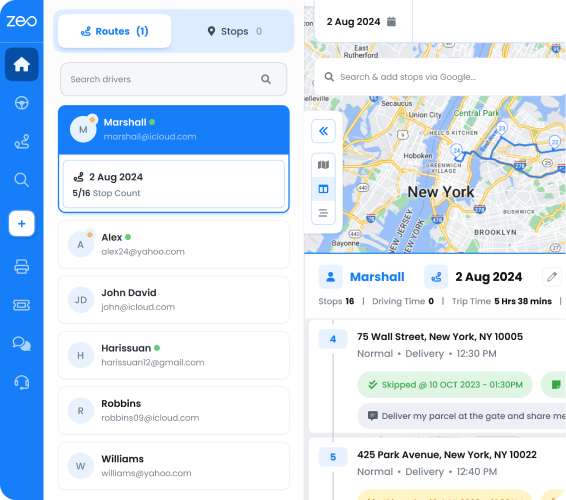
Test integration capabilities during software evaluation. Request demonstrations of data flows between your current systems and potential route planning solutions.
Implementation Roadmap: How to Successfully Deploy Route Planning Software
Successful route planning software deployment requires systematic preparation and phased rollout. Most implementation failures occur because companies skip essential preparation steps.
Phase 1: Data preparation and system setup (Week 1-2). Clean your customer database and standardize address formats. Geocoding accuracy depends on consistent address data. Upload driver information, vehicle details, and service area boundaries.
Phase 2: Manager training and route testing (Week 3). Learn the web platform interface and route optimization features. Create test routes using historical data to verify software performance. Configure customer notification settings and proof of delivery requirements.
Phase 3: Driver onboarding and mobile app deployment (Week 4). Train drivers on the mobile app for receiving routes, capturing delivery proof, and communicating with dispatch. Start with one or two experienced drivers before expanding to the full team.
Phase 4: Gradual rollout and optimization (Week 5-8). Begin with a portion of your daily routes while maintaining backup planning methods. Gradually increase software usage as confidence builds. Fine-tune settings based on real-world performance.
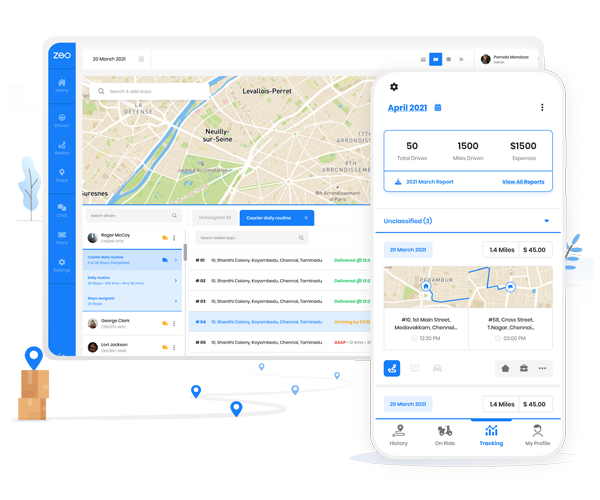
Your operations managers use the web platform to plan and assign optimized routes each morning, while drivers receive those routes on the mobile app complete with navigation and customer information. This coordination eliminates the confusion that often accompanies new software deployment. Modern fleet management software facilitates this manager-driver coordination.
Plan for temporary productivity dips during the first two weeks as your team learns new processes. Most companies reach full efficiency by week six with proper training and support.
Budget 2-3 hours weekly for optimization during the first month. Route planning software improves with use as algorithms learn your service areas and customer patterns.
Choosing the Right Solution: Delivery Route Planner Comparison Guide
Evaluate delivery route planners across six critical dimensions: optimization quality, ease of use, mobile capabilities, integration options, scalability, and support quality.
Optimization quality varies significantly between solutions. Test each platform with your actual delivery data to compare route efficiency. Look for software that considers real-world constraints like traffic patterns, time windows, and vehicle capacities.
User interface design impacts daily productivity. Your dispatchers will use this software for hours each day, so intuitive navigation and clear information display are essential. Request extended trial periods to evaluate usability under normal working conditions.
Mobile app functionality determines driver adoption and field efficiency. Evaluate navigation accuracy, offline capabilities, and proof of delivery features. Drivers should be able to complete their entire workflow through the mobile interface.
Pricing structure affects long-term costs as you scale. Compare per-driver pricing, setup fees, and feature limitations across different plans. Calculate total cost of ownership over three years to make accurate comparisons. Review Bureau of Labor Statistics wage data to calculate accurate labor cost savings when evaluating ROI.
Customer support quality becomes critical when problems arise. Evaluate response times, support channels, and technical expertise during the evaluation process. Peak delivery seasons aren’t the time to discover inadequate support.
Zeo Route Planner serves over 1.5 million users across 150+ countries with AI-powered optimization that saves 2+ hours daily per driver. The platform combines a comprehensive web interface for fleet management with a full-featured mobile app for drivers, creating seamless coordination between dispatch and field operations.
Request free trials from your top three candidates and test each solution with real delivery scenarios. Pay attention to software performance during high-volume periods and complex routing situations.
Most delivery companies benefit from route planning software that grows with their business rather than solutions requiring replacement as they scale.
Frequently Asked Questions
Q: How much can route optimization reduce fuel costs for delivery businesses?
Professional route optimization typically reduces vehicle miles traveled by 10-20% according to EPA studies. For a delivery driver covering 100 miles daily at current fuel prices, this translates to $175-350 monthly savings per vehicle through better routing.
Q: What’s the difference between basic mapping tools and professional delivery route planners?
Basic mapping tools like Google Maps handle simple point-to-point navigation, while professional delivery route planners solve complex multi-stop optimization problems. Zeo Route Planner’s AI-powered optimization can process hundreds of stops with constraints like time windows and vehicle capacity, saving 2+ hours daily compared to manual planning.
Q: How long does it take to implement route planning software in a delivery business?
Most delivery companies can fully deploy route planning software within 6-8 weeks using a phased approach. The process includes data preparation (weeks 1-2), manager training (week 3), driver onboarding (week 4), and gradual rollout with optimization (weeks 5-8).
Q: What ROI can delivery companies expect from route optimization software?
Most delivery companies see 300-500% ROI within the first year through three main savings: reduced labor costs (15-25% less drive time), fuel savings (10-20% fewer miles), and lower vehicle maintenance. The larger the fleet, the greater the absolute savings.
Q: Can route planning software integrate with existing e-commerce platforms?
Yes, modern route planners offer direct integrations with major e-commerce platforms to eliminate manual order entry. Zeo Route Planner connects with Shopify, WooCommerce, HubSpot, and over 1000+ apps through Zapier, automatically importing orders with addresses and delivery requirements.
Ready to transform your delivery operations? Start your free trial of Zeo Route Planner to see how much time and fuel you can save in your first week.
Are you a fleet owner?
Want to manage your drivers and deliveries easily?
Grow your business effortlessly with Zeo Routes Planner – optimize routes and manage multiple drivers with ease.

increase fuel savings
Save $200 on fuel, Monthly!
Optimize routes with our algorithm, reducing travel time and costs efficiently.
Get Started for Free