

Updated on: April 19, 2026
Reading Time: 3 minutes
TL;DR: AI-powered logistics faces four main challenges: data quality issues, system integration problems, scalability limitations, and high implementation costs. Companies using modern AI route optimization report saving 2+ hours daily despite initial setup hurdles. Route optimization tools like Zeo Route Planner address this with AI-powered route optimization and dynamic route adjustments mid-shift, helping logistics teams save 2+ hours daily.
The AI technology has taken the logistics industry by storm. The increasing use of AI-powered route optimization has started a revolution in the logistics industry, a revolution to drive efficiency, performance, and customer experience.
Fleet managers are turning to these advanced technologies to streamline various aspects of fleet management and boost business outcomes. Right from route optimization to automated delivery updates, AI-powered logistics is helping fleet managers step up their game.
However, the promise of great success from AI-powered logistics comes with an underlying shadow of challenges. These challenges, if not addressed strategically, can negatively impact your logistics operations.
Key Challenges of AI-powered Logistics
AI-powered logistics come with great potential and promise. But the road to seamless success is not without its own share of challenges:
-
Data Quality and Accuracy: The Backbone of AI Success
Data forms the core of AI-powered logistics. AI systems rely heavily on data and the quality of output is solely dependent on the data quality. Whether it’s delivery information, customer data, traffic patterns, weather conditions, vehicle maintenance records, or delivery windows, AI systems rely on data to make decisions.
According to the IBM Institute for Business Value, poor data quality costs the U.S. economy approximately $3.1 trillion annually. This statistic becomes even more critical in logistics where real-time decision-making depends on accurate information.
While AI systems can enhance logistics operations, outdated or inaccurate data can easily lead to a downfall. The results can be detrimental to the logistics operations, leading to increased delays, missed deliveries, and most importantly, an unhappy customer base.
Data accuracy is critical for the success of AI-powered logistics. Fleet managers need to ensure the data is extracted from a reliable source and is constantly updated. Poor data quality can tarnish the capabilities of even the most advanced AI-powered logistics systems.
-
Integration with Existing Systems: The Technical Hurdle
Every business has a set of legacy systems that run their operations. When they want to level up with AI-powered logistics tools, they face integration challenges. Logistical tools might fail to integrate with their existing legacy systems.
The inability of route planning software to integrate with other systems will lead to data silos and inaccuracy. If the ecosystem of business tools isn’t integrated, fleet managers will be left with fragmented data, double entries, or errors that will affect the logistics process efficiency.
Modern route optimization platforms now address this challenge through comprehensive integration capabilities. Advanced route planning solutions offer connections to popular e-commerce platforms like Shopify and WooCommerce, as well as CRM systems like HubSpot, ensuring seamless data flow across business operations.
The best way to overcome this challenge is to choose a route planner with effective integration capabilities. This will ensure a smoother transition to AI-powered logistics and seamless operations.
-
Scalability: Keeping Up with Growing Demand
Business growth and service demand growth are the two sides of the same coin. As businesses scale up, they experience a surge in demand and complexities in managing their logistics. Can all AI systems handle a sudden increase in demand volumes? The answer might not necessarily be yes, always.
Some AI systems are designed to handle a fixed volume of demand. If they were to cater to larger fleet operations and more complex route planning, they might fall short in output accuracy and quality.
The fleet managers will feel the pinch of this during the peak holiday seasons when the demands skyrocket. According to U.S. Department of Transportation data, freight volumes can increase by 30-40% during peak seasons, putting enormous strain on logistics systems that aren’t built to scale.
Inability of AI tools to scale according to the demand will result in significant slowdowns, delayed deliveries, increased operational costs and dissatisfied customers.
Route optimization tools that grow alongside the business will help fleet managers keep up with the growing demands. AI-powered logistics tools must be flexible and adaptable to business needs without compromising the service quality.
-
High Implementation Costs: The Investment Dilemma
AI technology demands investment. Implementing AI-powered logistics can be daunting for some businesses, especially the smaller ones. Implementation of AI-powered logistics tools brings the cost of new software, new upgrades, need for training programs.

increase fuel savings
Save $200 on fuel, Monthly!
Optimize routes with our algorithm, reducing travel time and costs efficiently.
Get Started for Free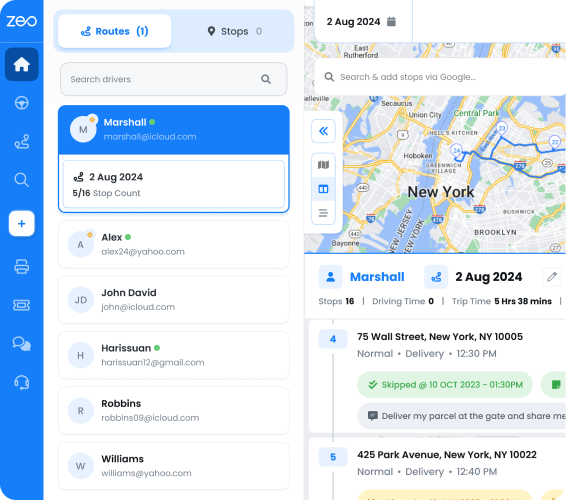
While this financial burden might not be ideal for most businesses, the failure to adopt AI-powered routing technology can prove costlier. Inefficient routing, poor efficiency, underutilized resources, increasing fuel costs – the list can go on.
Over time, these inefficiencies can outweigh the initial investment in AI systems. While building a case for AI-powered logistics, fleet managers must highlight the long-term business benefits. Cost-effective routing tools like Zeo make the job easier!
Strategies for Overcoming AI Implementation Challenges
Successfully navigating these challenges requires a strategic approach that focuses on preparation, gradual implementation, and continuous optimization.
Start with a comprehensive data audit before implementing any AI-powered logistics solution. Clean, standardized data serves as the foundation for accurate AI predictions and recommendations. Establish clear data governance protocols and ensure regular updates to maintain data integrity.
For integration challenges, prioritize solutions that offer robust API capabilities and pre-built connectors to popular business platforms. API and webhook integrations enable seamless data synchronization across different systems, eliminating manual data entry and reducing errors.
Address scalability concerns by choosing platforms designed to handle growing demands. Look for solutions that can accommodate increasing fleet sizes, more complex routing requirements, and higher order volumes without compromising performance.
Conclusion
While AI-powered logistics promises to be a game-changer for fleet managers and businesses, they need to carefully navigate the aforementioned challenges. Smart use of AI technology will pave the way to greater efficiency and logistical success in an increasingly competitive market.
Choosing the right route optimization tool can prove to be vital in the quest to unlock the power of AI in logistics. Zeo is a route planner that leverages AI capabilities to enhance logistics operations and delivery processes.
Ready to see how an AI-powered route planner can enhance your growth?
Schedule a demo with Zeo experts and pave the way for smarter, AI-driven route planning.
Frequently Asked Questions
What are the most common data quality issues in logistics AI systems?
The most common data quality issues include outdated customer addresses, incorrect delivery time windows, missing vehicle capacity information, and incomplete traffic pattern data. These inaccuracies can cause AI systems to generate suboptimal routes, leading to delayed deliveries and increased operational costs.
How long does it typically take to implement AI-powered route optimization?
Implementation timeframes vary depending on system complexity and integration requirements, but most businesses can deploy basic AI route optimization within 2-4 weeks. The key is starting with clean data and choosing solutions with strong integration capabilities to minimize setup time.
Can AI logistics systems handle seasonal demand fluctuations effectively?
Modern AI logistics platforms are designed to adapt to demand fluctuations, but scalability depends on the specific solution architecture. Systems that use cloud-based processing and dynamic resource allocation typically handle seasonal peaks more effectively than fixed-capacity solutions.
What integration capabilities should I look for in AI route planning software?
Look for platforms that offer API access, pre-built connectors to popular e-commerce platforms like Shopify and WooCommerce, and CRM integrations. Zeo Route Planner provides these integrations plus Zapier connectivity to over 1000 apps, helping logistics teams save 2+ hours daily through seamless data synchronization.
How do I calculate ROI for AI-powered logistics investments?
Calculate ROI by measuring fuel cost savings, reduced driver hours, improved delivery completion rates, and decreased customer service complaints against implementation costs. Most businesses see positive ROI within 6-12 months, with fuel savings alone often covering 40-60% of the investment cost.
Are you a fleet owner?
Want to manage your drivers and deliveries easily?
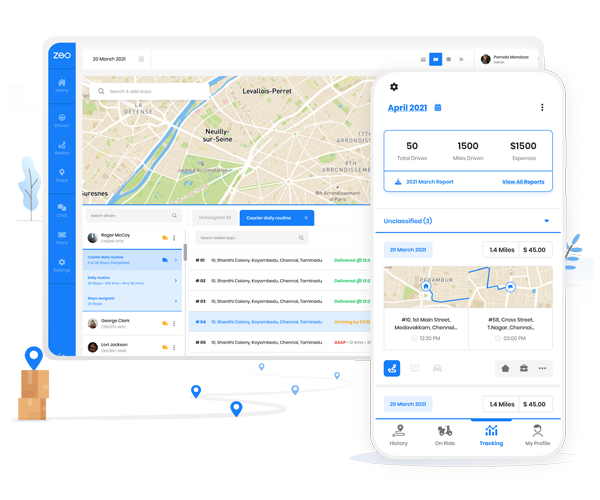
Grow your business effortlessly with Zeo Routes Planner – optimize routes and manage multiple drivers with ease.

increase fuel savings
Hassle Free Deliveries & Pickups!
Optimize routes with our algorithm, reducing travel time and costs efficiently.
Get Started for Free