

Updated on: May 1, 2026
Reading Time: 4 minutes
TL;DR: Investing in a driver safety management system reduces accidents, cuts liability costs, and protects your fleet’s most valuable assets—your drivers. Companies implementing these systems typically see significant reductions in accident rates and insurance premiums. Route optimization tools like Zeo Route Planner address this with real-time GPS tracking and driver performance analytics, helping fleet managers save 2+ hours daily while monitoring critical safety metrics.
The safety of your drivers isn’t just a regulatory checkbox—it’s a critical factor in the success and longevity of your fleet operations. With rising road accidents and increased scrutiny on business fleets, ensuring the well-being of your drivers has never been more important. Investing in a Driver Safety Management system is no longer a choice; it’s a necessity. Businesses that prioritize safety not only protect their employees but also safeguard their reputation and bottom line. In today’s fast-moving world, ensuring safety through the right tools is a clear competitive advantage.
The Importance of Driver Safety
In the world of fleet management, where deadlines, routes, and operational efficiency often take center stage, driver safety can sometimes get sidelined. But let’s be honest: without safe drivers, you don’t have a functioning fleet.
According to the Federal Motor Carrier Safety Administration, commercial vehicle crashes result in billions of dollars in economic losses annually. These statistics underscore the critical importance of proactive safety measures rather than reactive responses to incidents.
Ensuring safety means fewer accidents, less downtime, and a more productive workforce. The right Driver Safety Management system acts as a safeguard, helping businesses monitor and improve driver habits in real-time, preventing potential disasters before they happen. When your drivers are safe, your entire fleet thrives. Beyond the human element, safe operations protect your company’s reputation, reduce insurance costs, and maintain customer trust—all essential components of sustainable business growth.
What is a Driver Safety Management System?
A Driver Safety Management system is a comprehensive tool designed to monitor, manage, and improve driver behavior and safety across a fleet. It uses advanced technology such as telematics, real-time data analytics, and GPS tracking to assess driving patterns like speed, braking, acceleration, and idle time. These systems provide fleet managers with valuable insights into driver performance, enabling them to identify risky behaviors, coach drivers, and take preventive actions to avoid accidents.
Modern driver safety systems have evolved far beyond simple GPS tracking. They now incorporate sophisticated algorithms that can detect dangerous driving patterns, predict potential safety issues, and provide immediate feedback to both drivers and fleet managers. This proactive approach to safety management represents a significant advancement over traditional reactive safety protocols.
In essence, a Driver Safety Management system works to protect both drivers and vehicles, ensuring safer journeys and more efficient fleet operations. The integration of artificial intelligence and machine learning technologies has made these systems more intelligent and predictive than ever before, capable of learning from patterns and continuously improving safety recommendations.
The Growing Need for Advanced Safety Solutions
The transportation industry faces mounting pressure from multiple angles. Regulatory bodies are implementing stricter safety standards, insurance companies are demanding better risk management, and the public expects higher levels of accountability from commercial fleets. The National Highway Traffic Safety Administration reports that traffic fatalities remain a significant concern, with commercial vehicles playing a crucial role in overall road safety statistics.
Additionally, the driver shortage crisis makes retaining quality drivers more important than ever. Companies that demonstrate a commitment to driver safety through advanced technology solutions are better positioned to attract and retain experienced drivers who value working for safety-conscious employers.
The economic impact of accidents extends far beyond immediate repair costs. Legal liabilities, insurance premium increases, regulatory fines, and damage to company reputation can have lasting financial consequences that dwarf the initial investment in safety technology.
Benefits of a Driver Safety Management System
A robust Driver Safety Management system does more than just protect drivers—it enhances overall fleet performance. From reducing risks to boosting efficiency, it’s an essential tool for any modern fleet. Here’s how it can revolutionize your operations:

increase fuel savings
Hassle Free Deliveries & Pickups!
Optimize routes with our algorithm, reducing travel time and costs efficiently.
Get Started for Free
- Reducing Accidents and Liability
One of the most pressing reasons to invest in a Driver Safety Management System is to prevent accidents. These systems use real-time data to alert drivers about dangerous behaviors, such as speeding or harsh braking, and help correct them. As a result, the likelihood of accidents drops significantly. Fewer accidents means fewer injuries, fewer repair costs, and less legal liability, leading to lower insurance premiums. Studies have shown that fleets implementing comprehensive safety management systems can reduce accident rates by up to 20-30%, translating to substantial cost savings and improved driver wellbeing. - Monitoring Driver Behavior
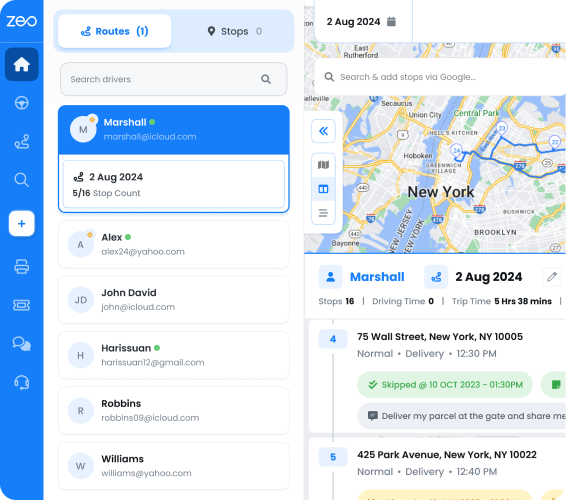
Driver behavior is at the core of fleet safety. A Driver Safety Management System tracks critical metrics as mentioned above – speeding, harsh braking, and idling times – all of which contribute to road safety. Real-time monitoring ensures that you can identify and address unsafe driving practices before they lead to accidents.Zeo’s Driver Management feature takes this a step further, providing actionable insights and reports that help you refine driving standards across the fleet. By addressing these behaviors head-on, you not only improve safety but also reduce wear and tear on your vehicles, enhancing fleet efficiency.
- Boosting Driver Accountability
Accountability is key to creating a culture of safety within your fleet. With the transparent reporting and real-time feedback offered by a Driver Safety Management System, drivers are more likely to adopt safer driving habits. When drivers know their actions are being tracked, they tend to be more cautious on the road, reducing the chances of accidents. This increased accountability also fosters a sense of professionalism and pride in safe driving practices, leading to better overall performance across the fleet. - Enhancing Fleet Efficiency
A Driver Safety Management system doesn’t just protect your drivers—it also makes your entire fleet run more efficiently. Safer drivers reduce vehicle wear and tear, lower fuel consumption, and minimize downtime due to accidents or repairs. In the long run, investing in driver safety boosts fleet productivity and cuts operational costs.With Zeo’s advanced monitoring systems, you gain access to real-time data on driver behavior and vehicle performance, helping you make data-driven decisions that improve fleet efficiency. The correlation between safe driving practices and fuel efficiency is particularly noteworthy, as smooth acceleration and braking patterns can improve fuel economy by 10-15%.
- Attracting and Retaining Top Drivers
Drivers are more likely to stay with a company that values their safety. Investing in a Driver Safety Management system sends a clear message: you care about their well-being. This not only helps you retain your best drivers but also attracts new talent. In an industry with high turnover rates, showing that safety is a priority can make all the difference.With Zeo’s comprehensive Driver Management Tool, you can offer drivers peace of mind, knowing that they’re backed by technology that prioritizes their safety and performance growth on the road. Professional drivers appreciate working for companies that invest in their success and safety, leading to improved job satisfaction and reduced turnover costs.
- Compliance with Regulations
Fleet safety isn’t just a best practice; it’s often a legal requirement. A Driver Safety Management system ensures that your fleet is compliant with regional and international regulations, avoiding costly fines and legal complications. By automatically generating reports on driver behavior, vehicle performance, and incident history, you can easily demonstrate compliance in case of audits or inspections. Zeo offers in-depth analytical reports for data analysis. These data insights can help you take effective measures to stay compliant with regulations and stay ahead of compliance while focusing on operational success. Regulatory compliance becomes significantly easier when you have comprehensive, automated documentation of safety practices and driver performance.
Conclusion
In today’s fast-paced fleet environment, prioritizing driver safety is not only responsible but also essential for long-term success. A Driver Safety Management System enhances accountability, reduces risks, and ultimately helps your fleet run more efficiently. By investing in these tools, businesses show their commitment to protecting their drivers, reducing liability, and optimizing operations.
The return on investment for driver safety management systems extends far beyond the initial cost. Reduced insurance premiums, fewer accidents, improved driver retention, and enhanced operational efficiency create a compelling business case that continues to pay dividends over time.
With Zeo’s cutting-edge driver management capabilities, you can ensure that your fleet stays safe, compliant, and ready for the future. Get in touch with our experts to know how!
Frequently Asked Questions
How much can a company save by implementing driver safety management systems?
Companies typically see 15-25% reductions in accident-related costs within the first year of implementing comprehensive driver safety management systems. These savings come from reduced insurance premiums, fewer vehicle repairs, decreased legal liability, and improved fuel efficiency from better driving habits.
What driving behaviors pose the greatest safety risks for commercial fleets?
The most dangerous driving behaviors include speeding, harsh braking and acceleration, distracted driving, and fatigue-related incidents. Following too closely and failure to properly check blind spots also contribute significantly to fleet accidents, making real-time monitoring and coaching essential for risk reduction.
How do driver safety systems help with regulatory compliance?
These systems automatically document driving hours, vehicle inspections, and safety incidents, creating comprehensive audit trails required by transportation regulators. They also help ensure compliance with Hours of Service regulations and provide the detailed reporting needed for DOT inspections and safety audits.
Can driver safety technology improve fuel efficiency?
Yes, safe driving practices directly correlate with better fuel economy, as smooth acceleration, consistent speeds, and gradual braking can improve fuel efficiency by 10-15%. Driver safety systems that monitor and coach these behaviors help fleets achieve significant fuel cost savings alongside safety improvements.
How quickly do drivers typically adapt to safety monitoring technology?
Most drivers adapt to safety monitoring within 2-4 weeks when proper training and positive reinforcement are provided. The key is positioning the technology as a tool for driver development and safety rather than punitive surveillance, which helps create buy-in and faster adoption.

Are you a fleet owner?
Want to manage your drivers and deliveries easily?
Grow your business effortlessly with Zeo Routes Planner – optimize routes and manage multiple drivers with ease.
increase fuel savings
Save 2 Hours on Deliveries, Everyday!
Optimize routes with our algorithm, reducing travel time and costs efficiently.
Get Started for Free