


# Route Optimization Case Studies: Real Before/After Numbers for Small Fleets
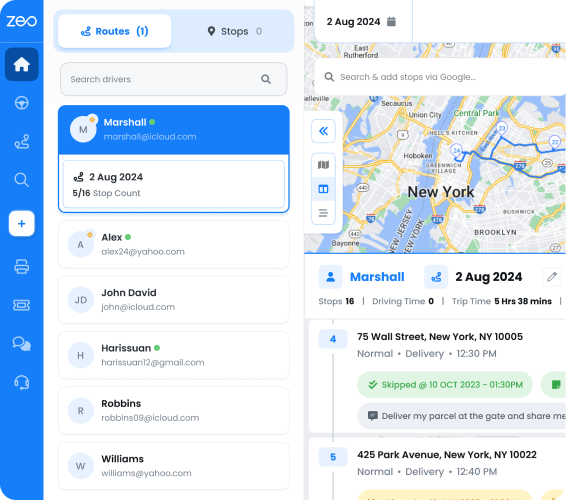
> TL;DR: Real route optimization case studies for small fleets show route planning time dropping from 90 minutes to 8 minutes and fuel costs falling by up to 27% — not the billion-dollar enterprise numbers you’ll find from UPS or Amazon. Route optimization tools like Zeo Route Planner address this with AI-powered route optimization and bulk address import, helping delivery and field service teams save 2+ hours daily on planning.
Search “route optimization case studies” and you’ll find the same names over and over: UPS, Amazon, DHL, FedEx. Their results are impressive. They’re also useless if you run a 6-driver courier company or an 8-technician pest control business.
You don’t have a logistics PhD on staff. You don’t have a $50 million tech budget. You have a dispatcher juggling spreadsheets, a handful of drivers, and a Tuesday morning that’s already falling apart by 9 AM.
This post skips the enterprise fairy tales. Instead, you’ll see real before/after numbers from businesses your size — what they paid, how long implementation took, and what actually changed on the ground.
Why Most Route Optimization Case Studies Don’t Apply to Your Business (And What Actually Matters)
Enterprise case studies share a few things your business doesn’t have. UPS has an entire research division (they famously eliminated left turns to save fuel, a project that took years and a dedicated team). Amazon has custom-built algorithms and warehouses positioned specifically to shorten delivery distances.
You have neither the time nor the budget for that. So when a case study brags about “saving $400 million annually,” it tells you nothing about what will happen in your 10-van operation.
Here’s what actually matters for a small-to-mid-size business, as outlined in our broader route optimization guide:
- Time to first result. Not “eventually” — how many days until you see a difference.
- Setup complexity. Can your dispatcher figure it out, or do you need a consultant?
- Cost relative to team size. A $2,000/month enterprise tool doesn’t scale down to 6 drivers.
- Driver adoption. If your team won’t use it, the software doesn’t matter.
The case studies below focus on businesses with 5-50 drivers or technicians — the size range where most route optimization buyers actually sit. According to U.S. Small Business Administration data on small business fleets, over 33 million small businesses operate in the U.S. alone, and a large share of them run some form of delivery or field service fleet. These are the results that apply to you.
Small Business Case Study: How a 6-Driver Courier Company Cut Route Planning from 90 Minutes to 8 Minutes
A regional courier company in the Midwest ran six drivers delivering medical samples and documents between clinics, labs, and offices. Every morning, the dispatcher spent 60-90 minutes manually building routes in Google Maps, copying addresses one at a time, and texting drivers their stops.
The problem wasn’t just time. Manual routes were inefficient — drivers backtracked across town, and last-minute pickup requests meant redoing half the route by hand.
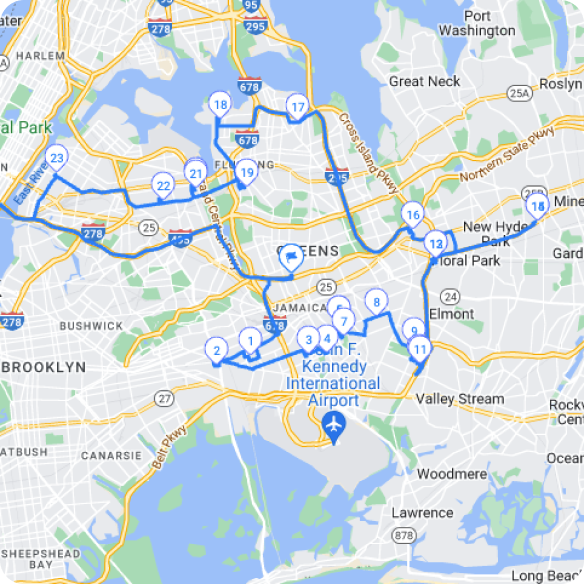
What changed: The company started using Zeo Route Planner’s bulk address import, uploading their daily stop list from a spreadsheet instead of entering addresses one by one. The AI-powered route optimization built optimized routes in minutes and auto-assigned stops based on driver location and capacity. This kind of setup is common across fleet management software built for small teams rather than enterprise logistics departments.
Results after 30 days:
- Route planning time dropped from 90 minutes to 8 minutes daily
- Drivers completed 2-3 more stops per shift without working longer hours
- Missed pickup windows dropped by roughly 40%, based on the dispatcher’s own tracking
The cost breakdown: For a 6-driver operation, the monthly software cost was less than what the company previously paid for one hour of dispatcher overtime per week. The owner-operator described the payback period as “under three weeks.”
The bigger win wasn’t fuel or mileage — it was getting the dispatcher’s morning back. That’s 80+ minutes a day redirected toward customer calls and handling exceptions instead of drawing lines on a map.
Mid-Size Fleet Case Study: A Field Service Business Reduced Fuel Costs by 27% Across 22 Technicians
A pool cleaning and maintenance company with 22 technicians across three service areas had a different problem. Their routes weren’t chaotic — they were just inefficient. Technicians were assigned to zones, but stop order within each zone was based on habit, not distance.
The problem: Technicians frequently crossed their own paths, doubling back to areas they’d already driven through earlier in the day. Fuel costs were creeping up, and the company had no clear way to measure whether routes were actually efficient.
What changed: The operations manager switched to Zeo’s web platform to plan and assign routes by zone, using capacity-based routing to balance workload and skill-based assignment to match technicians with specialized jobs (like equipment repairs) to the right stops. Technicians then received their routes directly on the Zeo mobile app, complete with turn-by-turn navigation and customer service notes. This mirrors patterns seen across other field service management operations juggling zone-based scheduling.
Results after 90 days:
- Fuel costs dropped 27% across the fleet, based on the company’s own fuel card data
- Average daily drive time per technician fell by roughly 45 minutes
- Technicians completed one to two additional jobs per day without route stress
Why this matters for mid-size fleets: At 22 technicians, manual routing isn’t impossible — it’s just unsustainable. The dispatcher was spending nearly three hours daily adjusting routes for cancellations and add-ons. Dynamic route adjustments mid-shift let the team re-route on the fly instead of starting from scratch. This freed the dispatcher to focus on customer scheduling instead of route Tetris.
Industry-Specific Results: What Route Optimization Looks Like in Delivery, Field Service, and Waste Management
Results vary by industry because the routing problems are different. Here’s what typically shows up in each:
Delivery (courier, e-commerce fulfillment, pharmacy):
Time windows matter most. A growing e-commerce fulfillment operation shipping same-day orders needs routes that respect delivery windows customers were promised at checkout. Zeo’s time window constraints and priority stop settings (ASAP vs. Normal) help dispatchers guarantee those windows without manual double-checking. Customer notifications with live tracking links also cut down “where’s my order” calls — often one of the biggest hidden time costs for small delivery teams.
Field Service (HVAC, pest control, plumbing, electrical):
Skill-based assignment is the differentiator. Not every technician can handle every job. An HVAC business with a mix of junior and senior technicians needs jobs routed to the right skill level, not just the nearest technician. This is especially true in businesses like pest control route planning, where certain treatments require licensed technicians. Field service businesses also lean heavily on proof of service — photo capture and digital signatures documenting completed work, which reduces billing disputes and “did they actually show up” questions from customers.
Waste Collection and Recurring Services:
Scheduled and recurring routes are the core need here. Waste collection routes repeat weekly with occasional stop changes (a new customer, a skipped pickup). Rebuilding a route from scratch every week wastes hours. Recurring route templates in Zeo let dispatchers adjust the previous week’s route instead of starting over, which matters most for businesses running the same basic route on a loop.
Across all three industries, the same pattern holds: the software adapts to how the industry already works, rather than forcing a generic delivery template onto every business.
The Real ROI: Manual Routing vs. Route Optimization Software (Cost, Time, Fuel, and Driver Hours Compared)
Here’s a direct comparison based on the patterns seen across the case studies above and typical SMB fleet operations:
| Metric | Manual Routing | Route Optimization Software |
|—|—|—|
| Daily planning time (per dispatcher) | 60-90 minutes | 5-15 minutes |
| Stops per driver per day | Baseline | +15-25% more stops |
| Fuel cost per vehicle | Baseline | 15-27% reduction (based on case studies above) |
| Route planning errors | Common (missed windows, backtracking) | Rare, caught before dispatch |
| Time to re-route mid-day | 10-20 minutes manually | Under 2 minutes |
| Customer “where is my delivery” calls | High | Reduced via live tracking links |
American Transportation Research Institute’s operational cost analysis has noted that fuel and driver labor represent two of the largest controllable operating costs for fleets of any size. Even a 15% improvement in either category compounds quickly for a business running 10+ vehicles daily.
For a 10-driver delivery company, saving 2+ hours daily on planning (per Zeo’s typical result) doesn’t just save the dispatcher’s time — it’s time that can go toward handling exceptions, customer service, or even taking on more daily volume without hiring another dispatcher.
The math is straightforward: if your dispatcher earns $25/hour and saves 75 minutes daily on route planning, that’s roughly $470/month in reclaimed labor cost alone — before counting fuel or extra completed stops.
Beyond Cost Savings: How Optimized Routes Improve Driver Retention and Reduce Turnover
Fuel savings get the headlines, but driver retention is often the bigger win — and it’s rarely mentioned in enterprise case studies.
Optimize routes with our algorithm, reducing travel time and costs efficiently.
increase fuel savings
Hassle Free Deliveries & Pickups!
The trucking and delivery industry has one of the highest turnover rates of any sector. American Trucking Associations’ driver turnover reporting has noted turnover rates exceeding 90% annually for large truckload carriers in some years. Small fleets feel this even harder because losing one driver out of six is a bigger operational hit than losing one out of 600.
Bad routes are a hidden driver retention problem. Long, inefficient routes mean longer days, more stress, and more time away from home for the same pay. Drivers notice when they’re driving in circles because dispatch didn’t plan well. Better visibility through driver tracking software also helps managers spot inefficient patterns before they become a retention issue.
Optimized routing addresses this directly:
- Shorter, smarter routes mean shorter workdays for the same number of completed stops.
- Fewer last-minute route changes reduce daily stress and confusion.
- In-app chat with dispatch lets drivers flag problems (a locked gate, a wrong address) without a phone call, keeping communication simple.
Here’s where the fleet-and-app connection matters most. While managers plan and assign routes through Zeo’s web platform, drivers and technicians receive their optimized routes directly on the Zeo mobile app — including turn-by-turn navigation, proof of delivery capture, and in-app chat with dispatch. Drivers don’t need to learn a separate system or sit through a training session. They download the app, log in, and start navigating their assigned stops the same day.
This is a big part of why the field service business in the case study above adapted so quickly. Technicians weren’t asked to change how they worked — they just received better information through a tool they were already using on their phone.
Lower stress, shorter days, and clearer communication add up to fewer drivers quitting. For a small business, retaining even one experienced driver or technician for an extra year can save thousands in hiring and training costs.
Implementation Timeline: What to Expect in Week 1, Month 1, and Month 3 After Switching
One of the biggest fears for SMB owners is a long, disruptive rollout. Here’s a realistic timeline based on the case studies above.
Week 1: Setup and first routes
You’ll import your driver list, add vehicles, and bring in your stop addresses (via bulk import from Excel, CSV, or Google Sheets — no manual data entry needed). Most businesses run their first optimized route within the first two to three days. Drivers download the Zeo mobile app and start navigating assigned stops immediately, with no separate training required — similar to how one driver saved two hours per day within his first week of switching.
Month 1: Adjustment and fine-tuning
By week three or four, dispatchers typically stop double-checking every route manually and trust the AI-powered optimization. This is when time savings become obvious — the courier company case study above saw its 90-minute planning process drop to 8 minutes within this window. You’ll also start setting up recurring routes for regular customers or service schedules.
Month 3: Full ROI visibility
By the three-month mark, fuel savings and stop-count improvements become measurable against your baseline data. This is also when driver feedback solidifies — either they’ve noticed shorter days and less stress, or you’ll know it’s time to adjust settings like time windows or skill assignments. The 22-technician field service case study saw its full 27% fuel reduction become clear around this point, once seasonal and route variations were accounted for.
The pattern across all case studies: meaningful time savings show up in week one, but full cost ROI takes 60-90 days to measure accurately.
Common Mistakes Businesses Make Before Adopting Route Optimization (And How to Avoid Them)
Most failed implementations aren’t a software problem — they’re a setup problem. Here’s what trips up SMB teams most often:
Mistake 1: Not cleaning up address data first.
Bad or incomplete addresses lead to bad routes, no matter how good the optimization engine is. Before importing your stop list, check for duplicate entries and missing suite numbers.
Mistake 2: Skipping driver buy-in.
If drivers think the new app is being forced on them without explanation, adoption slows down. Explain the benefit directly: shorter days, clear navigation, no more guessing which stop comes next.
Mistake 3: Ignoring time windows and capacity settings.
Businesses that skip setting proper time windows or vehicle capacity limits end up with technically “optimized” routes that still don’t reflect real constraints — like a customer only available after 2 PM, or a van that can’t fit one more delivery.
Mistake 4: Expecting instant fuel savings.
Fuel savings take a few weeks to show up clearly, since day-to-day mileage varies. Judge success by planning time and completed stops first; fuel savings follow once routes stabilize.
Mistake 5: Not using proof of delivery/service features.
Skipping photo capture or signature collection means missing an easy way to resolve customer disputes later. It costs nothing extra to turn on and prevents “they never showed up” arguments.
Avoiding these five mistakes is often the real difference between a business that sees results in week one and one that gives up after a rocky first month.
Frequently Asked Questions
Q: How much does route optimization software cost for a small business?
Most small business route optimization tools range from $15-$50 per driver per month, depending on features like real-time tracking or proof of delivery. Zeo Route Planner’s mobile app includes a free tier for up to 12 routes monthly, with premium plans starting at $15.99/month — making it accessible for businesses with just a handful of drivers rather than requiring enterprise-level budgets.
Q: What size business actually benefits from route optimization software?
Businesses with as few as 3-5 drivers or technicians typically see measurable time savings, since manual routing becomes unsustainable once you’re juggling more than a couple of vehicles and daily schedule changes. The case studies that matter most for small operators involve fleets of 5-50 drivers, not the 1,000+ vehicle fleets featured in most enterprise case studies.
Q: How long does it take to see ROI from route optimization?
Time savings on route planning typically show up in the first week, while measurable fuel cost reductions and stop-count improvements usually take 60-90 days to confirm against a baseline. This is because daily mileage and route conditions vary enough that you need a few weeks of data before drawing conclusions.
Q: Do drivers need special training to use route optimization software?
Most modern route optimization apps are designed for same-day adoption, since drivers are already comfortable with GPS navigation apps on their phones. With Zeo Route Planner, drivers download the mobile app, log in, and start navigating optimized routes with turn-by-turn directions the same day — no separate training session required.
Q: What’s the difference between route optimization and simple GPS navigation?
GPS navigation gets you from point A to point B, but it doesn’t decide the best order to visit multiple stops or account for time windows, vehicle capacity, or driver skills. Route optimization software solves that sequencing problem first, then hands off turn-by-turn navigation — which is why tools like Zeo combine AI-powered route optimization with support for Google Maps, Waze, and Apple Maps for the actual driving.
See These Results in Your Own Operation
The businesses in these case studies didn’t have enterprise budgets or logistics departments. They had a dispatcher, a handful of drivers or technicians, and a routing process that wasn’t scaling anymore.
Start a free Zeo Route Planner trial to run your own before/after comparison. No credit card required — you’ll see your route times and fuel savings within your first week.
Are you a fleet owner?
Want to manage your drivers and deliveries easily?
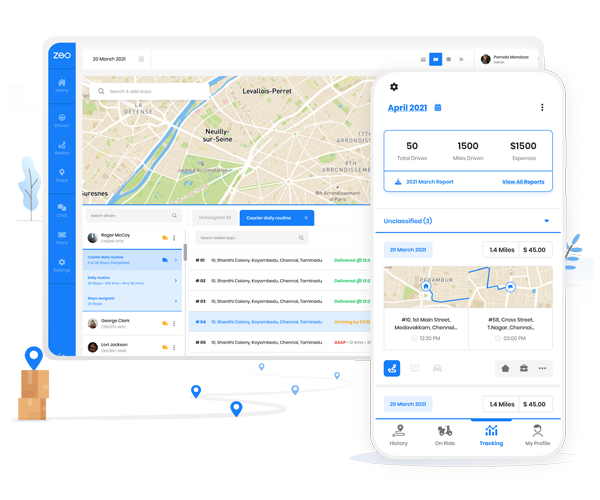
Grow your business effortlessly with Zeo Routes Planner – optimize routes and manage multiple drivers with ease.
increase fuel savings
Save 2 Hours on Deliveries, Everyday!
Optimize routes with our algorithm, reducing travel time and costs efficiently.
Get Started for Free