
# Beverage Distribution Merchandising Efficiency in 2026
> TL;DR: Beverage distributors lose $85,800+ annually per 10-person team due to inefficient merchandising routes that waste 1.5+ hours daily on unnecessary travel. Poor routing reduces productive shelf time by 50%, directly impacting brand presence and competitive positioning. Route optimization platforms like Zeo Route Planner address this with AI-powered routing and real-time GPS tracking, helping beverage distribution merchandising efficiency teams save 2+ hours daily.
Your merchandising teams are losing money with every inefficient route. While competitors optimize shelf presence and capture promotional opportunities, poor route planning turns profitable merchandising into a rushed afterthought that drains resources.
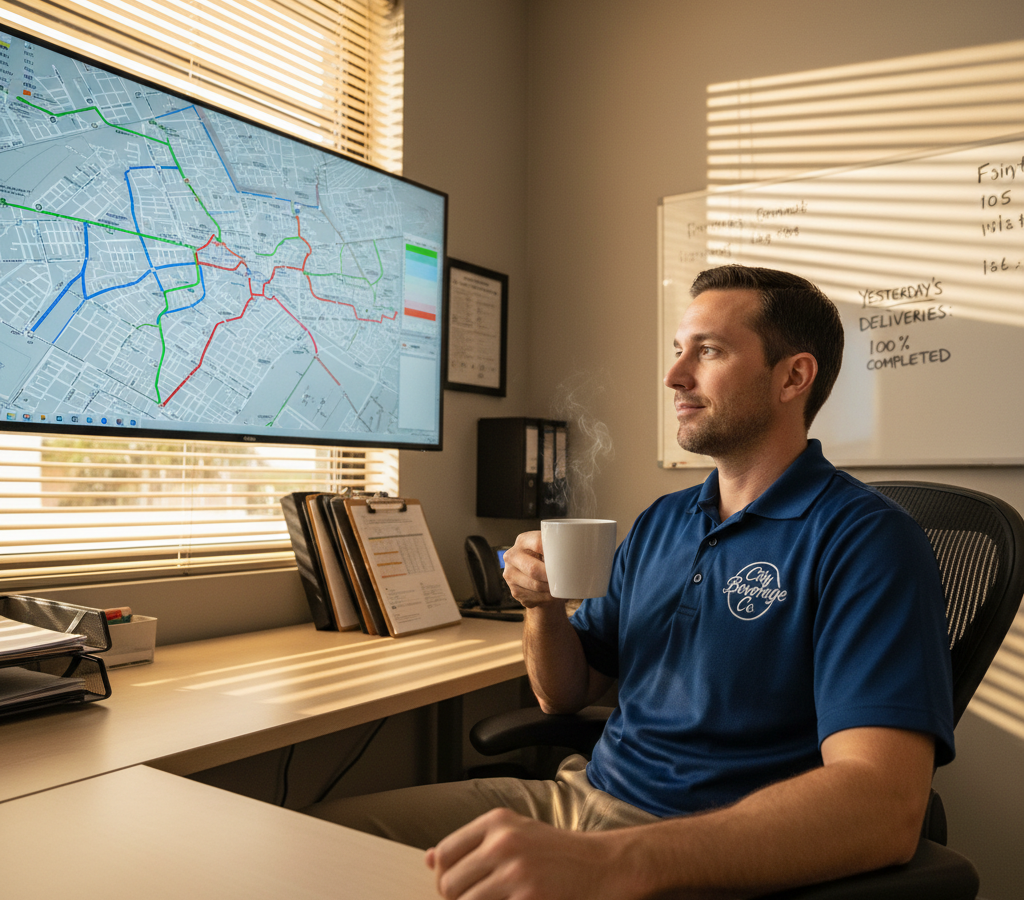
The beverage distribution industry faces unique challenges in 2026. You’re not just delivering products—you’re building brand presence, executing promotions, and competing for prime shelf space across dozens of retail locations daily. When merchandising routes aren’t optimized, your teams spend more time driving than selling, and your brand suffers.
This guide shows operations managers and route supervisors at beverage distributors how to transform merchandising efficiency from a cost center into a competitive advantage. You’ll learn specific strategies to reduce travel time, improve in-store execution, and measure real merchandising ROI.
The Hidden Costs of Inefficient Merchandising Routes: Why Every Extra Mile Hurts Your Bottom Line
Poor merchandising routes create a ripple effect of costs that extend far beyond fuel expenses. When your teams zigzag across territories or backtrack to missed locations, you’re paying for inefficiency in multiple ways.
The most obvious cost is time. According to the Bureau of Labor Statistics, beverage sales workers spend an average of 2.5 hours daily in transit between locations. Inefficient routing can increase this to 4+ hours, cutting productive merchandising time in half.
Consider this scenario: Your team serves 40 retail locations across a metropolitan area. With poor routing, drivers might visit stores in this order: downtown location A, suburban store B (20 miles away), then back to downtown store C (22 miles back). This creates 42 unnecessary miles and 90+ minutes of wasted time that could be spent on shelf management and customer relationships.
Labor costs compound quickly. If a merchandiser earns $22 per hour and wastes 1.5 hours daily on inefficient routing, that’s $33 in lost productivity per day, or $8,580 annually per team member. Multiply this across 10 merchandisers, and you’re looking at $85,800 in waste yearly.
Fuel costs add another layer. With commercial vehicle fuel averaging $3.85 per gallon and delivery trucks getting 8-10 mpg in urban areas, those 42 unnecessary daily miles cost $16-20 in fuel alone. Over 250 working days, that’s $4,000-5,000 per route annually.
The hidden costs run deeper. Rushed merchandising means missing promotional setups, inadequate shelf resets, and poor inventory rotation. When your team arrives at a key account with only 15 minutes instead of the planned 45, they can’t execute the promotional display that drives incremental sales.
Vehicle wear increases with unnecessary mileage. Additional miles mean more frequent maintenance, tire replacements, and earlier vehicle retirement. For a delivery truck averaging 50,000 miles annually, reducing routes by 20% extends vehicle life by 2-3 years.
But the biggest cost is opportunity cost. Every minute spent on inefficient travel is time not spent building relationships with store managers, optimizing product placement, or identifying new sales opportunities. In beverage distribution, shelf presence directly correlates with sales velocity, and rushed merchandising compromises both.
Mobile-First Merchandising: How Driver Apps Transform In-Store Execution and Accountability
Mobile technology transforms merchandising from a paper-based guessing game into a data-driven execution system. When merchandisers carry route optimization and tracking tools in their pockets, accountability and efficiency improve dramatically.
Traditional merchandising relies on printed route sheets, manual check-ins, and end-of-day reports that provide no real-time visibility. Store managers don’t know when merchandisers will arrive, dispatchers can’t track progress, and problems aren’t discovered until after routes are complete.
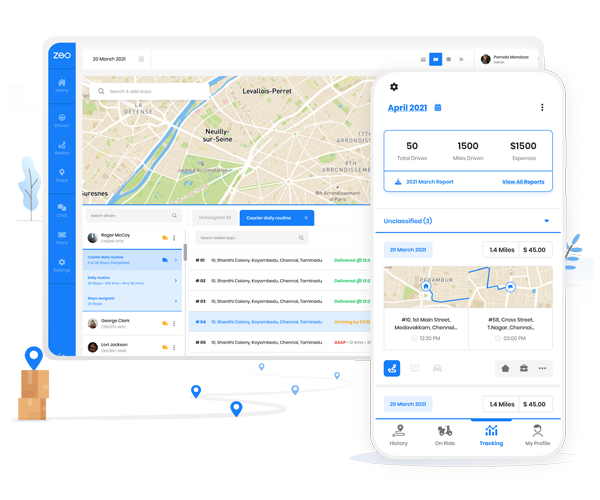
Mobile-first merchandising changes this dynamic completely. Merchandising teams use the Zeo driver app to receive optimized routes directly on their phones, complete with turn-by-turn navigation and customer details. This eliminates the guesswork and ensures teams follow the most efficient sequence.
Real-time GPS tracking provides visibility into merchandising progress throughout the day. Operations managers can see which stores have been completed, estimated arrival times at remaining locations, and any delays that might affect promotional schedules. This visibility allows proactive communication with key accounts about timing changes.
Photo capture capabilities transform proof of merchandising work. Instead of relying on handwritten notes about shelf conditions or promotional displays, merchandisers document their work with photos that timestamp and GPS-tag every interaction. Store managers can see before and after photos of endcap displays, shelf resets, and promotional materials.
Digital signature collection streamlines store manager approval processes. Rather than carrying paper forms for signature, merchandisers capture approvals digitally with store contact information automatically recorded. This creates a complete audit trail for promotional compliance and merchandising agreements.
Communication improves dramatically with mobile tools. When a store manager requests priority attention for a new product launch or competitor activity, merchandisers can instantly communicate this information back to dispatch. Route priorities can be adjusted in real-time based on store conditions and opportunities.
The mobile-first approach also supports skill-based assignments. Some merchandisers excel at complex promotional displays, while others are better suited for routine shelf maintenance. Mobile systems can assign specific store types or promotional activities to merchandisers with the right skills and experience.
Payment tracking becomes seamless for COD accounts or promotional payments. Merchandisers can record cash collections, check payments, and account credits directly in the mobile app, eliminating paperwork and ensuring accurate financial records.
Store managers benefit from increased predictability and communication. Instead of wondering when the beverage merchandiser will arrive, they receive notifications with accurate arrival times and can plan their schedules accordingly. Live tracking links let them monitor progress throughout the day.
Dynamic Route Optimization for Beverage Distribution Merchandising Efficiency: Adapting to Real-Time Store Priorities and Promotional Demands
Beverage merchandising isn’t static. Store priorities shift based on promotional calendars, competitor activities, inventory situations, and seasonal demands. Dynamic route optimization adapts to these changing conditions throughout the day.
Static route planning assumes every store visit requires the same time and has equal priority. In reality, a store launching a major promotional display might need 90 minutes of attention, while routine shelf maintenance takes 20 minutes. Dynamic systems adjust routes based on these varying requirements.
Time window constraints become critical during promotional periods. When a grocery chain requires all beer displays to be reset before 10 AM due to heavy customer traffic, your routing system must prioritize these accounts and sequence routes accordingly. Missing these windows means lost sales opportunities and strained retailer relationships.
Zeo Route Planner solves this by automatically factoring time windows, priority stops, and capacity constraints into route optimization. The AI-powered routing engine saves 2+ hours daily per driver while ensuring high-priority promotional work receives appropriate attention and scheduling.
Priority stop functionality allows dispatchers to mark urgent accounts as “ASAP” when situations change. If a key account reports competitor activity or requests immediate attention for a new product launch, the system can dynamically re-sequence routes to address these priorities first.
Skill-based assignment ensures the right merchandiser handles specialized work. Complex promotional displays, craft beer sections, and premium product placements require different expertise than basic shelf stocking. Dynamic routing considers merchandiser skills when assigning specific store types and promotional activities.
Capacity planning extends beyond vehicle space to include time capacity. A merchandiser might have physical capacity for additional stops but lack time capacity for complex promotional work. Dynamic systems balance both constraints to maximize productivity without compromising execution quality.
Real-time adjustments become possible when unexpected situations arise. If a merchandiser discovers extensive competitive activity requiring additional time, they can communicate this through the mobile app. Dispatchers can then re-route remaining stops to other team members or reschedule less critical accounts.
Weather and traffic conditions affect merchandising schedules, especially for outdoor promotional events or high-traffic retail areas. Dynamic routing incorporates real-time traffic data to adjust arrival times and sequences, ensuring teams stay on schedule despite changing conditions.
Seasonal demand fluctuations require different routing approaches. Summer beverage promotions might prioritize convenience stores and outdoor venues, while winter routes focus more on grocery chains and indoor displays. Dynamic systems can weight store priorities based on seasonal sales patterns.
The result is merchandising that responds to market conditions rather than following rigid predetermined routes. Teams spend more time on high-value activities and less time traveling between locations inefficiently.
Measuring Merchandising ROI: KPIs That Actually Matter for Beverage Distributors
Most beverage distributors track basic merchandising metrics like stores visited and hours worked, but these don’t reveal true ROI. Effective merchandising measurement focuses on outcomes that directly impact profitability and competitive position.
Revenue per merchandising hour provides the clearest picture of efficiency. Calculate total sales generated from merchandised accounts divided by total merchandising labor hours. This metric reveals which merchandisers, routes, and store types generate the highest return on investment.
Average shelf velocity in merchandised versus non-merchandised accounts shows merchandising impact on sales performance. Track inventory turns, sales per linear foot, and promotional lift rates to quantify the value of merchandising activities beyond basic delivery.
Route density measures how many productive stops teams complete per hour or per mile traveled. High route density indicates efficient territory coverage and maximized customer contact time. Track this metric by territory, merchandiser, and day of week to identify optimization opportunities.
On-time performance for promotional windows directly affects retailer relationships and sales opportunities. Measure the percentage of promotional setups completed within required time windows, as missed windows often result in lost sales and strained partnerships.
Photo documentation compliance ensures merchandising standards are maintained across all accounts. Track the percentage of store visits with proper before/after photos, promotional display documentation, and competitive intelligence gathering.
Customer satisfaction scores from retail partners provide external validation of merchandising quality. Survey store managers quarterly about merchandiser professionalism, display quality, and communication effectiveness to identify training opportunities.
Cost per stop includes all expenses associated with merchandising visits: labor, fuel, vehicle wear, and overhead. Compare this against revenue generated per stop to ensure positive ROI. Look for routes or accounts where costs exceed benefits.
Competitive displacement measures how effectively merchandising activities gain shelf space or promotional placement from competitors. Track changes in facings, endcap displays, and promotional calendar wins to quantify competitive performance.
Time utilization breaks down how merchandisers spend their hours: travel time, in-store productive work, administrative tasks, and breaks. Optimize this balance to maximize value-added activities while minimizing non-productive time.
The miles tracking feature in route optimization platforms helps calculate accurate cost per mile and identify routes with excessive travel requirements. Use this data to restructure territories or adjust account assignments.
Technology adoption rates among merchandising teams affect overall efficiency. Track mobile app usage, photo submission compliance, and real-time communication frequency to ensure tools are being utilized effectively.

increase fuel savings
Save 2 Hours on Deliveries, Everyday!
Optimize routes with our algorithm, reducing travel time and costs efficiently.
Get Started for Free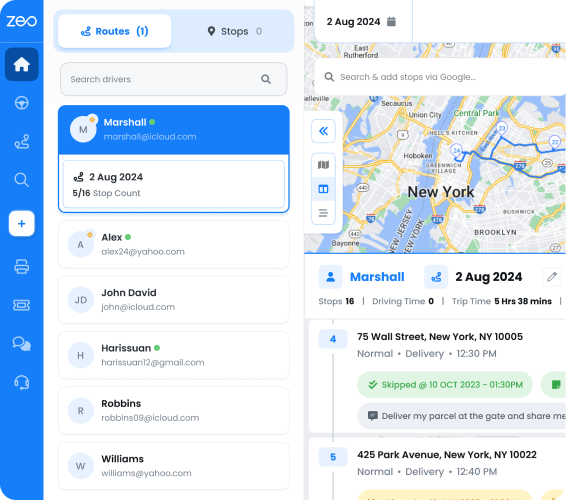
Promotional compliance percentages measure how consistently merchandisers execute required promotional activities across accounts. Poor compliance indicates training needs or capacity constraints that require attention.
Account retention rates in merchandised territories versus non-merchandised areas demonstrate the relationship-building value of consistent merchandising presence. Retailers with regular merchandising support typically show higher loyalty and order consistency.
Technology Stack Integration: Connecting Route Planning to Point-of-Sale Data and Inventory Management
Effective beverage distribution merchandising requires seamless integration between route optimization, inventory management, and retail point-of-sale data. Disconnected systems create inefficiencies and missed opportunities.
Most beverage distributors operate with siloed technology: separate systems for route planning, inventory tracking, and sales reporting. This creates gaps where critical information doesn’t flow between departments, resulting in suboptimal merchandising decisions.
Point-of-sale data integration reveals which products are moving quickly at specific accounts, enabling merchandisers to prioritize fast-turning items and identify slow-moving inventory that needs promotional support. When POS data flows directly into route planning systems, merchandisers arrive with actionable intelligence.
Inventory management integration ensures merchandisers know exactly what products are available for promotional displays and which items need rotation. Real-time inventory visibility prevents promoting products that aren’t in stock and helps identify aged inventory requiring immediate attention.
CRM integration through platforms like HubSpot allows merchandising activities to be tracked against customer relationship goals. Store visit history, promotional execution records, and competitive intelligence can be captured and analyzed to strengthen retailer partnerships.
Zeo Route Planner integrates with major e-commerce platforms like Shopify and WooCommerce through its API, enabling custom integrations that connect route optimization with inventory and sales systems. This connectivity ensures merchandising routes reflect current business priorities and available products.
Zapier integration capabilities connect Zeo to over 1,000 business applications, allowing beverage distributors to create automated workflows between route planning software and existing business systems. For example, when POS data indicates high demand for a specific product, automated workflows can prioritize accounts selling that product for immediate merchandising attention.
Real-time data synchronization prevents the delays that occur when systems update overnight or weekly. Merchandisers need current information about inventory levels, promotional requirements, and account status to make effective decisions during store visits.
Mobile data collection feeds back into integrated systems, creating a continuous improvement loop. Photos from merchandising visits, competitive intelligence, and store condition reports flow back into CRM and inventory systems for analysis and future route planning.
Automated reporting eliminates manual data entry and reduces errors. When route completion data automatically updates inventory systems and sales reporting, managers get accurate performance metrics without additional administrative work.
Performance analytics become more sophisticated when multiple data sources combine. Integration allows analysis of merchandising ROI by product category, promotional type, and store format using comprehensive data from multiple systems.
The key is selecting route optimization platforms that offer robust API capabilities and pre-built integrations with common beverage distribution software. Custom integration development should be the exception, not the requirement.
Implementation Roadmap: Building Merchandising Efficiency That Scales with Your Distribution Network
Successful merchandising efficiency improvements require systematic implementation that minimizes disruption while maximizing adoption. The key is phased deployment that proves value quickly and scales gradually.
Phase 1 focuses on route optimization for your highest-volume merchandising teams. Start with 3-5 merchandisers covering well-defined territories. This limited scope allows you to test processes, identify issues, and demonstrate results before expanding.
Technology setup begins with importing your current customer database and geocoding all retail locations. Clean data is critical—verify addresses, update contact information, and confirm store hours before importing into route optimization software.
Baseline measurement establishes current performance metrics: average daily mileage, stores visited per day, time per stop, and fuel costs. These benchmarks prove improvement when compared to optimized performance after implementation.
Team selection for the pilot should include your most adaptable merchandisers and a supportive route supervisor. Early adopters who embrace new technology and provide constructive feedback make the best pilot participants.
Training focuses on mobile app usage, photo documentation procedures, and communication protocols. Plan for 2-3 hours of initial training plus ongoing support during the first week of implementation.
Phase 2 expands to additional merchandising teams once the pilot proves successful. Use success stories and concrete results from Phase 1 to build enthusiasm among remaining team members.
Territory optimization may require adjustments as you gather data on actual travel times and store service requirements. Be prepared to modify boundaries and account assignments based on real-world performance data.
Integration planning should begin during Phase 2 to connect route optimization with existing business systems. Prioritize integrations that provide the highest value: inventory management, CRM, and reporting systems.
Zeo’s implementation support includes training resources, API documentation, and customer success assistance to ensure smooth deployment across your entire merchandising operation.
Phase 3 incorporates advanced features like dynamic routing, promotional priority management, and performance analytics. These capabilities require teams to be comfortable with basic route optimization before adding complexity.
Change management throughout implementation requires clear communication about benefits, patient training, and responsive support for questions and issues. Merchandisers need to understand how efficiency improvements benefit them personally, not just the company.
Success metrics should be communicated regularly to maintain momentum. Share weekly reports on mileage reduction, time savings, and improved customer service ratings to reinforce the value of new processes.
Scalability planning considers how processes will work as your distribution network grows. Choose technology platforms and procedures that can accommodate additional merchandisers, territories, and retail accounts without major rework.
The implementation timeline typically spans 3-6 months from pilot launch to full deployment, depending on network size and complexity. Rushing implementation often leads to poor adoption and suboptimal results.
Continuous improvement processes ensure merchandising efficiency keeps improving after initial implementation. Regular route analysis, performance reviews, and technology updates maintain competitive advantages over time.
Frequently Asked Questions
Q: How much can beverage distributors save by optimizing merchandising routes?
Beverage distributors typically save $85,800+ annually per 10-person merchandising team through route optimization. Efficient routing reduces daily travel time from 4+ hours to 2.5 hours, cutting fuel costs by $4,000-5,000 per route yearly while increasing productive merchandising time for better shelf presence and sales velocity.
Q: What technology do merchandising teams need for mobile-first execution?
Merchandising teams need mobile route optimization apps with GPS tracking, photo capture, digital signatures, and real-time communication features. Zeo Route Planner’s driver app provides turn-by-turn navigation, proof of delivery documentation, and instant messaging between merchandisers and dispatch, serving 1.5M+ users across field operations.
Q: How do time windows affect beverage merchandising scheduling?
Time windows are critical for promotional success, especially when grocery chains require beer displays reset before 10 AM due to heavy customer traffic. Missing these windows results in lost sales opportunities and strained retailer relationships, making dynamic route optimization essential for competitive shelf placement.
Q: What metrics should beverage distributors track for merchandising ROI?
Key metrics include revenue per merchandising hour, route density (stops per hour), on-time performance for promotional windows, and cost per stop versus revenue generated. Track shelf velocity differences between merchandised and non-merchandised accounts to quantify the impact of consistent store presence.
Q: How does beverage distribution merchandising efficiency impact competitive positioning?
Efficient merchandising directly affects shelf space competition, promotional calendar wins, and retailer relationships. When teams spend more time on value-added activities instead of driving, they can execute complex displays, gather competitive intelligence, and build stronger partnerships that lead to better product placement and increased sales velocity.
Your merchandising operation can become a profit center rather than just a cost of doing business. Efficient route optimization, mobile execution tracking, and integrated technology transform how beverage distributors compete for shelf space and customer relationships.
Start your free trial and see how Zeo can optimize your merchandising routes while providing real-time visibility into in-store execution. Transform your merchandising efficiency from afterthought to competitive advantage.
Are you a fleet owner?
Want to manage your drivers and deliveries easily?
Grow your business effortlessly with Zeo Routes Planner – optimize routes and manage multiple drivers with ease.

increase fuel savings
Save $200 on fuel, Monthly!
Optimize routes with our algorithm, reducing travel time and costs efficiently.
Get Started for Free