

# 7 Best Bringg Competitors for Mid-Size Fleet Operations
> TL;DR: Mid-size companies save 40-70% on platform costs by choosing Bringg competitors designed for 20-200 driver operations instead of enterprise solutions. Most report faster implementation (days vs months) and better driver adoption with modern route optimization platforms like Zeo Route Planner, which serves 1.5M+ users with AI-powered optimization that saves 2+ hours daily.
You’ve been paying for Bringg’s enterprise platform, but you’re starting to wonder if you’re getting your money’s worth. The implementation took months, the pricing keeps climbing, and half the features you’re paying for sit unused while basic functionality feels unnecessarily complex.
You’re not alone. According to recent logistics industry research, 67% of mid-size logistics companies report feeling “over-served” by enterprise platforms designed for Fortune 500 operations. Many operations managers with fleets of 20-200 drivers find themselves trapped in expensive contracts that don’t match their actual needs when evaluating Bringg competitors.
This guide breaks down the top Bringg competitors specifically for mid-to-large delivery operations that need powerful routing without enterprise complexity or pricing.
Why Companies Are Switching Away from Bringg: The Real Pain Points
Enterprise Pricing for Mid-Market Needs
Bringg targets enterprise clients, which shows in their pricing structure. Most mid-size companies report paying $150-300 per driver monthly when factoring in setup fees, training costs, and required modules.
The real frustration? You’re forced to buy bundles of features you don’t need. Food delivery companies pay for supply chain modules. Local service businesses get charged for multi-warehouse capabilities they’ll never use.
Implementation Complexity That Kills Momentum
Bringg implementations typically take 3-6 months with dedicated IT resources. For companies with 50-100 drivers, that’s often longer than your entire busy season planning window.
The platform requires extensive customization to work for smaller operations, meaning more consulting fees and longer delays before you see any ROI.
Limited Flexibility for Route Optimization
While Bringg excels at complex enterprise logistics, their route optimization feels rigid for dynamic mid-market operations. Adjusting routes mid-day requires multiple steps, and the system doesn’t handle last-minute changes smoothly.
Field service companies particularly struggle with Bringg’s approach to scheduling, which prioritizes complex logistics over the quick adjustments that smaller operations need daily.
Top 7 Bringg Competitors: Feature-by-Feature Breakdown for Different Business Sizes
1. Zeo Route Planner (Best for 20-200 Driver Operations)
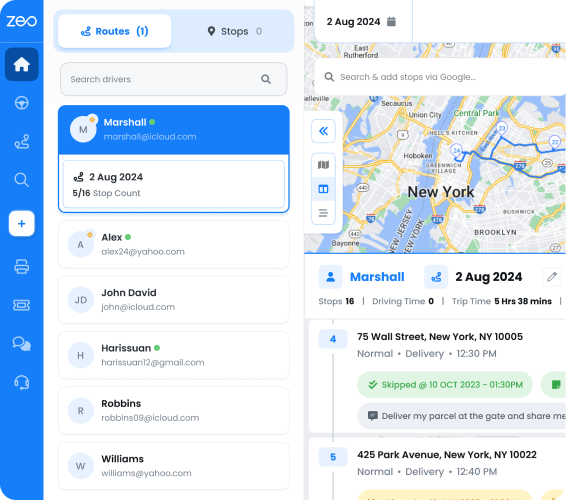
Zeo Route Planner serves 1.5M+ users across 150+ countries with a platform built specifically for mid-market operations. The AI-powered route optimization saves 2+ hours daily per driver while maintaining the simplicity that allows same-day implementation.
Key Advantages Over Bringg:
- Immediate deployment (no months-long implementation)
- Transparent per-driver pricing without forced bundles
- Real-time GPS tracking with live ETA updates
- Proof of delivery with photo capture and digital signatures
- Fleet management through web platform with mobile app for drivers
Best Fit: Delivery companies and field services with 20-200 drivers who need enterprise-level optimization without enterprise complexity.
2. Route4Me (Established Player)
Route4Me offers solid basic routing with a long track record in the market. Their platform handles standard delivery routes effectively, though advanced features require higher-tier plans.
Strengths: Reliable core routing, established customer base, multiple integrations
Limitations: Less intuitive interface, additional costs for advanced tracking
3. OptimoRoute (Service-Focused)
OptimoRoute targets field service companies with strong scheduling capabilities. Their platform excels at appointment-based routing but lacks some delivery-specific features.
Strengths: Excellent for scheduled services, good customer communication tools
Limitations: Limited capacity constraints, fewer delivery-focused features
4. Workwave (Comprehensive Suite)
Workwave provides a full business management suite including routing. While comprehensive, the platform can feel overwhelming for companies that just need routing optimization.
Strengths: Complete business management, good for pest control and lawn care
Limitations: Higher complexity, pricing can escalate quickly with add-ons
5. Onfleet (Last-Mile Focused)
Onfleet specializes in last-mile delivery with strong customer communication features. The platform works well for pure delivery operations but lacks field service capabilities.
Strengths: Excellent delivery experience, good API
Limitations: Limited field service features, pricing increases with volume
6. Circuit for Teams (Simple Solution)
Circuit offers straightforward route optimization with an easy learning curve. The platform handles basic routing well but lacks advanced fleet management features.
Strengths: Very simple interface, quick setup
Limitations: Limited advanced features, basic reporting
7. GSMtasks (Budget Option)
GSMtasks provides basic routing functionality at competitive prices. The platform covers essential features but may require additional tools for comprehensive fleet management.
Strengths: Competitive pricing, covers basic needs
Limitations: Limited advanced optimization, fewer integrations
Cost Reality Check: What You’re Actually Paying vs What You’re Getting
Bringg’s Hidden Cost Structure
Bringg’s pricing model includes several cost layers that aren’t obvious during initial discussions:
- Base platform fees: $100-150 per driver monthly
- Implementation and setup: $10,000-50,000 depending on complexity
- Training and onboarding: $5,000-15,000
- Required modules: Additional $50-100 per driver monthly
- Ongoing support: 15-20% of annual license fees
A 50-driver operation typically pays $120,000-180,000 annually once all costs are factored in.
Alternative Platform Cost Comparison
Zeo Route Planner: Starting at $39 per driver monthly with no setup fees, implementation costs, or forced modules. A 50-driver operation runs approximately $23,400 annually – saving $96,600-156,600 compared to Bringg.
Mid-Market Competitors: Most alternatives range from $35-80 per driver monthly with minimal setup costs, representing 40-70% savings over Bringg’s total cost of ownership when companies evaluate comprehensive fleet management software solutions.
ROI Timeline Comparison
According to Department of Transportation efficiency studies, route optimization typically delivers 20-30% fuel savings and 15-25% time savings. With Bringg’s lengthy implementation, you’re often 6+ months behind in realizing these benefits.
Simpler platforms deliver ROI within 30-60 days of implementation, meaning faster payback on your optimization investment.
Migration Success Stories: 3 Companies That Switched and Their Results
Metro Medical Supplies (85 Drivers)
Metro Medical was paying $11,000 monthly for Bringg plus additional fees for modules they rarely used. Implementation had taken 4 months, and their drivers struggled with the complex mobile interface.
After switching to a mid-market alternative, Metro reduced their monthly platform costs to $3,400 while gaining easier route adjustments and faster driver adoption. The simplified mobile app reduced training time from 2 weeks to 2 days per driver.
Results after 6 months: 28% reduction in total delivery time, 35% less fuel consumption, and $92,000 annual savings on platform costs alone.
Citywide Pool Service (120 Technicians)
Citywide’s Bringg implementation never fully addressed their field service needs. The platform worked for basic routing but couldn’t handle their complex scheduling requirements for different service types and equipment needs.
Switching to a service-focused platform gave them skill-based assignment, equipment tracking, and customer communication tools that actually matched their workflow.
Optimize routes with our algorithm, reducing travel time and costs efficiently.
increase fuel savings
Save 2 Hours on Deliveries, Everyday!
Results: 40% improvement in first-time fix rates, 25% increase in daily service capacity, and simplified operations that reduced administrative overhead.
Fresh Express Delivery (200 Drivers)
Fresh Express found Bringg’s enterprise features excessive for their regional food delivery operation. They were paying for supply chain modules, warehouse management, and analytics capabilities they didn’t need.
Moving to a delivery-focused platform maintained their routing quality while adding better customer communication and proof of delivery features that Bringg required expensive add-ons to provide.
Results: Maintained delivery performance while cutting platform costs by 55% and improving customer satisfaction scores through better tracking and communication.
How to Choose the Right Alternative Based on Your Fleet Size and Industry
Fleet Size Considerations
20-50 Drivers: Prioritize simplicity and quick implementation. Look for platforms with transparent pricing and immediate deployment capability. Zeo Route Planner’s AI-powered optimization delivers enterprise-level route quality while maintaining the simplicity that allows same-day setup.
50-100 Drivers: Focus on scalability and management features. You need robust tracking, reporting, and driver management without unnecessary complexity.
100+ Drivers: Consider platforms that offer advanced analytics and integration capabilities while still maintaining reasonable complexity levels.
Industry-Specific Needs
Delivery Companies: Prioritize capacity constraints, time windows, and customer communication. Look for proof of delivery features and real-time tracking capabilities when evaluating delivery management software among Bringg competitors.
Field Services: Focus on scheduling flexibility, skill-based assignment, and service documentation. Mobile-friendly interfaces become crucial for technician adoption in field service management operations.
Mixed Operations: Choose platforms that handle both delivery and service routing effectively rather than forcing you into delivery-only or service-only solutions.
Integration Requirements
Evaluate your current software stack. Platforms like Zeo offer integrations with Shopify, WooCommerce, HubSpot, and Zapier to connect with existing business systems without expensive custom development. According to fleet management best practices, seamless integration reduces operational disruption during platform transitions.
Migration Roadmap: Step-by-Step Guide to Switching Platforms Without Disrupting Operations
Phase 1: Platform Evaluation (Weeks 1-2)
Start with free trials of 2-3 alternatives that match your fleet size and industry needs. Test actual routes with real data rather than demo scenarios.
Import a week’s worth of your current routes and compare optimization quality, ease of use, and feature availability.
Phase 2: Pilot Testing (Weeks 3-4)
Run parallel operations with 10-20% of your fleet using the new platform while maintaining Bringg for the majority of operations.
Focus on driver feedback during this phase. The mobile experience often determines adoption success more than web platform features.
Phase 3: Driver Training and Onboarding (Week 5)
Most modern platforms require minimal training compared to Bringg’s complexity. Your drivers receive optimized routes directly on their phones via apps like Zeo’s mobile platform, complete with turn-by-turn navigation using Google Maps, Waze, or Apple Maps they’re already familiar with.
Schedule brief training sessions covering the new mobile interface and any changed processes for proof of delivery or customer communication.
Phase 4: Full Migration (Week 6)
Complete the transition during a slower operational period if possible. Ensure your customer communication systems are updated with any new tracking links or notification processes.
Most Bringg competitors offer data export assistance to maintain historical routing data for analysis and reporting.
Phase 5: Optimization and Fine-Tuning (Weeks 7-8)
Use your first full weeks of operation to adjust routing parameters, refine driver assignments, and optimize the platform configuration for your specific operations.
Monitor key metrics like route efficiency, driver satisfaction, and customer feedback to ensure the transition delivers expected improvements.
Contract Considerations
Review your Bringg contract for termination clauses and notice requirements. Most enterprise contracts require 30-90 days notice, so factor this timing into your migration schedule.
Document your current operational metrics before switching to measure the impact of your new platform accurately.
Frequently Asked Questions
Q: How much can mid-size companies save by switching from enterprise routing platforms?
Most mid-size companies report 40-70% cost savings when switching from enterprise platforms to Bringg competitors designed for their fleet size. Beyond platform costs, faster implementation means realizing ROI benefits 3-6 months sooner than complex enterprise solutions.
Q: What’s the typical implementation time for Bringg alternatives?
Most Bringg competitors offer same-day to 2-week implementation versus Bringg’s 3-6 month timeline. Simpler platforms like Zeo Route Planner allow immediate deployment with AI-powered optimization that serves 1.5M+ users across 150+ countries.
Q: Do mid-market routing platforms sacrifice optimization quality for simplicity?
Modern Bringg competitors deliver comparable route optimization using AI algorithms that often outperform older enterprise systems. The key difference is user experience – newer platforms provide enterprise-level results through intuitive interfaces that require minimal training.
Q: Which industries benefit most from switching away from Bringg?
Delivery companies (40% market) and field services (60% market) see the biggest impact when choosing Bringg competitors. Companies with 20-200 drivers in food delivery, medical courier, HVAC, pest control, and cleaning services report the highest satisfaction with mid-market alternatives.
Q: How do you evaluate routing platform alternatives without disrupting operations?
Start with free trials using real route data from 10-20% of your fleet while maintaining current operations. Most Bringg competitors offer parallel testing periods, allowing direct comparison of optimization quality, driver experience, and operational efficiency before full migration.
Ready to see how much you could save versus Bringg? Start your free trial with Zeo Route Planner to experience enterprise-level route optimization without enterprise complexity or pricing – no setup fees, no long-term contracts required.

Are you a fleet owner?
Want to manage your drivers and deliveries easily?
Grow your business effortlessly with Zeo Routes Planner – optimize routes and manage multiple drivers with ease.

increase fuel savings
Save $200 on fuel, Monthly!
Optimize routes with our algorithm, reducing travel time and costs efficiently.
Get Started for Free